Ketonal forte
Poland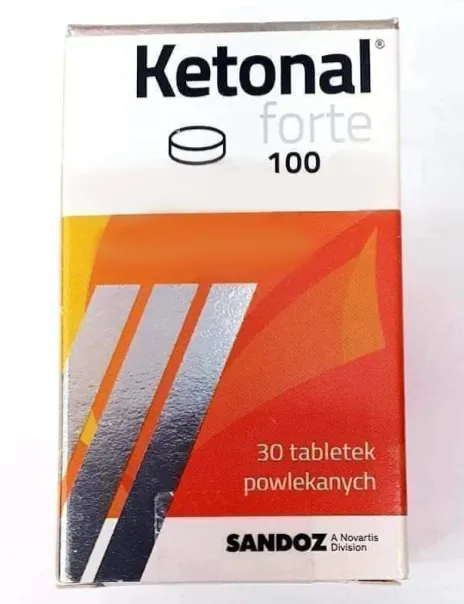
Table of Contents
PACKAGE LEAFLET: INFORMATION FOR THE PATIENT
Warning! Keep the leaflet – the information on the immediate packaging is in a foreign language!
Ketonal forte
100 mg, coated tablets
Ketoprofen
Please read this leaflet carefully before taking the medicine, as it contains
important information for the patient.
- Keep this leaflet, so that you can read it again if necessary.
- If you have any doubts, consult your doctor or pharmacist.
- This medicine has been prescribed for a specific individual. Do not pass it on to others.
- The medicine may harm another person, even if their symptoms are the same.
- If any adverse reactions occur, including any not listed in this leaflet, inform your doctor or pharmacist. See section 4.
Table of contents of the leaflet:
- What Ketonal forte is and what it is used for
- Important information before taking Ketonal forte
- How to take Ketonal forte
- Possible side effects
- How to store Ketonal forte
- Contents of the pack and other information
1. What Ketonal forte is and what it is used for
Ketonal forte contains the active substance ketoprofen, a non-steroidal anti-inflammatory drug (NSAID) with anti-inflammatory, antipyretic and analgesic properties.
Ketonal forte is used for the symptomatic treatment of inflammatory, degenerative and metabolic rheumatic disorders, as well as for relief of certain pain conditions.
Indications for use include:
rheumatoid arthritis;
osteoarthritis (degenerative joint disease);
painful menstruation;
moderate pain.
2. Important information before using Ketonal forte
When not to use Ketonal forte
if the patient is allergic to ketoprofen or any of the other ingredients of this medicine
(listed in section 6);
if the patient has previously experienced asthma, bronchospasm, nasal mucosal swelling
or skin reaction (skin rash or itching) or any other type of allergic reaction after taking ketoprofen or
similarly acting medicines (such as acetylsalicylic acid or other non-steroidal anti-inflammatory drugs (NSAIDs));
if the patient has:
- severe heart failure,
- severe renal failure,
- severe hepatic failure,
- tendency to bleeding,
- active gastric or duodenal ulcer or a history of gastrointestinal bleeding, ulceration or perforation;
if the patient is in the third trimester of pregnancy (see below "Pregnancy, breastfeeding and effects on fertility").
Warnings and precautions
Before starting treatment with Ketonal forte, consult your doctor or pharmacist if:
the patient has previously had gastrointestinal disorders (there is a risk of exacerbation of ulcerative colitis or Crohn's disease);
the patient has asthma or inflammation of the nasal mucosa (rhinitis, nasal congestion, sneezing),
chronic sinusitis or nasal polyps;
the patient currently has or has previously had heart, kidney or liver disease;
the patient currently has or has previously had high blood pressure (hypertension);
the patient has peripheral arterial disease (circulatory disorders in legs or feet due to arterial narrowing or blockage) or cerebrovascular disease;
the patient has diabetes or high blood cholesterol levels;
the patient has an infection — see below, section titled “Infections”;
the patient smokes;
the patient is elderly.
Non-steroidal anti-inflammatory drugs (NSAIDs) may cause gastrointestinal bleeding, ulceration or perforation (with potentially fatal outcome), which may occur at any time during treatment, even without warning symptoms or previous serious gastrointestinal events.
The risk of gastrointestinal bleeding, ulceration or perforation is higher when high doses of NSAIDs are used in patients with a history of peptic ulcer disease, especially complicated by bleeding or perforation (see section "When not to use Ketonal forte") and in elderly patients.
If the patient experiences unusual gastrointestinal symptoms during treatment with Ketonal forte (especially bleeding), medical advice should be sought immediately.
Use of medicines such as Ketonal forte may be associated with a small increased risk of arterial thrombotic events (myocardial infarction or stroke). This risk increases with prolonged use of high doses of the drug.
During treatment with non-steroidal anti-inflammatory drugs (NSAIDs), especially at the beginning of therapy, very rare but severe skin reactions (some potentially fatal) may occur, including exfoliative dermatitis, Stevens-Johnson syndrome and toxic epidermal necrolysis. If the patient develops a rash, mucosal lesions or any signs of hypersensitivity, the medicine should be discontinued immediately.
If the patient experiences visual disturbances (e.g. blurred vision) during treatment with Ketonal forte, the medicine should be discontinued and medical advice sought.
It is very important to use Ketonal forte at the lowest effective dose for the shortest duration necessary to relieve symptoms.
Do not use higher doses or longer treatment duration than recommended.
Infections
Ketonal forte may mask symptoms of infection such as fever and pain. Therefore, Ketonal forte may delay appropriate treatment of infection and consequently increase the risk of complications. This has been observed in bacterial pneumonia and bacterial skin infections associated with chickenpox. If the patient is taking this medicine during an ongoing infection and symptoms persist or worsen, immediate medical consultation is required.
Use of Ketonal forte in children and adolescents
This medicine should not be used in children and adolescents under 15 years of age.
Ketonal forte and other medicines
Inform your doctor about all medicines currently or recently taken, as well as any medicines the patient intends to take.
The following medicines should not be used together with Ketonal forte
other painkillers such as non-steroidal anti-inflammatory drugs (NSAIDs), including selective cyclooxygenase-2 inhibitors (e.g. acetylsalicylic acid, diclofenac, naproxen);
anticoagulants (medicines that inhibit blood clotting), antiplatelet agents (medicines that inhibit platelet aggregation) and thrombolytics (medicines used to open blocked blood vessels), such as acetylsalicylic acid, heparin, warfarin, clopidogrel, ticlopidine, dabigatran, apixaban, rivaroxaban or edoxaban;
nicorandil (a medicine used in the treatment of ischemic heart disease);
lithium (a medicine used in the treatment of certain psychiatric disorders);
methotrexate (a medicine used, among others, in the treatment of cancer) at doses exceeding 15 mg per week.
Ketonal forte and other medicines may interact with each other, affecting their efficacy and increasing the risk of adverse effects.
Therefore, always consult your doctor or pharmacist before using Ketonal forte together with other medicines such as:
diuretics;
methotrexate (a medicine used, among others, in the treatment of cancer) at doses less than 15 mg per week;
medicines that lower blood pressure;
medicines used to treat depression (selective serotonin reuptake inhibitors, SSRIs);
corticosteroids (medicines used to treat pain, swelling, allergies, asthma, rheumatoid diseases and skin disorders);
pentoxifylline (a medicine used to treat muscle pain due to peripheral vascular disease);
probenecid (a medicine used to treat gout and elevated uric acid levels);
medicines that suppress immune system function, e.g. after organ transplantation (cyclosporine and tacrolimus);
antidiabetic medicines;
antiepileptic medicines;
medicines used in heart disease (digitalis glycosides, beta-blockers);
quinolone antibiotics;
tenofovir (an antiretroviral medicine used in the treatment of HIV infection and chronic viral hepatitis B).
If in any doubt, consult your doctor or pharmacist.
Ketonal forte with food and drink
Ketonal forte tablets should be taken during meals, with at least half a glass of water or milk.
Pregnancy, breastfeeding and effects on fertility
If the patient is pregnant or breastfeeding, suspects she may be pregnant, or is planning to have a child, she should consult her doctor or pharmacist before using this medicine.
Pregnancy
This medicine may be used during the first and second trimesters of pregnancy only if the doctor considers it absolutely necessary. Use during the third trimester of pregnancy is contraindicated.
Breastfeeding
Women who are breastfeeding should not use Ketonal forte.
Effect on female fertility
Ketonal forte may impair fertility. If the patient is planning pregnancy, has difficulty conceiving or is undergoing fertility investigations, she should inform her doctor. The doctor may consider discontinuing treatment with Ketonal forte.
Driving and operating machinery
Ketonal forte may cause dizziness, drowsiness, visual disturbances and convulsions in some patients. If any of these symptoms occur, the patient should not drive or operate machinery.
Ketonal forte contains lactose monohydrate and sodium
If the patient has previously been diagnosed with intolerance to certain sugars, the patient should consult a doctor before taking this medicine.
This medicine contains less than 1 mmol (23 mg) of sodium per coated tablet, meaning the medicine is considered "sodium-free".
3. How to use Ketonal Forte
This medicine should always be used as directed by the physician. In case of doubt, consult a doctor or pharmacist.
This medicine is intended for oral administration. The lowest effective dose should be used for the shortest duration necessary to relieve symptoms. If symptoms of infection (such as fever and pain) persist or worsen, medical advice should be sought immediately (see section 2).
Adults and adolescents over 15 years of age
The usual dose is 1 coated tablet once or, at most, twice daily (100 to 200 mg of ketoprofen per day).
Rheumatoid arthritis and osteoarthritis
Recommended dose: 1 tablet up to twice daily.
The maximum daily dose of ketoprofen is 200 mg.
Before prescribing a daily dose of 200 mg, the physician will carefully evaluate the risk-benefit ratio of treatment.
Tablets should be taken during meals, with at least 100 ml of water or milk.
The physician may recommend concomitant use of drugs that neutralize gastric hydrochloric acid to reduce the risk of harmful effects of ketoprofen on the gastrointestinal tract.
Elderly patients
As a general rule, treatment with ketoprofen in elderly patients should be initiated at the lowest available dose and continued at the lowest effective dose.
The risk of severe adverse effects is higher in elderly patients.
If a patient feels that the effect of Ketonal Forte is too strong or too weak, they should consult a doctor.
Taking more than the recommended dose of Ketonal Forte
In case of overdose, seek immediate medical advice from a doctor or pharmacist.
Symptoms of overdose may include: lethargy, drowsiness, nausea, vomiting, abdominal pain, haematemesis (vomiting blood), melena (black, tarry stools), disturbances of consciousness, respiratory depression, convulsions, renal dysfunction, and renal failure.
In cases of suspected significant overdose, the physician may recommend gastric lavage and symptomatic and supportive treatment.
Missing a dose of Ketonal Forte
Do not take a double dose to make up for a missed dose.
If there are any further doubts regarding the use of this medicine, consult a doctor or pharmacist.
4. Possible adverse effects
Like all medicines, this medicine can cause adverse effects, although not everyone will experience them.
Taking anti-inflammatory and pain-relieving medicines, such as Ketonal forte, especially at high doses and for prolonged periods, may be associated with a small increased risk of heart attack or stroke.
If any of the following adverse effects occur, stop taking the medicine immediately
and seek medical advice without delay from a doctor or the nearest hospital emergency department:
Rare adverse effects (may affect fewer than 1 in 1,000 people):
asthma attack
burning sensation, persistent stomach pain (which may indicate stomach or duodenal ulceration)
Adverse effects with unknown frequency:
vomiting blood, severe abdominal pain or black, tarry stools (these may be symptoms of gastrointestinal bleeding)
formation of blisters, peeling of the skin or bleeding within the skin with or without itching, nodular rash (around the lips, eyes, mouth, nose, genital organs, hands or feet), sometimes accompanied by flu-like symptoms. These may be symptoms of serious skin disorders requiring urgent medical attention.
blood in the urine, changes in the amount of urine passed, swelling of the legs, ankles or feet (which may indicate serious kidney problems)
chest pain or sudden severe headache (taking medicines such as Ketonal forte may be associated with a small increased risk of heart attack or stroke)
swelling of the face, lips or throat causing difficulty in swallowing or breathing, wheezing or tightness in the chest, rapid heartbeat, drop in blood pressure (which may lead to shock), itching and rash. These may be symptoms of a severe allergic reaction.
If any of the following adverse effects occur, consult a doctor as soon as possible:
Rare adverse effects (may affect fewer than 1 in 1,000 people):
numbness, tingling, pricking or burning sensation of the skin
pallor and feeling of fatigue, fainting or dizziness (these may be symptoms of anaemia due to destruction of red blood cells)
yellowing of the skin or whites of the eyes (with increased liver enzyme activity and serum bilirubin concentration) – jaundice, which may indicate serious liver dysfunction
Adverse effects with unknown frequency:
bruising more easily than usual or persistent bleeding (these may be symptoms of serious blood disorders, e.g. reduced platelet count)
exacerbation of Crohn's disease or colitis
photosensitivity of the skin
hair loss
increased susceptibility to infections (which may indicate serious blood disorders, e.g. marked reduction in the number of certain white blood cells – agranulocytosis)
seizures
Other adverse effects
Very common (may affect more than 1 in 10 people): increased liver function test results
Common (may affect up to 1 in 10 people):
malaise, dyspepsia, nausea, abdominal pain, vomiting
Uncommon (may affect up to 1 in 100 people):
headache, dizziness, drowsiness, constipation, diarrhoea, flatulence, gastritis, rash, pruritus, oedema
Rare (may affect up to 1 in 1,000 people):
tinnitus, stomatitis, weight gain
Very rare (may affect up to 1 in 10,000 people):
enteropathy with perforation, ulceration, strictures and bleeding
Adverse effects with unknown frequency (frequency cannot be estimated from available data): mood changes, taste disturbances, heart failure (with symptoms such as shortness of breath, difficulty breathing when lying down, swelling of feet or legs), hypertension, skin redness (vasodilation), vasculitis, rhinitis (nasal congestion, nasal itching, sneezing or nasal obstruction), pancreatitis, feeling of fatigue or malaise, angioedema (sudden swelling of the face, limbs or joints without itching or pain), decreased sodium concentration in blood (hyponatraemia), increased potassium concentration in blood (hyperkalaemia); confusion, aseptic meningitis, drug eruption (acute generalised exanthematous pustulosis).
Reporting of adverse effects
If any adverse effects occur, including any possible adverse effects not listed in this leaflet, inform your doctor or pharmacist. Adverse effects can be reported directly to the Department for Monitoring Adverse Drug Reactions of the Office for Registration of Medicinal Products, Medical Devices and Biocidal Products: Al. Jerozolimskie 181C, 02-222 Warsaw, tel.: +48 22 49 21 301 / fax: +48 22 49 21 309 / website: https://smz.ezdrowie.gov.pl
Reporting adverse effects helps to provide more information on the safety of this medicine.
5. How to store Ketonal forte
Keep this medicine out of sight and reach of children.
Do not use this medicine after the expiry date stated on the packaging. The expiry date refers to the last day of the stated month.
Store below 25 °C.
Medicines should not be disposed of via wastewater or household waste. Ask your pharmacist how to dispose of medicines no longer required. Such measures help protect the environment.
6. Contents of the packaging and other information
What Ketonal forte contains
The active substance is ketoprofen. One coated tablet contains 100 mg of ketoprofen.
Other ingredients are: maize starch, povidone, magnesium stearate, colloidal anhydrous silica, talc, lactose monohydrate.
Coating: hypromellose, macrogol 400, indigo carmine (E 132), talc, titanium dioxide (E 171), Carnauba wax.
What Ketonal forte looks like and contents of the pack
Brown glass bottle closed with a tamper-evident cap made of polyethylene (PE), placed in a cardboard box.
Pack size: 20 coated tablets.
For more detailed information, please contact the marketing authorisation holder or the parallel importer.
Marketing authorisation holder in the Czech Republic, country of export:
Lek Pharmaceuticals d.d.
Verovškova 57
1526 Ljubljana
Slovenia
Manufacturer
Lek Pharmaceuticals d.d.
Verovškova 57
1526 Ljubljana
Parallel importer:
Medezin Sp. z o.o.
Zbąszyńska 3 Street
91-342 Łódź
Repackaged in:
Medezin Sp. z o.o.
Zbąszyńska 3 Street
91-342 Łódź
CEFEA Sp. z o.o. Sp. komandytowa
Działkowa 56 Street
02-234 Warsaw
Pharma Innovations Sp. z o.o.
Jagiellońska 76 Street
03-301 Warsaw
Synoptis Industrial Sp. z o.o.
Szosa Bydgoska 58 Street
87-100 Toruń
CANPOLAND SPÓŁKA AKCYJNA
Beskidzka 190 Street
91-610 Łódź
Marketing authorisation number in the Czech Republic, country of export: 29/930/95-C
Parallel import authorisation number: 140/22