Ketokaps max
Poland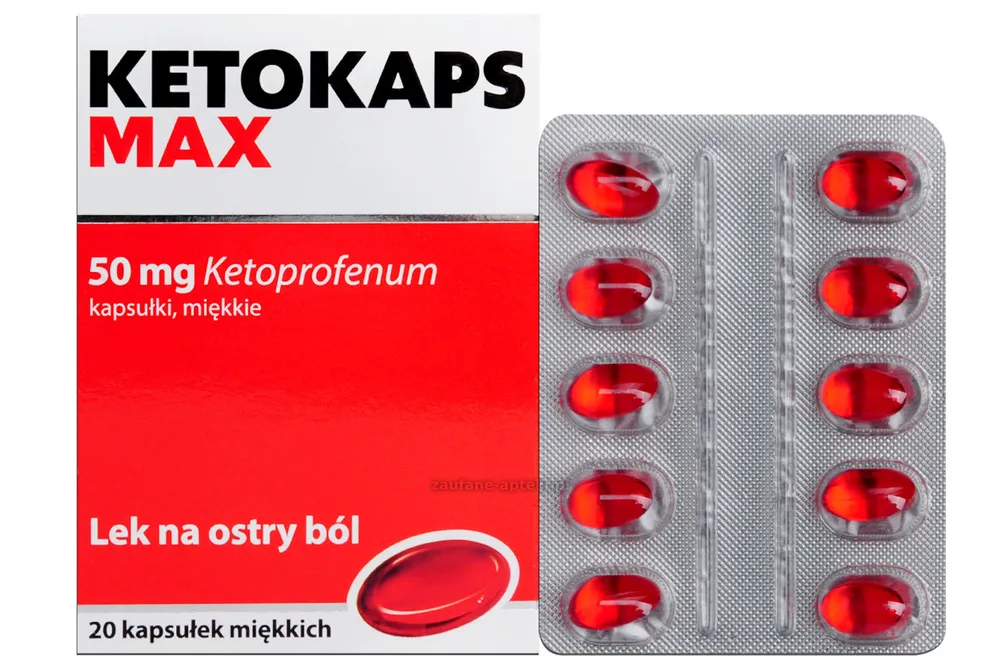
Table of Contents
Package leaflet: Information for the patient
Ketokaps Max
50 mg, soft capsules
Ketoprofenum
Please read carefully all of this leaflet before taking this medicine because it contains
important information for the patient.
This medicine should always be used exactly as described in this patient leaflet or as
advised by the doctor, pharmacist or nurse.
- Keep this leaflet so that you can read it again if necessary.
- If you need advice or further information, please consult your pharmacist.
- If you experience any adverse reactions, including any not listed in this leaflet, inform your doctor, pharmacist or nurse. See section 4.
- If there is no improvement or if you feel worse after 5 days, you should contact your doctor.
Table of contents
- What Ketokaps Max is and what it is used for
- Important information before taking Ketokaps Max
- How to take Ketokaps Max
- Possible side effects
- How to store Ketokaps Max
- Contents of the pack and other information
1. What Ketokaps Max is and what it is used for
Ketokaps Max contains the active substance ketoprofen. Ketoprofen is a medicine with
anti-inflammatory, analgesic and antipyretic effects (it belongs to the group of non-steroidal
anti-inflammatory drugs – NSAIDs). The mechanism of action of ketoprofen is probably due to
inhibition of prostaglandin synthesis.
Indications
Ketokaps Max is indicated for symptomatic treatment of acute mild to moderate pain of various
origin (e.g. muscular and musculoskeletal pain, headache, dental pain, painful menstruation).
2. Important information before using Ketokaps Max
When not to use Ketokaps Max
- if the patient is allergic to ketoprofen or any of the other ingredients of this medicine (listed in section 6);
- if the patient has previously experienced asthma, bronchospasm, nasal mucosal swelling, skin reaction (skin swelling or itchy rash), or any other type of allergic reaction after taking ketoprofen or similar-acting medicines (such as acetylsalicylic acid or other nonsteroidal anti-inflammatory drugs (NSAIDs));
- if the patient is in the third trimester of pregnancy (see below "Pregnancy, breastfeeding and fertility");
- if the patient has active gastric or duodenal ulcer, or has previously experienced gastrointestinal bleeding, ulceration, or perforation;
- if the patient has severe heart, liver, or kidney failure;
- if the patient has a bleeding tendency (bleeding diathesis).
Warnings and precautions
Before starting treatment with Ketokaps Max, consult a doctor, pharmacist, or nurse, especially if:
- the patient has a history of gastrointestinal disorders (gastric or duodenal ulcer, ulcerative colitis, Crohn's disease) – due to the risk of worsening symptoms;
- the patient is taking other medicines that may increase the risk of ulceration or bleeding, such as oral corticosteroids (e.g. prednisolone), anticoagulants (e.g. acenocoumarol), selective serotonin reuptake inhibitors (antidepressants), or antiplatelet agents (such as acetylsalicylic acid);
- the patient has been diagnosed with bronchial asthma, chronic rhinitis, chronic sinusitis, or nasal polyps – administration of ketoprofen may trigger an asthma attack or bronchospasm, particularly in individuals hypersensitive to acetylsalicylic acid or NSAIDs;
- the patient has heart disease (heart failure, ischemic heart disease), peripheral arterial disease, or cerebrovascular disease, or has had a stroke or is suspected of having an increased risk of cardiovascular disorders (e.g. high blood pressure, diabetes, elevated cholesterol, smoking);
- the patient has kidney or liver disease or fluid imbalance (e.g. dehydration due to diuretic use or recent surgical procedure) – use of the medicine may reduce renal blood flow, leading to kidney dysfunction, especially in elderly patients. Very rare cases of jaundice and hepatitis have been reported during ketoprofen treatment;
- the patient is elderly – in elderly patients, the risk of adverse effects (especially gastrointestinal bleeding and perforation) is higher, so particular caution is advised;
- the patient has an infection – see below, section titled "Infections".
Taking Ketokaps Max at the lowest effective dose for the shortest duration necessary to relieve symptoms reduces the risk of adverse effects.
Avoid concomitant use of Ketokaps Max with other medicines containing nonsteroidal anti-inflammatory drugs (NSAIDs), including acetylsalicylic acid or selective cyclooxygenase-2 (COX-2) inhibitors.
Nonsteroidal anti-inflammatory drugs (NSAIDs) may cause gastrointestinal bleeding, ulceration, or perforation (potentially fatal), which may occur at any time during treatment, even without warning symptoms or a history of severe gastrointestinal events.
The risk of gastrointestinal bleeding, ulceration, or perforation is higher when high doses of NSAIDs are used, in patients with a history of peptic ulcer disease, especially complicated by bleeding or perforation (see section "When not to use Ketokaps Max"), and in elderly patients.
If unusual gastrointestinal symptoms occur during treatment (especially bleeding), discontinue the medicine immediately and consult a doctor without delay.
Use of non-acetylsalicylic acid NSAIDs, such as ketoprofen, may be associated with a small increased risk of arterial thromboembolic events (myocardial infarction or stroke). This risk increases with long-term use of high doses. Do not exceed the recommended dose or duration of treatment.
Use of NSAIDs, such as Ketokaps Max, may be associated with a small increased risk of atrial fibrillation.
During treatment with NSAIDs, especially at the beginning of therapy, very rare but severe skin reactions (some potentially fatal), including exfoliative dermatitis, Stevens-Johnson syndrome, and toxic epidermal necrolysis, may occur. If the patient develops a rash, mucosal lesions, or any signs of hypersensitivity, discontinue the medicine immediately and consult a doctor.
If visual disturbances (e.g. blurred vision) occur during treatment with Ketokaps Max, discontinue the medicine and consult a doctor.
Infections
Ketokaps Max may mask objective signs of infection, such as fever and pain. Therefore, Ketokaps Max may delay appropriate treatment of infection and consequently increase the risk of complications. This has been observed in bacterial pneumonia and bacterial skin infections associated with chickenpox. If the patient is taking this medicine during an infection and symptoms persist or worsen, seek immediate medical advice.
Children and adolescents
Do not use in children and adolescents under 15 years of age.
Ketokaps Max and other medicines
Inform your doctor or pharmacist about all medicines currently or recently taken, as well as any medicines you plan to take.
The following medicines should not be used together with Ketokaps Max:
- other painkillers, such as nonsteroidal anti-inflammatory drugs (NSAIDs), including selective cyclooxygenase-2 (COX-2) inhibitors (e.g. acetylsalicylic acid, diclofenac, naproxen);
- anticoagulants (medicines that inhibit blood clotting), antiplatelet agents (medicines that inhibit platelet aggregation), thrombolytics (medicines used to unblock blood vessels), direct factor Xa inhibitors, for example: acetylsalicylic acid, heparin, warfarin, clopidogrel, ticlopidine, dabigatran, apixaban, rivaroxaban, edoxaban;
- lithium (a medicine used in the treatment of certain psychiatric disorders);
- methotrexate (a medicine used, among others, in the treatment of cancer) at doses exceeding 15 mg per week.
Ketokaps Max and other medicines may interact with each other. Therefore, always consult a doctor or pharmacist before using Ketokaps Max with other medicines.
In particular, inform your doctor or pharmacist if you are taking any of the following medicines:
- medicines that may increase blood potassium levels, such as potassium salts, potassium-sparing diuretics, angiotensin-converting enzyme (ACE) inhibitors, angiotensin II receptor antagonists, nonsteroidal anti-inflammatory drugs (NSAIDs), heparins (low molecular weight or unfractionated), cyclosporine, tacrolimus, and trimethoprim;
- diuretics;
- methotrexate (a medicine used, among others, in the treatment of cancer) at doses less than 15 mg per week;
- medicines used to lower blood pressure;
- medicines used to treat depression (so-called selective serotonin reuptake inhibitors, SSRIs);
- corticosteroids (medicines used to treat pain, swelling, allergies, asthma, rheumatoid diseases, and skin disorders);
- pentoxifylline (a medicine used to treat muscle pain due to peripheral vascular disease);
- probenecid (a medicine used to treat gout and elevated uric acid levels);
- tenofovir (a medicine used to treat certain viral infections);
- medicines that suppress the immune system, e.g. after organ transplantation (cyclosporine and tacrolimus);
- antidiabetic medicines;
- antiepileptic medicines;
- medicines used for heart disease (digitalis glycosides, beta-blockers, nicorandil);
- quinolone antibiotics.
If in doubt, consult a doctor or pharmacist.
Ketokaps Max with food and drink
Take the capsules preferably with meals.
Pregnancy, breastfeeding and fertility
If the patient is pregnant or breastfeeding, suspects she may be pregnant, or plans to become pregnant, she should consult a doctor or pharmacist before using this medicine.
Pregnancy
Do not take Ketokaps Max if the patient is in the last three months of pregnancy, as it may harm the unborn child or cause complications during delivery. Ketokaps Max may cause kidney and heart problems in the unborn child. It may increase the risk of bleeding in both mother and child and may delay or prolong labour. Do not use the medicine during the first six months of pregnancy unless the doctor considers it absolutely necessary. If treatment is required during this period or when trying to conceive, use the lowest possible dose for the shortest possible time. From the 20th week of pregnancy, Ketokaps Max may cause kidney dysfunction in the unborn child if taken for longer than a few days. This may lead to reduced amniotic fluid volume (oligohydramnios) or narrowing of a blood vessel (ductus arteriosus) in the child's heart. If treatment is required for longer than a few days, the doctor may recommend additional monitoring.
Breastfeeding
Use of Ketokaps Max in breastfeeding women is not recommended.
Effect on female fertility
Ketoprofen may impair fertility. If the patient is planning pregnancy, has difficulty conceiving, or is undergoing fertility investigations, she should inform her doctor. The doctor may decide to discontinue treatment with Ketokaps Max.
Driving and using machines
Ketoprofen may cause dizziness, drowsiness, visual disturbances, and convulsions in some patients. If these symptoms occur, do not drive or operate machinery.
The medicine contains liquid sorbitol, partially dehydrated, and carmine red
The medicine contains 67.5 mg of sorbitol in each capsule. Sorbitol is a source of fructose. If the patient (or their child) has previously been diagnosed with intolerance to certain sugars or hereditary fructose intolerance, a rare genetic disorder in which the patient's body cannot break down fructose, the patient should consult a doctor before taking this medicine. Sorbitol contained in the medicine may affect the bioavailability of other medicines taken simultaneously by oral route.
Carmine red may cause allergic reactions.
3. How to use Ketokaps Max
This medicine should always be used exactly as described in this patient information leaflet or as directed by a doctor or pharmacist. If in doubt, consult a doctor or pharmacist.
Adults and adolescents aged above 15 years:
The recommended dose is 1 capsule up to 3 times daily, every 6 to 8 hours.
Do not exceed the recommended maximum daily dose of 3 capsules (150 mg).
The medicine should be taken orally. The capsule should be swallowed whole (do not chew), with at least half a glass of water.
Use the lowest effective dose for the shortest duration necessary to relieve symptoms. If symptoms of infection (such as fever and pain) persist or worsen, consult a doctor immediately (see section 2).
In some patients, it may be advisable to take medicines that neutralize or protect the gastric mucosa to reduce the risk of harmful effects of ketoprofen on the gastrointestinal tract.
Use in children and adolescents
Ketokaps Max must not be used in children and adolescents under 15 years of age.
Elderly patients
In elderly patients, the risk of adverse reactions is higher; therefore, it is recommended to use the lowest effective doses.
Duration of use
Do not use this medicine for longer than 5 days without consulting a doctor.
Taking more Ketokaps Max than recommended
If more medicine than recommended has been taken, seek immediate advice from a doctor or pharmacist.
Symptoms of overdose may include: lethargy, drowsiness, nausea, vomiting, epigastric pain, haematemesis, melena, disturbances of consciousness, respiratory depression, convulsions, renal dysfunction, and renal failure.
In case of suspected significant overdose, the doctor may recommend gastric lavage and symptomatic and supportive treatment.
Missed dose of Ketokaps Max
Do not take a double dose to make up for a missed dose.
If you have any further doubts about the use of this medicine, consult your doctor or pharmacist.
4. Possible adverse reactions
Like all medicines, this medicine can cause adverse reactions, although not everybody gets them.
THE MEDICINE MUST BE DISCONTINUED AND IMMEDIATE MEDICAL ADVICE MUST BE SOUGHT IF
ANY OF THE FOLLOWING OCCUR:
- symptoms of gastrointestinal bleeding, such as severe abdominal pain, black stools, bloody vomit or dark particles resembling coffee grounds;
- symptoms of rare but severe allergic reactions, such as worsening asthma, unexplained wheezing or shortness of breath, swelling of the face, tongue or throat, breathing difficulties, palpitations, drop in blood pressure leading to shock. Symptoms may occur even after the first dose of the medicine. If any of these symptoms occur, contact a doctor immediately;
- severe skin reactions, such as rash affecting the whole body, peeling, formation of blisters and shedding of skin sheets.
The use of anti-inflammatory and analgesic medicines such as Ketokaps Max, especially at high doses and over long periods, may be associated with a small increased risk of heart attack or stroke.
Common (may affect up to 1 in 10 people):
- dyspepsia, nausea, abdominal pain, vomiting, asthenia, malaise.
Uncommon (may affect up to 1 in 100 people):
- headache and dizziness (central origin), drowsiness;
- constipation, diarrhoea, flatulence, gastric mucosal inflammation;
- rash, erythema, pruritus;
- oedema, fatigue.
Rare (may affect up to 1 in 1,000 people):
- anaemia caused by haemorrhage or bleeding;
- paraesthesia (sensory disturbances);
- visual disturbances (blurred vision);
- tinnitus (ringing in the ears);
- dyspnoea, risk of asthma attack;
- oral mucosal inflammation, gastric ulceration;
- hepatitis, increased aminotransferase activity, increased plasma bilirubin concentration due to liver inflammation;
- weight gain.
Frequency not known (frequency cannot be estimated from the available data):
- agranulocytosis (decreased number of certain types of granulocytes in blood), thrombocytopenia (reduced number of platelets in blood), bone marrow suppression, haemolytic anaemia, leukopenia (reduced number of white blood cells in blood);
- anaphylactic reactions (including anaphylactic shock);
- depression, hallucinations, disorientation, mood disturbances;
- aseptic meningitis, convulsions, taste disturbances, dizziness (peripheral origin);
- heart failure, atrial fibrillation, hypertension, vasodilation, vasculitis;
- bronchospasm (especially in patients with diagnosed hypersensitivity to acetylsalicylic acid or other NSAIDs), nasal mucosal inflammation;
- exacerbation of colitis and Crohn's disease, gastrointestinal bleeding, perforations, pancreatitis;
- photosensitivity, alopecia, urticaria, angioedema, bullous eruptions including Stevens-Johnson syndrome and toxic epidermal necrolysis, acute generalized exanthematous pustulosis;
- acute renal failure, particularly in patients with pre-existing renal impairment and/or in dehydrated patients, tubulointerstitial nephritis, nephrotic syndrome, abnormal kidney function test results;
- hyponatraemia, hyperkalaemia.
Reporting of adverse reactions
If any adverse reactions occur, including any not listed in this leaflet, inform a doctor or pharmacist. Adverse reactions can be reported directly to the Department of Monitoring Adverse Drug Reactions of the Office for Registration of Medicinal Products, Medical Devices and Biocidal Products:
Al. Jerozolimskie 181C, 02-222 Warsaw
Tel: +48 22 49 21 301, Fax: +48 22 49 21 309
Website: https://smz.ezdrowie.gov.pl
Adverse reactions can also be reported to the marketing authorisation holder.
Reporting adverse reactions helps provide more information on the safety of the medicine.
5. How to store Ketokaps Max
Keep this medicine out of sight and reach of children.
Store below 25°C. Keep in the original packaging to protect from light.
Do not use this medicine after the expiry date stated on the container. The expiry date refers to the last day of the stated month.
Medicines must not be disposed of via wastewater or household waste. Ask your pharmacist how to dispose of medicines no longer required. This helps protect the environment.
6. Contents of the pack and other information
What Ketokaps Max contains
- The active substance is ketoprofen. Each capsule contains 50 mg of ketoprofen.
- The other ingredients (excipients) are: macrogol 400, potassium hydroxide 50%, purified water; and the capsule shell containing: gelatin, sorbitol liquid partially dehydrated, carmine red (E 124), purified water.
What Ketokaps Max looks like and contents of the pack
Ketokaps Max is an oval, transparent capsule with a smooth, glossy red surface, hermetically filled with liquid, approximately 15.35 mm x 8.70 mm in size.
Each pack contains 10 or 20 soft capsules in PVC/PVDC/Aluminium blisters, packed in a cardboard box.
Marketing Authorisation Holder and Manufacturer
"PRZEDSIĘBIORSTWO PRODUKCJI FARMACEUTYCZNEJ HASCO-LEK" S.A.
51-131 Wrocław, ul. Żmigrodzka 242 E
Medicinal Product Information
tel.: 22 742 00 22
e-mail: [email protected]