Karbicombi
Poland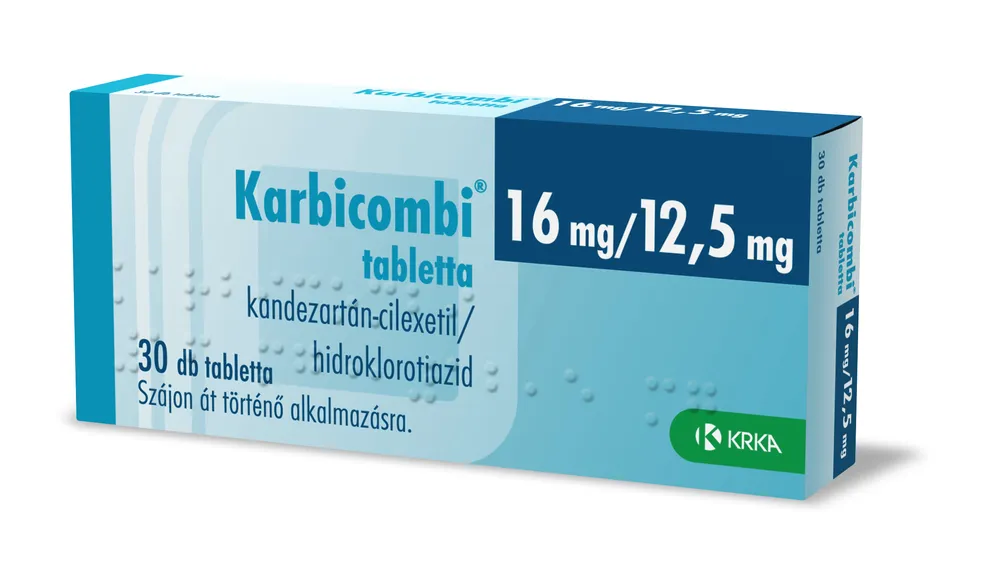
Table of Contents
Package leaflet: Information for the user
Warning! Keep this leaflet. The information on the immediate packaging is in a foreign language.
Karbicombi (Candesartan/HCT Krka)
32 mg + 25 mg, tablets
Candesartanum cilexetili + Hydrochlorothiazidum
Karbicombi and Candesartan/HCT Krka are different trade names for the same medicine.
Please read this leaflet carefully before taking the medicine, as it contains
important information for the patient.
- Keep this leaflet so that you can read it again if necessary.
- If you have any doubts, please consult your doctor or pharmacist.
- This medicine has been prescribed for a specific individual. Do not pass it on to others. The medicine may harm another person, even if their symptoms are the same.
- If you experience any adverse effects, including any not listed in this leaflet, inform your doctor, pharmacist, or nurse. See section 4.
Table of contents of the leaflet
- What Karbicombi is and what it is used for
- Important information before taking Karbicombi
- How to take Karbicombi
- Possible side effects
- How to store Karbicombi
- Contents of the pack and other information
1. What Karbicombi is and what it is used for
Karbicombi is used to treat high blood pressure (hypertension) in adult patients. This medicine contains two active substances: candesartan cilexetil and hydrochlorothiazide. Together, these substances lower blood pressure.
Candesartan cilexetil belongs to a group of medicines called angiotensin II receptor antagonists. It causes blood vessels to relax and widen, thereby helping to lower blood pressure.
Hydrochlorothiazide belongs to a group of medicines called diuretics (water pills). It helps the body get rid of excess water and salts, such as sodium salts, through urine. This helps lower blood pressure.
Your doctor may prescribe Karbicombi if your blood pressure is not sufficiently controlled with either candesartan cilexetil or hydrochlorothiazide alone.
2. Important information before taking Karbicombi
Do not take Karbicombi:
- if you are allergic to candesartan cilexetil or hydrochlorothiazide, or to any of the other ingredients of this medicine (listed in section 6);
- if you are allergic to sulphonamide medicines. If in doubt, consult your doctor;
- after the 3rd month of pregnancy (it is also advisable to avoid using Karbicombi in early pregnancy – see section "Pregnancy and breastfeeding");
- if you have severe kidney disease;
- if you have severe liver disease or biliary obstruction
(obstruction of bile flow from the gallbladder); - if you have persistently low potassium levels in your blood;
- if you have persistently high calcium levels in your blood;
- if you have ever had gout;
- if you have diabetes or kidney problems and are being treated with a blood pressure-lowering medicine containing aliskiren.
If you are unsure whether any of the above conditions apply to you, contact your doctor or pharmacist before taking Karbicombi.
Warnings and precautions
Before starting Karbicombi, discuss with your doctor or pharmacist:
- if you have diabetes;
- if you have heart, liver, or kidney disease;
- if you have recently received a kidney transplant;
- if you have had or currently have severe vomiting or diarrhea;
- if you have a disorder of the adrenal glands called Conn's syndrome (also known as primary hyperaldosteronism);
- if you have ever had systemic lupus erythematosus;
- if you have low blood pressure;
- if you have ever had a stroke;
- if you have ever had an allergy or asthma;
- inform your doctor if you suspect (or are planning) pregnancy. Use of Karbicombi is not recommended during early pregnancy and must not be used after the 3rd month of pregnancy, as it may seriously harm the unborn child (see section "Pregnancy and breastfeeding");
- if you have previously had skin cancer or if unexpected skin changes occur during treatment. Treatment with hydrochlorothiazide, especially at high doses over a long period, may increase the risk of certain types of non-melanoma skin cancer and lip cancer. While taking Karbicombi, protect your skin from sunlight and UV radiation;
- if you have previously experienced breathing or lung problems (including pneumonia or fluid accumulation in the lungs) after taking hydrochlorothiazide. If you develop severe shortness of breath or difficulty breathing after taking Karbicombi, seek medical help immediately;
- if you experience blurred vision or eye pain. These may be symptoms of fluid accumulation in the vascular layer surrounding the eye (excessive fluid accumulation between choroid and sclera) or increased intraocular pressure – these may occur from a few hours to weeks after taking Karbicombi. If untreated, they may lead to permanent vision loss. If you have previously had an allergic reaction to penicillin or sulphonamides, you may be at higher risk of developing this condition;
- if you are taking any of the following medicines for high blood pressure:
- ACE inhibitors (e.g. enalapril, lisinopril, ramipril, etc.), especially if you have kidney problems related to diabetes,
- aliskiren.
Your doctor may monitor your kidney function, blood pressure, and blood electrolyte levels (e.g. potassium) at regular intervals.
See also information under the heading "Do not take Karbicombi".
If you have any of the conditions listed above, your doctor may recommend more frequent check-ups and diagnostic tests.
If you are scheduled for surgery, inform your doctor or dentist that you are taking Karbicombi. Karbicombi may cause excessive lowering of blood pressure when used together with certain anesthetics.
Karbicombi may increase skin sensitivity to sunlight.
Children and adolescents
There is no experience with the use of Karbicombi in children (under 18 years of age), therefore it should not be used in this patient group.
Karbicombi with other medicines
Tell your doctor or pharmacist about all medicines you are currently taking, have recently taken, or plan to take.
Karbicombi may affect the action of other medicines and other medicines may affect the action of Karbicombi. Your doctor may recommend periodic blood tests when certain medicines are used.
In particular, inform your doctor if you are taking any of the following medicines, as your doctor may need to adjust the dose and/or take other precautions:
- other blood pressure-lowering medicines, including beta-blockers, medicines containing aliskiren, diazoxide, and angiotensin-converting enzyme inhibitors (ACE inhibitors), such as enalapril, captopril, lisinopril, or ramipril;
- non-steroidal anti-inflammatory drugs (NSAIDs), such as ibuprofen, naproxen, diclofenac, celecoxib, or etoricoxib (medicines that relieve pain and reduce inflammation);
- acetylsalicylic acid (at doses above 3 g per day) (a medicine that relieves pain and reduces inflammation);
- potassium supplements or potassium-containing salt substitutes (medicines that increase potassium levels in the blood);
- calcium supplements or vitamin D;
- cholesterol-lowering medicines, such as colestipol or cholestyramine;
- antidiabetic medicines (tablets or insulin);
- medicines controlling heart rhythm (antiarrhythmics), such as digoxin and beta-blockers;
- medicines whose effects may be influenced by blood potassium levels, such as certain antipsychotics;
- heparin (a blood-thinning medicine);
- diuretics (water pills);
- laxatives;
- penicillin or co-trimoxazole (also known as trimethoprim/sulfamethoxazole) (antibiotics);
- amphotericin (a medicine used to treat fungal infections);
- lithium (a medicine used to treat psychiatric disorders);
- steroids, such as prednisolone;
- pituitary hormone (ACTH);
- anticancer medicines;
- amantadine (a medicine used to treat Parkinson's disease or severe viral infections);
- barbiturates (a type of sedative used also in epilepsy treatment);
- carbenoxolone (a medicine used to treat esophageal disorders or oral ulcers);
- anticholinergic medicines, such as atropine and biperiden;
- cyclosporine, a medicine used to prevent rejection of transplanted organs;
- other medicines that may enhance the antihypertensive effect, such as baclofen (a muscle relaxant), amifostine (an anticancer medicine), and certain antipsychotics.
- if you are taking an ACE inhibitor or aliskiren (see also information under the headings "Do not take Karbicombi" and "Warnings and precautions").
Karbicombi with food, drink, and alcohol
- Karbicombi can be taken during meals or independently of meals.
- Discuss with your doctor whether you may consume alcohol while taking Karbicombi, as alcohol may cause fainting or dizziness.
Pregnancy and breastfeeding
Pregnancy
Inform your doctor if you suspect (or are planning) pregnancy. Your doctor will usually advise stopping Karbicombi before planned pregnancy or immediately after confirmed pregnancy and will recommend an alternative medicine. Karbicombi is not recommended during early pregnancy and must not be used after the 3rd month of pregnancy, as it may seriously harm the unborn child.
Breastfeeding
Inform your doctor if you are breastfeeding or planning to breastfeed. Karbicombi is not recommended during breastfeeding. Your doctor may recommend an alternative medicine during breastfeeding.
Driving and using machines
Some patients taking Karbicombi may experience fatigue or dizziness. If this occurs, do not drive, operate tools, or use machinery.
Karbicombi contains monohydrate lactose, a type of sugar.
If you have been diagnosed with intolerance to certain sugars, consult your doctor before taking this medicine.
3. How to use Karbicombi
This medicine should always be taken exactly as directed by your doctor. If in doubt, consult your doctor or pharmacist.
Karbicombi is available in the following strengths: 8 mg + 12.5 mg; 16 mg + 12.5 mg; 32 mg + 12.5 mg; and 32 mg + 25 mg.
It is important to take Karbicombi every day.
The usual recommended dose of Karbicombi is one tablet once daily.
The tablet should be swallowed with water.
Try to take the tablet at the same time each day, as this will help you remember to take your medicine.
Taking more Karbicombi than prescribed
If you take more Karbicombi than prescribed, contact your doctor or pharmacist immediately.
If you miss a dose of Karbicombi
Do not take a double dose to make up for the missed dose.
Take the next dose at the usual time.
Stopping Karbicombi treatment
Stopping treatment with Karbicombi may cause your blood pressure to rise again. Therefore, do not stop taking Karbicombi without consulting your doctor.
If you have any further questions about the use of this medicine, consult your doctor or pharmacist.
4. Possible adverse effects
Like all medicines, this medicine can cause adverse effects, although not everybody will experience them.
It is important for the patient to know which adverse effects may occur. Some adverse effects of Karbicombi are due to candesartan cilexetil, and some are due to hydrochlorothiazide.
You should stop taking Karbicombi and seek immediate medical help if any of the following allergic reactions occur:
- Difficulty in breathing, with or without swelling of the face, lips, tongue and (or) throat,
- Swelling of the face, lips, tongue and (or) throat, which may cause difficulty in swallowing,
- Severe skin itching (with hives).
Karbicombi may cause a reduction in the number of white blood cells, which may lead to decreased resistance to infections and the occurrence of fatigue, infection or fever. If such symptoms occur, inform your doctor. Your doctor may recommend periodic blood tests to check whether Karbicombi affects blood composition (agranulocytosis).
Other possible adverse effects include:
Common (may affect up to 1 in 10 patients):
- Changes in blood test results:
- Decreased sodium levels in blood. If significantly reduced, weakness, fatigue or muscle cramps may occur.
- Increased or decreased potassium levels in blood, especially in patients with pre-existing kidney disease or heart failure. If significant changes occur, fatigue, weakness, heart rhythm disturbances or tingling sensations may develop.
- Increased levels of cholesterol, glucose or uric acid in blood.
- Presence of glucose in urine.
- Dizziness/vertigo or weakness.
- Headache.
- Respiratory tract infection.
Uncommon (may affect up to 1 in 100 patients):
- Low blood pressure. This may cause fainting or dizziness.
- Loss of appetite, diarrhoea, constipation, stomach irritation.
- Skin rash, urticaria, photosensitivity-related rash.
Rare (may affect up to 1 in 1000 patients):
- Jaundice (yellowing of the skin or eyes). If such symptoms occur, contact your doctor immediately.
- Impaired kidney function, especially in patients with pre-existing kidney disease or heart failure.
- Sleep disorders, depression, anxiety.
- Tingling or prickling sensations in the upper or lower limbs.
- Transient blurred vision.
- Heart rhythm disturbances.
- Breathing difficulties (including pneumonia and presence of fluid in the lungs).
- High body temperature (fever).
- Pancreatitis, causing moderate or severe upper abdominal pain.
- Muscle cramps.
- Damage to blood vessels causing red or purple spots on the skin.
- Decreased number of red blood cells, white blood cells or platelets. Fatigue, infections, fever or easy bruising may occur.
- Severe rash developing rapidly, with blister formation or skin peeling, possibly accompanied by blisters in the mouth.
Very rare (may affect up to 1 in 10,000 patients):
- Swelling of the face, lips, tongue and (or) throat.
- Itching.
- Back pain, joint and muscle pain.
- Changes in liver function, including hepatitis. Symptoms may include fatigue, yellowing of the skin and eyes, and flu-like symptoms.
- Cough.
- Nausea.
- Acute respiratory failure (symptoms include severe shortness of breath, fever, weakness and confusion).
Not known (frequency cannot be estimated from available data):
- Malignant skin and lip tumours (non-melanoma skin cancers).
- Diarrhoea.
- Sudden myopia.
- Visual impairment or eye pain due to elevated pressure (possible symptoms of fluid accumulation in the vascular layer surrounding the eye – excessive accumulation of fluid between choroid and sclera – or acute angle-closure glaucoma).
- Systemic and cutaneous lupus erythematosus (allergic reaction with associated fever, joint pain, skin rashes including darkening, blisters, peeling and skin nodules).
Reporting of adverse effects
If any adverse effects occur, including any not listed in this leaflet, inform your doctor, pharmacist or nurse. Adverse effects can be reported directly to the Department of Monitoring of Adverse Drug Reactions of the Office for Registration of Medicinal Products, Medical Devices and Biocidal Products:
Al. Jerozolimskie 181C, 02-222 Warsaw
Tel.: + 48 22 49 21 301
Fax: + 48 22 49 21 309
Website: https://smz.ezdrowie.gov.pl
Reporting adverse effects helps to provide more information on the safety of the medicine.
5. How to store Karbicombi
Keep this medicine out of the sight and reach of children.
Do not use this medicine after the expiry date stated on the packaging. The expiry date refers to the last day of the stated month.
PVC/PVDC/Aluminium blisters: Do not store above 30°C.
OPA/Aluminium/PVC/Aluminium blisters: No special storage conditions required.
Medicines should not be disposed of via wastewater or household waste. Ask your pharmacist how to dispose of medicines no longer required. These measures help protect the environment.
6. Contents of the pack and other information
What Karbicombi contains
- The active substances are candesartan cilexetil and hydrochlorothiazide. Each tablet contains 32 mg of candesartan cilexetil and 25 mg of hydrochlorothiazide.
- The other ingredients are: monohydrate lactose, maize starch, hydroxypropylcellulose, magnesium stearate, calcium carmellose, macrogol 8000, iron oxide red (E 172).
What Karbicombi looks like and contents of the pack
Light pink, biconvex, oval tablets with a division line on one side. The tablet can be divided into equal doses.
Pack sizes: 30 or 60 tablets in PVC/PVDC/Aluminum or OPA/Aluminum/PVC/Aluminum blisters, in a cardboard box.
For more detailed information, please contact the responsible party or parallel importer.
Responsible party in Austria, country of export:
KRKA, d.d., Novo mesto, Šmarješka cesta 6, 8501 Novo mesto, Slovenia
Manufacturer:
KRKA, d.d., Novo mesto, Šmarješka cesta 6, 8501 Novo mesto, Slovenia
TAD Pharma GmbH, Heinz-Lohmann-Straße 5, 27472 Cuxhaven, Germany
Parallel importer:
Delfarma Sp. z o.o., ul. Św. Teresy od Dzieciątka Jezus 111, 91-222 Łódź
Repackaged in:
Delfarma Sp. z o.o., ul. Św. Teresy od Dzieciątka Jezus 111, 91-222 Łódź
Austria marketing authorisation number, country of export: 1-30800
Parallel import authorisation number: 114/20
This medicinal product is authorised in the European Economic Area member states under the following names:
Austria Candesartan/HCT Krka
Bulgaria, Poland, Romania, Slovakia Karbicombi
Czech Republic Cancombino
Germany Candesartan-HCTad
Greece Candesartan+HCTZ/Krka
Cyprus Candesartan/Hydrochlorothiazide KRKA
Ireland Candesartan Hydrochlorothiazide Krka
Slovenia Candecombi
Lithuania Canocombi