Kalium chloratum wzf 15%
Poland
Table of Contents
- Package leaflet: Information for the patient
- 1. What Kalium chloratum WZF 15% is and what it is used for
- 2. Important information before using Kalium chloratum WZF 15%
- 3. How to use Kalium chloratum WZF 15%
- 4. Possible adverse reactions
- 5. How to store Kalium chloratum WZF 15%
- 6. Contents of the pack and other information
- Information intended exclusively for healthcare professionals:
Package leaflet: Information for the patient
KALIUM CHLORATUM WZF 15%
150 mg/ml, concentrate for solution for infusion
Kalii chloridum
Please read the entire leaflet carefully before use, as it contains
important information for the patient.
- Keep this leaflet, as you may need to read it again.
- If you have any doubts, please consult your doctor or pharmacist.
- This medicine has been prescribed for a specific individual. Do not pass it on to others. The medicine may harm someone else, even if their symptoms are the same.
- If the patient experiences any adverse reactions, including any not listed in this leaflet, inform the doctor or pharmacist. See section 4.
Table of contents
- What Kalium chloratum WZF 15% is and what it is used for
- Important information before using Kalium chloratum WZF 15%
- How to use Kalium chloratum WZF 15%
- Possible side effects
- How to store Kalium chloratum WZF 15%
- Contents of the pack and other information
1. What Kalium chloratum WZF 15% is and what it is used for
Kalium chloratum WZF 15% contains potassium, which is one of the main cations of intracellular fluid and one of the most important elements in body fluids. It participates in numerous enzymatic reactions and physiological processes, including proper functioning of the nervous and muscular systems. It influences the body's water balance and contributes to maintaining acid-base balance and osmotic pressure.
Kalium chloratum WZF 15% concentrate for solution for infusion is intended exclusively for intravenous administration by infusion and must be diluted before administration in a large volume of infusion solution.
Kalium chloratum WZF 15% is used:
- in the treatment of hypokalemia,
- in the treatment of digitalis glycoside intoxication,
- as an electrolyte supplement to hydrating or parenteral nutrition infusion fluids.
Kalium chloratum WZF 15% is intended for patients in whom oral potassium medications cannot be used.
2. Important information before using Kalium chloratum WZF 15%
When not to use Kalium chloratum WZF 15%
- if the patient is allergic to potassium chloride;
- if the patient has hyperkalaemia (excess potassium in the blood).
Warnings and precautions
Before starting treatment with Kalium chloratum WZF 15%, discuss this with your doctor or
pharmacist.
Potassium chloride should not be used in patients with ventricular fibrillation, atrioventricular
block, intraventricular conduction blocks, Addison's disease, adrenogenital syndrome, or in states of
aldosterone deficiency.
Use with caution in conditions associated with acute dehydration, extensive mechanical tissue
damage, extensive burns, concomitant internal bleeding, after transfusion of a large volume of
concentrated red blood cells, in patients receiving chemotherapy, and in rare neurological disorders
(familial periodic hyperkalemic paralysis).
Do not administer intravenously to patients with normal or slightly reduced potassium levels if they
also have renal failure or any other condition predisposing to potassium retention and risk of
hyperkalaemia.
Use of Kalium chloratum WZF 15% in patients with impaired kidney function
Extreme caution must be exercised when using this medicinal product in patients with impaired
kidney function, as hyperkalaemia and toxic effects on the heart may occur. The medicinal product
should not be used in renal failure, conditions associated with oliguria or anuria, or in kidney diseases
with impaired function of the distal tubules (e.g. sickle cell anaemia, systemic lupus erythematosus).
Kalium chloratum WZF 15% and other medicines
Inform your doctor or pharmacist about all medicines the patient is currently taking or has recently
taken, as well as any medicines planned for future use.
Medicines that increase potassium levels:
- angiotensin-converting enzyme (ACE) inhibitors, angiotensin II receptor antagonists (medicines used for arterial hypertension);
- non-steroidal anti-inflammatory drugs (anti-inflammatory and analgesic medicines);
- heparin (anticoagulant medicine);
- cyclosporine, tacrolimus (immunosuppressive medicines used after transplantation);
- amiloride, spironolactone, triamterene (diuretics);
- trimethoprim (chemotherapeutic agent used in urinary tract infections);
- pentamidine (medicine used in protozoal infections);
- digoxin (cardiac glycoside);
- propranolol, nadolol, timolol (medicines from the group of non-selective β-adrenolytics).
Medicines that decrease potassium levels:
- insulin (used in diabetes);
- bicarbonates;
- β-adrenergic medicines.
Potassium reduces the effect of digitalis glycosides.
Calcium salts administered intravenously normalize ECG abnormalities typical of hyperkalaemia.
Pregnancy and breast-feeding
This medicinal product may be used during pregnancy only if, in the opinion of the physician, the
expected benefit to the mother outweighs the potential risk to the foetus. Both hypokalaemia and
hyperkalaemia are harmful to the mother and the foetus.
The medicinal product passes into breast milk; therefore, caution should be exercised when using it
in breastfeeding women.
Driving and operating machinery
The medicinal product has no influence on the ability to drive or operate machinery.
3. How to use Kalium chloratum WZF 15%
This medicine must always be used according to the instructions of a doctor or pharmacist. If in doubt,
consult a doctor or pharmacist.
The medicine must be diluted before administration.
After dilution, the medicine is administered by intravenous infusion.
Kalium chloratum WZF 15% does not contain preservatives.
The doctor adjusts the dose and infusion rate according to the patient's condition.
Detailed dosing and administration instructions – see "Information intended exclusively for
medical professionals" at the end of this leaflet.
Administration of a higher than recommended dose of Kalium chloratum WZF 15%
In case of impaired excretion mechanisms or too rapid intravenous administration of potassium,
hyperkalemia may occur, which potentially can lead to death.
Mild (5–6 mmol/l) or moderate (6–7 mmol/l) hyperkalemia is asymptomatic; increased serum
potassium concentration and characteristic changes in the ECG may be observed. In severe
hyperkalemia (above 7–8 mmol/l), weakness, paresthesia, bradyarrhythmia, conduction disturbances,
hypotension, spastic paralysis of skeletal and respiratory muscles, absence of reflexes, disturbances
of consciousness, circulatory arrest, and death may occur. Appropriate management will be
undertaken by medical personnel.
4. Possible adverse reactions
Like all medicines, this medicine can cause adverse reactions, although not everyone experiences them.
Due to the formulation and route of administration, the following may occur: fever, infection at the infusion site, venous thrombosis or phlebitis at the injection site, extravasation, increased circulating blood volume (hypervolemia), and excess potassium in the blood.
If administered too rapidly intravenously, pain at the injection site may occur, and less frequently, irritation or inflammation of the veins. Infusion of potassium chloride through a central line (especially if too rapid or at high concentration) may lead to cardiac arrest and death.
Nausea, vomiting, abdominal pain, diarrhea, and adverse reactions resulting from potassium overdose may also occur.
Reporting of adverse reactions
If any adverse symptoms occur, including any adverse reactions not listed in this leaflet, inform your doctor or pharmacist. Adverse reactions can be reported directly to the Department of Monitoring Adverse Drug Reactions of the Office for Registration of Medicinal Products, Medical Devices and Biocidal Products
Al. Jerozolimskie 181C
02-222 Warsaw
Phone: +48 22 49 21 301
Fax: +48 22 49 21 309
Website: https://smz.ezdrowie.gov.pl
Adverse reactions can also be reported to the marketing authorization holder.
Reporting adverse reactions helps to gather further information on the safety of the medicine.
5. How to store Kalium chloratum WZF 15%
Store below 25°C. Do not freeze.
Keep the medicine in a place out of sight and reach of children.
Do not use this medicine after the expiry date stated on the packaging. The expiry date refers to the last day of the stated month.
Medicines must not be disposed of via wastewater or household waste. Ask your pharmacist how to dispose of medicines no longer required. This will help protect the environment.
6. Contents of the pack and other information
What Kalium chloratum WZF 15% contains
- The active substance is potassium chloride. Each ml of concentrate contains 150 mg of potassium chloride.
- The other ingredient is water for injections.
What Kalium chloratum WZF 15% looks like and contents of the pack
A 10 ml ampoule contains 1.5 g of potassium chloride, equivalent to 20 mmol (20 mEq) of potassium.
A 20 ml vial contains 3.0 g of potassium chloride, equivalent to 40 mmol (40 mEq) of potassium.
Pack contents: 50 ampoules of 10 ml; 10 vials of 20 ml
Marketing Authorisation Holder and Manufacturer
Zakłady Farmaceutyczne POLPHARMA S.A.
ul. Pelplińska 19, 83-200 Starogard Gdański
tel. + 48 22 364 61 01
Information intended exclusively for healthcare professionals:
Route of administration
Kalium chloratum WZF 15% must be diluted before administration.
Kalium chloratum WZF 15% does not contain preservatives.
After the first dose has been withdrawn from the vial, any remaining concentrate may be stored for up to 24 hours at a temperature below 25°C.
Kalium chloratum WZF 15% concentrate for solution for infusion is intended exclusively for intravenous infusion and must be diluted before administration in a large volume of infusion solution.
Kalium chloratum WZF 15% concentrate for solution for infusion may be diluted with:
5% glucose solution, 0.9% sodium chloride solution, Ringer's solution, Ringer's solution with sodium lactate, or Hartmann's solution.
The sodium content originating from the diluent should be taken into account when calculating the total sodium content in the prepared diluted medicinal product. For accurate information regarding the sodium content in the solution used for dilution, refer to the patient leaflet of the diluent used.
10 ml of concentrate containing 20 mmol of potassium (ampoule content) should be diluted to 500 ml with infusion solution.
20 ml of concentrate containing 40 mmol of potassium (vial content) should be diluted to 1000 ml with infusion solution.
The resulting solution should be thoroughly mixed. The potassium concentration in the resulting solution is 40 mmol/l.
Kalium chloratum WZF 15% and the infusion solutions used to dilute the concentrate do not contain preservatives. Therefore, the infusion solution should be prepared immediately before use and used within 6 hours. Any unused solution should be discarded.
Warning:
Do not mix this medicinal product with the following solutions: mannitol, amikacin, amphotericin B, amoxicillin, benzylpenicillin, diazepam, dobutamine, ergotamine, methylprednisolone, phenytoin, promethazine, streptomycin, sodium nitroprusside, etoposide with cisplatin and mannitol, as pharmaceutical incompatibilities may occur.
The list of medicinal products that may exhibit pharmaceutical incompatibility with Kalium chloratum WZF 15% may be incomplete; therefore, if co-administration with other medicinal products via the same infusion is required, pharmaceutical compatibility must be verified in each case prior to mixing.
Prior to mixing Kalium chloratum WZF 15% with parenteral nutrition fluids, pharmaceutical compatibility must be verified in each case.
Instructions for opening the ampoule
Before opening the ampoule, ensure that all the solution is in the lower part of the ampoule. Gently shake the ampoule or tap it with a finger to facilitate the solution flowing down.
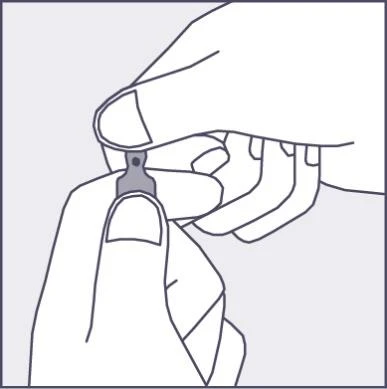
Each ampoule has a coloured dot (see Figure 1) indicating the score line located beneath it.
- To open the ampoule, hold it vertically in both hands, with the coloured dot facing towards you – see Figure 2. The upper part of the ampoule should be held so that the thumb is positioned above the coloured dot.
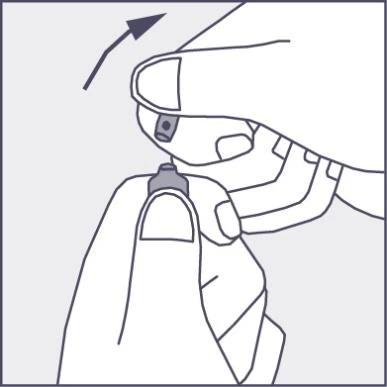
- Press according to the arrow shown in Figure 3. Ampoules are intended for single use only and should be opened immediately before use. Any unused portion of the product should be destroyed in accordance with applicable regulations.
Figure 1 Figure 2 Figure 3

-
The dose and infusion rate depend on the patient's condition. Even in cases of severe hypokalaemia, the medicinal product must not be administered without prior dilution.
-
As a general rule, it may be assumed that 10 mmol of potassium chloride leads to an increase in serum potassium concentration by 0.1 mmol/l. The actual effect of a given dose on kaliemia depends on many factors such as: volemia, acid-base balance status, hormonal balance, renal function, concomitant diseases, and concomitant medications. The individual patient's potassium requirement can only be determined empirically based on repeated measurements of serum potassium concentration.
-
The potassium concentration in intravenous infusions should not exceed 40 mmol/l, and the infusion rate should not exceed 20 mmol/hour. The dose depends on the individual patient's condition; usually, the daily dose should not exceed 200 mmol of potassium.
-
Under specific conditions, serum potassium concentration may not reflect the body's actual potassium stores. This results from redistribution of potassium ions between intracellular and extracellular compartments. A typical example is hyperkalaemia in a patient with uncontrolled diabetes and metabolic acidosis. Such a patient has a systemic potassium deficiency due to potassium loss caused by osmotic diuresis. Acidosis causes potassium to shift from cells into the extracellular space, resulting in hyperkalaemia. Potassium supplementation should be considered during rehydration and correction of metabolic acidosis.
-
Local symptoms (pain) may make infusion difficult; in such cases, infusion into two veins or into a large vein (e.g. femoral vein) should be considered.
-
Potassium chloride solution should not be administered too rapidly via a central catheter (inserted into subclavian, jugular, or femoral vein), as this may lead to cardiac arrest. Administration via central line should be avoided.
-
During intravenous infusion (especially during rapid potassium administration), ECG, serum potassium levels, and other electrolytes should be monitored. In dehydrated patients, 1000 ml of potassium-free fluid should be administered before giving potassium-containing fluids, unless hypokalaemia is present. Potassium deficiency is often accompanied by magnesium deficiency; this deficiency should be corrected concurrently.
Dosage
Adults
In patients with serum potassium concentration greater than 3 mmol/l, the infusion rate should not exceed 10 mmol/hour. The potassium concentration in the infusion fluid should not exceed 40 mmol/l. The daily dose should not exceed 200 mmol.
If serum potassium concentration is less than 3 mmol/l, especially when ECG changes or muscle weakness are observed, potassium should be administered via infusion at a rate of 20 mmol/hour (and, in justified cases, up to 40 mmol/hour). The potassium concentration in the infusion fluid should not exceed 40 mmol/l. Only in justified cases may the daily dose exceed 200 mmol.
Children
The recommended dose is 0.25–0.5 mmol/kg body weight. The infusion rate should not exceed 10 mmol/hour. The dose should not exceed 1 mmol/kg body weight/hour.
Particular attention should be paid to ECG monitoring and repeated measurements of serum potassium and other electrolyte concentrations.