Kalinox
Poland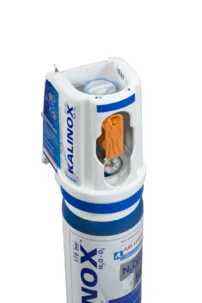
Table of Contents
- Package leaflet: information for the patient and user
- 1. What KALINOX, 50% + 50%, compressed medical gas is and what it is used for
- 2. Important information before using the medicinal product KALINOX, 50% + 50%, medical gas, compressed
- 4. Possible adverse effects
- 6. Contents of the packaging and other information
Package leaflet: information for the patient and user
KALINOX, 50% + 50%, compressed medical gas
Dinitrogenii oxidum + Oxygenium
Please read carefully the entire leaflet before use, as it contains
important information for the patient.
- Keep this leaflet, so you can read it again if necessary.
- If you have any questions, please consult your doctor, pharmacist, or nurse.
- This medicine has been prescribed for a specific individual. Do not pass it on to others. This medicine may harm other people, even if their symptoms are the same.
- If the patient experiences any adverse reactions, including any not listed in this leaflet, inform the doctor, pharmacist, or nurse. See section 4.
Table of contents of the leaflet:
- What KALINOX, 50% + 50%, compressed medical gas is and what it is used for
- Important information before use of KALINOX, 50% + 50%, compressed medical gas
- How to use KALINOX, 50% + 50%, compressed medical gas
- Possible adverse reactions
- How to store KALINOX, 50% + 50%, compressed medical gas
- Contents of the package and other information
1. What KALINOX, 50% + 50%, compressed medical gas is and what it is used for
KALINOX is a mixture of two medical gases (nitrous oxide 50% and oxygen 50%). It belongs to the category of general anaesthetics.
At this concentration, KALINOX does not produce general anaesthesia.
The medicine works by reducing sensitivity to pain and allows the patient to feel more relaxed during certain medical procedures, such as:
- Short, painful procedures in adults and children over 1 month of age, particularly lumbar punctures (collection of cerebrospinal fluid from the spine), bone marrow biopsies (collection of bone marrow samples), minor superficial surgical procedures, burn dressing, reduction of simple fractures or certain peripheral joint dislocations (repositioning of bones or joints into correct alignment), venous punctures (blood collection), emergency medical care related to trauma, burns, and transport.
- Dental procedures in infants, young children, children, adolescents, and patients experiencing anxiety about the procedure or patients with disabilities.
- Childbirth, only under hospital conditions, during waiting for epidural anaesthesia, or if the patient refuses such anaesthesia or if its application is not possible.
2. Important information before using the medicinal product KALINOX, 50% + 50%, medical gas, compressed
When not to use KALINOX:
- If the patient has been administered an ophthalmic gas (SF6, C2F6, C3F8) used in eye surgery, always inform the physician so that they may decide whether administration of the medicinal product could expose the patient to serious postoperative complications due to increased intraocular pressure.
- If the patient's condition requires administration of 100% oxygen.
- In case of increased intracranial pressure (high pressure inside the skull).
- In case of impaired consciousness (not fully normal state of awareness).
- If the patient is in any of the following conditions or has any of the following disorders associated with the accumulation of air in the body:
Head injury
Maxillofacial injuries
Pneumothorax ( accumulation of air between the lung and the chest wall )
Obstructive lung disease ( lung alveolar disease resulting in breathing difficulties )
Air embolism ( formation of air bubbles in the blood, which may occur, e.g., after an accident during diving )
After diving
Decompression sickness
After completion of encephalography
During ear and sinus surgery
Presence of air in the abdominal cavity
Diagnosed and untreated deficiency of vitamin B12 or folic acid
During epidural anesthesia
Recent, unexplained neurological disorders
Warnings and precautions
Before starting treatment with KALINOX, discuss this with your doctor or pharmacist.
- The gas should be administered only by qualified personnel. However, self-administration by the patient is recommended for the purpose of assessing the level of consciousness. The patient must NEVER operate the cylinder containing KALINOX independently.
- Rooms where KALINOX is frequently used must be equipped with efficient air conditioning or ventilation systems to maintain the lowest possible concentration of nitrous oxide in the ambient air.
- During inhalation, breathe normally.
- Do not apply greasy substances (creams, ointments, etc.) to the face before administering KALINOX.
- Efficacy is reduced in children under 3 years of age.
- Newborns should be monitored for adverse effects, primarily respiratory depression.
- Prolonged and/or repeated use of the medicinal product may lead to abuse or dependence.
- In case of repeated or prolonged administration of the medicinal product, the physician may prescribe vitamin B12, as it is inactivated by the action of KALINOX.
- If the patient has anemia, atrophic gastritis, intracranial disorders, follows a vegetarian diet, or has alcohol-related disease, they are obliged to inform the physician, as these conditions may cause vitamin B12 deficiency.
- If the patient has acute otitis media, inform the physician.
KALINOX and other medicinal products
- If the patient has been administered an ophthalmic gas (SF6, C2F6, C3F8) used in eye surgery, always inform the physician so that they may decide whether administration of the medicinal product could expose the patient to serious postoperative complications due to increased intraocular pressure.
- Concomitant use with medicinal products acting on the central nervous system (such as morphine derivatives, benzodiazepines, and other psychotropic drugs) increases sedative effects. In case of simultaneous use of such medicinal products, the patient's condition should be closely monitored.
- Concomitant use with medicinal products affecting vitamin B12 function and/or folate metabolism may intensify inactivation of vitamin B12. In case of simultaneous use of such medicinal products, the patient's condition should be closely monitored.
Tell your doctor or pharmacist about all medicinal products currently or recently taken by the patient, as well as any medicinal products the patient plans to take.
KALINOX with food, drink or alcohol
Not applicable
Pregnancy and breastfeeding
KALINOX may be used during pregnancy if required by the clinical condition.
After short-term administration of nitrous oxide, it is not necessary to interrupt breastfeeding.
Before using any medicinal product, consult a doctor or pharmacist.
Driving and operating machinery
If the patient needs to drive or operate machinery after administration of KALINOX (especially after prolonged administration), the patient will remain under observation until all adverse effects have subsided and awareness returns to the same level as before treatment.
3. How to use KALINOX 50% + 50% medical gas, compressed
Dosage
Only authorized medical personnel are permitted to administer KALINOX. Medical staff will explain the inhalation procedure to the patient and will monitor them throughout the entire duration of inhalation. A family member or close person may also be present.
Administration of KALINOX will be immediately discontinued in case of loss of verbal contact.
Maximum efficacy is achieved after at least 3 minutes of inhalation.
Efficacy is reduced in children under 3 years of age.
Method and route of administration
The medicinal product must be administered in a clean, well-ventilated room.
KALINOX is a mixture of two medical gases inhaled by the patient through a mask placed over the face and appropriate equipment.
During inhalation, the patient must breathe normally.
After completion of the procedure, the mask is removed, and the patient must rest until the full effect of the medicinal product has completely worn off.
Duration of treatment
The duration of mixture inhalation depends on the length of the procedure and should not exceed 60 minutes of continuous inhalation per day. If administration is repeated, treatment must not last longer than 15 days.
Overdose of KALINOX:
The patient's skin may turn bluish (cyanosis); in such a case, medical personnel will immediately stop administration of the medicinal product. If cyanosis does not resolve quickly, the patient will be ventilated using a manual resuscitator - a breathing bag filled with ambient air or oxygen.
Discontinuation of KALINOX:
Return to normal condition after termination of inhalation is practically immediate, without residual post-anesthetic effects.
If you have any further questions regarding the use of this medicinal product, please consult your doctor or pharmacist.
4. Possible adverse effects
Like all medicines, this medicine can cause adverse effects, although not everybody will experience them.
The following adverse effects may occur during administration of the medicine. Most of them usually
subside within a few minutes after completion of the inhalation mixture:
Common (≥1/100 to <1/10):
- Nausea,
- Vomiting.
Uncommon (≥1/1000 to <1/100):
- Paresthesia (tingling),
- Deep sedation (drowsiness),
- Hallucinations,
- Exhaustion,
- Agitation,
- Euphoria,
- Dreams.
Frequency not known (frequency cannot be estimated from available data):
- Dizziness,
- Headache,
- Seizures,
- Increased intracranial pressure (in patients at risk of elevated intracranial pressure - see section: "When not to use KALINOX*"),
- Ear pain,
- Disorientation,
- Respiratory depression (in small children),
- Respiratory depression (in newborns when KALINOX was administered during the perinatal period - see section: "Warnings and precautions*"),
- Severe visual disturbances have been observed in patients who received an intravitreal injection containing gas during eye surgery (see section: "When not to use KALINOX").
After prolonged or repeated exposure:
Frequency not known (frequency cannot be estimated from available data):
- Abnormal movements, most commonly due to hyperventilation (breathing too fast during ventilation).
- Neurological disorders such as myeloneuropathies (spinal cord disorders). These adverse effects are caused by inactivation of vitamin B12.
- Megaloblastic anemia with leukopenia (decreased number of red blood cells, accompanied by decreased number of white blood cells). These adverse effects are caused by inactivation of vitamin B12.
- Cases of abuse and dependence.
- Vitamin B12 deficiency (see sections: "When not to use KALINOX", "Warnings and precautions*", "KALINOX with other medicines").
Reporting of adverse effects
If any adverse effects occur, including any not listed in this leaflet, inform your doctor, pharmacist, or nurse.
Adverse effects can be reported directly to the Department of Monitoring of Adverse Drug Reactions at the Office for Registration of Medicinal Products, Medical Devices and Biocidal Products,
Al. Jerozolimskie 181C, 02-222 Warsaw, tel.: +48 22 49 21 301, fax: +48 22 49 21 309,
website: https://smz.ezdrowie.gov.pl
Adverse effects can also be reported to the marketing authorization holder.
Reporting adverse effects helps provide more information on the safety of this medicine.
5. How to store KALINOX 50% + 50%, medicinal compressed gas
Do not store below 0°C. Do not freeze.
Keep the medicine out of the sight and reach of children.
Do not use this medicine after the expiry date stated on the label after EXP. The expiry date refers to the last day of the stated month.
Protect from shocks, falls, sources of heat or ignition, flammable materials, and adverse atmospheric conditions, especially low temperatures.
Full cylinders must be stored HORIZONTALLY at a temperature between 10 and 30°C for at least 48 hours before use, with valves closed.
6. Contents of the packaging and other information
What KALINOX 50% + 50% medical gas, compressed contains
Active substances of the medicine are:
Nitrous oxide 50% (mol/mol)
Oxygen 50% (mol/mol)
Other components:
Not applicable
What KALINOX 50% + 50% medical gas, compressed looks like and contents of the packaging
Cylinders with a capacity of 2 L, 5 L, 11 L, 15 L and 20 L.
One 2-litre cylinder filled under pressure of 170 bar delivers 0.59 m³ of gas at 1 bar pressure
at 15°C, equivalent to 943 g.
One 5-litre cylinder filled under pressure of 170 bar delivers 1.47 m³ of gas at 1 bar pressure
at 15°C, equivalent to 2358 g.
One 11-litre cylinder filled under pressure of 170 bar delivers 3.23 m³ of gas at 1 bar pressure
at 15°C, equivalent to 5187 g.
One 15-litre cylinder filled under pressure of 170 bar delivers 4.4 m³ of gas at 1 bar pressure
at 15°C, equivalent to 7073 g.
One 20-litre cylinder filled under pressure of 170 bar delivers 5.9 m³ of gas at 1 bar pressure
at 15°C, equivalent to 9431 g.
Cylinders are made of steel or aluminium, equipped with a closing valve and integrated pressure regulator.
Standard colour: white body with blue bands and white handle.
Marketing Authorisation Holder and Manufacturer
Marketing Authorisation Holder
AIR LIQUIDE Santé INTERNATIONAL
75, quai d’Orsay
75007 Paris - France
Manufacturer:
AIR LIQUIDE Santé FRANCE
Les petits Carreaux
2, avenue du Lys
94380 Bonneuil-sur-Marne - France
AIR LIQUIDE MEDICAL NV
Tolhuisstraat 46
2627 Schelle - Belgium
This medicinal product is authorised for sale in the Member States of the European Economic Area under the following names:
AUSTRIA: KALINOX
FRANCE: KALINOX
ITALY: KALINOX
POLAND: KALINOX
PORTUGAL: KALINOX
27.08.2024
The following information is intended exclusively for medical personnel or healthcare professionals:
Cylinders containing an equimolar mixture of nitrous oxide and oxygen are intended solely for medical use.
FiO2 (oxygen content in the breathing mixture) must not be lower than 21%.
Rooms where KALINOX is frequently used must be equipped with an efficient gas scavenging system or ventilation system.
WHAT YOU NEED TO KNOW BEFORE USING KALINOX
- Personnel handling cylinders must be trained in the use of medical gases.
- Do not use any cylinders that may have been exposed to sub-zero temperatures.
- If frost forms on the cylinder, do not use it and return it to the pharmacy.
- Do not use a cylinder without its valve protected by a safety cap.
- Do not use leaking cylinders.
- Do not lift cylinders by the valve.
- Do not attempt to repair a damaged valve.
- Secure cylinders properly (using chains, hooks) to keep them UPRIGHT WITH THE VALVE UP and prevent accidental falling.
- Never use force to position or secure the cylinder.
WARNINGS FOR THE PERSON ADMINISTERING THE GAS AND THE PATIENT
- Never stand in front of the gas outlet of the cylinder – always stand to the side and behind the cylinder, at a safe distance. Do not expose the patient directly to the gas stream.
- When connecting the cylinder, ensure hands are clean and free from grease (do not wear gloves or use spanners).
- Do not use aerosols (hair spray, deodorant, etc.) or organic solvents (alcohol, gasoline, etc.) on or near the patient.
- Do not apply greasy substances (vaseline, ointments, etc.) to the patient's face.
WARNING:
- Do not lubricate.
- Do not smoke.
- Do not place near fire. In particular:
a) Never introduce the gas into equipment that may contain flammable materials, especially greasy substances.
b) Never clean equipment containing this gas, or connecting parts, seals, valves, using flammable materials, especially greasy substances. - In case of leakage, close the leaking valve immediately. Ventilate the area thoroughly and evacuate if necessary.
- In case of fire, risk of poisoning increases due to the production of fumes containing nitrogen compounds.
INSTRUCTIONS FOR USE AND HANDLING OF CYLINDERS:
To prevent accidents, observe the following rules:
Connecting:
- Cylinders equipped with a valve
Open the cylinder valve just before connecting the pressure regulator to blow out any possible
contaminants from the outlet. Keep the connection between the cylinder and pressure regulator clean.
Ensure that the safety valve is compatible with the gas mixture used and that the pressure regulator-flowmeter is sealed.
Use a dedicated pressure regulator-flowmeter designed for medical equimolar nitrous oxide-oxygen mixtures, filled at 170 bar pressure (a two-stage pressure regulator-flowmeter equipped with an L-connector according to standard NF E 29-650).
Use a pressure regulator with a flowmeter capable of measuring pressures up to 1.5 times higher than the maximum working pressure in the cylinder.
- Cylinders with integrated pressure regulator: For safety reasons, these cylinders may only be used with a flexible hose secured by a clamp onto a special connector, with a blue-white locking device connected to the dosing valve or delivery set (one-way valve, reservoir bag, single-use mask with tubing). The special connector for the medical nitrous oxide-oxygen mixture must comply with standard NF S 90-116. Do not tighten the pressure regulator-flowmeter with spanners, as this may damage the seal. Do not use additional adapters to connect components not designed to fit together. If frost forms on the pressure regulator, check gas flow (using a reservoir bag), as this may indicate a blocked regulator. Ventilate areas where the mixture has been used for prolonged periods (rooms, vehicles, etc.) and ensure that gas can be safely removed in case of accident or accidental leakage.
Opening the cylinder after connection
- Follow instructions on the cylinder label.
- Do not use force to open the valve and do not open the valve fully.
- Open the valve slowly and gradually to avoid cooling of the mixture, which may lead to gas separation.
- Do not repeatedly change pressure settings on the pressure regulator.
- Do not transfer gas under pressure from one cylinder to another.
After use:
- Close the cylinder valve, allow the pressure indicated on the pressure regulator to drop by leaving the flowmeter open, then close the flowmeter and unscrew the pressure regulator connection.
- Store empty cylinders UPRIGHT WITH THE VALVE UP (to prevent moisture-induced corrosion).