Itulazax
Poland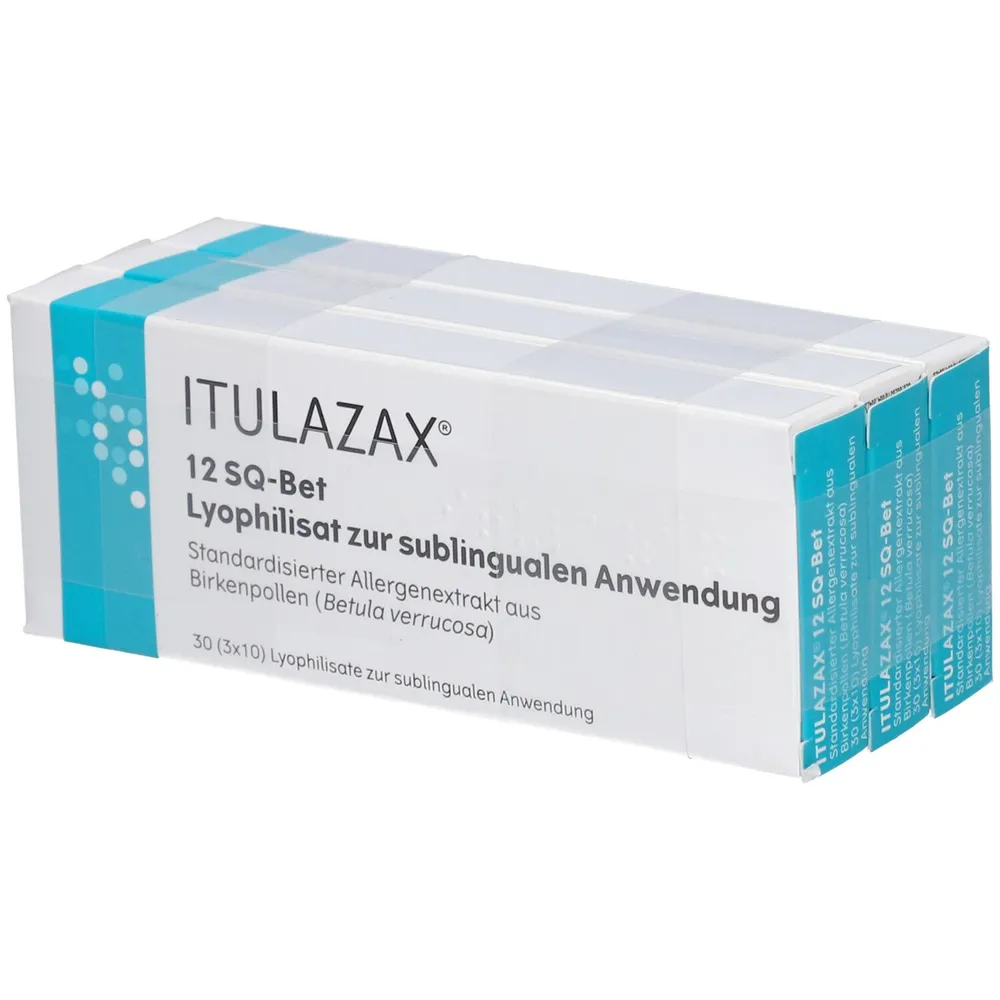
Table of Contents
Package leaflet: Information for the user
ITULAZAX
12 SQ-Bet, sublingual lyophilisate
For use in adults and children (aged 5 years or older)
Standardised allergen extract from pollen of white birch ( Betula verrucosa )
Please read this leaflet carefully before taking this medicine, as it contains
important information for the patient.
- Keep this leaflet, as you may need to read it again.
- If you have any questions, please consult your doctor or pharmacist.
- This medicine has been prescribed for a specific individual. Do not pass it on to others. It may harm other people, even if their symptoms are the same.
- If you experience any adverse reactions, including any not listed in this leaflet, inform your doctor or pharmacist. See section 4.
Leaflet contents
- What ITULAZAX is and what it is used for
- Important information before taking ITULAZAX
- How to take ITULAZAX
- Possible side effects
- How to store ITULAZAX
- Contents of the pack and other information
1. What ITULAZAX is and what it is used for
What ITULAZAX is
ITULAZAX contains an allergen extract from birch pollen. The medicine is in the form of a sublingual lyophilisate, resembling a tablet but softer, and dissolves in the body after placement under the tongue.
What ITULAZAX is used for
Treatment of:
- allergic rhinitis and/or
- conjunctivitis caused by pollen from trees such as birch, alder, hazel, hornbeam, oak, horse chestnut, and beech.
- Allergic rhinitis is inflammation of the nasal mucosa causing sneezing, nasal congestion, or runny nose.
- Conjunctivitis is inflammation of the eyes causing redness, itching, or tearing.
ITULAZAX is used in adults and children (aged 5 years or older).
ITULAZAX is prescribed by doctors experienced in allergy treatment.
How ITULAZAX works
ITULAZAX increases immunological tolerance (the body's ability to cope) to tree pollens.
How your doctor decides whether ITULAZAX is suitable for you
Your doctor will assess your allergic symptoms and perform skin tests and/or order blood tests.
2. Important information before taking ITULAZAX
When not to take ITULAZAX:
- If the patient is allergic to any of the other ingredients of this medicine listed in section 6;
- If lung function is impaired – this will be determined by the doctor;
- If the patient has experienced worsening of severe asthma or uncontrolled asthma attacks within the last three months – this will be determined by the doctor;
- If the patient has a disease affecting the immune system, is taking medicines that suppress immune system function, or has malignant cancer;
- If the patient has recently had a tooth extraction, other oral surgical procedures, currently has oral ulcers or infections in the mouth, or has lost a tooth. The doctor may recommend delaying the start of treatment or interrupting treatment until oral wounds have healed.
Warnings and precautions
Before starting treatment with ITULAZAX, discuss with the doctor if:
- The patient is being treated for depression with tricyclic antidepressants, monoamine oxidase inhibitors (MAOIs), or is being treated for Parkinson's disease with catechol-O-methyltransferase (COMT) inhibitors;
- The patient has heart disease and/or is being treated with beta-blockers;
- The patient has previously experienced a severe allergic reaction after an injection containing tree pollen allergen extract;
- The patient has asthma and an ongoing respiratory tract infection such as a cold, sore throat, or pneumonia on the day the first dose of ITULAZAX is to be taken. The doctor will delay the start of treatment until the patient feels better;
- The patient has experienced worsening of severe asthma within the past 12 months;
- The patient has a disease affecting the immune system or is taking medicines that suppress immune system function;
- The patient is due to receive a vaccination. The doctor will decide whether the patient can be vaccinated without interrupting treatment with ITULAZAX;
- The patient has a fish allergy. ITULAZAX may contain trace amounts of fish protein. Available data do not indicate an increased risk of allergic reaction in patients allergic to fish.
If any of the above situations apply to the patient, speak with the doctor before
using ITULAZAX.
The use of ITULAZAX should be discontinued and the doctor contacted immediately if the patient
experiences severe or persistent heartburn or difficulty swallowing, as these may be symptoms
of eosinophilic esophagitis.
ITULAZAX contains pollen to which the patient is allergic; therefore, mild to moderate allergic
reactions may be expected. These reactions may occur in the mouth and throat. If symptoms are
bothersome, inform the doctor, who will decide whether the patient requires additional
antiallergic medication, such as antihistamines.
During the first few days of home treatment, new allergic reactions may occur that were not
observed on the first day of treatment in the doctor's office. Information on possible
side effects is provided in section 4.
Children
ITULAZAX is not intended for use in children under 5 years of age.
ITULAZAX and other medicines
Inform the doctor or pharmacist about all medicines the patient is currently taking or has
recently taken, as well as any medicines the patient plans to take, including over-the-counter
medicines. If the patient is taking other antiallergic medicines such as antihistamines or
corticosteroids, inform the doctor, who should evaluate whether these medicines should be
continued.
If the patient stops taking antiallergic medicines, there may be an increased occurrence of
side effects with ITULAZAX.
Food and drink with ITULAZAX
Do not eat or drink for 5 minutes after taking this medicine.
Pregnancy, breastfeeding and fertility
There is no experience with the use of ITULAZAX during pregnancy. Treatment with ITULAZAX
should not be initiated during pregnancy. If the patient becomes pregnant during treatment,
she should consult the doctor whether she may continue treatment with this medicine.
There is no experience with the use of ITULAZAX during breastfeeding. However, an effect on
the breastfed infant is not expected. Consult the doctor whether it is possible to continue
taking ITULAZAX while breastfeeding.
There is no experience with the use of ITULAZAX in patients planning pregnancy.
Discuss with the doctor before using this medicine if the patient is planning pregnancy.
Driving and operating machinery
ITULAZAX has no effect or has a negligible effect on the ability to drive and operate machinery.
Nevertheless, the patient should personally assess whether the medicine affects their well-being,
and in case of doubt, consult the doctor or pharmacist.
ITULAZAX contains sodium.
The medicine contains less than 1 mmol of sodium (23 mg) per sublingual lyophilisate, meaning
the medicine is considered "sodium-free".
3. How to take ITULAZAX
This medicine should always be taken as directed by the physician. In case of doubt, consult
your doctor or pharmacist.
How much ITULAZAX should be taken
- The usual recommended dose is one sublingual lyophilisate (soft tablet) per day.
How to take ITULAZAX
Treatment with ITULAZAX should be started at least 4 months before the expected onset of the tree pollen season. Your doctor will decide how long you should continue treatment with ITULAZAX.
According to guidelines, changes in the course of the underlying allergic disease may occur after
3 years of treatment with ITULAZAX. The efficacy of long-term treatment has not been established.
If allergy symptoms do not improve during the first year of treatment with ITULAZAX, the patient
should discuss with the doctor whether treatment should be continued.
The first dose of ITULAZAX should be taken under medical supervision in a doctor's office because:
- After taking the first dose, the patient should remain under medical observation for at least 30 minutes.
- This precaution allows assessment of the individual patient's sensitivity to the treatment.
- It also enables discussion with the doctor regarding possible adverse effects.
ITULAZAX should be taken daily, even if it takes some time before improvement occurs.
Before handling the medicine, ensure that your hands are dry.
The medicine should be taken as follows:
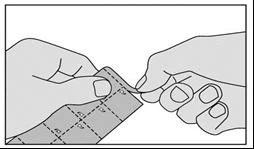
- Tear off the strip marked with triangles at the top of the package.
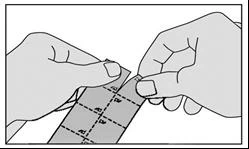
- Detach one square containing the sublingual lyophilisate from the packaging along the perforated line.
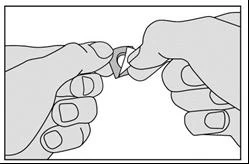
- Fold back the indicated corner of the foil and then pull it gently.
- Do not push the medicine through the foil, as the lyophilisate may easily break.
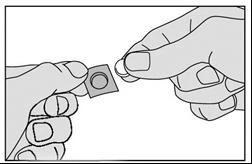
- Carefully remove the medicine from the foil and take it immediately.
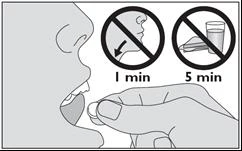
- Place the medicine under the tongue. It should remain there until completely dissolved.
- Do not swallow saliva during the first minute.
- Do not eat or drink for at least 5 minutes.
Use in children
ITULAZAX is not intended for use in children under 5 years of age.
Use in elderly patients
Experience in elderly patients (aged 65 years and older) is limited.
Taking more ITULAZAX than recommended
If more ITULAZAX is taken than recommended, the patient may experience unwanted allergic symptoms, including local symptoms in the mouth and throat. If symptoms are severe, seek immediate medical advice or go to hospital.
See section 4.
Missed dose of ITULAZAX
- If a dose is missed, take ITULAZAX later on the same day.
- Do not take a double dose to make up for a missed dose.
- If the patient has forgotten to take ITULAZAX for more than 7 consecutive days, consult the doctor before resuming treatment.
Stopping ITULAZAX treatment
Effective treatment depends on taking the medicine exactly as prescribed by the doctor.
If you have any further questions about the use of this medicine, consult your doctor or pharmacist.
4. Possible adverse reactions
Like any medicine, this medicine can cause adverse reactions, although they do not occur in everyone.
An adverse reaction may be an allergic reaction to the allergen (pollen) the patient is being treated with.
- In most cases, adverse reactions are mild to moderate and occur during the first days of treatment.
- Most of them should resolve within a few months of treatment, in most cases within one or two weeks.
If any adverse reaction concerns or bothers the patient, the patient should contact their doctor, who will decide whether antihistamine medicines are necessary to relieve the symptoms experienced by the patient.
Adverse reactions usually occur within 10 minutes after taking ITULAZAX, each day of taking the medicine, and decrease within one hour.
Severe adverse reactions:
Frequency unknown (frequency cannot be estimated from the available data)
- Severe allergic reaction/anaphylactic reaction
The use of ITULAZAX should be discontinued and the doctor or hospital should be contacted immediately if any of the following symptoms occur:
- Symptoms of a severe allergic reaction:
- Significant worsening of existing asthma
- Severe swelling of the throat
- Difficulty swallowing
- Difficulty breathing
- Voice changes (e.g. hoarseness)
- Low blood pressure (hypotension)
- Sensation of throat fullness
Other possible adverse reactions:
Very common (may occur in more than 1 in 10 people):
- Itching of the ears, mouth or tongue
- Swelling in the mouth
- Sensation of throat irritation
- Pricking sensation in the mouth
Common (may occur in up to 1 in 10 people):
- Rhinitis
- Oral allergy syndrome (itching and (or) swelling of the mouth and throat after eating certain raw vegetables, fruits or nuts)
- Taste disturbances
- Eye symptoms (e.g. itching, tearing, swelling, redness)
- Cough
- Dryness in the throat
- Hoarseness
- Dyspnoea
- Pain in the mouth or throat
- Swelling of the throat
- Abdominal pain
- Diarrhoea
- Heartburn
- Pain during swallowing or difficulty swallowing
- Pain or burning sensation of the tongue
- Numbness sensation in the mouth
- Swelling of lips or tongue
- Itching of lips
- Nausea
- Discomfort in the mouth
- Mouth blisters
- Pricking sensation in the throat
- Stomatitis
- Urticaria
- Discomfort in the chest
- Foreign body sensation in the throat
Uncommon (may occur in up to 1 in 100 people):
- Sensation of pressure in the throat
- Glossitis
- Formation of blisters on the lips
- Oral ulcers
- Oesophageal irritation
- Sudden swelling of the face, mouth or throat
Frequency unknown (frequency cannot be estimated from the available data):
- Allergic oesophagitis (eosinophilic oesophagitis)
If any adverse reaction concerns or bothers the patient, the patient should contact their doctor, who will decide whether antihistamine medicines are necessary to relieve the symptoms experienced by the patient.
Additional adverse reactions in children
Adverse reactions in children (aged 5 years and older) are similar to those observed in adults.
In addition, some adverse reactions in children include:
Common (may occur in 1 in 10 people): redness in the mouth, discomfort in the tongue or throat, rash, skin eruption, headache and nasal itching.
Uncommon (may occur in 1 in 100 people): anaphylactic reaction, rhinitis, pain in the oesophagus and excessive salivation.
Reporting of adverse reactions
If any adverse reactions occur, including any adverse reactions not listed in this leaflet, the patient should inform their doctor or pharmacist. Adverse reactions can be reported directly to the Department of Monitoring of Adverse Reactions of Medicinal Products, Office for Registration of Medicinal Products, Medical Devices and Biocidal Products,
Al. Jerozolimskie 181 C, 02-222 Warsaw,
Tel.: +48 22 49 21 301, Fax: +48 22 49 21 309, Website: https://smz.ezdrowie.gov.pl
Adverse reactions can also be reported to the marketing authorisation holder.
Reporting adverse reactions helps to provide more information on the safety of the medicine.
5. How to store ITULAZAX
Keep this medicine out of sight and reach of children.
Do not use this medicine after the expiry date stated on the blister and carton after:
"Expiry date (EXP)". The expiry date refers to the last day of the stated month.
Store in the original blister pack to protect from moisture. This medicine does not require any
special storage temperature conditions.
Medicines must not be disposed of via wastewater or household waste. Ask your pharmacist how to dispose of medicines no longer in use. This will help protect the environment.
6. Contents of the packaging and other information
What ITULAZAX contains
The active substance is standardized birch pollen allergen extract ( Betula verrucosa ).
The activity of one sublingual lyophilisate is expressed in SQ-Bet units.
The activity of one sublingual lyophilisate is 12 SQ-Bet. Each sublingual lyophilisate contains 194 micrograms of the allergen Bet v 1.
The other ingredients are: gelatine (derived from fish), mannitol, and sodium hydroxide (for pH adjustment).
What ITULAZAX looks like and contents of the pack
White or almost white, round sublingual lyophilisate, marked with an embossed image on one side.
Aluminium blisters with removable aluminium foil in a cardboard box. Each blister contains 10 sublingual lyophilisates.
The following pack sizes are available: 30 or 90 sublingual lyophilisates.
Marketing Authorisation Holder
ALK-Abelló A/S
Bøge Allé 6-8
DK-2970 Hørsholm
Denmark
Manufacturer
ALK-Abelló S.A.
Miguel Fleta 19
28037 Madrid
Spain
This medicinal product is authorised in the following European Economic Area countries under the following names:
Austria, Belgium, Croatia, Czech Republic, Denmark, Finland, France, Germany, Ireland, Luxembourg, the Netherlands, Norway, Poland, Romania, Slovakia, Slovenia, and Sweden: ITULAZAX