Itrax
Poland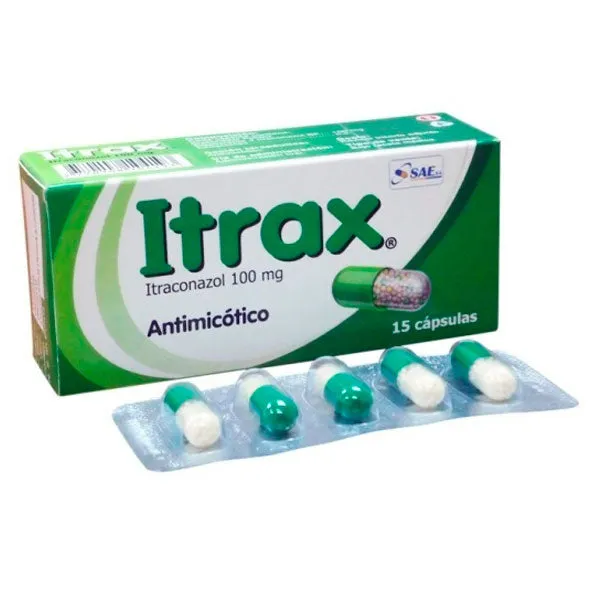
Table of Contents
Package leaflet: Information for the patient
Itrax, 100 mg, hard capsules
Itraconazolum
Please read this leaflet carefully before taking this medicine, as it contains
important information for you.
- Keep this leaflet, as you may need to read it again.
- If you have any questions, please consult your doctor, pharmacist, or nurse.
- This medicine has been prescribed for a specific individual. Do not pass it on to others. The medicine may harm another person, even if their symptoms are the same.
- If you experience any adverse reactions, including any not listed in this leaflet, inform your doctor, pharmacist, or nurse. See section 4.
Leaflet contents
- What Itrax is and what it is used for
- Important information before taking Itrax
- How to take Itrax
- Possible side effects
- How to store Itrax
- Contents of the pack and other information
1. What Itrax is and what it is used for
Itrax contains the active substance itraconazole, which belongs to the group of triazole derivatives and is a broad-spectrum antifungal agent.
Itrax is indicated for the treatment of:
- Genital infections: vaginal and vulvar candidiasis;
- Skin, mucous membrane, or eye infections: dermatomycosis, pityriasis versicolor, oral candidiasis, fungal keratitis;
- Onychomycosis caused by dermatophytes and (or) yeasts;
- Systemic fungal infections (fungal infections of various organs and tissues): systemic aspergillosis and systemic candidiasis, cryptococcosis, including cryptococcal meningitis, in patients with cryptococcosis and impaired immunity, as well as in all patients with central nervous system cryptococcosis (Itrax is indicated only when first-line treatment is ineffective), histoplasmosis, blastomycosis, sporotrichosis, paracoccidioidomycosis, and other rare systemic or tropical fungal infections.
2. Important information before using Itrax
When not to use Itrax
- If the patient is allergic to the active substance or to any of the other ingredients of this medicine (listed in section 6).
- If the patient has or has previously had heart muscle disorders, such as congestive heart failure, except in the treatment of life-threatening infections or other severe infections. Symptoms of congestive heart failure include, among others: shortness of breath,
unexpected weight gain, swelling of the limbs or abdomen, severe fatigue, or
waking up at night due to breathlessness.
- If the patient is pregnant (except in life-threatening situations). Women of childbearing age taking Itrax should use effective contraception methods until the first menstrual period after discontinuation of Itrax.
During treatment with Itrax, concomitant use of certain other medicines is contraindicated – see
section: "Itrax and other medicines".
Warnings and precautions
If any of the following conditions apply to the patient, discuss them with a doctor or pharmacist before
starting treatment with Itrax.
- The patient has kidney disease. Dose adjustment of this medicine may be necessary.
- The patient has liver disease. Dose adjustment of this medicine may be necessary. The doctor may recommend monitoring liver function in patients receiving Itrax, as this medicine very rarely may cause severe liver damage.
- The patient has heart disease.
- The patient has previously experienced an allergic reaction to another antifungal medicine.
- The patient has a weakened immune system, e.g. due to neutropenia, AIDS, or organ transplantation. Dose adjustment of this medicine may be necessary.
- The patient is taking other medicines.
If the patient develops any of the symptoms described below during treatment with Itrax, inform the
doctor immediately.
- Symptoms indicating liver inflammation: loss of appetite, nausea, vomiting, fatigue, abdominal pain, yellowing of the skin or eyes, pale stools or dark urine – discontinue taking the medicine and contact a doctor immediately.
- Symptoms of congestive heart failure: shortness of breath, unexplained weight gain, leg swelling, unusual fatigue, waking up at night due to breathlessness – discontinue taking the medicine and contact a doctor immediately.
- Symptoms of a severe allergic reaction: rash, itching, hives, difficulty breathing and/or facial swelling – discontinue taking the medicine and contact a doctor immediately.
- Photosensitivity.
- Severe skin reactions, such as generalized rash with skin peeling and blisters in the mouth, eyes, or genital organs, or rash with small pustules or blisters – discontinue taking the medicine and contact a doctor immediately.
- Symptoms of neuropathy (nerve damage), such as: tingling, sensory disturbances, reduced sensation, limb weakness, headache, dizziness – discontinue taking the medicine and contact a doctor immediately.
- Symptoms of hearing loss.
- Blurred or double vision, ringing in the ears, urinary incontinence or excessive urination.
Itrax and other medicines
Inform the doctor about all medicines currently or recently taken by the patient,
as well as any medicines the patient plans to take.
Medicines with which Itrax must not be used:
- certain antihistamines: terfenadine, astemizole, mizolastine;
- certain medicines used for angina pectoris (coronary artery disease) or high blood pressure: bepridil, felodipine, nisoldipine, lerkanidipine, ivabradine, ranolazine, eplerenone;
- ticagrelor – an antiplatelet medicine;
- cisapride – a medicine used for gastrointestinal motility disorders;
- certain cholesterol-lowering medicines: simvastatin, lovastatin;
- certain hypnotics: midazolam (oral), triazolam;
- certain medicines used to treat psychotic disorders: lurasidone, pimozide, sertindole;
- certain medicines used to treat severe pain or addiction: levacetylmethadol (i.e. levomethadyl), methadone;
- halofantrine – a medicine used to treat malaria;
- irinotecan – an anticancer medicine;
- ergot alkaloids used to treat migraine headaches: dihydroergotamine or ergotamine;
- ergot alkaloids used to control postpartum bleeding and maintain uterine contraction: ergometrine (i.e. ergonovine) or methylergometrine (i.e. methylergonovine);
- certain antiarrhythmics: disopyramide, dronedarone, quinidine, dofetilide;
- domperidone – a medicine used to treat nausea and vomiting;
- telithromycin in patients with severe renal or hepatic impairment;
- fesoterodine in patients with moderate or severe renal or hepatic impairment;
- solifenacin in patients with severe renal impairment or moderate to severe hepatic impairment;
- colchicine in patients with renal or hepatic impairment.
If the patient is taking any of these medicines, use of Itrax is contraindicated.
If the patient is taking Itrax, these medicines may be started no sooner than at least 2 weeks after
discontinuation of Itrax.
Medicines that may reduce the effectiveness of Itrax:
- antiepileptic medicines: carbamazepine, phenytoin, phenobarbital;
- antituberculosis medicines: rifampicin, rifabutin, isoniazid;
- anti-HIV/AIDS medicines: efavirenz, nevirapine. If the patient is taking any of these medicines, always inform the doctor.
Medicines whose concomitant use with Itrax is not recommended unless considered necessary by a doctor:
- certain anticancer medicines: axitinib, dabrafenib, dasatinib, ibrutinib, nilotinib, sunitinib, trabectedin;
- aliskiren – a medicine used for hypertension;
- sildenafil, when used for pulmonary hypertension;
- rifabutin – an antituberculosis medicine;
- carbamazepine – an antiepileptic medicine;
- colchicine – a medicine used for gout;
- conivaptan, tolvaptan – medicines used for low blood sodium levels;
- darifenacin – a medicine used for urinary incontinence;
- everolimus – a medicine given after organ transplantation;
- fentanyl – a potent analgesic;
- apixaban, rivaroxaban – anticoagulant medicines;
- salmeterol – a medicine used for bronchial asthma;
- simeprevir – a medicine used for hepatitis C virus infection;
- tamsulosin – a medicine used for urinary incontinence in men;
- vardenafil – a medicine used for erectile dysfunction. These medicines may be started no sooner than at least 2 weeks after discontinuation of Itrax.
Other medicines that interact with Itrax:
- certain antibiotics: ciprofloxacin, clarithromycin, erythromycin, telithromycin;
- certain medicines acting on the heart or blood vessels: bosentan, digoxin, nadolol, riociguat, and certain calcium channel blockers, including: verapamil;
- medicines reducing blood coagulation: coumarins, cilostazol, dabigatran;
- methylprednisolone, budesonide, ciclesonide, fluticasone, or dexamethasone – administered orally, by injection, or by inhalation for inflammatory conditions, asthma, and allergies;
- cyclosporine, tacrolimus, temsirolimus, sirolimus (i.e. rapamycin) – usually administered after organ transplantation;
- certain medicines used to treat HIV (AIDS): maraviroc, protease inhibitors, including indinavir, ritonavir, darunavir, fosamprenavir, saquinavir;
- certain anticancer medicines: bortezomib, busulfan, docetaxel, erlotinib, gefitinib, imatinib, ixabepilone, lapatinib, ponatinib, trimetrexate, vinca alkaloids;
- certain medicines used to treat anxiety or insomnia: buspirone, perospirone, ramelteon, midazolam (intravenous), alprazolam, brotizolam;
- certain potent analgesics: alfentanil, buprenorphine, oxycodone, sufentanil;
- certain medicines used to treat diabetes: repaglinide, saxagliptin;
- certain medicines used to treat psychosis: aripiprazole, haloperidol, quetiapine, risperidone;
- certain medicines used to treat nausea and vomiting: aprepitant;
- certain medicines used to treat cystitis: fesoterodine, imidafenacin, oxybutynin, solifenacin, tolterodine;
- certain medicines used to treat erectile dysfunction: sildenafil, tadalafil;
- praziquantel – an antiparasitic medicine;
- bilastine, ebastine – antihistamines;
- reboxetine – an antidepressant;
- atorvastatin – a cholesterol-lowering medicine;
- meloxicam – a medicine used for joint inflammation and pain;
- cinacalcet – a medicine used for hyperparathyroidism;
- certain medicines used to treat low blood sodium: mozavaptan;
- alitretinoin (oral) – a medicine used for eczema;
- eletriptan – a medicine used for migraine headaches. If the patient is taking any of these medicines, dose adjustment of these medicines or Itrax may be necessary.
Medicines affecting itraconazole absorption
- Medicines that reduce (neutralize) gastric acid should be taken at least 1 hour before or at least 2 hours after taking Itrax, as they impair the absorption of itraconazole released from Itrax capsules.
- If the patient is taking medicines that reduce gastric acid secretion, Itrax should be taken with acidic drinks (e.g. "cola" (non-diet)). This is because these medicines impair the absorption of itraconazole released from Itrax capsules.
If in doubt, consult a doctor or pharmacist.
Pregnancy and breastfeeding
If the patient is pregnant or breastfeeding, suspects she may be pregnant, or is planning to become
pregnant, she should consult a doctor or pharmacist before using this medicine.
Itrax must not be used during pregnancy, except in life-threatening situations,
where in the doctor's opinion the potential benefits of treatment outweigh the possible
risk to the fetus.
Women of childbearing age taking Itrax should use effective contraception methods
until the first menstrual period after discontinuation of Itrax.
Itraconazole passes into breast milk in very small amounts. The doctor will decide whether the expected
benefits of using Itrax during breastfeeding outweigh the risk to the infant. In case of
any doubts, the patient should not breastfeed.
Driving and operating machinery
Itrax may occasionally cause dizziness, blurred or double vision, or hearing loss.
If the patient experiences these symptoms, he or she should not drive or operate machinery.
Itrax contains sucrose
One capsule of Itrax contains 216.6 mg of sucrose.
If the patient has previously been diagnosed with intolerance to certain sugars, the patient should
consult a doctor before taking this medicine.
3. How to use Itrax
This medicine should always be used as directed by the physician. In case of doubts, consult
your doctor or pharmacist.
Itrax should be taken immediately after a full meal. The capsules must be swallowed whole.
Dosage for adults
| Genital infections | ||
| Indication | Dosage | Duration of treatment |
| Vulvovaginal candidiasis | 200 mg twice daily or 200 mg once daily | 1 day or 3 days |
| Skin, mucous membrane or eye infections | ||
| Indication | Dosage | Duration of treatment |
| Skin mycosis | 200 mg once daily or 100 mg once daily | 7 days or 15 days |
| Infections in areas with increased keratinization, such as tinea of the soles and palms | 200 mg twice daily or 100 mg once daily | 7 days or 30 days |
| Pityriasis versicolor | 200 mg once daily | 7 days |
| Oral candidiasis | 100 mg once daily | 15 days |
| In some patients with impaired immunity (e.g. patients with neutropenia, AIDS or after organ transplantation), the physician may recommend doubling the dose. | ||
| Fungal keratitis | 200 mg once daily | 21 days. |
| The length of treatment depends on the patient's response to therapy | ||
| Onychomycosis caused by dermatophytes and/or yeasts | |||||||||||
| Intermittent treatment | |||||||||||
| Consists of taking two capsules twice daily (200 mg twice daily) for one week. In the treatment of fingernail onychomycosis, two cycles are used. In the treatment of toenail onychomycosis, three cycles are used. The drug administration periods (cycles) are separated by a three-week break during which the drug is not taken. The response to treatment becomes evident after completion of therapy and regrowth of the nails. | |||||||||||
| Site of onychomycosis | Week 1 | Week 2 | Week 3 | Week 4 | Week 5 | Week 6 | Week 7 | Week 8 | Week 9 | ||
| Toenails or together with fingernails | Cycle 1 | Break in itraconazole administration | Cycle 2 | Break in itraconazole administration | Cycle 3 | ||||||
| Fingernails only | Cycle 1 | Break in itraconazole administration | Cycle 2 | ||||||||
| Continuous treatment | |||||||||||
| Site of onychomycosis | Dosage | Duration of treatment | |||||||||
| Toenails only or together with fingernails | 200 mg once daily | 3 months | |||||||||
Elimination of itraconazole from the skin and nails is slower than from plasma. Optimal treatment outcomes in terms of clinical symptoms and mycological test results are achieved within 2 to 4 weeks after completion of treatment for skin infections and 6 to 9 months after completion of treatment for nail infections.
| Systemic fungal infections | |||
| Indication | Dosage | Mean duration of treatment1 | Notes |
| Aspergillosis | 200 mg once daily | 2 to 5 months | The physician may increase the dose to 200 mg twice daily if lesions are deep or disseminated |
| Candidiasis | 100 mg to 200 mg once daily | 3 weeks to 7 months | The physician may increase the dose to 200 mg twice daily if lesions are deep or disseminated |
| Cryptococcosis (without meningitis) | 200 mg once daily | 2 months to 1 year | |
| Cryptococcal meningitis | 200 mg twice daily | 2 months to 1 year | The physician may consider continuing maintenance therapy |
| Histoplasmosis | from 200 mg once daily to 200 mg twice daily | 8 months | |
| Blastomycosis | from 100 mg once daily to 200 mg twice daily | 6 months | |
| Lymphocutaneous or cutaneous sporotrichosis | 100 mg once daily | 3 months | |
| Paracoccidioidomycosis | 100 mg once daily | 6 months | Lack of data on efficacy of Itrax capsules in treatment of paracoccidioidomycosis in patients with AIDS |
| Chromoblastomycosis | 100 mg to 200 mg once daily | 6 months | |
The doctor will adjust the duration of treatment according to the patient's response to therapy.
Use in children
Itrax may be used in children only if the doctor decides that the expected benefits outweigh the potential risks.
Use of a higher than recommended dose of Itrax
If a higher than recommended dose of Itrax has been used, contact your doctor as soon as possible.
Missed dose of Itrax
Do not use a double dose to make up for a missed dose.
Stopping treatment with Itrax
Continue taking Itrax for as long as your doctor recommends. Do not stop treatment on your own, even if the patient notices improvement.
If you have any further questions regarding the use of this medicine, consult your doctor, pharmacist, or nurse.
4. Possible adverse reactions
Like all medicines, this medicine can cause adverse reactions, although not everyone will experience them.
In clinical trials involving 8,499 patients receiving itraconazole, adverse reactions occurred in at least 1 in 100 patients, such as: headache, nausea, and abdominal pain.
During these clinical trials, the following adverse reactions occurred less frequently than in 1 in 100 patients receiving itraconazole: nasal mucosal inflammation, sinusitis, upper respiratory tract infections, low white blood cell count, hypersensitivity, taste disturbances, hypogonadism, paresthesia (sensory disturbances, tingling, numbness, burning sensation on the skin), tinnitus, constipation, diarrhea, dyspepsia, flatulence, vomiting, abnormal liver function, elevated bilirubin levels in blood, itching, rash, urticaria, polyuria, erectile dysfunction, menstrual disorders, and edema.
Adverse reactions first identified after itraconazole was introduced into the market, across all pharmaceutical forms of itraconazole, are listed below.
Very rare adverse reactions (may occur in less than 1 in 10,000 patients):
- serum sickness-like syndrome (a type of systemic allergic reaction), angioedema (swelling most commonly affecting the face or throat, potentially impairing breathing), anaphylactic reaction (allergic reaction);
- tremor;
- hypertriglyceridemia (high blood fat levels);
- visual disturbances (including double vision and blurred vision);
- transient or permanent hearing loss;
- congestive heart failure (including symptoms such as shortness of breath, unexpected weight gain, swelling of limbs or abdomen, severe fatigue, or waking up at night due to breathlessness);
- dyspnea;
- pancreatitis;
- severe hepatotoxicity (severe liver damage, including several cases of death due to acute liver failure);
- severe, exfoliative skin reactions (toxic epidermal necrolysis, Stevens-Johnson syndrome, erythema multiforme, exfoliative dermatitis), acute generalized exanthematous pustulosis, leukocytoclastic vasculitis (inflammation of small skin vessels), alopecia, photosensitivity.
Additional adverse reactions in children and adolescents
In clinical trials using itraconazole in children and adolescents (aged 1 to 17 years), the following adverse reactions occurred more frequently than in 1 in 100 patients: headache, vomiting, abdominal pain, diarrhea, liver function abnormalities, hypotension, nausea, and urticaria.
Reporting of adverse reactions
If any adverse reactions occur, including any not listed in this leaflet, inform your doctor, pharmacist, or nurse. Adverse reactions can be reported directly to the Department of Monitoring Adverse Drug Reactions at the Office for Registration of Medicinal Products, Medical Devices and Biocidal Products:
Al. Jerozolimskie 181C, 02-222 Warsaw, tel.: 22 49-21-301, fax: 22 49-21-309,
e-mail: [email protected]
Adverse reactions can also be reported to the marketing authorization holder.
Reporting adverse reactions helps to provide more information on the safety of the medicine.
5. How to store Itrax medicine
Keep this medicine out of sight and reach of children.
Store below 25°C, protected from light.
Do not use this medicine after the expiry date stated on the outer packaging and
blister after "EXP". The expiry date refers to the last day of the stated month.
Medicines must not be disposed of via wastewater or household waste. Ask your
pharmacist how to dispose of medicines no longer required. This will help protect the environment.
6. Contents of the packaging and other information
What Itrax contains
- The active substance is itraconazole. Each capsule contains 100 mg of itraconazole.
- Other ingredients: hypromellose, eudragit E-100, sucrose, macrogol 20000; capsule shell: titanium dioxide (E 171), gelatin.
What Itrax looks like and contents of the pack
Itrax is a white capsule.
The pack contains blisters packed in cardboard boxes containing 4 or 28 capsules.
Marketing Authorisation Holder
Aristo Pharma Sp. z o.o.
Baletowa 30
02-867 Warsaw
Poland
Manufacturer
Olpha AS
5 Rupnicu Street
Olaine LV-2114
Latvia