Irinotecan kabi
Poland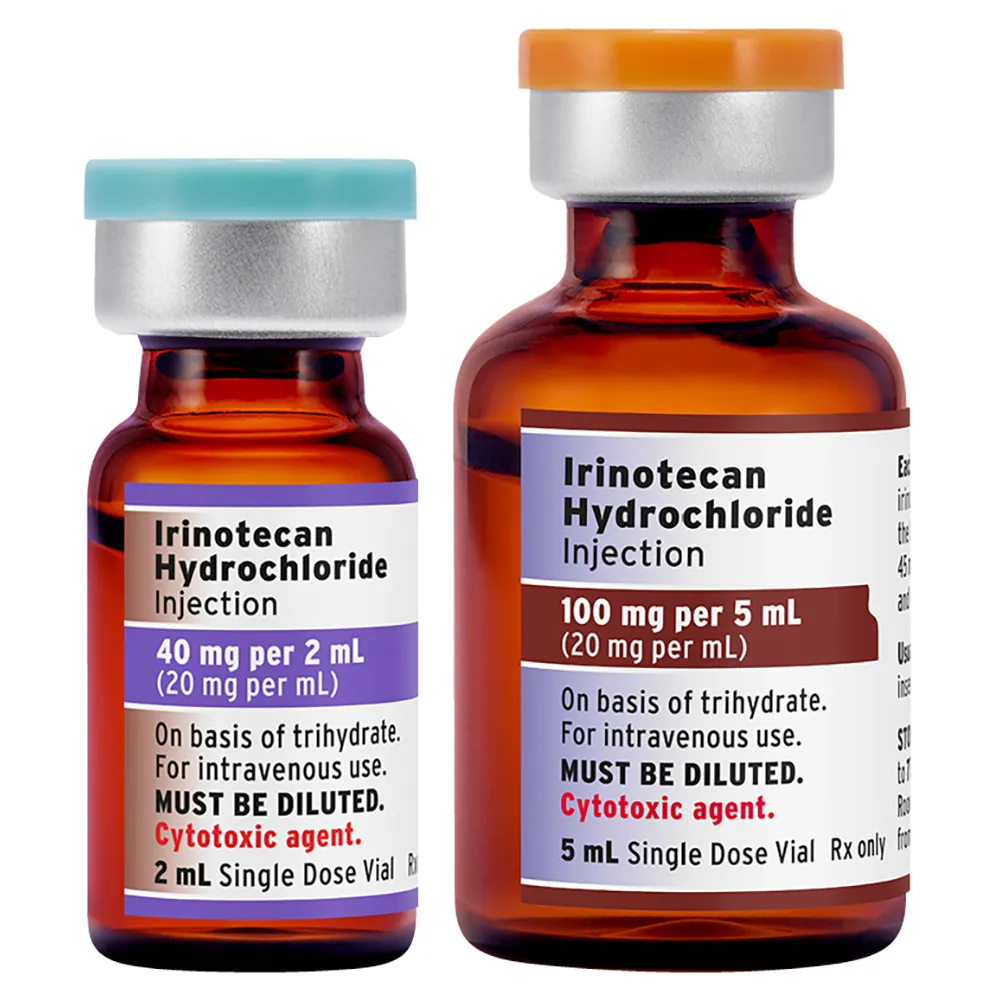
Table of Contents
- Package leaflet: Information for the user
- 1. What Irinotecan Kabi is and what it is used for
- 2. Important information before using Irinotecan Kabi
- 3. How to use Irinotecan Kabi
- 4. Possible adverse effects
- 5. How to store Irinotecan Kabi
- 6. Contents of the pack and other information
- Information intended exclusively for healthcare professionals:
Package leaflet: Information for the user
Irinotecan Kabi, 20 mg/ml, concentrate for solution for infusion
Irinotecani hydrochloridum trihydricum
Read the entire leaflet carefully before using this medicine because it contains important information for the patient.
- Keep this leaflet so that you can read it again if necessary.
- If you have any further questions, ask your doctor, pharmacist, or nurse.
- If you experience any adverse reactions, including any not listed in this leaflet, inform your doctor, pharmacist, or nurse. See section 4.
Leaflet contents:
- What Irinotecan Kabi is and what it is used for
- Important information before using Irinotecan Kabi
- How to use Irinotecan Kabi
- Possible side effects
- How to store Irinotecan Kabi
- Contents of the pack and other information
1. What Irinotecan Kabi is and what it is used for
Irinotecan Kabi belongs to a group of anticancer medicines. The active substance is
irinotecan hydrochloride trihydrate.
Irinotecan hydrochloride inhibits the growth and spread of cancer cells in the body.
Irinotecan is indicated in combination with other medicines for the treatment of patients
with advanced colorectal cancer or metastatic colorectal cancer.
Irinotecan may be used alone in patients with metastatic colorectal cancer who have experienced disease recurrence or progression after initial therapy with fluorouracil.
2. Important information before using Irinotecan Kabi
When not to use Irinotecan Kabi:
- if the patient has chronic inflammatory bowel disease and (or) intestinal obstruction;
- if the patient is allergic (hypersensitive) to the active substance or to any of the other ingredients of this medicine (listed in section 6. "Contents of the pack and other information");
- if the patient is breastfeeding (see section 2.);
- if the patient has bilirubin levels more than 3 times the upper limit of normal;
- if the patient has severe bone marrow dysfunction;
- if the patient is in poor general condition (performance status according to WHO higher than 2);
- if the patient is taking or has recently taken St. John's wort (herbal extract containing Hypericum perforatum);
- if the patient intends to take or has recently taken live attenuated vaccines (against yellow fever, chickenpox, shingles, measles, mumps, rubella, tuberculosis, rotavirus, influenza) or within 6 months after completion of chemotherapy.
When Irinotecan Kabi is used in combination with other medicines, please refer to the patient leaflet included with the other medicines for information on additional contraindications.
Warnings and precautions
Before starting treatment with Irinotecan Kabi, discuss this with your doctor, pharmacist, or nurse.
Extreme caution should be exercised when using Irinotecan Kabi. The use of Irinotecan Kabi should be restricted to specialized departments experienced in administering cytotoxic chemotherapy. The medicine must be administered only under the supervision of a physician qualified in the use of anticancer chemotherapy.
In patients with Gilbert's syndrome, a hereditary condition, elevated bilirubin levels and jaundice (yellowing of the skin and eyes) may occur.
Diarrhoea
Irinotecan Kabi may cause diarrhoea, which in some cases may be severe.
Diarrhoea may begin several hours or several days after the infusion of the medicine. If left untreated, it may lead to dehydration and serious electrolyte imbalances, which may be life-threatening. Your doctor will prescribe medicines to help prevent or control these side effects. Ensure that the medicine is readily available so that the patient can take it if needed.
- The medicine should be taken according to the doctor's instructions at the first sign of loose or frequent stools.
- The patient should drink large amounts of water and (or) salty fluids (sparkling water, broth, or soup).
- Contact your doctor or pharmacist if diarrhoea persists, especially if it lasts longer than 24 hours, or if dizziness, lightheadedness, or fainting occurs.
Neutropenia (reduction in the number of certain types of white blood cells)
This medicine may reduce the number of white blood cells, especially during the first few weeks after administration. This may increase the risk of infection. Immediately inform your doctor or nurse if any signs of infection occur, such as fever (38°C or higher), chills, pain during urination, cough, or production of sputum. Avoid close contact with people who are ill or have an infection. Immediately inform your doctor if signs of infection occur.
Blood monitoring
Your doctor will likely perform blood tests before and during treatment to monitor the medicine's effect on blood cell counts or blood composition. Test results may indicate the need for additional medicines to help manage these reactions. Your doctor may also reduce or delay the next dose of this medicine, or even discontinue treatment. Keep all scheduled medical appointments and laboratory test dates.
This medicine may reduce the number of platelets within the first few weeks after administration, increasing the risk of bleeding. Consult your doctor before taking any medicines or supplements that may affect blood clotting, such as aspirin or aspirin-containing products, warfarin, or vitamin E. Inform your doctor if unusual bruising or bleeding occurs, such as nosebleeds, bleeding gums during tooth brushing, or black, tarry stools.
Nausea and vomiting
Nausea and vomiting may occur on the day of administration or within a few days thereafter. Before starting treatment, your doctor may administer a medicine to prevent nausea and vomiting. Your doctor will likely prescribe anti-nausea medicines for use at home. These medicines should be kept readily available in case they are needed. Contact your doctor if nausea and vomiting prevent the patient from drinking fluids orally.
Acute cholinergic syndrome
This medicine may affect the part of the nervous system that controls secretory functions, leading to a so-called cholinergic syndrome. Symptoms may include runny nose, increased salivation, excessive tearing, sweating, flushing, abdominal cramps, and diarrhoea. Inform your doctor or nurse if any of these symptoms occur, as there are medicines that can help control them.
Lung function disorders
Patients taking this medicine may rarely experience serious lung problems. Immediately inform your doctor if new or worsening cough, difficulty breathing, or fever occurs.
Your doctor may discontinue treatment to manage this issue.
This medicine may increase the risk of developing large blood clots in the veins of the legs or lungs, which may travel to other parts of the body, such as the lungs or brain. Immediately inform your doctor if the patient experiences chest pain, shortness of breath, or swelling, pain, redness, or warmth in an arm or leg.
Chronic inflammatory bowel disease and (or) intestinal obstruction
Inform your doctor if the patient experiences abdominal pain and is unable to defecate, especially if bloating and loss of appetite also occur.
Radiation therapy
If the patient has recently undergone pelvic or abdominal radiation therapy, there may be an increased risk of bone marrow suppression. Discuss this with your doctor before starting treatment with Irinotecan Kabi.
Kidney function
Kidney function disorders have been reported.
Heart disorders
Inform your doctor if the patient has or has had heart disease or previously received anticancer medicines. The doctor will closely monitor the patient and discuss ways to reduce risk factors (e.g., smoking, high blood pressure, and excessive dietary fat).
Vascular disorders
Irinotecan Kabi is rarely associated with blood flow disorders (blood clots in the vessels of the legs and lungs) and may rarely occur in patients with multiple risk factors.
Other
This medicine may cause mouth or lip ulcers, often within the first few weeks of treatment. This may cause mouth pain, bleeding, or even difficulty eating. Your doctor or nurse may suggest ways to reduce these discomforts, such as changes in eating or tooth brushing habits. If needed, your doctor may prescribe a medicine to reduce pain.
Information on contraception, pregnancy, breastfeeding, and effects on fertility is provided below under
Contraception, pregnancy, breastfeeding, and effects on fertility.
If surgery or another procedure is planned, inform your doctor or dentist that you are taking this medicine.
If this medicine is used in combination with other anticancer medicines, ensure that you have read the leaflet included with the other anticancer medicine.
If the patient has previously been diagnosed with intolerance to certain sugars, the patient should consult a doctor before using this medicine.
Irinotecan Kabi and other medicines
Irinotecan Kabi may interact with other medicines and supplements, which may increase or decrease the level of the medicine in the blood. Inform your doctor or pharmacist if the patient is taking, has recently taken, or might take any of the following medicines or supplements:
- medicines used to treat seizures (carbamazepine, phenobarbital, phenytoin, and fosphenytoin);
- medicines used to treat fungal infections (ketoconazole, itraconazole, voriconazole, and posaconazole);
- medicines used to treat bacterial infections (clarithromycin, erythromycin, and telithromycin);
- medicines used to treat tuberculosis (rifampicin and rifabutin);
- St. John's wort (herbal dietary supplement);
- live attenuated vaccines;
- medicines used to treat HIV infection (indinavir, ritonavir, amprenavir, fosamprenavir, nelfinavir, atazanavir, and others);
- medicines that suppress the immune system, used to prevent transplant rejection (cyclosporine and tacrolimus);
- medicines used to treat cancer (regorafenib, crizotinib, idelalisib, and apalutamide);
- vitamin K antagonists (blood thinners such as warfarin);
- medicines used to relax muscles during general anaesthesia and surgery (succinylcholine);
- 5-fluorouracil/folinic acid;
- bevacizumab (an inhibitor of blood vessel formation);
- cetuximab (an EGF receptor inhibitor).
Before receiving Irinotecan Kabi, inform your doctor, pharmacist, or nurse if the patient is currently or has recently undergone chemotherapy (and radiation therapy).
Do not start or stop taking any medicines during treatment with Irinotecan Kabi without first consulting your doctor.
This medicine may cause severe diarrhoea. While taking this medicine, avoid using laxatives or stool softeners.
Other medicines may also interact with Irinotecan Kabi. Consult your doctor, pharmacist, or nurse if you are taking other medicines, herbs, or supplements, and discuss the possibility of alcohol interacting with this medicine.
Contraception, pregnancy, breastfeeding, and effects on fertility
Contraception
Women of childbearing potential must use an effective method of contraception during treatment and for 6 months after treatment ends.
Men must use an effective method of contraception during treatment and for 3 months after treatment ends. It is important to consult your doctor about which contraceptive methods are suitable when taking this medicine.
Pregnancy
This medicine may harm the unborn child if used at the time of conception or during pregnancy. Before starting treatment, your doctor will confirm that the patient is not pregnant.
If the patient is pregnant, suspects she may be pregnant, or plans to become pregnant, she should consult her doctor or pharmacist before using this medicine.
Breastfeeding
Irinotecan and its metabolite have been detected in human milk. Breastfeeding must be discontinued during treatment with this medicine.
If the patient is breastfeeding, she should consult her doctor or pharmacist before using this medicine.
Effects on fertility
No studies have been conducted on the effects on fertility; however, this medicine may affect fertility. Before using this medicine, consult your doctor about the potential risks associated with its use and the options available to preserve the patient's ability to have children in the future.
Driving and operating machinery
Dizziness and (or) vision problems may occur within 24 hours after administration of this medicine. If these side effects occur, do not drive or operate machinery.
Irinotecan Kabi contains sorbitol and sodium
This medicine contains 45 mg of sorbitol per ml of concentrate. Sorbitol is a source of fructose. This medicine must not be used if the patient (or their child) has a rare hereditary condition, hereditary fructose intolerance. Patients with hereditary fructose intolerance cannot metabolize fructose, which may lead to serious adverse effects.
Inform your doctor before using this medicine if the patient (or their child) has hereditary fructose intolerance or if the child cannot consume sweet foods or drinks due to nausea, vomiting, or adverse reactions such as bloating, stomach cramps, or diarrhoea.
This medicine contains less than 1 mmol (23 mg) of sodium per dose, meaning the medicine is considered "sodium-free".
3. How to use Irinotecan Kabi
This medicine should always be used exactly as prescribed by your doctor. If in doubt, consult your doctor.
Irinotecan Kabi is administered by trained medical personnel.
Your doctor may recommend a DNA test before the first dose of Irinotecan Kabi is given.
Some individuals are genetically more susceptible to certain adverse effects.
The amount of Irinotecan Kabi administered depends on several factors, including height and body weight,
overall health or other medical conditions, and the type of tumour or other disease being treated. Your doctor will determine the dose and treatment schedule.
Irinotecan Kabi is injected into a vein (intravenous route, iv.). The patient will receive the injection in a hospital
or clinic. Irinotecan Kabi must be administered slowly, and the infusion may last up to 90 minutes.
During treatment with Irinotecan Kabi, the patient may be given other medicines to prevent nausea,
vomiting, diarrhoea, and other side effects. These medicines may need to be continued for at least one day after administration of Irinotecan Kabi.
If the patient experiences burning, pain, or swelling around the injection site after receiving Irinotecan Kabi,
medical staff should be informed immediately. If the medicine leaks out of the vein, tissue damage may occur.
If pain, redness, or swelling occurs at the injection site during administration of Irinotecan Kabi, the doctor must be notified immediately.
Several treatment regimens with Irinotecan Kabi are currently recommended. It is usually administered once every
3 weeks (Irinotecan Kabi alone) or once every 2 weeks (Irinotecan Kabi given in combination
with 5FU/FA chemotherapy). The dose administered depends on multiple factors, including the
treatment schedule, body surface area, age, general health, blood cell counts, liver function, whether the patient has undergone abdominal/pelvic radiotherapy, and whether any adverse effects such as diarrhoea are present.
Only a doctor can determine the duration of treatment.
Overdose of Irinotecan Kabi
Seek immediate medical help. Symptoms of overdose may include some of the serious adverse effects listed in this leaflet.
Missed dose of Irinotecan Kabi
If a scheduled appointment for administration of Irinotecan Kabi is missed, contact your doctor for instructions.
If you have any further questions about how to use this medicine, consult your doctor, pharmacist, or nurse.
4. Possible adverse effects
Like any medicine, this medicine can cause adverse effects, although not everyone will experience them.
Your doctor will discuss these adverse effects with you and explain the risks and benefits of treatment.
Some adverse effects may be serious. Contact your doctor immediately if any of the following serious adverse effects occur (see section 2).
Seek immediate medical help if you experience any symptoms of an allergic reaction: hives; difficulty breathing; swelling of the face, lips, tongue or throat.
- Diarrhoea (see section 2).
- Early-onset diarrhoea: occurs within 24 hours of receiving the medicine, with symptoms such as flu-like symptoms, increased salivation, lacrimation, sweating, flushing and abdominal cramps. This reaction may occur during administration of the medicine. In such a case, inform medical personnel immediately. Medicines may be given to stop and/or reduce these symptoms.
- Late-onset diarrhoea: occurs more than 24 hours after administration of the medicine. Because diarrhoea may lead to dehydration and electrolyte imbalance, it is important that the patient contacts a healthcare professional to monitor health status and receive advice on medication and dietary modifications.
If any of the following symptoms occur, inform your doctor or nurse.
Adverse effects Frequency* in monotherapy Frequency† in combination therapy
Low white blood cell count, increasing the risk of infection Very common Very common
Low red blood cell count, causing fatigue and shortness of breath Very common Very common
Loss of appetite Very common Very common
Cholinergic syndrome (see: "Warnings and precautions") Very common Very common
Vomiting Very common Very common
Nausea Very common Very common
Abdominal pain Very common Common
Hair loss (reversible) Very common Very common
Mucositis (inflammation of mucous membranes) Very common Very common
Fever Very common Common
Weakness and lack of energy Very common Very common
Low platelet count (blood cells involved in clotting), leading to bruising and bleeding Common Very common
Abnormal liver function tests Common Very common
Infection Common Common
Low white blood cell count with fever Common Common
Constipation Common Common
Abnormal kidney function tests Common Not reported
* Very common: may affect more than 1 in 10 people
† Common: may affect up to 1 in 10 people
Frequency unknown: frequency cannot be estimated from available data
- Severe, persistent or bloody diarrhoea (which may be accompanied by abdominal pain or fever) caused by bacteria called Clostridium difficile
- Blood infection (sepsis)
- Dehydration (due to diarrhoea and vomiting)
- Dizziness, rapid heartbeat and pale skin (a condition called hypovolemia)
- Allergic reaction
- Transient speech disturbances during or shortly after treatment
- Tingling sensations (paraesthesia)
- High blood pressure (during or after infusion)
- Heart problems*
- Lung disease causing wheezing and shortness of breath (see section 2)
- Hiccups
- Bowel obstruction
- Enlargement of the large intestine (colonic dilation)
- Bleeding from the intestine
- Inflammation of the large intestine (colitis)
- Abnormal laboratory test results
- Bowel perforation
- Fatty liver (hepatic steatosis)
- Skin reactions
- Reactions at the site of medicine administration
- Low blood potassium levels (hypokalaemia)
- Low blood sodium levels, mainly due to diarrhoea and vomiting (hyponatraemia)
- Muscle cramps
- Kidney problems*
- Low blood pressure*
- Fungal infections
- Viral infections
* Rare cases of these symptoms have been observed in patients who experienced episodes of dehydration related to diarrhoea and/or vomiting or blood infections.
Reporting of adverse effects
If any adverse effects occur, including any not listed in this leaflet, tell your doctor, pharmacist or nurse. Adverse effects can be reported directly to the Department of Monitoring Adverse Drug Reactions, Office for Registration of Medicinal Products, Medical Devices and Biocidal Products
Al. Jerozolimskie 181C
02-222 Warsaw
Phone: +48 22 49 21 301
Fax: +48 22 49 21 309
Website: https://smz.ezdrowie.gov.pl
Adverse effects can also be reported to the marketing authorisation holder.
Reporting adverse effects helps provide more information on the safety of the medicine.
5. How to store Irinotecan Kabi
Keep this medicine out of the sight and reach of children.
Do not use this medicine after the expiry date stated on the vial and carton after EXP. The expiry date refers to the last day of the specified month.
Store below 25°C. Keep the vial in the outer packaging to protect from light. Do not freeze.
After dilution
Chemical and physical stability of the solution has been demonstrated for 24 hours at temperatures below 25°C and for 48 hours at temperatures from 2°C to 8°C.
From a microbiological standpoint, the medicine should be used immediately. If not used immediately, the user is responsible for storage conditions and duration; usually, the solution should not be stored for longer than 24 hours at temperatures from 2°C to 8°C, unless dilution was carried out under controlled and validated aseptic conditions.
Do not use this medicine if visible particles are observed in the concentrate or infusion solution.
Medicines must not be disposed of via the sewage system or household waste. Ask your pharmacist how to dispose of medicines no longer required. Such measures will help protect the environment.
6. Contents of the pack and other information
What Irinotecan Kabi contains
The active substance is irinotecan hydrochloride trihydrate. Each ml contains 20 mg of
irinotecan hydrochloride trihydrate, equivalent to 17.33 mg of irinotecan.
Each 2 ml vial contains 40 mg of irinotecan hydrochloride trihydrate.
Each 5 ml vial contains 100 mg of irinotecan hydrochloride trihydrate.
Each 15 ml vial contains 300 mg of irinotecan hydrochloride trihydrate.
Each 25 ml vial contains 500 mg of irinotecan hydrochloride trihydrate.
The other ingredients are: sorbitol, lactic acid, water for injections, sodium hydroxide,
and hydrochloric acid (for pH adjustment).
What Irinotecan Kabi looks like and contents of the pack
Irinotecan Kabi 20 mg/ml, concentrate for solution for infusion, is a clear yellow solution, without
visible solid particles, packed in glass vials.
The medicine is available as single vials containing 40 mg/2 ml, 100 mg/5 ml, 300 mg/15 ml, or
500 mg/25 ml. Vials are for single use only.
Not all pack sizes may be marketed.
Marketing Authorisation Holder and Manufacturer
Marketing Authorisation Holder
Fresenius Kabi Polska Sp. z o.o.
Al. Jerozolimskie 134
02-305 Warsaw
Poland
Manufacturer
Fresenius Kabi Deutschland GmbH
Pfingstweide 53
61169 Friedberg
Germany
For further information, please contact the Marketing Authorisation Holder:
Fresenius Kabi Polska Sp. z o.o.
Al. Jerozolimskie 134
02-305 Warsaw
Poland
Tel. +48 22 345 67 89
This medicinal product is authorised in the European Economic Area and the United Kingdom (Northern Ireland)
under the following names:
Czech Republic Irinotecan Kabi
Denmark Irinotecan Fresenius Kabi
Estonia Irinotecan Kabi 20 mg/ml
Finland Irinotecan Fresenius Kabi 20 mg/ml infuusiokonsentraatti, liuosta varten
Spain Irinotecán Kabi 20 mg/ml concentrado para solución para perfusión
EFG
Ireland Irinotecan 20 mg/ml concentrate for solution for infusion
Lithuania Irinotecan Kabi 20 mg/ml koncentratas infuziniam tirpalui
Latvia Irinotecan Kabi 20 mg/ml koncentrāts infūziju šķīduma pagatavošanai
Poland Irinotecan Kabi
Slovakia Irinotecan Kabi 20 mg/ml infúzny koncentrát
Hungary Irinotecan Kabi 20 mg/ml koncentrátum oldatos infúzióhoz
Italy Irinotecan Kabi
United Kingdom Irinotecan 20 mg/ml concentrate for solution for infusion
(Northern Ireland)
Information intended exclusively for healthcare professionals:
The following information is intended solely for healthcare personnel or healthcare workers.
Instructions for use
Cytotoxic medicinal product
Handling instructions
As with other antineoplastic agents, special precautions must be observed when preparing solutions of Irinotecan Kabi. Dilution must be performed under aseptic conditions by trained personnel in a designated area. Precautions should be taken to avoid contact with skin and mucous membranes.
Precautions during preparation of infusion solution:
- A biological safety cabinet should be used, and protective gloves and a protective gown must be worn. If a biological safety cabinet is not available, a protective mask and protective eyewear must be used.
- Open containers such as infusion vials and infusion bottles, as well as used cannulas, syringes, catheters, tubing, and residual cytotoxic medicinal products, should be considered hazardous waste and must be disposed of in accordance with local guidelines for handling HAZARDOUS WASTE.
- In case of spillage, follow these instructions:
- Wear protective clothing;
- Collect broken glass and place it in a container for HAZARDOUS WASTE;
- Rinse contaminated surfaces thoroughly with copious amounts of cold water;
- Then thoroughly wipe the rinsed surfaces; materials used for wiping must be disposed of as HAZARDOUS WASTE.
- In case of contact of Irinotecan Kabi with skin, the affected area should be flushed immediately with large amounts of running water and then washed with soap and water. In case of contact with mucous membranes, the area should be thoroughly rinsed with water. If discomfort persists, consult a physician.
- In case of contact of Irinotecan Kabi with eyes, rinse eyes immediately with copious amounts of water. Seek immediate consultation with an ophthalmologist.
Preparation of infusion solution
Irinotecan Kabi, concentrate for solution for infusion, is intended for intravenous infusion only after dilution prior to administration using the recommended diluents, either 0.9% sodium chloride solution for infusion or 5% glucose solution for infusion. The required amount of Irinotecan Kabi, concentrate for solution for infusion, should be aseptically withdrawn from the vial using a calibrated syringe and injected into an infusion bag or infusion bottle with a capacity of 250 ml. The infusion fluid should then be thoroughly mixed by gently rotating the bag or bottle by hand.
The prepared solution is clear, colorless to pale yellow, and free from visible particulate matter.
If any precipitate is observed in the vials or after dilution, the product should be discarded in accordance with standard procedures for handling cytotoxic medicinal products.
For information on the stability of the diluted solution, refer to the package leaflet.
Irinotecan Kabi must not be administered as an intravenous bolus or by intravenous infusion shorter than 30 minutes or longer than 90 minutes.
Disposal of unused medicinal product and waste materials
All materials used in the preparation, administration, or otherwise coming into contact with irinotecan should be disposed of in accordance with standard procedures for the disposal of waste from cytotoxic medicinal products.