Iprixon neb
Poland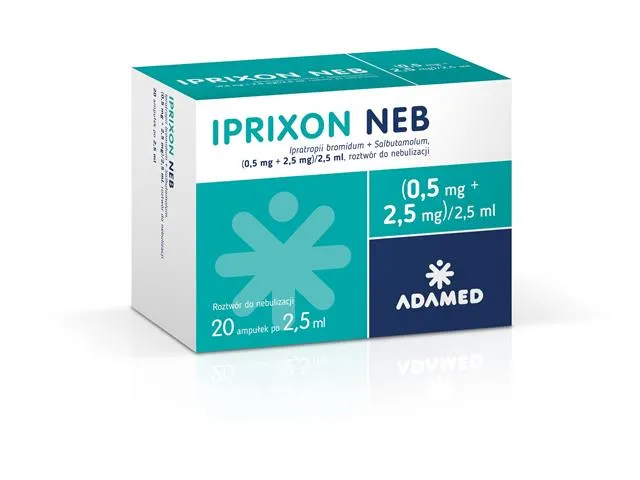
Instructions for Use
Package leaflet: Information for the patient
Iprixon Neb, (0.5 mg + 2.5 mg)/2.5 ml, solution for nebulization
Ipratropii bromidum + Salbutamolum
Please read all of this leaflet carefully before using this medicine, because it contains important information for you.
- Keep this leaflet, as you may need to read it again.
- If you have any further questions, please ask your doctor or pharmacist.
- This medicine has been prescribed for a specific individual. Do not pass it on to others. It may harm someone else, even if their symptoms are the same.
- If you experience any side effects, including any not listed in this leaflet, tell your doctor or pharmacist. See section 4.
Table of contents:
- What Iprixon Neb is and what it is used for
- Important information before using Iprixon Neb
- How to use Iprixon Neb
- Possible side effects
- How to store Iprixon Neb
- Contents of the pack and other information
1. What Iprixon Neb is and what it is used for
The name of the medicine is Iprixon Neb. The active substances in this medicine are ipratropium bromide and salbutamol. Ipratropium bromide and salbutamol belong to a group of medicines called bronchodilators, which help breathing by widening the airways.
This occurs by preventing the contraction of smooth muscles in the airways, thus keeping them open.
Ipratropium bromide works by blocking nerve signals reaching the muscles surrounding the airways, while salbutamol acts by stimulating beta-receptors in these muscles.
Iprixon Neb is used to treat breathing problems in people with chronic obstructive pulmonary disease (COPD).
Iprixon Neb is also used as a bronchodilator in the treatment of symptoms of obstructive airway diseases: bronchial asthma, and chronic bronchitis with or without emphysema.
Iprixon Neb reduces wheezing, shortness of breath, and chest tightness.
2. Important information before using Iprixon Neb
When not to use Iprixon Neb:
- if you are allergic (hypersensitive) to ipratropium bromide, salbutamol, or any of the other ingredients of this medicine (listed in section 6);
- if you are allergic to similar medicines containing atropine, including atropine-like drugs;
- if you have an irregular heartbeat, including a very fast heartbeat (called tachyarrhythmia);
- if you have been diagnosed with an enlarged heart or a condition called hypertrophic obstructive cardiomyopathy or HOCM (Hypertrophic cardiomyopathy), a disease characterized by thickening of part of the heart muscle, causing obstruction of blood outflow;
- if you are pregnant or breastfeeding, or if you suspect you may be pregnant. If you have any doubts, consult your doctor or pharmacist before using Iprixon Neb.
Warnings and precautions:
Lactic acidosis, a condition characterized by increased lactic acid levels, has been reported with high therapeutic doses of salbutamol, mainly in patients treated for acute bronchospasm (see sections 3 and 4).
Increased lactate levels may lead to shortness of breath and hyperventilation, even if wheezing improves. If you feel the medicine is not working as well as usual and you need to use nebulization more often than prescribed by your doctor, contact your doctor immediately.
Before starting treatment with Iprixon Neb, discuss with your doctor or pharmacist if you:
- have or suspect you have a condition called glaucoma (increased pressure in the eye) or any other eye disorders. Your doctor may recommend eye protection during use of Iprixon Neb ampoules;
- have been diagnosed with benign prostatic hyperplasia or have problems with urination;
- recently had a heart attack; if you have heart or artery diseases or experience leg pain while walking;
- have ever had heart disease, irregular heartbeat, or angina pectoris (inform your doctor before starting this medicine);
- have diabetes;
- have hyperthyroidism;
- have cystic fibrosis;
- have been diagnosed with a (non-malignant) adrenal gland tumor called pheochromocytoma. Inhaled medicines may worsen symptoms. Inform your doctor if you have any of the conditions listed above before using Iprixon Neb.
Iprixon Neb and other medicines
Tell your doctor or pharmacist about all medicines you are currently taking, have recently taken, or plan to take.
Some medicines may interact with Iprixon Neb and may increase the risk of side effects or reduce the effectiveness of Iprixon Neb. Always inform your doctor if you are taking any of the following medicines:
- diuretics (water tablets) and oral steroids (medicines used to reduce inflammation in the body, e.g., prednisolone). These medicines may increase the risk of low potassium levels;
- certain medicines used to treat depression (antidepressants, prescribed for depression and anxiety). This includes monoamine oxidase inhibitors (e.g., phenelzine) or tricyclic antidepressants (e.g., amitriptyline);
- other medicines used for asthma, including inhaled medicines and tablets used for asthma, including bronchodilators such as salbutamol, or anti-inflammatory medicines such as beclometasone dipropionate. These may enhance the effect of Iprixon Neb and increase the risk of side effects;
- anticholinergic medicines. These may be used to treat colicky pain, Parkinson’s disease, problems with urination, or urinary or fecal incontinence;
- beta-blockers, i.e., medicines usually used to treat heart conditions such as exertional chest pain (called angina pectoris), irregular heartbeat or arrhythmias, and high blood pressure (called hypertension). Examples include propranolol. These medicines counteract the airway dilation caused by Iprixon Neb;
- medicines called beta2-mimetics, such as fenoterol, used in breathing disorders;
- digoxin (used in heart conditions) when given together with Iprixon Neb may cause heart rhythm disturbances;
- anesthetics may increase the heart's sensitivity to salbutamol – you will be closely monitored. Your doctor may also decide to discontinue Iprixon Neb if you are undergoing surgery.
If you are unsure whether any of the above situations apply to you, consult your doctor or pharmacist before using Iprixon Neb.
Procedures
Certain volatile substances used during surgical procedures (anesthetic gases) may affect the action of this medicine. If you are due to undergo surgery, make sure you inform your doctor, dentist, or anesthesiologist that you are using Iprixon Neb.
Anti-doping tests
If you are required to provide a urine sample for anti-doping testing, inform the person conducting the test that you are taking Iprixon Neb, as it contains salbutamol, which may lead to a positive test result.
Iprixon Neb with food and drink
Food and drink do not affect the action of Iprixon Neb.
Pregnancy and breastfeeding
If you are pregnant or breastfeeding, suspect you may be pregnant, or are planning to have a baby, consult your doctor before using this medicine.
Iprixon Neb should not be used in pregnant or breastfeeding women unless your doctor determines that the benefits to the mother outweigh the risks to the child.
Driving and using machines
While using Iprixon Neb, you may experience dizziness, difficulty concentrating, or blurred vision. If this occurs, do not drive or operate machinery.
3. How to use Iprixon Neb
This medicine should always be used exactly as prescribed by your doctor. If in doubt, consult your
doctor or pharmacist.
Iprixon Neb is intended for inhalation use. The solution is for inhalation through the mouth after nebulization (aerosolization).
The recommended dose for adults and children over 12 years of age is the contents of one ampoule three or four
times daily.
Elderly patients should usually receive the dose recommended for adults.
Iprixon Neb is not recommended for use in children under 12 years of age.
Never use more medicine than prescribed by your doctor. If breathing difficulties worsen, if the medicine does not provide sufficient relief of breathing difficulties, or if you need to use a short-acting inhaled bronchodilator more frequently than usual, you must inform your doctor.
Instructions for use
- Prepare the nebulizer for use according to the manufacturer's instructions and your doctor's advice.
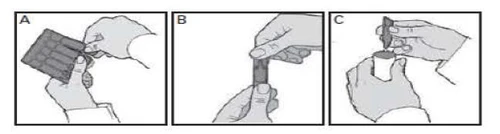
- Carefully detach the Iprixon Neb ampoule from the marked blister by twisting and pulling. Never use an ampoule if it has been previously opened or if the solution has changed color (Figure A).
- Hold the ampoule upright and twist off the top part (Figure B).
- Squeeze the entire contents into the nebulizer chamber (Figure C).
- Follow the manufacturer's instructions and your doctor's advice regarding assembly and use of the nebulizer.
- After use, discard any remaining solution in the chamber. Any solution left in the ampoule should also be discarded.
- Clean the nebulizer thoroughly according to the manufacturer's instructions. It is important that the nebulizer remains clean.
Do not dilute the solution or mix it with other medicines unless your doctor specifically instructs you to do so.
Single-dose ampoules of Iprixon Neb contain no preservatives, so it is essential to use the medicine immediately after opening the ampoule. A new ampoule must be used each time Iprixon Neb is administered via nebulizer.
Partially used, opened, or damaged ampoules must be discarded. Never use a previously opened ampoule.
It is important to follow the above instructions carefully to avoid contamination of the nebulized solution in the ampoule.
Do not swallow the solution or use it by injection. Avoid getting the solution or aerosol into the eyes.
If the solution or nebulized mist accidentally gets into the eyes, eye pain, stinging sensation, redness, pupil dilation, blurred vision, or seeing colored or light spots may occur.
In such cases, consult your doctor. If you experience any eye problems during treatment, consult your doctor.
Use of a higher than recommended dose of Iprixon Neb
If a slightly higher than recommended dose is used, symptoms such as increased heart rate (palpitations) or muscle tremors may occur. Other symptoms may include chest pain, changes in blood pressure, flushing, restlessness, or dizziness. These symptoms usually resolve within a few hours. A decrease in blood potassium levels may also occur; therefore, your doctor may recommend monitoring blood potassium levels and periodic blood tests for this purpose. Inform your doctor if you are concerned about any of these symptoms or if symptoms persist.
If you have used more than the recommended dose, contact your doctor immediately or go to the nearest hospital. If you need to see a doctor or go to hospital, bring all your medicines with you, including those obtained without a prescription; if possible, keep them in their original packaging. Bring this leaflet with you to show to your doctor.
Missing a dose of Iprixon Neb
If you miss a dose at the scheduled time, take it as soon as possible. Do not use two doses at the same time.
Stopping treatment with Iprixon Neb
Do not stop using Iprixon Neb without first discussing it with your doctor.
If you have any further questions about the use of this medicine, consult your doctor or pharmacist.
4. Possible adverse effects
Like all medicines, this medicine can cause adverse effects, although not everyone will experience them.
Some adverse effects may be serious and require medical intervention.
If the patient notices any of the serious adverse effects listed below,
they should immediately inform their doctor – the patient may require urgent medical attention:
If, immediately after inhalation of the Iprixon Neb nebuliser solution, asthma symptoms or wheezing worsen or breathing becomes difficult and the patient experiences shortness of breath, administration of Iprixon Neb should be stopped immediately and a short-acting inhaled bronchodilator should be used without delay. The use of Iprixon Neb should be discontinued and the patient should contact their doctor immediately. The doctor may recommend an alternative treatment method for the condition.
If the patient suspects hypersensitivity to the Iprixon Neb nebuliser solution or believes they may be experiencing an allergic reaction (e.g. skin rash, itching, urticaria) to the solution, they should immediately stop using Iprixon Neb and contact their doctor without delay.
In the event of any of the listed adverse effects occurring, the patient should seek medical advice immediately.
The following adverse effects may also occur, although their frequency is unknown:
A condition called lactic acidosis, which may cause abdominal pain, hyperventilation, shortness of breath (even if wheezing has improved), cold hands and feet, irregular heartbeat, or thirst.
If the patient experiences eye pain or discomfort, blurred vision, redness of the eyes, seeing colored halos around light sources, or colored spots, they should contact their doctor immediately, as these symptoms may require treatment.
A decrease in blood potassium levels (hypokalaemia) may occur due to the action of salbutamol – an ingredient of Iprixon Neb – which may lead to muscle weakness, tremor, or cardiac arrhythmias. This is more likely if the patient is taking Iprixon Neb together with certain other asthma medications, inhaled corticosteroids or oral corticosteroids, or if they are taking diuretics. The doctor may recommend periodic blood tests to monitor potassium levels.
Frequency of adverse effects
Uncommon (occur in less than 1 in 100 people)
- Nervousness, tremor, or dizziness
- Dryness of the mouth
- Cough, headache
- Nausea
- Throat irritation
- Increased blood pressure
- Irregular or very rapid heartbeat (palpitations)
- Voice disorders (dysphonia)
- Skin reactions
Rare (occur in less than 1 in 1,000 people)
- Irregular heartbeat
- Regular but abnormally rapid heartbeat (supraventricular tachycardia)
- Chest pain (due to heart disorders such as angina pectoris). If such symptoms occur, the doctor should be informed as soon as possible, but the patient should not stop using the medicine unless advised otherwise by the doctor.
- Blurred vision, dilated pupils, glaucoma, eye pain, stinging or redness of the eyes, periorbital swelling, seeing colored or light spots
- Excessive sweating
- Sensation of chest tightness immediately after inhalation of the medicine
- Sensation of dryness in the throat, throat swelling
- Breathing or speaking difficulties due to vocal cord muscle spasm
- Diarrhea, constipation, vomiting, or other gastrointestinal disturbances
- Oral inflammation
- Muscle cramps, weakness, and muscle pain
- Difficulty in urination
- Feeling of weakness
- Low blood pressure
- Mood changes
The patient may also experience abnormally low blood potassium levels (a condition called hypokalaemia).
In such a case, the doctor will periodically monitor blood potassium levels.
Some patients may experience chest pain (due to conditions such as angina pectoris), although the exact frequency of this symptom is unknown. If such symptoms occur during treatment with Iprixon Neb, the doctor should be informed as soon as possible, but the patient should not discontinue treatment unless instructed otherwise by the doctor.
If the solution or the aerosol mist accidentally gets into the eyes, eye pain, stinging sensation, redness of the eyes, dilated pupils, blurred vision, or seeing colored or light spots may occur.
In such a case, the patient should consult a doctor. If any eye problems occur at any time during treatment, the patient should consult a doctor.
Reporting of adverse effects
If any adverse effects occur, including any adverse effects not listed in this leaflet, the patient should inform their doctor or pharmacist. Adverse effects can be reported directly to the Department of Monitoring of Adverse Drug Reactions, Office for Registration of Medicinal Products, Medical Devices and Biocidal Products
Al. Jerozolimskie 181C, 02-222 Warsaw,
Tel.: + 48 22 49 21 301
Fax: + 48 22 49 21 309
Website: https://smz.ezdrowie.gov.pl
Adverse effects can also be reported to the marketing authorization holder.
Reporting adverse effects helps to provide more information on the safety of the medicine.
5. How to store Iprixon Neb
Keep the medicine out of the sight and reach of children.
Do not use this medicine after the expiry date stated on the carton. The expiry date refers to the last day of the stated month.
Do not freeze.
After opening the protective pouch, the medicine should be used within 7 days.
Do not use the medicine if discoloration or cloudiness of the solution is visible.
Medicines must not be disposed of via the sewage system or in household waste. Ask your pharmacist how to dispose of medicines no longer in use. This will help protect the environment.
6. Contents of the pack and other information
What Iprixon Neb contains
Each 2.5 ml ampoule of Iprixon Neb contains:
- Active substances: 0.5 mg ipratropium bromide and 2.5 mg salbutamol (as salbutamol sulphate).
- Other ingredients: sodium chloride, water for injections, and hydrochloric acid 1 N (to adjust pH).
What Iprixon Neb looks like and contents of the pack
Each ampoule of Iprixon Neb contains a clear solution.
Ampoules made of LDPE (Steri-Neb), packed in packs of 5 in PET/Aluminium/PE bags, in a cardboard box. The box contains 20 or 30 ampoules (Steri-Neb) of 2.5 ml solution. Not all pack sizes may be marketed.
Marketing Authorisation Holder:
Adamed Pharma S.A.
Pieńków, ul. M. Adamkiewicza 6A
05-152 Czosnów
Tel.: 22 732 77 00
Manufacturer:
Genetic S.p.A,
Nucleo Industriale, Contrada Canfora,
84084 Fisciano (SA),
Italy
Adamed Pharma S.A.
Pieńków, ul. M. Adamkiewicza 6A
05-152 Czosnów
This medicinal product is authorised in the European Economic Area countries
under the following names:
Portugal Iprixon
Poland Iprixon Neb
June 2025
This page has been machine-translated and may contain inaccuracies. The original data is available in the manufacturing country's language.
Last data check: June 04, 2026 · Data source: Rejestr Produktów Leczniczych (URPL)