Intralipid 10%
Poland
Table of Contents
- Package leaflet: Information for the user
- 1. What Intralipid 10% is and what it is used for
- 2. Important information before using Intralipid 10%
- 3. How to use Intralipid 10%
- 4. Possible adverse reactions
- 5. How to store Intralipid 10%
- 6. Contents of the packaging and other information
- Information intended exclusively for medical professionals:
Package leaflet: Information for the user
Intralipid 10%
100 mg/ml, infusion emulsion
Soiae oleum raffinatum
Please read all of this leaflet carefully before use, as it contains important information for the patient.
- Keep this leaflet so that you can read it again if necessary.
- If you have any further questions, please consult your doctor, pharmacist, or nurse.
- This medicine has been prescribed for a specific individual. Do not pass it on to others. It may harm someone else, even if their symptoms are the same.
- If any side effects occur in the patient, including any not listed in this leaflet, inform your doctor, pharmacist, or nurse. See section 4.
Contents of the leaflet
- What Intralipid 10% is and what it is used for
- Important information before using Intralipid 10%
- How to use Intralipid 10%
- Possible side effects
- How to store Intralipid 10%
- Contents of the pack and other information
1. What Intralipid 10% is and what it is used for
Intralipid 10% is a fat emulsion intended for parenteral nutrition. The medicine contains refined soybean oil, which provides the body with fatty acids necessary for energy production. The medicine should be used as a component of parenteral nutrition in combination with appropriate amounts of carbohydrate solutions, proteins, electrolytes, vitamins, and trace elements.
The medicine is administered by intravenous infusion.
Indications:
Intralipid 10% is indicated as a source of energy and fatty acids in parenteral nutrition. It is also intended for use in patients with fatty acid deficiency in whom it is not possible to maintain or restore normal levels of these acids through oral administration.
2. Important information before using Intralipid 10%
When not to use Intralipid 10%
Do not use this medicine:
- if the patient is allergic to egg protein, soy, or peanuts, to the active substance, or to any of the other ingredients of this medicine (listed in section 6);
- if the patient is in acute shock (a set of disease symptoms caused by inadequate oxygenation of vital organs);
- if the patient has severe hyperlipemia (marked increase in blood cholesterol levels);
- if the patient has severe liver failure;
- if the patient has been diagnosed with hemophagocytic syndrome (a rare, life-threatening inherited disorder characterized by high fever, enlargement of the liver and/or spleen, and a significant decrease in the number of all blood cells).
Warnings and precautions
Intralipid 10% should be used with caution if the patient has:
- impaired fat metabolism;
- kidney failure;
- uncontrolled diabetes;
- pancreatitis;
- liver function disorders;
- hyperthyroidism (if hypertriglyceridemia is present - significantly elevated levels of triglycerides (simple fats) in the blood);
- sepsis (systemic inflammatory response syndrome due to infection). During treatment with Intralipid 10% in these patients, the doctor will order blood tests (measurement of triglyceride levels).
Intralipid 10% should be used with caution in newborns and premature infants with hyperbilirubinemia (markedly increased levels of bilirubin, the pigment causing jaundice, in the blood) and in cases where pulmonary hypertension (a condition in which blood pressure in the pulmonary arteries is elevated) is suspected. During prolonged administration of Intralipid 10% to newborns, especially premature infants, the doctor will order blood tests (platelet count, liver enzyme activity, and triglyceride levels).
This medicine may affect the results of certain laboratory tests. Inform the doctor about using this medicine before any testing.
Intralipid 10% may very rarely cause allergic reactions. Allergic reactions have also been observed after administration of this medicine and consumption of peanuts.
When used in newborns and children under 2 years of age, the solution (in the bag and infusion set) should be protected from light until the end of administration. Exposure of Intralipid 10% to light, particularly after addition of trace elements and/or vitamins, may lead to the formation of peroxides and other degradation products, which can be minimized by protecting from light.
Intralipid 10% and other medicines
Inform the doctor about all medicines the patient is currently taking or has recently taken, as well as any medicines the patient plans to take.
Inform the doctor if the patient is using:
- insulin (a medicine used in the treatment of diabetes);
- heparin or coumarin derivatives (medicines used to reduce blood coagulability).
Pregnancy and breastfeeding
If the patient is pregnant or breastfeeding, suspects she may be pregnant, or is planning to become pregnant, she should consult a doctor or pharmacist before using this medicine.
The doctor will decide whether this medicine should be used during pregnancy or breastfeeding.
Driving and operating machinery
Not applicable.
3. How to use Intralipid 10%
This medicine is administered exclusively by medical personnel. You must not use this medicine yourself.
If you have any doubts, consult your doctor.
The dosage is determined individually by the doctor for each patient, depending on age, body weight,
and health status. Medical personnel may monitor the patient's health condition during treatment.
When administering to newborns and children under 2 years of age, the solution (in the bag and infusion set)
must be protected from light until the end of administration (see section 2).
Administration of a higher than recommended dose of Intralipid 10%
It is unlikely that a patient would receive an excessive dose of Intralipid 10%, as this medicine is administered by trained medical personnel.
In case of overdose, there is a risk of excessive fat intake. This condition is known as the "fat overload syndrome". For detailed information, see
section 4: Possible side effects. If the patient notices the above symptoms or suspects having received more than the recommended dose of Intralipid 10%,
they should immediately inform the doctor or nurse.
Acute overdose may lead to acidosis (accumulation in the blood of excessive amounts of acidic substances or reduced concentration of alkaline substances),
especially if carbohydrates have not been co-administered.
If you have any further doubts regarding the use of this medicine, consult your doctor or nurse.
4. Possible adverse reactions
Like all medicines, this medicine can cause adverse reactions, although not everyone will experience them.
Uncommon adverse reactions (occurring in more than 1 in 100 patients and less than 1 in 1,000 patients):
- headache;
- increased body temperature;
- tremors;
- chills;
- feeling of fatigue;
- abdominal pain;
- nausea;
- vomiting.
Very rare adverse reactions (occurring in less than 1 in 10,000 patients):
- allergic reaction (hypersensitivity), presenting as skin rash, swelling (especially of the lips, face, eyelids, tongue and throat), shortness of breath or fainting. In such cases, contact a doctor immediately.
- increased or decreased blood pressure;
- transient increase in liver enzyme activity. Your doctor will inform you if this adverse reaction occurs.
- abdominal pain;
- thrombocytopenia (reduced number of blood platelets, manifesting as petechiae, easy bruising, haematomas);
- haemolysis (breakdown of red blood cells);
- reticulocytosis (increased number of immature red blood cells);
- priapism (prolonged, painful penile erection);
- urticaria (pinkish, itchy skin blisters);
- skin rash.
Intralipid 10% may cause increased body temperature and, less frequently, tremors, chills, nausea or vomiting (occurring in less than 1 in 100 patients).
After prolonged treatment:
- in infants, thrombocytopenia and increased cholesterol levels have been reported;
- transient increase in liver enzyme activity has been reported with or without the use of Intralipid 10%.
Fat overload syndrome
Fat overload syndrome occurs when the body has difficulty metabolizing fats due to receiving an excessive amount of Intralipid 10%. It may also occur due to a sudden change in the patient's health status (e.g. kidney problems or infection). Possible symptoms include fever, increased fat levels in blood, cells and tissues, disturbances in the function of multiple organs, and coma. All these symptoms usually resolve after stopping the infusion.
Reporting of adverse reactions
If any adverse reactions occur, including those not listed in this leaflet, inform your doctor, pharmacist or nurse. Adverse reactions can be reported directly to the Department of Monitoring Adverse Drug Reactions of the Office for Registration of Medicinal Products, Medical Devices and Biocidal Products
Al. Jerozolimskie 181C
02-222 Warszawa
tel.: +48 22 49 21 301
fax: +48 22 49 21 309
website: https://smz.ezdrowie.gov.pl
Adverse reactions can also be reported to the marketing authorization holder.
Reporting adverse reactions helps to provide more information on the safety of this medicine.
5. How to store Intralipid 10%
Keep the medicine out of the sight and reach of children.
The doctor or pharmacist is responsible for ensuring appropriate storage, use, and disposal of the medicine Intralipid 10%.
Store below 25°C. Do not freeze.
Do not use this medicine after the expiry date stated on the container. The expiry date refers to the last day of the stated month.
When used in newborns and children under 2 years of age, the solution (in the bag and administration set) must be protected from light until the end of administration (see section 2).
6. Contents of the packaging and other information
What Intralipid 10% contains
- The active substance is soybean oil. 1000 ml of emulsion contains 100 g of purified soybean oil (Soiae oleum raffinatum).
- The other ingredients (excipients) are: purified egg phospholipids, anhydrous glycerol, sodium hydroxide, water for injections.
Osmolality: 300 mOsm/kg water
pH: approximately 8
Energy value: 4.6 MJ (1100 kcal)/1000 ml
Content of organic phosphates: 15 mmol/1000 ml
What Intralipid 10% looks like and contents of the pack
The medicine is a white, homogeneous emulsion.
Packaging of the medicine:
Bottle
Bottles made of type II glass with a butyl rubber stopper and an aluminium-plastic cap.
Pack sizes:
100 ml in 1 bottle
500 ml in 1 bottle
Bag
The packaging consists of an inner Biofine bag and an outer bag.
The inner Biofine bag is made of plastic material.
Between the inner and outer bags there is an oxygen absorber and a bag integrity indicator.
Pack sizes:
100 ml in 1 bag
500 ml in 1 bag
Not all pack sizes may be marketed.
Marketing Authorisation Holder and Manufacturer
Marketing Authorisation Holder
Fresenius Kabi AB
S-751 74 Uppsala
Sweden
Manufacturer
Bottles
Fresenius Kabi Austria GmbH
Hafnerstrasse 36
A-8055 Graz
Austria
Fresenius Kabi AB
S-751 74 Uppsala
Sweden
Bag
Fresenius Kabi AB
S-751 74 Uppsala
Sweden
For further information, please contact the representative of the Marketing Authorisation Holder:
Fresenius Kabi Polska Sp. z o.o.
Al. Jerozolimskie 134
02-305 Warsaw
Tel.: +48 22 345 67 89
Information intended exclusively for medical professionals:
Dosage and method of administration
The dose and rate of administration of Intralipid 10% should be adjusted according to fat elimination capacity.
See: "Fat elimination".
Dosage
1 g of triglycerides corresponds to 10 ml of Intralipid 10% solution.
Adult patients
The recommended maximum dose is 3 g of triglycerides/kg body weight/day. With this upper limit, Intralipid 10% may be used to provide up to 70% of energy requirements, including in patients with significantly increased energy needs.
The infusion rate of Intralipid 10% should not exceed 500 ml over 5 hours.
Newborns and infants
The recommended dose for newborns and infants is 0.5 to 4.0 g of triglycerides/kg body weight/day.
The infusion rate should not exceed 0.17 g of triglycerides/kg body weight/hour (equivalent to 4 g/day).
Premature infants and newborns with low birth weight should initially receive Intralipid 10% at a dose of 0.5 to 1.0 g/kg body weight/day, gradually increased by 0.5 to 1.0 g/kg body weight/day up to a dose of 2 g/kg body weight/day, administered as a continuous infusion over 24 hours.
Further dose escalation up to 4 g/kg body weight/day may be considered only under strict monitoring of serum triglyceride concentrations, liver enzyme activity, and blood oxygen saturation. The above infusion rates represent maximum rates and should not be exceeded in an attempt to rapidly compensate for missed doses.
Method of administration
When administered to newborns and children under 2 years of age, the solution (in the bag and administration set) must be protected from light until the end of administration.
Deficiency of essential fatty acids (EFAD)
To prevent or correct essential fatty acid deficiency, 4–8% of non-protein energy should be provided as Intralipid 10%, ensuring adequate supply of linoleic and linolenic acids.
When essential fatty acid deficiency is associated with stress, the amount of drug required to correct the deficiency may be significantly increased.
Fat elimination
Adult patients
Fat elimination capacity should be closely monitored in patients under the conditions listed in section 4.4 "Special warnings and precautions for use" of the Summary of Product Characteristics, and in patients who have received Intralipid 10% for longer than one week.
For this purpose, blood samples should be collected 5–6 hours after the end of fat emulsion infusion. Blood cells should be separated from plasma by centrifugation. Infusion must not be continued if the plasma appears turbid. The sensitivity of this method is insufficient to detect hypertriglyceridemia. Therefore, measurement of serum triglyceride concentration is recommended in patients suspected of impaired fat tolerance.
Newborns and infants
Fat elimination capacity should be regularly monitored in newborns and infants. The only reliable method is measurement of serum triglyceride concentration.
Overdose
Fat overload syndrome
Impaired elimination of Intralipid 10% may lead to fat overload syndrome when the recommended dose is exceeded.
This syndrome may also occur even when recommended infusion rates are used, particularly in association with sudden clinical deterioration, such as impaired renal function or infection. Fat overload syndrome is characterized by hyperlipidemia, fever, fat infiltration, multi-organ dysfunction, and coma. All symptoms of fat overdose usually resolve after discontinuation of Intralipid 10% infusion.
Acute fat overdose caused by administration of triglyceride-containing fat emulsion may lead to acidosis, especially if carbohydrates have not been co-administered.
Preparation of the medicinal product for use
Do not use if the packaging is damaged.
Check the bag wall damage indicator (Oxalert) before removing the outer bag. If the indicator is black, oxygen has penetrated the packaging and the product must be destroyed.
The outer bag, oxygen absorber, and bag wall damage indicator should be removed after opening the outer bag.
When using Biofine-type bags, also refer to: "Instructions for preparing a Biofine-type bag for use".
Special warnings and precautions for use
Exposure of parenteral nutrition solutions to light, particularly after addition of trace elements and/or vitamins, may have undesirable effects on clinical response in newborns due to the formation of peroxides and other degradation products. When administered to newborns and children under 2 years of age, Intralipid 10% must be protected from light until the end of administration.
Pharmaceutical incompatibilities
Additional substances should be added under aseptic conditions. Electrolyte solutions alone should not be added directly to Intralipid 10%. Only drugs, nutrient solutions, or electrolyte solutions with documented compatibility should be added.
Information on compatibility with other solutions and additives, as well as on shelf life of prepared mixtures, is available upon request.
Storage conditions
Store below 25°C. Do not freeze.
Storage after addition of other nutrient substances
Mixing in a plastic bag (phthalate-free): components of the mixture prepared under aseptic and validated conditions should be used within 7 days of preparation. The nutrient bag may be stored for up to 6 days in a refrigerator at 2 to 8°C, followed by infusion within 24 hours.
Disposal of unused medicinal product
Any unused residues or waste material should be disposed of in accordance with local regulations.
Special precautions for disposal and preparation of the medicinal product for use
When administered to newborns and children under 2 years of age, protect from light until the end of administration. Exposure of Intralipid 10% to light, particularly after addition of trace elements and/or vitamins, leads to formation of peroxides and other degradation products, which can be minimized by ensuring protection from light.
Instructions for preparing a Biofine-type bag for use
((attached only to Biofine-type bags))
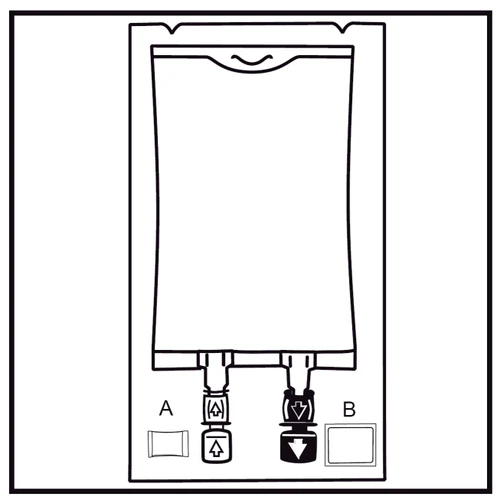
The bag wall damage indicator (Oxalert) A must be checked before removing the outer bag. If the indicator is black, the outer bag is damaged and the product must be destroyed.
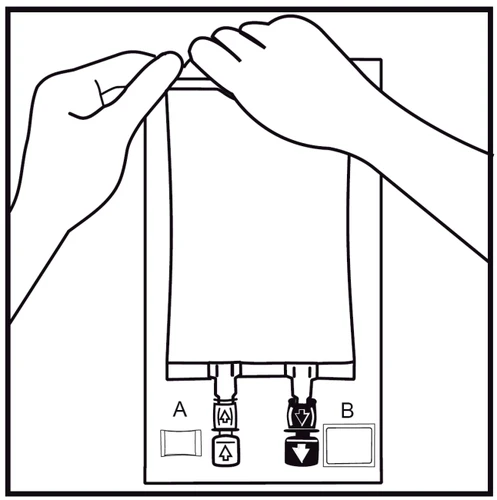
Remove the outer bag by tearing the seal at the top and pulling along the packaging. The bag wall damage indicator A and oxygen absorber B should be removed.
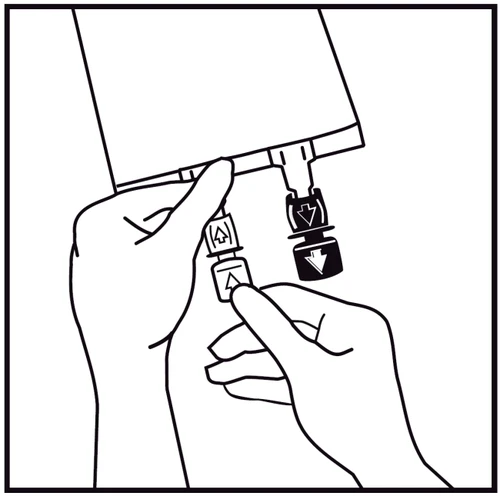
If additional substances are to be added, remove the single-use closure plug marked with an arrow, protecting the white port for administration of these substances.
If no additional substances are added, proceed to step 5.
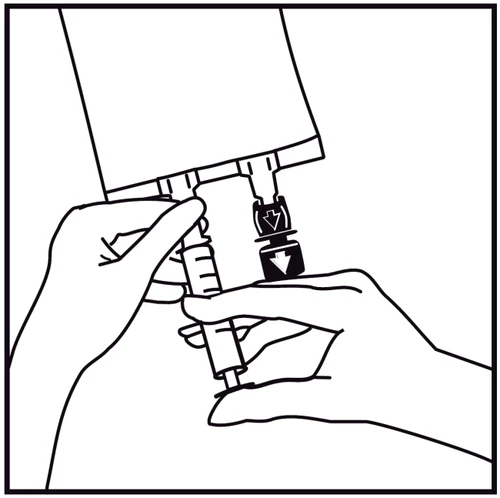
Insert a needle and administer the additional substances (with documented compatibility) through the center of the injection site. Use syringes with needles of gauge 18 to 23 G and maximum length of 40 mm.
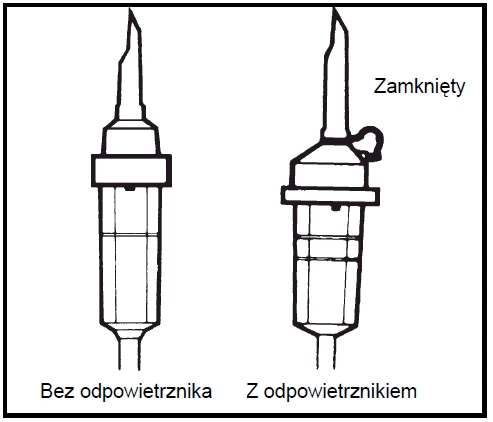
Use an infusion pump without an air vent or close the air inlet if the pump has one. Follow the infusion pump’s operating instructions. Use an infusion device with a connector diameter as specified in ISO 8536-4, 5.6 ± 0.1 mm.
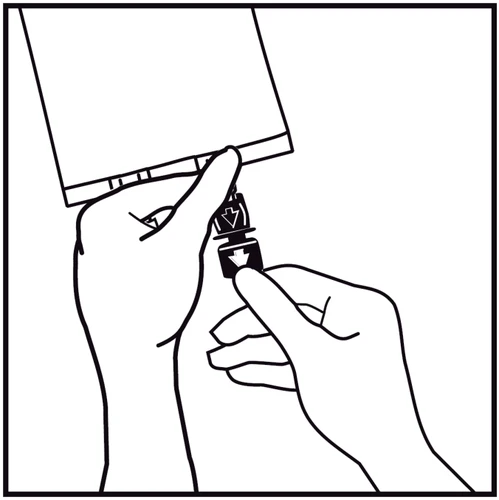
Remove the single-use closure plug protecting the blue infusion port.
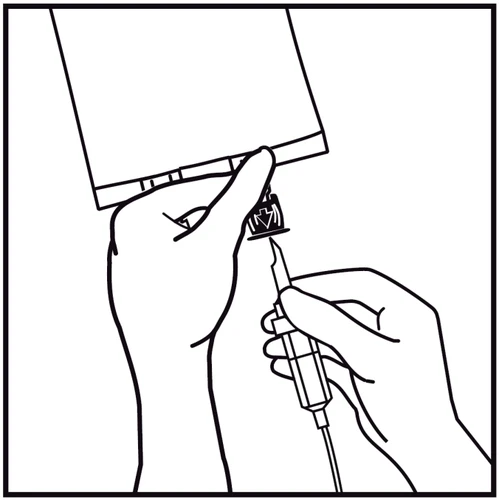
Hold the base of the infusion port. Insert the infusion set spike into the infusion port and gently screw it in until fully inserted.
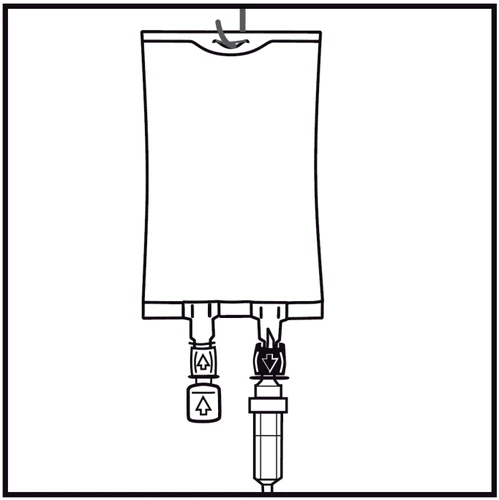
Hang the bag using the designated hole and begin infusion.