Instillido
Poland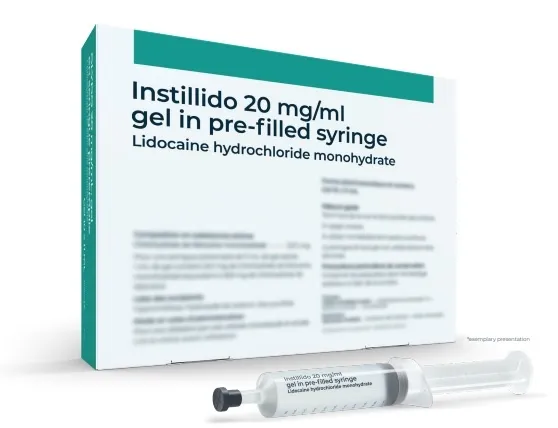
Table of Contents
Package leaflet: Information for
the patient
Instillido, 20 mg/mL, gel in ampoule-syringe
Lidocaine hydrochloride (as lidocaine hydrochloride monohydrate)
Please read all of this leaflet carefully before using this medicine, because it contains
important information for the patient.
- Keep this leaflet, as you may need to read it again.
- If you have any doubts, please consult your doctor, pharmacist, or nurse.
- This medicine has been prescribed for a specific individual. Do not pass it on to others. This medicine may harm another person, even if their symptoms are identical.
- If you experience any adverse reactions, including any not listed in this leaflet, inform your doctor, pharmacist, or nurse. See section 4.
Leaflet contents
- What Instillido is and what it is used for
- Important information before using Instillido
- How to use Instillido
- Possible side effects
- How to store Instillido
- Contents of the pack and other information
1. What Instillido is and what it is used for
Instillido is a sterile gel containing the active substance lidocaine hydrochloride (as lidocaine hydrochloride monohydrate). In this leaflet, it will be referred to as lidocaine.
Lidocaine has a local anaesthetic effect and is used to numb the area of the body where the gel is applied. It blocks the transmission of pain signals from nerves to the brain, thereby preventing the sensation of pain.
Thanks to its local anaesthetic action and properties enabling coating of surfaces of catheters, endoscopes, or other medical devices, Instillido is intended to reduce discomfort and facilitate procedures during certain examinations and interventions. Instillido is used for:
- instillation into the urethra before insertion or replacement of a catheter, and during cystoscopy, when a doctor inserts a tube through the urethra to examine the urinary bladder.
- use during proctoscopy/rectoscopy (medical procedures in which an instrument called an endoscope is used to examine the rectal cavity or rectum). During this procedure, the medical product Instillido is administered into the rectal cavity/rectum and (or) used to coat the surface of the instrument prior to insertion.
Due to its local anaesthetic effect, Instillido is also used:
- to relieve pain caused by cystitis.
Instillido is indicated for use in adults, adolescents (over 12 years of age), and children aged 2 to 12 years.
Your doctor will explain to you the specific procedure or condition for which Instillido is being used.
The medicine is usually administered by a doctor, but may also be given by the patient or caregiver, for example, for self-catheterization (see section 3, "How to use Instillido").
2. Important information before using Instillido
When not to use Instillido
- if the patient is allergic to lidocaine hydrochloride or any of the other ingredients of this medicine (listed in section 6).
- if the patient is allergic to certain other local anaesthetics of the amide type.
- in children under 2 years of age.
Warnings and precautions
Before starting to use Instillido, discuss this with your doctor or pharmacist.
Before using this medicine, the doctor must know whether the patient has or has had any of the
following conditions, diseases or situations:
- wounds, mucosal damage or ulceration/inflammation at or around the proposed site of administration.
- impaired liver or kidney function, acute condition, debilitation or sepsis ("blood infection"). The doctor may reduce the dose of Instillido.
- slow heart rate, cardiac or respiratory dysfunction (respiratory tract disorders).
- weak heart (heart failure) or cardiac conduction disorders (atrioventricular block).
- medical shock.
- tendency to seizures (epileptic fits) or epilepsy.
- muscle disease (myasthenia gravis).
- a rare inherited blood disorder called glucose-6-phosphate dehydrogenase deficiency.
- a condition related to blood pigment called methemoglobinemia.
- porphyria (a disorder affecting blood formation).
- the patient is taking medicines used to treat heart rhythm disorders, known as class III antiarrhythmics (e.g. amiodarone), because their effect on the heart may be enhanced. See also section "Instillido with other medicines".
You should also inform the doctor if the patient is using other medicines containing lidocaine frequently and/or in high doses, as this may cause serious adverse reactions.
If a large amount of Instillido is administered into the urethra and a large amount of gel enters the bladder, or if the urethra is ulcerated/inflamed, this may generally lead to increased absorption of lidocaine through the mucous membranes, especially in children and elderly patients, causing serious adverse reactions (see also section 3 "Use of a dose higher than recommended of Instillido").
Instillido with other medicines
Tell your doctor or pharmacist about all medicines the patient is currently using or has recently used, as well as any medicines the patient plans to use. Lidocaine may affect the action of other medicines, and other medicines may affect how lidocaine works.
In particular, tell the doctor if the patient is taking/using any of the following medicines:
- antiarrhythmics – medicines used to treat heart rhythm disorders (e.g. mexiletine, amiodarone).
- calcium channel antagonists – medicines used for heart conditions or high blood pressure (e.g. diltiazem, verapamil).
- beta-blockers (e.g. propranolol, metoprolol) – used to treat high blood pressure or angina (chest pain). These medicines may have an enhanced effect on the heart.
- other medicines containing lidocaine or certain other local anaesthetics (amide type), because their effects may be unpredictably intensified.
- cimetidine, used to treat gastric hyperacidity, peptic ulcer disease of the stomach and duodenum. Concurrent use of this medicine may increase the risk of adverse reactions.
- fluvoxamine, used to treat depression.
- erythromycin (an antibiotic).
- protease inhibitors used in the treatment of HIV infection (e.g. ritonavir).
- medicines used to treat infections, called sulfonamides and nitrofurantoin.
- medicines used to treat epilepsy, called phenytoin and phenobarbital.
Pregnancy and breastfeeding
If the patient is pregnant or breastfeeding, suspects she may be pregnant, or is planning to have a child, she should consult her doctor before using this medicine.
During pregnancy and breastfeeding, Instillido should be used only after careful consideration by the doctor of the benefits and risks.
Driving and operating machinery
The effect on the ability to drive and operate machinery is unlikely, but cannot be completely ruled out in cases of increased individual sensitivity. If drowsiness, dizziness or visual disturbances occur, the patient should not drive or operate any tools or machinery.
3. How to use Instillido
The medicine is usually administered by a properly trained and experienced doctor.
If the patient performs the treatment themselves, e.g. performs self-catheterization (inserts a plastic
tube (catheter) into their own urethra), this medicine should always be used as directed by the
doctor and in accordance with the instructions below for applying the gel. If in doubt, consult your
doctor.
The onset of action of Instillido is observed within 5–15 minutes after application. The anaesthetic
effect usually lasts from 20 to 30 minutes.
Dosage
The doctor will decide on the most appropriate dosage in each individual case, depending on age and
health status, as well as the site of application, method used, and patient response.
Recommended dosage:
Adults
Administration into the urethra
Men
To achieve adequate pain relief, 20 mL of gel is usually required.
When anaesthesia is particularly important, e.g. during catheterization or cystoscopy, the doctor may
administer a larger amount of gel (up to 40 mL).
For catheterization, small volumes of gel (5–10 mL) are usually sufficient for lubrication.
Women
The doctor will individually adjust the amount of gel administered depending on the anatomical
conditions of the urethra. Usually, 5–10 mL of gel is administered in small portions to fill the entire
urethra.
Relief of pain caused by cystitis
Sufficient pain relief usually requires 10–20 mL of gel.
The doctor will determine the frequency and duration of administration based on the patient's condition and symptoms. Maximum dosage: 20 mL of gel once daily.
Proctoscopy/rectoscopy
To achieve adequate pain relief, the doctor usually administers 10–20 mL of gel into the anal cavity/rectum and coats the surface of the endoscope with a small amount of gel.
Maximum dosage
The dosage depends on the site of application. The safe dosage for use in the urethra and urinary bladder in adults is 40 mL of gel (approximately 800 mg of lidocaine hydrochloride). The maximum recommended daily dose is approximately 800 mg of lidocaine hydrochloride.
Special patient populations
The doctor may decide to reduce the dose if the patient is elderly, seriously ill, debilitated, has liver or kidney problems, or has sepsis or blood infection (‘blood poisoning’). The maximum dose of lidocaine hydrochloride must not exceed 2.9 mg/kg body weight.
Children and adolescents
Children under 2 years of age
Instillido must not be used in children under 2 years of age.
Children (aged 2–12 years) and adolescents (over 12 years)
The doctor will determine the dose based on the child's age, body weight, and physical condition.
In children (aged 2–12 years), the maximum dose of lidocaine hydrochloride must not exceed 2.9 mg/kg body weight.
Method of administration
Pre-filled syringes with graduations containing 6 mL or 11 mL of gel are available. The doctor will select the appropriate size depending on the required amount.
Each graduation mark on the syringe corresponds to approximately 1 mL of gel (20.1 mg of lidocaine hydrochloride).
For (self-)catheterization (insertion into the urethra)
Follow the instructions below:
- Wash your hands. Wash and disinfect the genital area.
- When everything is ready for use, open the blister pack.
- Before removing the cap from the syringe tip, press the plunger slightly to release any resistance.
This will help ensure smooth and even emptying of the syringe.
Figure 1
- Remove the cap from the syringe tip. The syringe is now ready for use. Figure 2
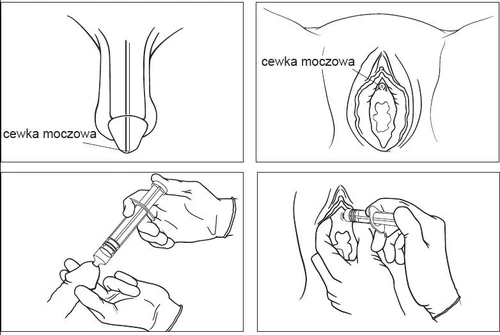
- Insert the tip into the urethral opening and press the plunger slowly and evenly to expel the gel into the urethra. Figure 3
- After administering the gel, wait several minutes for the anaesthetic to take full effect. Full anaesthetic effect occurs within 5 to 15 minutes after administering the entire contents of the pre-filled syringe.
Figure 1 Figure 2
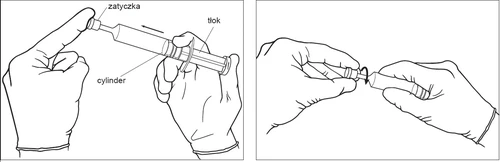
Figure 3
Men: Women:
For cystoscopy
The doctor administers the medicine into the urethra and (or) coats the surface of the endoscope with it.
For proctoscopy/rectoscopy
The doctor administers the medicine into the anal cavity/rectum and (or) coats the surface of the endoscope with it.
The syringe is intended for single use only.
Use immediately after opening the blister pack. The syringe and any unused gel remaining after one application must be discarded.
Duration of treatment
For examinations/procedures, Instillido is usually used only in one or two doses or over a short treatment period.
If a patient has been prescribed Instillido for self-administration, the doctor will decide, depending on the patient's condition, how long the medicine should be used.
Use of more than the recommended dose of Instillido
Administration of Instillido by a doctor
Since this medicine is usually administered by a trained doctor, it is unlikely that the patient will receive too high a dose of Instillido. Nevertheless, if the patient believes they have received too high a dose or begin to experience the symptoms of overdose listed below, they must immediately inform the person administering Instillido. The doctor will know how to manage these symptoms and will provide necessary treatment.
Self-administration of Instillido or administration by a caregiver during self-catheterization
Whether the patient experiences symptoms of overdose depends on the concentration of this medicine in the blood. The higher the level of lidocaine in the blood, the more serious the overdose symptoms may be. Usually, only small amounts of the active substance, lidocaine, from Instillido are absorbed into the blood. Excessive absorption of lidocaine may occur if the application site is damaged.
The first signs of overdose may include: hearing, vision, speech and/or coordination problems, yawning, restlessness, dizziness, nausea, and vomiting.
In case of overdose, contact a doctor or hospital emergency department immediately, even if no symptoms are present.
If you have any further questions about the use of this medicine, consult your doctor, pharmacist, or nurse.
4. Possible adverse reactions
Like all medicines, this medicine can cause adverse reactions, although not everyone will experience them.
Lidocaine is generally well tolerated provided the medicine is used in accordance with the
recommendations given in section "3. How to use Instillido" and necessary precautions are observed
(see section "2. Important information before using Instillido").
Some adverse reactions may be serious. Immediate medical help should be sought if the patient
experiences an allergic reaction (hypersensitivity) causing:
- swelling of the hands, feet, face, lips, mouth, tongue or throat
- difficulty breathing
- breathlessness due to narrowing of the airways (bronchospasm)
- skin problems such as itchy skin or rash
- hives (urticaria)
- low blood pressure and shock
These adverse reactions are rare (may occur in less than 1 in 1,000 people).
Other adverse reactions may include:
Very rare (may occur in less than 1 in 10,000 people)
- irritation at the site of administration.
Symptoms of overdose may occur as a result of rapid absorption (from the site of administration into the blood) or overdose (see also section 3, "Use of a larger than recommended dose of Instillido").
Reporting of adverse reactions
If any adverse reactions occur, including any adverse reactions not listed in this leaflet, inform a doctor, pharmacist or nurse.
Adverse reactions can be reported directly to the Department of Monitoring Adverse Drug Reactions of the Office for Registration of Medicinal Products, Medical Devices and Biocidal Products:
Al. Jerozolimskie 181C,
02-222 Warsaw,
tel.: 22 49-21-301,
fax: 22 49-21-309,
Website: https://smz.ezdrowie.gov.pl .
Adverse reactions can also be reported to the marketing authorization holder.
Reporting adverse reactions helps to provide more information on the safety of the medicine.
5. How to store Instillido
Keep the medicine out of the sight and reach of children.
Do not use this medicine after the expiry date stated on the label/blister/outer carton, indicated by the abbreviation "EXP". The expiry date refers to the last day of the stated month.
There are no special storage precautions regarding the temperature for this medicinal product.
Keep the blisters in the outer packaging to protect from light.
Keep the ampoule-syringe in the unopened blister until the time of use.
Instillido pre-filled syringes are for single use only. Any unused syringe and gel remaining after one application must be discarded.
Medicines must not be disposed of via wastewater. Ask your pharmacist how to dispose of medicines no longer required. Such measures help protect the environment.
6. Contents of the package and other information
What Instillido contains
- The active substance in Instillido is lidocaine in the form of lidocaine hydrochloride monohydrate. 1 mL of gel contains 20.1 mg of lidocaine hydrochloride, equivalent to 21.5 mg of lidocaine hydrochloride monohydrate.
6 mL pre-filled syringe
One 6 mL pre-filled syringe contains 120.6 mg of lidocaine hydrochloride.
11 mL pre-filled syringe
One 11 mL pre-filled syringe contains 221.1 mg of lidocaine hydrochloride.
- Other ingredients: hypromellose, sodium hydroxide (for pH adjustment), purified water.
What Instillido looks like and contents of the pack
A clear, almost colourless, sterile gel.
The medicinal product Instillido is available in a sterile polypropylene pre-filled syringe with a polypropylene plunger, bromobutyl rubber stopper (siliconized), and a tip cap made of bromobutyl rubber (siliconized). Each pre-filled syringe is individually packed in a blister made of PP/paper. The pre-filled syringe contains 6 mL or 11 mL of gel. Outer packaging: cardboard box.
Each graduation mark on the syringe corresponds to approximately 1 mL of gel (20.1 mg of lidocaine hydrochloride).
Pack sizes:
Pack containing 10 pre-filled syringes, each containing 6 mL of gel.
Pack containing 10 pre-filled syringes, each containing 11 mL of gel.
Not all pack sizes may be marketed.
Marketing Authorization Holder
Farco-Pharma GmbH
Gereonsmühlengasse 1-11
50670 Köln
Germany
E-mail: [email protected]
Manufacturer
Klosterfrau Berlin GmbH
Motzener Straße 41
12277 Berlin
Germany
This medicinal product is authorized in the European Economic Area countries under the following names:
| Member State | Medicinal product name |
| Denmark | Instillido |
| France | Glydo 20 mg/ml gel |
| Germany | Instillido 20 mg/ml Gel in a pre-filled syringe |
| Sweden | Instillido 19 mg/ml gel |
| United Kingdom (Northern Ireland) | Glydo 19 mg/ml gel in pre-filled syringe |
| Norway | Instillido 20 mg/ml gel in pre-filled syringe |
| Finland | Instillido 20 mg/ml gel |
| Belgium | Instillido 20 mg/ml gel |
| Croatia | Instillido 20 mg/ml gel |
| Spain | Instillido 20 mg/ml gel en jeringa precargada |
| Poland | Instillido, 20 mg/mL, gel in ampoule-syringe |
| Estonia | Instillido 20 mg/ml gel |
| Lithuania | Lidocaine hydrochloride Instillido 20 mg/ml gel |
| Slovenia | Instillido 20 mg/ml gel in pre-filled syringe |
| Romania | Instillido 20 mg/ml gel |
| Bulgaria | Instillido 20 mg/ml gel Инстилидо 20 mg/ml гел |