Infectofos
Poland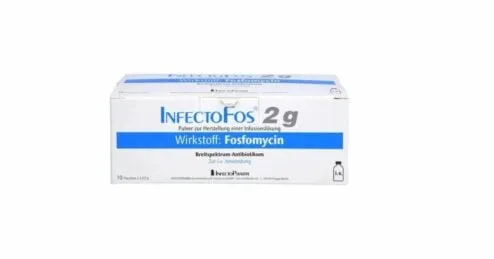
Table of Contents
- PACKAGE LEAFLET: INFORMATION FOR THE USER
- 1. What InfectoFos is and what it is used for
- 2. Important information before using InfectoFos
- 3. How to use InfectoFos
- 4. Possible adverse reactions
- 5. How to store InfectoFos
- 6. Contents of the packaging and other information
- Information intended exclusively for healthcare professionals or medical personnel:
pal-fosfomycin13421000-pl-18-0
PACKAGE LEAFLET: INFORMATION FOR THE USER
InfectoFos, 40 mg/ml, powder for solution for infusion
Fosfomycinum
Please read all of this leaflet carefully before this medicine is administered, as it contains
important information for the patient.
- Keep this leaflet, as you may need to read it again.
- If you have any further questions, please ask your doctor, pharmacist or nurse.
- This medicine has been prescribed for a specific individual. Do not pass it on to others. It may harm them even if their symptoms are the same.
- If you experience any adverse reactions, including any not listed in this leaflet, tell your doctor, pharmacist or nurse. See section 4.
Leaflet contents:
- What InfectoFos is and what it is used for
- What you need to know before you are given InfectoFos
- How to use InfectoFos
- Possible side effects
- How to store InfectoFos
- Contents of the pack and other information
1. What InfectoFos is and what it is used for
InfectoFos contains the active substance fosfomycin. It belongs to a group of medicines called
antibiotics. It works by killing microorganisms (bacteria) that cause serious infections. Your doctor has decided to prescribe InfectoFos to help your body fight the infection. Effective treatment of the condition from which you are suffering is important.
InfectoFos is used in adults, adolescents and children for the treatment of bacterial infections of:
- urinary tract;
- heart – sometimes referred to as endocarditis;
- bones and joints;
- lungs – known as pneumonia;
- skin and subcutaneous tissue;
- central nervous system;
- abdominal cavity;
- bloodstream, when caused by the pathogens listed above.
pal-fosfomycin13421000-pl-18-0
2. Important information before using InfectoFos
When not to use InfectoFos
- if the patient is allergic to fosfomycin or to any of the other ingredients of this medicine (listed in section 6).
Warnings and precautions
Before starting treatment with InfectoFos, consult a doctor, pharmacist, or nurse if the patient has:
- heart problems (heart failure), especially when taking cardiac glycosides (due to possible hypokalaemia);
- high blood pressure (hypertension);
- certain endocrine disorders (hyperaldosteronism);
- high blood sodium levels (hypernatremia);
- fluid accumulation in the lungs (pulmonary oedema);
- kidney problems. In such cases, the doctor may need to adjust the dose (see section 3 of this leaflet);
- a history of diarrhoea following the use of other antibiotics.
Considerations
InfectoFos may cause serious adverse effects. These may include allergic reactions, inflammation of the large intestine, and reduced white blood cell count. While taking this medicine, be vigilant for specific symptoms to reduce the risk of complications. See "Serious adverse effects" in section 4.
InfectoFos and other medicines
Inform your doctor or pharmacist about all medicines currently used, recently taken, or planned for use.
- anticoagulants, as fosfomycin and other antibiotics may affect their ability to prevent blood clots.
Pregnancy and breastfeeding
If the patient is pregnant, breastfeeding, suspects she may be pregnant, or is planning to have a child, she should consult a doctor or pharmacist before using this medicine.
Fosfomycin may pass to the unborn child through the placenta or to the infant through breast milk. The doctor will prescribe this medicine during pregnancy or breastfeeding only if clearly necessary.
Driving and operating machinery
Administration of InfectoFos may be associated with adverse effects such as confusion or asthenia. If such adverse effects occur, the patient should not drive or operate machinery.
Important information about certain ingredients of InfectoFos
This medicine contains 14 mmol (320 mg) of sodium per 1 g of fosfomycin. This corresponds to 16% of the maximum recommended daily dietary sodium intake for adults. One vial containing 2 g of fosfomycin contains 28 mmol (640 mg) of sodium, one vial containing 4 g of fosfomycin contains 56 mmol (1280 mg) of sodium, and one vial containing 8 g of fosfomycin contains 111 mmol (2560 mg) of sodium.
This should be taken into account in patients who are monitoring their dietary sodium intake.
A low-sodium diet should be followed during treatment with this medicine to reduce sodium intake.
3. How to use InfectoFos
InfectoFos is administered to the patient by a doctor or nurse intravenously (as an intravenous infusion).
Dosage
The dose amount and frequency depend on:
- the type and severity of infection,
- kidney function. In children, dosing also depends on:
- the child's body weight,
- the child's age. In case of kidney problems or the need for dialysis, the doctor may need to reduce the dose of the medicine.
Method and route of administration
Intravenous administration. InfectoFos is administered by a doctor or nurse intravenously (as an intravenous infusion). The infusion usually lasts 15–60 minutes, depending on the dose. The medicine is usually given two, three, or four times daily.
Duration of treatment
The doctor will decide how long treatment should last, depending on how quickly the patient's condition improves. During treatment of bacterial infections, it is important to complete the full course of treatment. Even after fever subsides and symptoms improve, treatment should be continued for several more days.
In certain types of infections, such as bone infections, an even longer treatment period after symptom resolution may be required.
If more than the recommended dose of InfectoFos has been administered
It is unlikely that a doctor or nurse would administer too high a dose of the medicine to the patient.
If the patient thinks they have been given too high a dose, they should immediately ask the healthcare provider.
If there are any further doubts regarding the use of this medicine, consult a doctor, pharmacist, or nurse.
pal-fosfomycin13421000-pl-18-0
4. Possible adverse reactions
Like all medicines, this medicine can cause adverse reactions, although not everyone will experience them.
Serious adverse reactions
If you notice any of the following serious adverse reactions,
contact your doctor immediately – urgent treatment may be required:
- Symptoms of a severe allergic reaction (very rare: may affect up to 1 in 10,000 people). These may include: difficulty breathing or swallowing, sudden wheezing, dizziness, swelling of the eyelids, face, lips or tongue, rash or itching.
- Severe and persistent diarrhoea, possibly accompanied by abdominal pain or fever (frequency not known). This may be a sign of a serious intestinal inflammation. Do not take antidiarrhoeal medicines that reduce intestinal peristalsis (antiperistaltic medicines).
- Yellowing of the skin or whites of the eyes (jaundice, frequency not known). This may be an early sign of liver problems.
- Confusion, muscle twitching or irregular heartbeat. This may be caused by elevated sodium levels or decreased potassium levels in the blood (common: may affect up to 1 in 10 people). If you notice any of the following adverse reactions, contact your doctor or nurse as soon as possible:
- Pain, burning, redness or swelling along the vein where this medicine is being infused (common: may affect up to 1 in 10 people).
- Increased tendency to bleeding, bruising or infections. This may be due to a reduced number of white blood cells or platelets (frequency not known). Other adverse reactions may include: Common adverse reactions (may occur in up to 1 in 10 people)
- Disturbances in taste sensation
Uncommon adverse reactions (may affect up to 1 in 100 people)
- Nausea, vomiting or mild diarrhoea
- Headache
- Increased liver enzyme activity in blood, potentially associated with liver problems
- Rash
- Weakness Adverse reactions with unknown frequency (frequency cannot be estimated from available data)
- Liver problems (hepatitis)
- Itching, urticaria
pal-fosfomycin13421000-pl-18-0
Reporting of adverse reactions
If any adverse symptoms occur, including any adverse reactions not listed
in this leaflet, inform your doctor, pharmacist or nurse. Adverse reactions
can be reported directly to the Department of Monitoring Adverse Drug Reactions of the Office for Registration of Medicinal Products, Medical Devices and Biocidal Products
Al. Jerozolimskie 181C
02-222 Warsaw
Tel.: + 48 22 49 21 301
Faks: + 48 22 49 21 309
Website: https://smz.ezdrowie.gov.pl
Adverse reactions can also be reported to the marketing authorization holder.
Reporting adverse reactions helps to provide more information on the safety of this medicine.
5. How to store InfectoFos
- Keep this medicine out of sight and reach of children.
- There are no special requirements for storage of this medicinal product.
- Do not use this medicine after the expiry date stated on the carton and label after "Expiry date (EXP)". The expiry date refers to the last day of the specified month.
- After reconstitution with solvent, the medicine should be used immediately or stored in a refrigerator (at 2–8°C), protected from light, for up to 24 hours.
Medicines must not be disposed of via wastewater or household waste. Ask your pharmacist how to dispose of medicines no longer in use. Such measures help protect the environment.
6. Contents of the packaging and other information
What InfectoFos contains
The active substance is fosfomycin. Each ml of infusion solution contains 40 mg of fosfomycin.
- Each InfectoFos 2 g vial containing 2.69 g of powder for preparing a solution in 50 ml of solvent contains 2.64 g of sodium fosfomycin, equivalent to 2 g of fosfomycin and 0.64 g of sodium.
- Each InfectoFos 4 g vial containing 5.38 g of powder for preparing a solution in 100 ml of solvent contains 5.28 g of sodium fosfomycin, equivalent to 4 g of fosfomycin and 1.28 g of sodium.
- Each InfectoFos 8 g vial containing 10.76 g of powder for preparing a solution in 200 ml of solvent contains 10.56 g of sodium fosfomycin, equivalent to 8 g of fosfomycin and 2.56 g of sodium.
The other ingredient is succinic acid.
What InfectoFos looks like and contents of the pack
This medicine is a white or cream-coloured powder for preparing an infusion solution. The infusion solution is clear, colourless or slightly yellowish.
It is packed in colourless glass vials (type I) with a bromobutyl rubber stopper and an aluminium pull-off cap.
pal-fosfomycin13421000-pl-18-0
Three vial sizes are available:
- Vials containing 2 g of fosfomycin – each pack contains 10 vials,
- Vials containing 4 g of fosfomycin – each pack contains 10 vials,
- Vials containing 8 g of fosfomycin – each pack contains 1 or 10 vials.
Marketing Authorisation Holder and Manufacturer
InfectoPharm Arzneimittel und Consilium GmbH
Von-Humboldt-Str. 1
64646 Heppenheim
Germany
e-mail: [email protected]
This medicinal product is authorised for marketing in the European Economic Area countries under the following names:
United Kingdom (Northern Ireland): Fomicyt 40 mg/ml Powder for solution for infusion
Italy: InfectoFos
Poland: InfectoFos, 40 mg/ml, powder for solution for infusion
Ireland: Fomicyt 40 mg/ml Powder for solution for infusion
Netherlands: Fomicyt 40 mg/ml Poeder voor oplossing voor infusie
Greece: Fomicyt 40 mg/ml Κόνις για διάλυμα προς έγχυση
Croatia: Fomicyt 40 mg/ml prašak za otopinu za infuziju
Denmark/Finland/Norway/Sweden: Fosfomycin Infectopharm
Austria: Fomicyt 40 mg/ml Pulver zur Herstellung einer Infusionslösung
Belgium: Fomicyt 40 mg/ml poeder voor oplossing voor infusie / Fomicyt 40 mg/ml Poudre pour solution pour perfusion / Fomicyt 40 mg/ml Pulver zur Herstellung einer Infusionslösung
Czech Republic: Fomicyt
Hungary: Fomicyt 40 mg/ml por oldatos infúzióhoz
Romania: Fomicyt 40 mg/ml pulbere pentru soluție perfuzabilă
Slovakia: Fomicyt
__________________________________________________________________________________
Information intended exclusively for healthcare professionals or medical personnel:
Product InfectoFos 40 mg/ml powder for solution for infusion is intended for single use only. Any unused solution must be discarded.
Preparation of the infusion solution
The medicinal product InfectoFos must be dissolved and diluted before administration.
Water for injections, 5% glucose solution for infusion (50 mg/ml), or 10% glucose solution for infusion (100 mg/ml) may be used as solvents for dissolution and dilution. Solvents containing sodium chloride must not be used.
Dissolution
Shake the vial before dissolution to loosen the powder. Dissolve the contents of a 2 g or 4 g vial with 20 ml, and the contents of an 8 g vial with 40 ml of solvent. Shake vigorously to dissolve. A slight increase in temperature may occur during dissolution of the powder.
Warning: This intermediate solution is not intended for direct infusion. Withdraw the entire solution from the original vial. Transfer the withdrawn solution into an infusion bag or another suitable infusion container for further dilution as described below.
pal-fosfomycin13421000-pl-18-0
Dilution
Transfer the dissolved contents of the 2 g vial into an infusion container containing an additional 30 ml of solvent.
Transfer the dissolved contents of the 4 g vial into an infusion container containing an additional 80 ml of solvent.
Transfer the dissolved contents of the 8 g vial into an infusion container containing an additional 160 ml of solvent.
Displacement volume
The displacement volumes for the solutions are 1 ml for the 2 g pack size, 2 ml for the 4 g pack size, and 4 ml for the 8 g pack size. These volumes correspond to a 2% increase in volume. This should be taken into account if the entire volume of the final diluted solution is not used.
Administration method
The InfectoFos medicinal product is intended for intravenous administration.
The infusion duration should be at least 15 minutes for the 2 g pack size, at least 30 minutes for the 4 g pack size, and at least 60 minutes for the 8 g pack size.
Since inadvertent intra-arterial administration of products not specifically indicated for intra-arterial use may cause harmful effects, it is essential that fosfomycin be administered intravenously only.
Stability of the infusion solution
Chemical and physical stability of the solution prepared aseptically has been demonstrated for 24 hours at 25°C when protected from light.
From a microbiological standpoint, the solution should be used immediately. If the product is not used immediately, the user is responsible for the storage time and conditions prior to use, which under no circumstances should exceed 24 hours at 2–8°C, provided the solution was prepared under controlled and validated aseptic conditions.