Infanrix - ipv + hib
Poland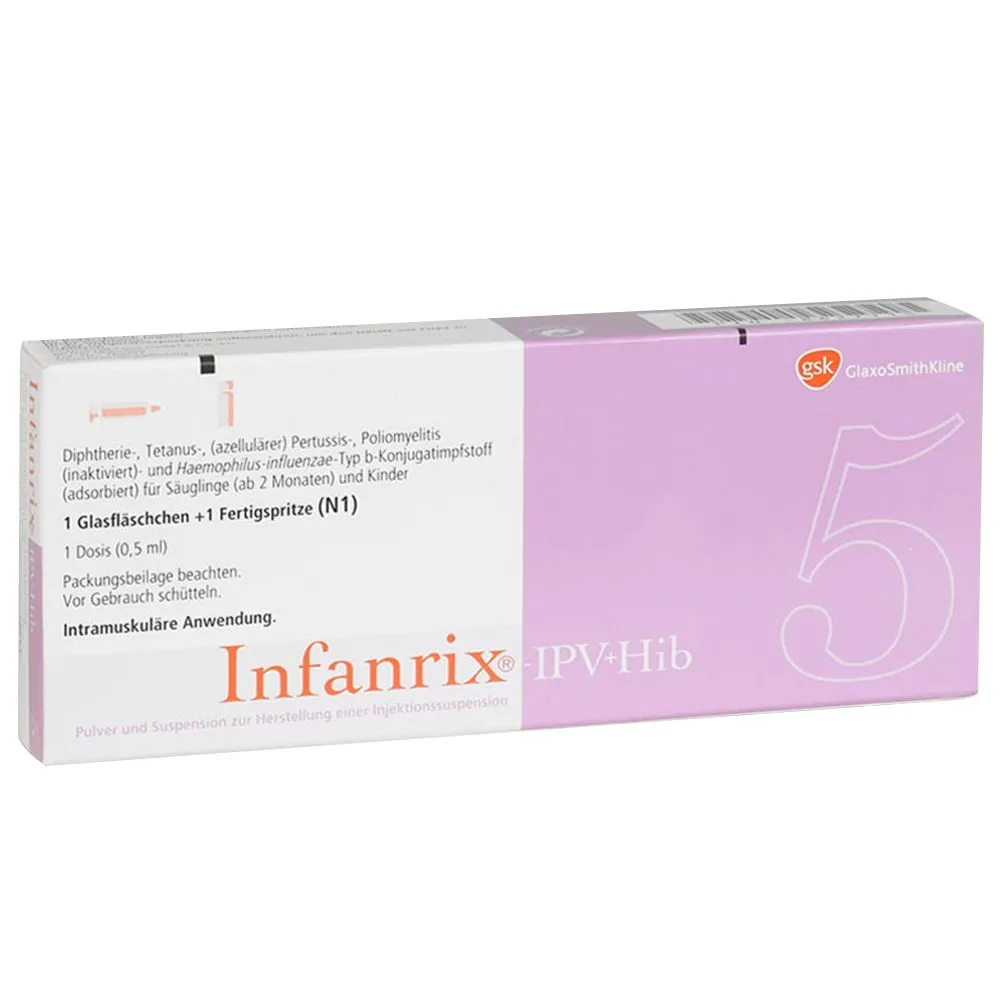
Table of Contents
- Package leaflet: Information for the user
- 1. What INFANRIX-IPV+Hib vaccine is and what it is used for
- 2. Important information before administering INFANRIX-IPV+Hib vaccine
- 3. How to administer INFANRIX-IPV+Hib vaccine
- 4. Possible adverse reactions
- 5. How to store the INFANRIX-IPV+Hib vaccine
- 6. Contents of the pack and other information
- Information intended exclusively for medical professionals:
Package leaflet: Information for the user
INFANRIX-IPV+Hib, Powder and suspension for reconstitution of suspension for injection
Vaccine against diphtheria (D), tetanus (T), pertussis (acellular, combined) (Pa),
poliomyelitis (inactivated) (IPV) and Haemophilus influenzae type b (Hib) (conjugate), adsorbed
Please read this leaflet carefully before the vaccine is administered, as it contains
important information for the patient.
- Keep this leaflet, as you may need to read it again.
- If you have any further questions, ask your doctor, pharmacist or nurse.
- This vaccine has been prescribed for a specific individual only. Do not pass it on to others.
- If any side effects occur in the patient, including any side effects not listed in this leaflet, inform your doctor, pharmacist or nurse. See section 4.
Leaflet contents:
- What INFANRIX-IPV+Hib vaccine is and what it is used for
- Important information before vaccination with INFANRIX-IPV+Hib
- How to use INFANRIX-IPV+Hib vaccine
- Possible side effects
- How to store INFANRIX-IPV+Hib vaccine
- Contents of the pack and other information
1. What INFANRIX-IPV+Hib vaccine is and what it is used for
INFANRIX-IPV+Hib is a vaccine used to prevent diphtheria, tetanus, pertussis (whooping cough), poliomyelitis (polio, Heine-Medin disease) and infections caused by Haemophilus influenzae type b in children.
The component of the vaccine against diphtheria, tetanus, pertussis and polio (DTPa-IPV) is a cloudy, white suspension in a pre-filled syringe (0.5 ml).
The component of the vaccine against Hib is a white powder contained in a glass vial.
Both components of the vaccine must be mixed together before administering the vaccine to the child.
-
Diphtheria: Diphtheria is an infectious disease, most commonly affecting the respiratory tract, and sometimes the skin. In the respiratory tract, inflammation and swelling usually develop, leading to severe breathing difficulties and sometimes suffocation. Diphtheria bacteria also produce toxins (poisons) that can damage nerves, cause heart disease, and even lead to death.
-
Tetanus: Tetanus bacteria enter the human body through cuts, scratches or wounds in the skin. Injuries posing the highest risk of tetanus infection include: burns, fractures, deep wounds or wounds contaminated with soil, dust, horse manure, or wooden splinters. These bacteria produce toxins (poisons) that can cause muscle stiffness, painful muscle spasms, seizures, and even death. Muscle spasms can be so severe that they lead to spinal fractures.
-
Pertussis (whooping cough): Pertussis is a highly contagious respiratory tract disease. It causes severe coughing fits that may interfere with normal breathing. The cough associated with this disease is very characteristic – it is said that people suffering from pertussis "cough until they gasp for breath." The cough may persist for 1–2 months or longer. Pertussis bacteria can also cause ear infections, bronchitis which may last a very long time, pneumonia, seizures, brain damage, and even death.
-
Poliomyelitis (Heine-Medin disease, polio): Poliomyelitis, sometimes simply called polio, is a viral infection characterized by various symptoms. It often causes a mild illness, but in some individuals it may lead to permanent damage or even death. In its most severe form, the disease causes muscle paralysis (muscles unable to perform their functions), which may involve respiratory muscles or muscles required for independent movement. Limbs affected by this condition may become deformed and painful.
-
Haemophilus influenzae type b (Hib): Hib infection most commonly leads to inflammation and swelling of the brain. Consequences of a previous Hib infection may include mental retardation, cerebral palsy, deafness, epilepsy or partial blindness. Hib infection can also lead to inflammation and swelling of the throat. Rarely, it may even result in death due to suffocation. Less frequently, infection may occur in the blood, heart, lungs, bones, joints, and tissues around the eyes and mouth.
The vaccine stimulates the body to produce its own immunity (antibodies) against the diseases listed above.
Vaccination is the best way to prevent the diseases described. None of the components of the vaccine are infectious.
2. Important information before administering INFANRIX-IPV+Hib vaccine
When not to use INFANRIX-IPV+Hib vaccine:
- If the child has a hypersensitivity to INFANRIX-IPV+Hib or to any of the other components of this vaccine (listed in section 6) or to neomycin, polymyxin or formaldehyde (substances present in the vaccine in trace amounts). Symptoms of hypersensitivity may include itchy skin rash, difficulty breathing, swelling of the face or tongue;
- If the child has ever had an allergic reaction to any vaccine against diphtheria, tetanus, pertussis (whooping cough), polio or Haemophilus influenzae type b infections;
- If the child has experienced any neurological disorders within 7 days after previous administration of a pertussis (whooping cough) vaccine;
- If the child has a high fever (above 38.0 °C). A mild infection, such as a cold, should not be a contraindication to vaccination, but you should inform the doctor first.
Warnings and precautions
Before starting administration of INFANRIX-IPV+Hib vaccine, discuss with the doctor:
- If the child has previously experienced any health problems after vaccination with INFANRIX-IPV+Hib or another pertussis (whooping cough) vaccine, particularly:
- high fever (≥ 40.0 °C) within 48 hours after vaccination,
- collapse or shock-like state within 48 hours after vaccination,
- persistent, inconsolable crying lasting at least 3 hours within 48 hours after vaccination,
- seizures or convulsions with or without fever within 3 days after vaccination;
- If the child suffers from an undiagnosed or progressive brain disorder or from epilepsy that is not controlled by treatment. The vaccine should be administered only after the condition has been stabilized;
- If the child has a tendency to febrile seizures, or if such cases have occurred in the family;
- If the child experiences bleeding or bruises easily.
In such cases, the doctor will decide on the appropriate timing and method of vaccination for the child.
Fainting may occur after or even before any injectable vaccine is administered. Therefore, inform the doctor or nurse if the child has ever fainted during an injection.
Administration of INFANRIX-IPV+Hib vaccine in patients with immune disorders
In children with health problems due to immune system disorders, the immune response to vaccination may be reduced. HIV infection does not constitute a contraindication to vaccination.
Interaction of INFANRIX-IPV+Hib vaccine with other medicines
Inform the doctor about all medicines currently taken or recently taken, as well as any vaccinations already administered.
In children receiving immunosuppressive drugs, the immune response to vaccination may be reduced.
Different pediatric vaccines should be administered at different injection sites.
Pregnancy and breastfeeding
As this vaccine is intended for use in children, there are no adequate data regarding its use during pregnancy and breastfeeding in humans.
Driving and operating machinery
Not applicable.
INFANRIX-IPV+Hib vaccine contains para-aminobenzoic acid, phenylalanine, sodium and potassium
INFANRIX-IPV+Hib contains para-aminobenzoic acid. It may cause allergic reactions (including delayed-type reactions) and, exceptionally, bronchospasm.
This vaccine contains 0.036 micrograms of phenylalanine per dose. Phenylalanine may be harmful for patients with phenylketonuria (PKU), a rare genetic disorder in which phenylalanine accumulates in the body because the body cannot eliminate it properly.
This vaccine contains less than 1 mmol (23 mg) of sodium per dose, meaning the vaccine is considered "sodium-free".
This vaccine contains potassium, less than 1 mmol (39 mg) of potassium per dose, meaning the vaccine is considered "potassium-free".
3. How to administer INFANRIX-IPV+Hib vaccine
The child should receive a total of 3 doses of the vaccine at intervals of at least one month.
The first dose may be administered from the second month of life, and the complete vaccination course should be completed within the first 6 months of life.
A booster dose is recommended during the second year of life.
Each dose is administered during a separate visit. The doctor or nurse will inform you when to bring your child for the next dose.
If the child does not receive the next dose of the vaccine at the scheduled time, it is essential to consult the doctor and arrange another visit.
Make sure the child completes the full vaccination course consisting of three doses, because otherwise the child may not be fully protected against the infectious diseases covered by the vaccine.
The INFANRIX-IPV+Hib vaccine will be administered as an intramuscular injection.
The vaccine must never be administered intravenously.
4. Possible adverse reactions
Like any vaccine, INFANRIX-IPV+Hib may cause adverse reactions, although they do not occur in every child.
The adverse reactions listed below may occur after vaccination:
Very common (may occur in 1 out of 10 doses of vaccine or more frequently): loss of appetite, irritability, unusual crying, restlessness, drowsiness, pain, redness and localized swelling (≤ 50 mm) at the injection site, fever (≥ 38°C).
Common (less frequent than 1 in 10 doses of vaccine): vomiting, diarrhoea, hard lump or localized swelling (> 50 mm) at the injection site.
Uncommon (less frequent than 1 in 100 doses of vaccine): upper respiratory tract infection, swelling of cervical, axillary or inguinal lymph nodes, cough, bronchitis, runny nose, rash, urticaria, fever (> 39.5°C), fatigue, diffuse swelling of the limb into which the vaccine was injected, sometimes involving the adjacent joint.
Rare (less frequent than 1 in 1,000 doses of vaccine): itching, dermatitis.
Very rare (less frequent than 1 in 10,000 doses of vaccine):
Adverse reactions that have very rarely occurred after marketing of INFANRIX-IPV+Hib or other vaccines containing diphtheria, tetanus or pertussis components include:
- Transient apnoea (cessation of breathing)
- In very premature infants (born before or at 28 weeks of gestation), prolonged intervals between breaths may occur within 2–3 days after vaccination.
- Bleeding or easier than usual bruising
- Allergic reactions. As with other injectable vaccines, there is a very small risk of allergic (hypersensitivity) reactions. Such a reaction may be recognized by the following symptoms:
- itchy rash on hands and feet,
- swelling around the eyes and face,
- difficulty breathing and swallowing. Such symptoms usually occur before leaving the doctor's office. Immediate treatment must be initiated in each such case.
- Convulsions (with or without fever), collapse, disturbances of consciousness or loss of consciousness
- Localized swelling, usually affecting the head and neck (angioedema)
- Swelling of the entire limb into which the vaccine was injected
- Vesicles at the injection site
If these symptoms persist or worsen, a doctor should be informed.
Do not be alarmed by this list of possible adverse reactions. It is possible that no adverse reactions will occur after vaccination.
Reporting of adverse reactions
If any adverse reactions occur, including any adverse reactions not listed in this leaflet, inform a doctor, pharmacist or nurse. Adverse reactions can be reported directly to the Department of Monitoring Adverse Drug Reactions of the Office for Registration of Medicinal Products, Medical Devices and Biocidal Products: Al. Jerozolimskie 181C, 02-222 Warsaw, tel.: 22 49-21-301, fax: 22 49-21-309
Website: https://smz.ezdrowie.gov.pl
Adverse reactions can also be reported to the marketing authorization holder.
Reporting adverse reactions helps to collect more information on the safety of the medicinal product.
5. How to store the INFANRIX-IPV+Hib vaccine
Store in a refrigerator (2 °C – 8 °C). Do not freeze.
Keep in the original packaging to protect from light.
Keep the vaccine out of sight and reach of children.
Do not use this vaccine after the expiry date stated on the packaging. The expiry date (EXP) refers to the last day of the stated month.
Batch number (Lot).
6. Contents of the pack and other information
What INFANRIX-IPV+Hib vaccine contains:
1 dose of vaccine (0.5 ml) after reconstitution contains:
Diphtheria toxoid not less than 30 IU
Tetanus toxoid not less than 40 IU
Bordetella pertussis antigens:
Pertussis toxoid 25 micrograms
Filamentous haemagglutinin 25 micrograms
Pertactin 8 micrograms
Poliovirus (inactivated):
type 1 (Mahoney strain) 40 D-antigen units
type 2 (MEF-1 strain) 8 D-antigen units
type 3 (Saukett strain) 32 D-antigen units
Haemophilus influenzae type b polysaccharide 10 micrograms
(ribosylribitol phosphate)
conjugated to tetanus toxoid as carrier protein approximately 25 micrograms
adsorbed on aluminium hydroxide, hydrated 0.5 milligrams Al
grown on VERO cell culture
Other components are:
lactose, sodium chloride (see also section 2, “INFANRIX-IPV+Hib vaccine contains sodium”),
Medium 199 (containing amino acids (including phenylalanine), mineral salts (including sodium and potassium),
vitamins (including para-aminobenzoic acid) and other substances), water for injections.
What INFANRIX-IPV+Hib vaccine looks like and contents of the pack:
The lyophilized Haemophilus influenzae type b (Hib) component is a white powder.
The suspension (DTPa-IPV) containing diphtheria toxoid, tetanus toxoid, pertussis antigens and
inactivated poliovirus is a white, opaque suspension.
Before administration, the powder and suspension are mixed together.
INFANRIX-IPV+Hib vaccine is available as a single-dose vial + pre-filled syringe,
in pack sizes of 1 or 10 units, with or without attached needles.
Not all pack types may be marketed.
Marketing Authorisation Holder and Manufacturer:
GlaxoSmithKline Biologicals S.A
rue de l’Institut 89
1330 Rixensart, Belgium
For further information, contact the representative of the Marketing Authorisation Holder.
GSK Services Sp. z o.o.
Rzymowskiego 53
02-697 Warsaw, Poland
Tel. +48 (22) 576 90 00
Information intended exclusively for medical professionals:
During storage, a white sediment and a clear supernatant liquid may form.
This is a normal phenomenon and does not affect the vaccine's efficacy.
Before reconstitution, the prefilled syringe containing the DTPa-IPV suspension should be shaken well to obtain a homogeneous suspension.
The DTPa-IPV suspension in the prefilled syringe, the Hib powder in the vial, and the reconstituted vaccine should all be inspected visually for any particulate matter or abnormal appearance prior to administration. If any such abnormalities are observed, the vaccine must be discarded.
The vaccine should be prepared by adding the entire contents of the DTPa-IPV suspension to the vial containing the Hib powder. The vaccine should be administered immediately after reconstitution. The reconstituted vaccine is more turbid than the DTPa-IPV suspension alone. After reconstitution and withdrawal of the suspension into a syringe, separation of the suspension into a clear phase and a gel-like phase may occur.
This does not indicate a reduction in vaccine quality.
If such separation occurs, the syringe contents should be shaken vigorously before administration. If any other changes in the appearance of the suspension are observed, the vaccine must be discarded.
Detailed instructions for vaccine preparation are provided below:
- Shake the prefilled syringe containing the DTPa-IPV suspension;
- Attach a needle to the prefilled syringe with DTPa-IPV suspension and transfer the entire contents into the vial containing Hib powder;
- Without removing the needle, shake the vial vigorously and check whether complete dissolution has occurred;
- Withdraw the mixture back into the prefilled syringe;
- Replace the attached needle with an injection needle and administer the vaccine immediately;
- If the vaccine is not administered immediately after reconstitution, the contents of the prefilled syringe should be shaken vigorously again before administration.
Instructions for the prefilled syringe
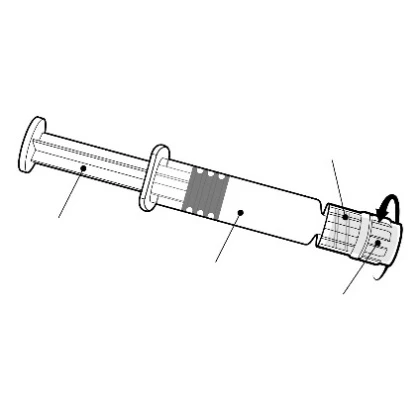
Luer Lock adapter
Hold the prefilled syringe by the barrel, not by the plunger.
Unscrew the cap of the prefilled syringe by turning it counterclockwise.
Plunger
Barrel
Cap
Needle cap
Attach the needle to the prefilled syringe by connecting the needle cap to the
Luer Lock adapter (LLA) and turning it a quarter turn clockwise until a click is felt, indicating secure locking.
Perform vaccine reconstitution according to the instructions above.
Do not remove the plunger from the barrel of the prefilled syringe. If this occurs, the vaccine must not be administered.
Disposal
Any unused product or waste material should be disposed of in accordance with local regulations.