Individual autoinjector set against chemical warfare agents izas-05
Poland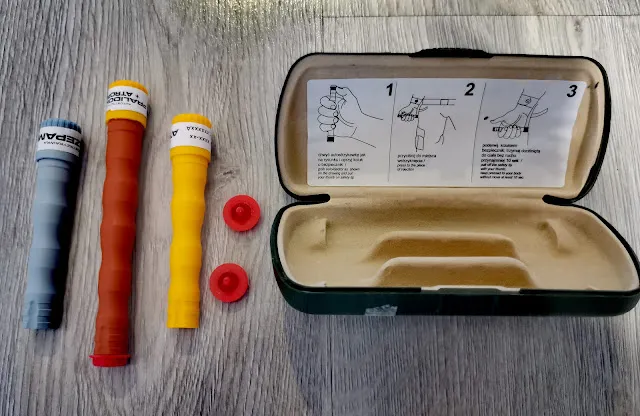
Table of Contents
Package leaflet: Information for the user
Individual Auto-injector Set against Chemical Warfare Agents
IZAS-05
ATROPINE Auto-injector,
2 mg/2 mL, solution for injection (Atropine sulfate)
PRALIDOXIME + ATROPINE Auto-injector,
600 mg/2 mL + 2 mg/2 mL, solution for injection
(Pralidoxime chloride + Atropine sulfate)
DIAZEPAM Auto-injector,
10 mg/2 mL, solution for injection (Diazepam)
Please read this leaflet carefully before using the medicine, as it contains
important information for the user.
- Keep this leaflet for future reference.
- If you have any questions, consult your doctor, pharmacist, or nurse.
- If the patient experiences any adverse reactions, including any adverse reactions not listed in this leaflet, inform your doctor, pharmacist, or nurse. See section 4.
Leaflet contents
- What IZAS-05 is and what it is used for
- Important information before using IZAS-05
- How to use IZAS-05
- Possible side effects
- How to store IZAS-05
- Contents of the pack and other information
1. What IZAS-05 is and what it is used for
IZAS-05 is a set of three auto-injectors (ATROPINE auto-injector, PRALIDOXIME + ATROPINE auto-injector, DIAZEPAM auto-injector), intended for use in cases of poisoning with nerve agents (cholinesterase inhibitors).
The IZAS-05 set is used to alleviate symptoms and counteract the effects of poisoning.
2. Important information before using the IZAS-05 kit
When not to use components of the IZAS-05 kit
Autoinjector ATROPINE
- if the patient is allergic to the active substance or any of the other ingredients of this medicine (listed in section 6),
- if the patient has narrow-angle glaucoma,
- if the patient has diseases causing urinary tract obstruction (e.g. prostate enlargement) or gastrointestinal obstruction.
Autoinjector PRALIDOXIME + ATROPINE
- there are no absolute contraindications to the use of pralidoxime chloride,
- do not use if the patient is allergic to pralidoxime chloride or any of the other ingredients of this medicine (listed in section 6), or in other situations where the risk clearly outweighs the potential benefits of using the medicine.
Autoinjector DIAZEPAM
- if the patient is allergic to diazepam, to any other medicine from the group of drugs known as benzodiazepines, or to any of the other ingredients of this medicine (listed in section 6),
- if the patient has been diagnosed with myasthenia gravis (a disease causing muscle weakness and excessive fatigue),
- if the patient has severe respiratory insufficiency,
- if the patient suffers from sleep apnoea syndrome,
- if the patient has severe hepatic insufficiency.
In cases of poisoning with nerve agent chemical warfare agents, the relevance of the above-mentioned contraindications should be assessed, considering both the potential risks and benefits for the patient associated with the use of autoinjectors included in the IZAS-05 kit.
Warnings and precautions
Before starting to use the IZAS-05 kit, discuss this with a doctor or nurse, if possible.
Autoinjector ATROPINE
Atropine should be administered with caution in patients:
- over 40 years of age, due to the possibility of prostate enlargement and urinary tract obstruction;
- with respiratory diseases, because atropine may exacerbate shortness of breath;
- with hyperthyroidism, hypertension, tachyarrhythmia, congestive heart failure, angina pectoris, autonomic neuropathy, gastrointestinal disorders (e.g. peptic ulcer, gastroesophageal reflux);
- with impaired kidney and/or liver function.
Autoinjector PRALIDOXIME + ATROPINE
- Pralidoxime chloride is not effective in the treatment of poisoning with phosphorus, inorganic phosphates, or organophosphorus compounds that do not have anticholinesterase activity.
- Pralidoxime chloride is not indicated as an antidote in poisoning with pesticides belonging to the carbamate class, as it may enhance their toxic effects.
Autoinjector DIAZEPAM
Particular caution should be exercised when administering diazepam to patients:
- of advanced age,
- with hepatic insufficiency,
- with chronic pulmonary insufficiency,
- with brain damage resulting from, for example, trauma, atherosclerosis of blood vessels, stroke,
- in severe condition, especially with heart and respiratory disorders,
- with chronic respiratory insufficiency,
- dependent on drugs or alcohol,
- who have lost close relatives and are in a period of mourning,
- suffering from phobias and obsessions,
- suffering from chronic psychoses.
Tolerance
After several weeks of diazepam use, its effectiveness may decrease.
Dependence
Prolonged use of diazepam may lead to psychological and physical dependence. The risk of developing dependence increases with higher doses and longer duration of treatment, and is greater in patients dependent on alcohol or drugs, as well as in patients with personality disorders.
Withdrawal symptoms
If the medicine is discontinued abruptly, withdrawal symptoms may occur, such as: headache, muscle pain, increased anxiety, tension, agitation, motor restlessness, disorientation, sleep disturbances, irritability.
In more severe cases, the following may occur: loss of reality perception, personality disturbances, hypersensitivity to sound, touch, light, noise, tingling and numbness of limbs, hallucinations and delusions, epileptic seizures.
Rebound phenomenon and anxiety
During diazepam withdrawal, a transient recurrence of intensified symptoms that were the reason for using the medicine may occur (so-called "rebound" phenomenon). These symptoms are often accompanied by mood changes, anxiety, sleep disturbances, and insomnia. To minimize the risk of these symptoms, gradual dose reduction is recommended.
Anterograde amnesia (inability to remember events after drug administration)
Diazepam may cause anterograde amnesia (difficulty in learning and remembering new information – new data are not permanently stored). This condition most commonly occurs within a few hours after drug administration, especially at high doses.
Psychotic and paradoxical reactions
When using benzodiazepines, reactions such as anxiety, agitation, irritability, aggression, delusions, rage attacks, nightmares, hallucinations, psychoses, inappropriate behavior, and other behavioral disorders have been reported. If such symptoms occur, the use of the medicine should be discontinued.
The risk of the above-mentioned adverse effects is higher in children and elderly patients.
Use in depression
Before administering diazepam, inform the doctor about any psychiatric disorders.
Patients with symptoms of depression or anxiety associated with depression should be treated with multiple medications simultaneously. Administering diazepam alone to patients with depression may worsen depressive symptoms, including suicidal thoughts.
Children and adolescents
The Individual Autoinjector Kit against Chemical Warfare Agents IZAS-05 is not intended for use in children.
IZAS-05 and other medicines
Inform your doctor or pharmacist about all medicines currently used or recently used, as well as any medicines the patient plans to use.
Autoinjector ATROPINE
Medicines that enhance the effects of atropine:
- tricyclic antidepressants,
- antispasmodic drugs (e.g. used in irritable bowel syndrome),
- drugs used in Parkinson's disease,
- certain antihistamines (classified as first-generation),
- phenothiazines (medicines used in mental disorders),
- disopyramide, quinidine (medicines used in heart diseases).
Atropine, by delaying gastric emptying, may slow down or accelerate the absorption of some orally administered medicines.
Autoinjector PRALIDOXIME + ATROPINE
Concomitant use of pralidoxime with atropine may accelerate the signs of atropine action (facial flushing, pupil dilation, increased heart rate, dryness of mouth and nose).
Avoid simultaneous use of morphine, theophylline, aminophylline, reserpine, and sedatives of the phenothiazine type in patients poisoned with organophosphorus compounds.
Succinylcholine used in combination with pralidoxime chloride should be administered with caution due to the risk of prolonged paralysis.
Autoinjector DIAZEPAM
Diazepam and other concomitantly used medicines may mutually influence their effects.
This particularly concerns the following medicines:
- fluvoxamine, fluoxetine, and other medicines used in the treatment of mental disorders;
- medicines used for insomnia;
- medicines used in allergic conditions that may cause drowsiness;
- medicines used in epilepsy (e.g. carbamazepine, phenytoin, hydantoin);
- muscle relaxants;
- levodopa (a medicine used in Parkinson's disease);
- medicines used in gastric and duodenal ulcers (e.g. cimetidine, omeprazole, cisapride);
- ketoconazole (an antifungal medicine);
- strong analgesics (opioid analgesics, e.g. morphine, buprenorphine);
- rifampicin (an antibiotic).
Theophylline and tobacco smoking accelerate diazepam metabolism.
DIAZEPAM autoinjector and alcohol
Using the medicine together with alcohol may enhance its sedative effect. Simultaneous use of diazepam and alcohol is not recommended.
Pregnancy, breastfeeding and effects on fertility
Autoinjector ATROPINE
The medicine may be used during pregnancy only if, in the opinion of the doctor, the benefit to the mother outweighs the potential risk to the fetus.
Autoinjector PRALIDOXIME + ATROPINE
Pralidoxime chloride may be administered to pregnant women only in cases of clear necessity, when the potential risk is acceptable in view of the clinical benefits considered.
Autoinjector DIAZEPAM
Diazepam should not be used in pregnant women, especially during the first and third trimesters, and during breastfeeding, unless the doctor determines that its use is necessary.
Driving and operating machinery
Atropine sulfate has a significant influence on the ability to drive vehicles and operate machinery. During treatment and for 24 hours after administration, patients should not drive vehicles or perform tasks requiring good psycho-physical performance.
Diazepam has a significant influence on the ability to drive vehicles and operate machinery. During treatment and for 24 hours after administration, patients should not drive vehicles or perform tasks requiring good psycho-physical performance.
The IZAS-05 kit contains benzyl alcohol, therefore it should not be administered to premature infants or newborns. Benzyl alcohol present in the medicine may cause poisoning and allergic reactions in infants and children under 3 years of age.
The IZAS-05 kit contains ethanol. This should be taken into account when administering to pregnant or breastfeeding women, children, and patients at high risk, such as patients with liver disease, epilepsy, or alcohol-related disorders.
The IZAS-05 kit contains sodium benzoate, which may increase the risk of jaundice in newborns.
3. How to use the IZAS-05 kit
Medicines should be used in case of exposure to toxic warfare agents belonging to organophosphorus compounds of the paralytic-convulsive group.
ATROPINE auto-injector: remove from the outer packaging, press the yellow end against the injection site, pull off the red safety guard, and hold still for 10 seconds (self-administration).
PRALIDOXIME + ATROPINE auto-injector: remove from the outer packaging, press the yellow end against the injection site, pull off the red safety guard, and hold still for 10 seconds (self-administration).
DIAZEPAM auto-injector: remove from the outer packaging, press the grey end against the injection site, pull off the red safety guard, and hold still for 10 seconds (mutual aid required).
4. Possible adverse reactions
Like all medicines, the drugs contained in the IZAS-05 kit may cause adverse reactions,
although not everyone experiences them.
ATROPINE Auto-injector
Adverse reactions depend on the dose administered and usually resolve after
discontinuation of the drug.
After administration of relatively small doses:
Very common adverse reactions (may occur in more than 1 in 10 people):
- reduced salivation and dry mouth
- constipation
- reflux
- loss of taste
- nausea
- vomiting
- bloating
- reduced bronchial secretion, which may lead to thickening of retained mucus and formation of a difficult-to-remove bronchial plug
- reduced sweating (anhidrosis)
- urticaria and rash, sometimes with skin peeling
- visual disturbances (pupil dilation, eye accommodation disorders, photophobia, blurred vision)
- these effects intensify with increasing atropine dose
After administration of high doses of atropine, the following have been reported:
Common adverse reactions (may occur in less than 1 in 10 people):
- inhibition of excessive vagus nerve stimulation, leading to increased heart rate with possible occurrence of atrial flutter or fibrillation, atrioventricular dissociation, and additional ventricular contractions
- urinary retention and constipation
- inhibition of gastric secretion
- hallucinations or agitation, confusion and lack of motor coordination, disorientation – especially in elderly patients
- hyperthermia
- facial flushing
Uncommon adverse reactions (may occur in less than 1 in 100 people):
- psychotic reactions
Rare adverse reactions (may occur in less than 1 in 1,000 people):
- allergic reactions
- drowsiness, fatigue
Very rare adverse reactions (may occur in less than 1 in 10,000 people):
- anaphylaxis
- atrial arrhythmia with ventricular fibrillation
- angina pectoris
- hypertensive crisis
- increased intraocular pressure
Frequency not known (frequency cannot be determined from available data):
- headache
- nervousness
- dizziness
- insomnia
- ataxia
PRALIDOXIME + ATROPINE Auto-injector
When pralidoxime and atropine are administered together, signs of atropine effects may appear
earlier than when atropine is used alone. Cases of agitation and manic-like behavior after regaining consciousness have been reported.
After intramuscular injection of the drug, the following may occur:
- increased heart rate
- dry mouth
- blurred vision
- scotoma (visual field defects)
- anxiety
- headache
- difficulty urinating
DIAZEPAM Auto-injector
After intramuscular injection of the drug, the following may occur:
- pain at the injection site
- erythema at the injection site
Fatigue, drowsiness, and muscle weakness may also occur. Use of the drug (even at therapeutic doses) may lead to dependence. Abuse of benzodiazepines has been observed.
Rarely (in 1 to 10 people per 10,000), other adverse reactions have been observed, such as:
- confusion, blunted emotional responses, decreased level of consciousness, ataxia, tremors
- anterograde amnesia (the patient does not remember events occurring several hours after diazepam administration)
- depression
- double or blurred vision
- speech disorders or slurred speech
- gastrointestinal disturbances, nausea, dry mouth or excessive salivation, constipation, increased appetite
- headache, dizziness
- hypotension, changes in pulse rate, circulatory depression (marked slowing of heart rate), blood count abnormalities (visible in morphological blood tests)
- urinary incontinence or retention
- increased or decreased libido
- skin allergic reactions
Very rarely (in less than 1 person per 10,000), the following have been observed:
- increased activity of certain enzymes (transaminases and alkaline phosphatase)
- jaundice
- cases of cardiac arrest
After administration of diazepam (especially in children and elderly patients), the following may occur: anxiety, agitation, hallucinations, behavioral changes, aggression, nightmares, psychoses (so-called paradoxical reactions).
Elderly and debilitated patients may experience more pronounced adverse reactions.
Latent depression may be unmasked after administration of diazepam.
If any adverse reactions occur, including any possible adverse reactions not listed in this leaflet, consult a doctor, pharmacist, or nurse.
Reporting of adverse reactions
If any adverse reactions occur, including those not listed in this leaflet, inform your doctor, pharmacist, or nurse. Adverse reactions can be reported directly to the Department of Monitoring Adverse Drug Reactions of the Office for Registration of Medicinal Products, Medical Devices and Biocidal Products, Al. Jerozolimskie 181C, 02-222 Warsaw
Tel.: +48 22 49-21-301
Fax: +48 22 49-21-309
Website: https://smz.ezdrowie.gov.pl
Adverse reactions can also be reported to the responsible entity.
Reporting adverse reactions helps to gather more information on the safety of the medicine.
5. How to store the IZAS-05 kit
Keep the medicine out of the sight and reach of children.
Do not use this medicine after the expiry date stated on the carton and label following:
EXP. The expiry date refers to the last day of the specified month.
Store below 25°C.
Do not freeze.
6. Contents of the package and other information
What the IZAS-05 kit contains
ATROPINE auto-injector
The active substance is atropine sulfate; 2 mL of injection solution contain 2 mg of atropine sulfate.
Other ingredients: diluted hydrochloric acid (for pH adjustment), water for injections.
PRALIDOXIME + ATROPINE auto-injector
First chamber:
The active substance is atropine sulfate; 2 mL of injection solution contain 2 mg of atropine sulfate.
Other ingredients: diluted hydrochloric acid (for pH adjustment), water for injections.
Second chamber:
The active substance is pralidoxime chloride; 2 mL of injection solution contain 600 mg of pralidoxime chloride.
Other ingredients: benzyl alcohol, glycine, water for injections.
DIAZEPAM auto-injector
The active substance is diazepam; 2 mL of injection solution contain 10 mg of diazepam.
Other ingredients: benzyl alcohol, ethanol, propylene glycol, sodium benzoate (E 211), glacial acetic acid, 10% acetic acid, water for injections.
What the IZAS-05 kit looks like and contents of the pack
Individual Auto-injector Kit against Chemical Warfare Agents IZAS-05
contains three auto-injectors:
ATROPINE auto-injector (small) – 115 mm in length, consisting of a yellow body, yellow cap, and red safety guard.
DIAZEPAM auto-injector (small) – 115 mm in length, consisting of a grey body, grey cap, and red safety guard.
PRALIDOXIME + ATROPINE auto-injector (large) – 142 mm in length, consisting of a brown body, yellow cap, and red safety guard.
Follow the instructions below:
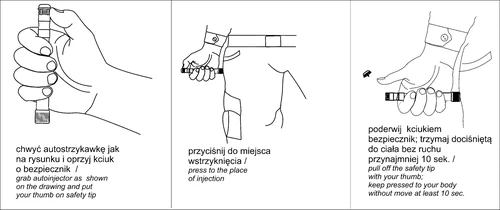
The auto-injectors included in the IZAS-05 kit are placed in a green plastic case.
Marketing Authorisation Holder and Manufacturer
Medical Equipment Production Plant
Ravimed Sp. z o.o.
ul. Polna 54
05-119 Łajski, Poland