Indapen
Poland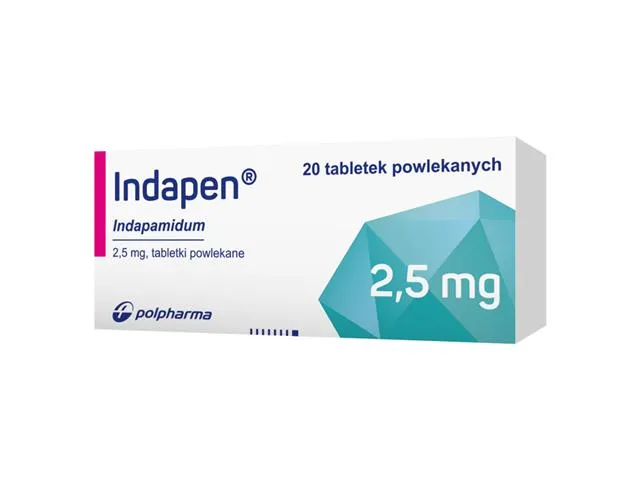
Table of Contents
Package leaflet: Information for the patient
Indapen, 2.5 mg, coated tablets
Indapamidum
Please read all of this leaflet carefully before taking this medicine, because it contains
important information for the patient.
- Keep this leaflet, as you may need to read it again.
- If you have any further questions, please consult your doctor or pharmacist.
- This medicine has been prescribed for a specific individual. Do not pass it on to others. This medicine may harm other people, even if their symptoms are the same.
- If you experience any adverse reactions, including any not listed in this leaflet, inform your doctor, pharmacist, or nurse. See section 4.
Contents of the leaflet
- What Indapen is and what it is used for
- Important information before taking Indapen
- How to take Indapen
- Possible side effects
- How to store Indapen
- Contents of the pack and other information
1. What Indapen is and what it is used for
These are coated tablets containing indapamide as the active substance. Indapamide is a diuretic medicine. Most diuretics increase the volume of urine produced by the kidneys. However, indapamide differs from other diuretics in that it causes only a slight increase in urine volume.
Indapen is used in the treatment of high blood pressure (essential hypertension).
2. Important information before using Indapen
When not to use Indapen
- if the patient is allergic to indapamide, other sulfonamides, or any of the other ingredients of this medicine (listed in section 6);
- if the patient has severe kidney failure (anuria);
- if the patient has severe liver dysfunction or a condition called hepatic encephalopathy (a nervous system disorder caused by liver damage);
- if the patient has low blood potassium levels (hypokalemia).
Warnings and precautions
Before starting treatment with Indapen, discuss this with your doctor or pharmacist.
Special caution is required when using Indapen:
- if the patient has liver impairment;
- if the patient has kidney impairment;
- if the patient has diabetes;
- if the patient has gout;
- if the patient has an increased risk of hypokalemia (low blood potassium levels, which may manifest as muscle weakness, tremors, or cardiac arrhythmias);
- if the patient has disturbances in water and electrolyte balance;
- if the patient is photosensitive (hypersensitive to light);
- if the patient has an increased risk of hypercalcemia (excessively high calcium levels in blood serum, which may manifest as loss of appetite, nausea, vomiting, or cardiac rhythm disturbances);
- if the patient is scheduled for tests assessing parathyroid function;
- if the patient experiences blurred vision or eye pain. These may be symptoms of fluid accumulation in the non-vascular membrane surrounding the eye (excessive fluid buildup between choroid and sclera) or increased intraocular pressure – these symptoms may occur from several hours to weeks after taking Indapen. Without treatment, these symptoms may lead to permanent vision loss. If the patient previously had an allergic reaction to penicillin or sulfonamides, they may be at increased risk of developing these symptoms.
The medicine may cause positive results in anti-doping tests in athletes.
If the patient believes any of the above conditions apply, or has any doubts about using the medicine, they should consult their doctor or pharmacist.
The doctor may recommend tests to assess whether blood potassium or sodium levels have decreased, or calcium levels have increased.
Children and adolescents
Due to lack of clinical data, use of the medicine is not recommended in children and adolescents.
Elderly patients
Indapen may be used in elderly patients only if kidney function is normal or only mildly impaired. The doctor will adjust the dose, taking into account the patient's age, body weight, and sex.
Indapen and other medicines
Inform your doctor or pharmacist about all medicines the patient is currently taking or has recently taken, as well as any medicines they plan to use.
Medicines that must not be used with indapamide:
- lithium salts (used in the treatment of depression).
Medicines that may enhance the effect of Indapen or increase the risk of adverse reactions:
Ensure that the doctor is informed if the patient is taking any of the following medicines, as special precautions may be necessary:
- medicines used to treat cardiac arrhythmias (e.g. quinidine, hydroquinidine, disopyramide, amiodarone, sotalol, ibutilide, dofetilide, digitalis preparations);
- antipsychotic medicines used to treat mental disorders such as depression, anxiety, schizophrenia: phenothiazine derivatives (e.g. chlorpromazine, cyamemazine, levomepromazine, thioridazine, trifluoperazine), benzamide derivatives (amisulpride, sulpiride, sultopride, tiapride), butyrophenone derivatives (droperidol, haloperidol);
- bepridil (used to treat ischemic heart disease causing chest pain);
- cisapride, difenoxin (used to treat gastrointestinal disorders);
- sparfloxacin, moxifloxacin, intravenous vinca alkaloids, amphotericin B, or erythromycin (antibiotics used to treat infections);
- halofantrine (an antiparasitic medicine used to treat certain types of malaria);
- mizolastine (used to treat allergic reactions such as high fever);
- pentamidine (used to treat certain types of pneumonia);
- non-steroidal anti-inflammatory drugs with analgesic effect (e.g. ibuprofen) or high doses of acetylsalicylic acid;
- orally administered corticosteroids, used to treat various diseases including severe asthma and rheumatoid arthritis;
- baclofen (used to treat muscle stiffness occurring in diseases such as multiple sclerosis);
- angiotensin-converting enzyme (ACE) inhibitors (used to treat high blood pressure and heart failure);
- potassium-sparing diuretics (amiloride, spironolactone, triamterene);
- osmotic laxatives;
- metformin (used to treat diabetes);
- iodine-containing contrast agents (used during diagnostic X-ray procedures);
- calcium tablets or other calcium supplements;
- cyclosporine, tacrolimus, or other immunosuppressive medicines used after organ transplantation or to treat autoimmune diseases, severe rheumatic or dermatological conditions;
- tetracosactide (used to treat Crohn's disease).
Pregnancy and breastfeeding
If the patient is pregnant or breastfeeding, suspects she may be pregnant, or is planning to have a child, she should consult her doctor or pharmacist before using this medicine.
Diuretics should be avoided in pregnant women. Diuretics may cause fetoplacental hypoperfusion, with a risk of impaired fetal growth.
Indapamide may be used during pregnancy only if absolutely necessary.
Indapamide passes into breast milk. Therefore, use of this medicine is not recommended during breastfeeding.
Driving and operating machinery
When using Indapen, especially at the beginning of treatment or when adding another antihypertensive medicine, symptoms related to reduced blood pressure may occur. In such cases, the ability to drive or operate machinery may be impaired.
3. How to use Indapen
This medicine should always be taken as prescribed by your doctor. If in doubt, consult your doctor.
The usual dose for adults is 1 tablet (2.5 mg) daily, taken in the morning.
Tablets may be taken independently of food.
Indapen should be taken orally.
Treatment of hypertension is usually long-term.
Taking more than the recommended dose of Indapen
Acute overdose may lead to disturbances in water and electrolyte balance (reduced blood sodium and potassium levels), nausea, vomiting, hypotension, muscle cramps, dizziness, drowsiness, confusion, polyuria or oliguria, up to anuria (due to reduced circulating blood volume).
If more than the recommended dose has been taken, seek immediate medical advice from a doctor or pharmacist, as gastric lavage or other interventions in a hospital setting may be necessary.
Missing a dose of Indapen
If a dose is missed, take the next dose as usual. Do not take a double dose to make up for the missed dose.
Stopping treatment with Indapen
Since treatment of high blood pressure usually lasts for life, consult your doctor before stopping the medication.
If you have any further questions about the use of this medicine, consult your doctor or pharmacist.
4. Possible adverse effects
Like all medicines, this medicine can cause adverse effects, although they do not occur in everyone.
Common (occur in 1 to 10 people out of 100):
low blood potassium levels;
maculopapular rash (especially in individuals prone to allergic reactions or suffering from asthma).
Uncommon (occur in 1 to 10 people out of 1,000):
vomiting;
purpura (a condition characterized by skin rash, abdominal pain, and joint pain);
low blood sodium levels, which may lead to dehydration and lowered arterial blood pressure;
impotence (inability to achieve or maintain an erection).
Rare (occur in 1 to 10 people out of 10,000):
feeling of fatigue, dizziness, headache, tingling sensations (paresthesia);
nausea, constipation, dry mouth;
low blood chloride levels;
low blood magnesium levels.
Very rare (occur in fewer than 1 person out of 10,000):
thrombocytopenia (reduced number of blood platelets, leading to increased risk of bleeding and bruising), leukopenia (reduced total number of white blood cells in the blood), agranulocytosis (complete or near-complete absence of granulocytes (a type of white blood cell) in the blood), aplastic anemia (reduced number of blood cells due to absent or incomplete bone marrow development), hemolytic anemia (reduced number of red blood cells);
heart rhythm disorders, low blood pressure;
pancreatitis, renal failure, liver function disturbances;
angioedema (swelling of the face, lips, tongue, and/or throat, which may cause difficulty in swallowing or breathing) and/or urticaria, toxic epidermal necrolysis (erythematous-bullous skin and mucosal lesions leading to shedding of large skin areas and exposure of extensive skin surfaces), Stevens-Johnson syndrome (blisters progressing to erosions on the mucous membranes of the oral cavity, conjunctiva, and genital organs);
hypercalcemia.
Frequency unknown (frequency cannot be estimated from available data):
visual disturbances or eye pain due to increased intraocular pressure (possible symptoms of fluid accumulation in the vascular membrane surrounding the eye—excessive fluid buildup between choroid and sclera—or acute angle-closure glaucoma);
fainting;
severe heart rhythm disorders (torsade de pointes);
in patients with liver insufficiency, risk of developing hepatic encephalopathy (a brain-damaging disease), hepatitis;
increased liver enzyme activity;
possible worsening of symptoms of coexisting systemic lupus erythematosus;
photosensitivity reactions (skin changes) following exposure to sunlight or artificial UVA radiation;
abnormal ECG findings;
increased blood uric acid and glucose levels. In patients with diabetes or gout, the physician should consider whether diuretic treatment is appropriate.
Reporting of adverse effects
If any adverse effects occur, including any not listed in this leaflet, inform your doctor, pharmacist, or nurse. Adverse effects can be reported directly to the Department of Monitoring Adverse Drug Reactions, Office for Registration of Medicinal Products, Medical Devices and Biocidal Products
Al. Jerozolimskie 181C
02-222 Warsaw
Tel.: +48 22 49 21 301
Fax: +48 22 49 21 309
Website: https://smz.ezdrowie.gov.pl
Adverse effects can also be reported to the marketing authorization holder.
Reporting adverse effects helps to provide more information on the safety of the medicine.
5. How to store the medicine Indapen
Keep this medicine out of the sight and reach of children.
Store at a temperature not exceeding 25°C.
Do not use this medicine after the expiry date stated on the packaging. The expiry date refers to the last day of the stated month.
The marking on the packaging following the abbreviation EXP indicates the expiry date, and the abbreviation Lot/LOT indicates the batch number.
Medicines must not be disposed of via wastewater or household waste. Ask your pharmacist how to dispose of medicines no longer in use. This will help protect the environment.
6. Contents of the packaging and other information
What Indapen contains
- The active substance is indapamide. Each tablet contains 2.5 mg of indapamide.
- The other ingredients are:
- tablet core: microcrystalline cellulose, crospovidone, magnesium stearate;
- coating: hypromellose, stearic acid, microcrystalline cellulose, titanium dioxide (E 171).
What Indapen looks like and contents of the pack
Indapen is a round, white, biconvex coated tablet.
The pack contains 20, 30 or 60 tablets in a cardboard box.
Not all pack sizes may be marketed.
Marketing Authorisation Holder and Manufacturer
Zakłady Farmaceutyczne POLPHARMA S.A.
ul. Pelplińska 19, 83-200 Starogard Gdański
tel. +48 22 364 61 01