Imodium instant
Poland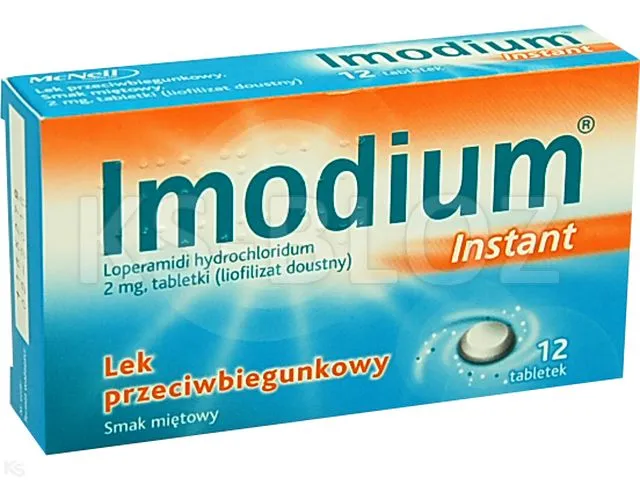
Table of Contents
Patient Information Leaflet
Imodium Instant, 2 mg, orodispersible tablet
Loperamidi hydrochloridum
Please read this leaflet carefully before using this medicine, as it contains important information for the patient.
This medicine should always be used exactly as described in this patient leaflet or as directed by a doctor or pharmacist.
- Keep this leaflet so that you can read it again if necessary.
- If you need advice or further information, please consult your pharmacist.
- If you experience any adverse reactions, including any not listed in this leaflet, inform your doctor or pharmacist. See section 4.
- If there is no improvement after 2 days, or if you feel worse, you should contact your doctor.
Leaflet Contents:
- What Imodium Instant is and what it is used for
- What you need to know before taking Imodium Instant
- How to take Imodium Instant
- Possible side effects
- How to store Imodium Instant
- Contents of the pack and other information
1. What Imodium Instant is and what it is used for
Loperamide is an oral antidiarrheal agent.
It reduces intestinal peristalsis and prolongs the transit time of intestinal contents. Loperamide increases the resting tone of the anal sphincter while simultaneously reducing the immediate urge to defecate.
Indications
Imodium Instant is indicated for the symptomatic treatment of acute and chronic diarrhoea in adults and children over 6 years of age.
In patients with an established ileostomy, Imodium Instant may be used to reduce stool frequency and volume and to increase stool consistency.
The medicine may also be used for the symptomatic treatment of acute episodes of diarrhoea associated with irritable bowel syndrome in adults (from age 18), following prior diagnosis of this condition by a physician, subject to the warnings and precautions listed under section 2.
2. Important information before using Imodium Instant
When not to use Imodium Instant:
- if the patient is allergic to loperamide hydrochloride or any of the other ingredients of this medicine (listed in section 6),
- in children under 6 years of age,
- as primary treatment:
- in patients with acute dysentery, characterised by blood in the stool and high fever;
- in patients with acute flare-up of ulcerative colitis;
- in patients with bacterial enterocolitis caused by pathogenic bacteria of the genus Salmonella, Shigella and Campylobacter;
- in patients with pseudomembranous colitis associated with the use of broad-spectrum antibiotics,
- in cases where slowing of intestinal peristalsis should be avoided due to the possible risk of serious complications, including intestinal obstruction, colonic dilatation and toxic megacolon. Treatment with Imodium Instant must be discontinued immediately if constipation, abdominal distension or intestinal obstruction occurs.
Treatment of diarrhoea with Imodium Instant is purely symptomatic. In every case where the cause of diarrhoea can be identified and treatment is indicated (or justified), the physician will recommend appropriate therapy.
Warnings and precautions
In patients with diarrhoea, especially in children, dehydration and excessive loss of electrolytes may occur. Therefore, during diarrhoea, increased fluid intake is recommended to compensate for these losses.
If symptoms do not improve within 48 hours of taking the medicine in acute diarrhoea, treatment with Imodium Instant should be discontinued and medical advice sought.
Patients with AIDS who are using Imodium Instant for diarrhoea should immediately stop taking the medicine and contact their doctor if the earliest signs of abdominal distension occur. Cases of toxic megacolon have been reported in patients with AIDS and concurrent infectious colitis caused by both viruses and bacteria, treated with loperamide hydrochloride.
Patients diagnosed by a doctor with irritable bowel syndrome should discuss treatment with a doctor or pharmacist, particularly if:
- the patient is 40 years of age or older and some time has passed since the last episode of irritable bowel symptoms, or if the current symptoms differ from previous ones,
- the patient suffers from severe constipation,
- there has been unintentional weight loss,
- symptoms related to irritable bowel syndrome worsen,
- new symptoms appear,
- symptoms do not improve within 48 hours after taking the medicine for acute diarrhoea,
- recurrent episodes of diarrhoea last longer than two weeks.
Cases of misuse and off-label use of Imodium Instant have been reported. This medicine should not be taken for purposes other than those indicated (see section 1) or in doses higher than recommended (see section 3). In patients taking excessive doses of loperamide (the active substance in Imodium Instant), severe cardiac disorders (including rapid or irregular heartbeat) have been observed.
Imodium Instant and other medicines
Inform your doctor or pharmacist about all medicines currently used, recently used, or planned for use.
It is especially important to inform your doctor or pharmacist if you are taking:
- ritonavir (a medicine used in the treatment of HIV infection),
- quinidine (a medicine used to treat heart rhythm disorders),
- oral desmopressin (a medicine used to suppress excessive urine production),
- itraconazole or ketoconazole (antifungal medicines),
- gemfibrozil (a lipid-lowering medicine).
Pregnancy, breastfeeding and fertility
If the patient is pregnant, breastfeeding, suspects she may be pregnant, or is planning to have a child, she should consult a doctor or pharmacist before using this medicine.
The doctor should carefully weigh the expected benefits to the mother's health against the potential risks of using Imodium Instant during pregnancy, especially during the first trimester.
Imodium Instant is not recommended during pregnancy and breastfeeding. Women who are pregnant or breastfeeding should therefore consult their doctor to determine appropriate treatment.
Driving and operating machinery
Fatigue, dizziness or drowsiness may occur during treatment of diarrhoea with loperamide. Therefore, caution should be exercised when driving or operating machinery.
Imodium Instant contains 0.75 mg of aspartame per tablet
Aspartame is a source of phenylalanine. It may be harmful to patients with phenylketonuria. This is a rare genetic disorder in which phenylalanine accumulates in the body due to impaired excretion.
Imodium Instant contains trace amounts of sulphites in the mint-flavoured
flavouring composition
The medicine may rarely cause severe hypersensitivity reactions and bronchospasm.
Imodium Instant contains glucose, which is a component of maltodextrin present in the
mint-flavoured flavouring composition
If the patient has previously been diagnosed with intolerance to certain sugars, they should consult their doctor before taking the medicine.
Imodium Instant contains 0.00066 mg of benzyl alcohol per tablet
Benzyl alcohol may cause allergic reactions.
Patients with liver or kidney disease should consult their doctor before using the medicine, as higher amounts of benzyl alcohol may accumulate in their body and cause adverse effects (such as metabolic acidosis).
The medicine contains less than 1 mmol (23 mg) of sodium per dose, meaning the medicine is considered "sodium-free".
3. How to use Imodium Instant
This medicine should always be used exactly as described in this patient information leaflet or as directed by a doctor or pharmacist. If in doubt, consult a doctor or pharmacist.
Method of administration
Place the orally disintegrating tablet of Imodium Instant on the tongue, wait until it dissolves, and swallow it with saliva. No liquid is needed to swallow the tablet.
Dosage
Symptomatic treatment of acute and chronic diarrhoea
Adults and children over 6 years of age
Acute diarrhoea: Initial dose – 2 tablets (4 mg) for adults and 1 tablet (2 mg) for children, followed by 1 tablet (2 mg) after each subsequent loose stool.
Chronic diarrhoea: Initial dose – 2 tablets (4 mg) per day for adults and 1 tablet (2 mg) per day for children; this initial dose should be adjusted until 1 to 2 normal stools per day are achieved, which is usually accomplished by maintaining a dose of 1 to 6 tablets (2 mg to 12 mg) per day.
Maximum dose in acute and chronic diarrhoea – 8 tablets (16 mg) per day for adults and children; in children, the dose should be adjusted according to body weight (3 tablets/20 kg body weight).
Do not exceed the maximum recommended dose.
Symptomatic treatment of acute episodes of diarrhoea associated with irritable bowel syndrome
Adults from 18 years of age
Initial dose – 2 tablets (4 mg) per day, then 1 tablet (2 mg) after each subsequent loose stool, or as otherwise directed by a doctor. Imodium Instant may be used for up to 2 weeks during recurrent episodes, but not for longer than 48 hours during single episodes of diarrhoea (see also “Warnings and precautions” in section 2).
Maximum dose in diarrhoea associated with irritable bowel syndrome – 6 tablets (12 mg) per day.
Remember to replenish fluids and drink more water than usual during episodes of diarrhoea.
Use of Imodium Instant in patients with hepatic and/or renal impairment
Imodium Instant should be used with caution in patients with hepatic impairment, and they should be carefully monitored for signs of central nervous system toxicity.
Dose adjustment is not necessary in patients with renal impairment.
Use of Imodium Instant in children
Imodium Instant should not be used in children under 6 years of age.
For use in children over 6 years of age, see section 3.
Use of Imodium Instant in elderly patients
Dose adjustment is not necessary in elderly patients.
If symptoms worsen or do not improve within 48 hours of using Imodium Instant, consult a doctor.
Overdose of Imodium Instant
Symptoms
In case of overdose, the following symptoms may occur: increased heart rate, irregular heartbeat, changes in heart rhythm (these may have serious, life-threatening consequences), muscle rigidity, uncoordinated movements, drowsiness, difficulty urinating, shallow breathing, slowed breathing, stupor, pinpoint pupils, and intestinal obstruction (manifesting as abdominal pain, vomiting, bloating, and constipation). Children may react more strongly to large doses of Imodium Instant than adults.
Treatment
If a patient has taken an excessive dose of Imodium Instant, seek immediate medical advice from a doctor or hospital.
If a child has taken an excessive dose or develops any of the symptoms listed above, contact a doctor immediately.
The doctor will take appropriate measures, such as performing an ECG and administering naloxone if necessary. Since the duration of action of loperamide is longer than that of naloxone (1 to 3 hours), repeated doses of naloxone may be required. Therefore, the patient should remain under close medical supervision for at least 48 hours to detect any potential central nervous system depression.
4. Possible adverse reactions
Like any medicine, this product may cause adverse reactions, although not everyone will experience them.
Many of the adverse events associated with loperamide use are common symptoms of diarrhoeal syndromes (abdominal discomfort and pain, nausea, vomiting, dry mouth, fatigue, drowsiness, dizziness, constipation, bloating with flatulence). Often, it is difficult to distinguish these symptoms from adverse effects of the medicine used.
The frequency of adverse reactions is presented according to the following classification:
Frequent: occurs in 1 to 10 out of 100 patients
Uncommon: occurs in 1 to 10 out of 1,000 patients
Rare: occurs in 1 to 10 out of 10,000 patients
Frequency not known: cannot be estimated from available data
In clinical trials on the treatment of acute diarrhoea, the frequently reported adverse reactions were: headache, constipation, bloating and nausea.
Dizziness, dry mouth, abdominal pain and discomfort, vomiting, epigastric pain and rash were reported uncommonly.
Abdominal distension was reported rarely.
In studies on chronic diarrhoea treatment, dizziness, bloating, constipation and nausea were frequently reported, while headache, dry mouth, abdominal pain and discomfort, and dyspepsia were reported uncommonly.
After the introduction of Imodium Instant to the market, frequently reported adverse reactions included headache, dizziness, constipation, nausea and bloating.
Uncommonly reported adverse reactions included insomnia, abdominal pain and discomfort, dry mouth, epigastric pain, vomiting, dyspepsia and rash.
After marketing authorization, the following adverse reactions were reported rarely: immune system disorders (hypersensitivity reaction, anaphylactic reaction and anaphylactoid reaction), nervous system disorders (ataxia, decreased level of consciousness, loss of consciousness, increased muscle tone, drowsiness, stupor), gastrointestinal disorders (intestinal obstruction, colonic dilation, burning sensation of the tongue, abdominal distension), skin and subcutaneous tissue disorders (angioedema, bullous rash, pruritus, urticaria), as well as miosis, urinary retention and fatigue.
Following the marketing of Imodium Instant, additional adverse reactions have also been reported (frequency not known – cannot be estimated from available data), including epigastric pain, abdominal pain radiating to the back, abdominal tenderness, fever, tachycardia, nausea and vomiting, which may be symptoms of pancreatitis (acute pancreatitis).
If any of the above symptoms occur, treatment with the medicine should be discontinued immediately and medical advice should be sought without delay.
Reporting of adverse reactions
If any adverse effects occur, including any not listed in this leaflet, inform your doctor, pharmacist or nurse. Adverse reactions can be reported directly to the Department of Monitoring Adverse Drug Reactions at the Office for Registration of Medicinal Products, Medical Devices and Biocidal Products:
Al. Jerozolimskie 181C, 02-222 Warsaw, tel.: +48 22 49 21 301, fax: +48 22 49 21 309,
website: https://smz.ezdrowie.gov.pl
Adverse reactions can also be reported to the responsible entity.
Reporting adverse reactions helps to provide more information on the safety of the medicine.
5. How to store Imodium Instant
Store in the original packaging.
Keep the medicine out of the sight and reach of children.
Do not use this medicine after the expiry date stated on the packaging. The expiry date refers to the last day of the stated month.
Medicines must not be disposed of via wastewater or household waste. Ask your pharmacist how to dispose of medicines no longer in use. This will help protect the environment.
6. Contents of the pack and other information
What Imodium Instant contains
The active substance is loperamide hydrochloride. Each orodispersible tablet contains 2 mg of loperamide hydrochloride.
The other ingredients are: gelatin, mannitol, aspartame, mint flavouring composition 051296 TP0551 MINT (containing sulphites, glucose, benzyl alcohol and propylene glycol (E1520), benzyl salicylate), sodium hydrogen carbonate.
What Imodium Instant looks like and contents of the pack
Blister packs made of PVC/OPA/Al/OPA/PVC in a cardboard carton.
The pack contains 6, 12 or 20 orodispersible tablets.
Marketing Authorisation Holder and Manufacturer
Marketing Authorisation Holder: McNeil Healthcare (Ireland) Limited, Office 5, 6 & 7, Block 5, High Street, Tallaght, Dublin 24, D24 YK8N, Ireland.
Manufacturer: Janssen-Cilag S.p.A, Via C. Janssen, Borgo S. Michele, 04010 Latina, Italy.
JNTL Consumer Health (France) SAS, Domaine de Maigremont, 27100 Val de Reuil, France.
For further information, please contact:
email: [email protected]