Igantet 500
Poland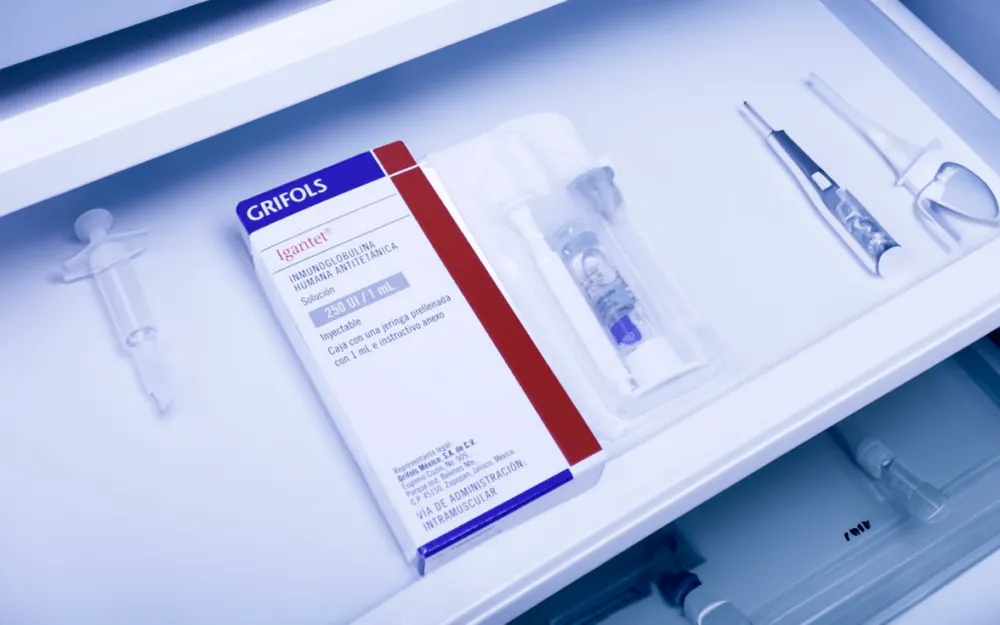
Table of Contents
PACKAGE LEAFLET: INFORMATION FOR THE PATIENT
Igantet 500
250 IU/ml, solution for injection
Human anti-tetanus immunoglobulin
Please read carefully all the information in this leaflet before using this medicine, as it contains important information for the patient.
- Keep this leaflet for future reference.
- If you have any questions, consult your doctor, pharmacist, or nurse.
- This medicine has been prescribed for a specific individual. Do not pass it on to others. It may harm someone else, even if their symptoms are the same.
- If you experience any adverse reactions, including any not listed in this leaflet, inform your doctor, pharmacist, or nurse. See section 4.
Contents of the leaflet:
- What Igantet 500 is and what it is used for
- Important information before using Igantet 500
- How to use Igantet 500
- Possible side effects
- How to store Igantet 500
- Contents of the package and other information
1. What Igantet 500 is and what it is used for
Igantet 500 is a solution for injection in a 2 ml pre-filled syringe.
It is obtained from plasma of donors containing specific antibodies against Clostridium tetani toxin.
Indications:
Igantet 500 is used:
- for prophylaxis of tetanus in individuals with fresh wounds that may be contaminated with Clostridium tetani spores, in those who have not been vaccinated within the last 10 years, who have not been vaccinated according to the recommended schedule, or whose vaccination history is unknown;
- for treatment of tetanus.
2. Information before using Igantet 500
When not to use Igantet 500
- if you are allergic to any component of this medicine,
- in case of hypersensitivity to human immunoglobulin.
Take special care with Igantet 500
- in case of IgA deficiency with presence of anti-IgA antibodies,
- ensure that the needle is not in a blood vessel by pulling back the syringe plunger, because intravascular administration may cause shock.
- Allergic reactions after administration of human antitetanus immunoglobulin are possible, although they occur rarely. In the event of shock, treat according to standard shock management principles.
- After administration of Igantet 500, the patient should remain under medical supervision for at least 20 minutes.
Warnings and precautions
In the manufacturing process of medicinal products derived from human blood or plasma, specific procedures are applied to prevent transmission of infections to treated patients. These procedures include selection of blood and plasma donors to exclude those who may be sources of infection, and testing of plasma for the presence of infectious agents. Manufacturers of these products use processes that inactivate or eliminate viruses. Despite preventive measures, it cannot be completely excluded that transmission of infection may occur when medicinal products derived from human blood or plasma are administered. This also applies to unknown or newly emerging viruses and other pathogens.
The risk of transmitting infectious agents is significantly reduced by applying appropriate procedures:
- donor selection based on medical interviews and screening tests of individual donations and plasma pools for the presence of HBsAg and antibodies against HIV and HCV,
- testing of plasma pools for the presence of HCV genetic material,
- use during production of validated virus inactivation and removal processes, using model viruses. These processes are considered effective against HIV, HCV, HAV and HBV.
The above measures may have limited effectiveness against pathogens such as parvovirus B19. Clinical experience to date indicates that immunoglobulin preparations do not transmit hepatitis A virus or parvovirus B19. It is considered that the presence of antibodies plays an important protective role against viral infections.
For patient safety, it is recommended, whenever possible, to record the name and batch number of the Igantet 500 product each time it is administered.
Igantet 500 and other medicines
You should inform your doctor about all medicines you are currently taking, including those obtained without a prescription. Inform your doctor about any recent vaccinations.
Live attenuated virus vaccines
Administration of immunoglobulins may temporarily reduce the effectiveness of live attenuated virus vaccines (e.g. measles, mumps, rubella, and varicella vaccines) for a period ranging from at least 6 weeks to 3 months.
Effect on serological test results
After administration of immunoglobulins, a transient increase in passively administered antibodies may occur in the patient's blood, which may lead to false-positive results in serological tests.
Pregnancy and breastfeeding
The safety of using Igantet 500 during pregnancy has not been studied in clinical controlled trials; therefore, it should be used with caution in pregnant or breastfeeding women. Long-term clinical experience with immunoglobulins, particularly anti-D immunoglobulin, does not indicate a risk of negative effects on pregnancy course or fetal or neonatal development.
Immunoglobulins are excreted in human milk, which may contribute to the transfer of protective antibodies to the newborn.
Driving and operating machinery
No influence of human antitetanus immunoglobulin on the ability to drive or operate machinery has been observed.
3. How to use the medicine Igantet 500
Before administration, warm the medicine to room temperature or body temperature.
- Administer slowly by intramuscular injection.
- If higher doses are required (5 ml or more), it is recommended to divide the dose and administer at different sites.
- When administering both tetanus immunoglobulin and tetanus vaccine simultaneously, use separate syringes and needles. Administer the injections at different body sites.
After cleaning the wound and removing foreign bodies and dead tissue, assess the need for
active immunization with tetanus vaccine and simultaneous administration of human tetanus immunoglobulin
by intramuscular injection at a different body site, according to the following recommendations:
- Clean and minor wounds
Vaccination and administration of tetanus immunoglobulin are not recommended for patients who
have received a booster dose of tetanus vaccine within the last 10 years or who have been
fully vaccinated according to the tetanus vaccination schedule.
Vaccination is recommended for patients who have not received a booster dose within the last
10 years, or who have not been vaccinated according to the tetanus vaccination schedule, or
whose vaccination history is unknown. Administration of tetanus immunoglobulin is not necessary.
- Contaminated and large wounds
Vaccination is not recommended for patients who have received the last booster dose
of tetanus vaccine within the last 5 years or who have been vaccinated according to the tetanus
vaccination schedule.
Tetanus vaccination should be administered if more than 5 years have passed since the last booster dose.
In both cases, administration of tetanus immunoglobulin is not necessary.
For patients who have not been vaccinated according to the tetanus vaccination schedule or whose
vaccination history is unknown, tetanus vaccination should be administered simultaneously with
tetanus immunoglobulin.
For active immunization, a vaccine containing only tetanus toxoid (T) or combined tetanus and diphtheria toxoid (Td vaccine for adults) may be used. The Td vaccine should not be used in patients with compromised immunity.
It is recommended that the physician assess the risk of tetanus development based on the likelihood of wound contamination with Clostridium tetani.
Doses for children and adults are the same.
- Prevention of tetanus
250 IU by intramuscular injection.
The dose should be doubled (500 IU) in the case of complicated wounds (deep wounds with damaged tissue, contaminated wounds), or when more than 24 hours have passed since the injury, or in overweight adults.
- Treatment of tetanus
Results of several studies suggest the importance of administering a single dose of
3000 to 6000 IU of human tetanus immunoglobulin in the treatment of tetanus, together with
other appropriate treatment methods.
Use of a higher than recommended dose of Igantet 500
The consequences of overdose are unknown.
4. Possible adverse reactions
Like all medicines, this medicine can cause adverse reactions, although not everyone experiences them.
Pain and tenderness may occur at the injection site. This can be prevented by dividing the dose and administering it at different sites.
Sometimes fever, chills and skin reactions may occur. Rarely observed reactions include nausea, vomiting, hypotension, tachycardia, and allergic and anaphylactic reactions, including anaphylactic shock.
There is no precise information on the frequency of adverse reactions from either clinical trials or post-marketing experience.
For information on the risk of virus transmission, see Warnings and precautions.
Reporting of adverse reactions
If any adverse reactions occur, including any adverse reactions not listed in this leaflet, inform your doctor or pharmacist. Adverse reactions can be reported directly to the Department of Monitoring Adverse Reactions of Medicinal Products, Office for Registration of Medicinal Products, Medical Devices and Biocidal Products:
Al. Jerozolimskie 181C 02-222 Warsaw, Phone: +48 22 49 21 301, fax: +48 22 49 21 309; e-mail: [email protected].
By reporting adverse reactions, it is possible to gather more information on the safety of using this medicine.
5. How to store Igantet 500
Store in a refrigerator (2°C – 8°C).
Keep the medicine out of the sight and reach of children.
Do not use this medicine after the expiry date stated on the packaging.
After opening, use immediately.
The solution should be inspected visually. It should be clear and free of precipitate.
Do not use Igantet 500 if the liquid appears cloudy or contains particles.
Medicines should not be disposed of via wastewater or household waste. Ask your pharmacist how to dispose of medicines no longer in use. This will help protect the environment.
6. Contents of the packaging and other information
What Igantet 500 contains
Active substance:
1 ml of solution contains:
Human plasma protein 160 mg
of which immunoglobulin G ≥ 95%
Specific antibody 250 IU
Other ingredients: glycine, sodium chloride, and water for injections.
What Igantet 500 looks like and contents of the pack
1 pre-filled syringe-ampoule of 2 ml in a cardboard box.
Marketing Authorisation Holder and Manufacturer
INSTITUTO GRIFOLS, S.A.
Poligono Levante Can Guasch, 2
08150 Parets del Vallès, Barcelona, Spain
Other sources of information
For further information, please contact the representative of the Marketing Authorisation Holder:
Grifols Polska Sp. z o.o., ul. Grzybowska 87, 05-462 Warsaw, Poland
Tel.:+48 22 378 85 61, fax: +48 22 378 85 6