Icatibant medical valley
Poland
Table of Contents
- Package leaflet: Information for the user
- 1. What Icatibant Medical Valley is and what it is used for
- 2. Important information before using Icatibant Medical Valley
- 3. How to use Icatibant Medical Valley
- 4. Possible adverse reactions
- 5. How to store Icatibant Medical Valley
- 6. Contents of the package and other information
Package leaflet: Information for the user
Icatibant Medical Valley, 30 mg, solution for injection in pre-filled syringe
Icatibantum
Please read all of this leaflet carefully before using this medicine because it contains
important information for you.
- Keep this leaflet as you may need to read it again.
- If you have any further questions, please ask your doctor or pharmacist.
- This medicine has been prescribed for a specific individual. Do not pass it on to others. It may harm others, even if their symptoms are the same as yours.
- If you experience any adverse reactions, including any not listed in this leaflet, tell your doctor or pharmacist. See section 4.
Contents of the leaflet
- What Icatibant Medical Valley is and what it is used for
- What you need to know before using Icatibant Medical Valley
- How to use Icatibant Medical Valley
- Possible side effects
- How to store Icatibant Medical Valley
- Contents of the pack and other information
1. What Icatibant Medical Valley is and what it is used for
Icatibant Medical Valley contains the active substance icatibant.
Icatibant Medical Valley is intended for the treatment of symptoms of hereditary angioedema (HAE) in adults, adolescents, and children aged 2 years and older.
In HAE, there is an increased level in the blood of a substance called bradykinin, which leads to symptoms such as swelling, pain, nausea, and diarrhoea.
Icatibant Medical Valley blocks the activity of bradykinin, thereby interrupting the progression of HAE attack symptoms.
2. Important information before using Icatibant Medical Valley
When not to use Icatibant Medical Valley
- if the patient is allergic to icatibant or to any of the other ingredients of this medicine (listed in section 6).
Warnings and precautions
Before starting treatment with Icatibant Medical Valley, discuss with your doctor:
- if the patient has angina pectoris (reduced blood flow to the heart muscle)
- if the patient has recently had a stroke
Some of the adverse effects associated with the use of Icatibant Medical Valley are similar to
the symptoms of the disease.
If worsening of symptoms occurs after administration of Icatibant Medical Valley, contact your doctor
immediately.
Moreover:
- Before self-injecting Icatibant Medical Valley or before administering Icatibant Medical Valley by a caregiver, the patient or caregiver should be trained in performing subcutaneous injections.
- A patient experiencing an attack affecting the larynx (upper airway obstruction), who self-administers Icatibant Medical Valley or receives it from a caregiver, should immediately seek medical assistance at a healthcare facility.
- If symptoms do not resolve after a single self-administration of Icatibant Medical Valley or a single administration by a caregiver, the patient should seek medical attention or the caregiver should take the patient to a doctor for administration of the next dose of Icatibant Medical Valley. No more than two additional injections should be given to adult patients within 24 hours.
Children and adolescents
Icatibant Medical Valley is not recommended for use in children under 2 years of age or weighing less
than 12 kg, as it has not been studied in this age group.
Icatibant Medical Valley and other medicines
Tell your doctor or pharmacist about all medicines the patient is currently taking or has recently taken, as well as any medicines the patient plans to take.
No interactions between Icatibant Medical Valley and other medicines are known. However, if the patient is taking a medicine known as an angiotensin-converting enzyme (ACE) inhibitor (for example: captopril, enalapril, ramipril,
quinapril, lisinopril), used to lower blood pressure or for any other reason, inform the doctor before using Icatibant Medical Valley.
Pregnancy and breastfeeding
If the patient is pregnant or breastfeeding, suspects she may be pregnant, or is planning to have a
child, she should consult her doctor before starting this medicine.
The patient should not breastfeed for 12 hours after taking Icatibant Medical Valley.
Driving and operating machinery
Do not drive or operate machinery if the patient experiences fatigue or dizziness due to an HAE attack or after using Icatibant Medical Valley.
Icatibant Medical Valley contains sodium
This medicine contains less than 1 mmol (23 mg) of sodium per pre-filled syringe, meaning the medicine is considered "sodium-free".
3. How to use Icatibant Medical Valley
This medicine should always be used exactly as directed by the physician. In case of doubt, consult the
physician.
If the patient is receiving Icatibant Medical Valley for the first time, the first dose is always
administered by a doctor or nurse. The doctor will inform the patient when it is safe to return
home.
After discussion with the doctor or nurse and training in subcutaneous injection techniques,
the patient may self-administer Icatibant Medical Valley, or a caregiver may administer Icatibant Medical Valley to the patient, if the patient experiences an attack of hereditary angioedema
(HAE). It is important to administer the subcutaneous injection of Icatibant Medical Valley as soon as possible after onset of an angioedema attack. The treating physician will instruct the patient and caregiver on how to safely administer Icatibant Medical Valley according to the instructions provided in the "Patient Leaflet".
When and how often to use Icatibant Medical Valley
The physician will determine the exact dose of Icatibant Medical Valley and inform the patient how often it should be used.
Adults
- The recommended dose of Icatibant Medical Valley is one subcutaneous injection (3 mL, 30 mg), administered immediately after recognition of an angioedema attack (e.g., severe skin swelling, particularly in the face and neck area, or worsening abdominal pain).
- If symptoms do not improve within 6 hours, seek medical advice regarding administration of a subsequent dose of Icatibant Medical Valley. Adult patients should not receive more than two additional injections within 24 hours.
- Do not administer more than 3 injections within 24 hours. If the patient requires more than 8 injections per month, consult the physician.
Children and adolescents aged 2 to 17 years
- The recommended dose of Icatibant Medical Valley is one subcutaneous injection of 1 mL up to a maximum of 3 mL, depending on body weight, administered immediately after recognition of symptoms of an angioedema attack (e.g., severe skin swelling, particularly in the face and neck area, or worsening abdominal pain).
- For further information on dosing, see "Detailed Injection Instructions".
- If the patient is unsure of the correct dose, consult the physician, pharmacist, or nurse.
- If symptoms worsen or do not improve, seek immediate medical attention.
How to administer Icatibant Medical Valley
Icatibant Medical Valley is intended for subcutaneous administration. Each syringe should be used
only once.
Icatibant Medical Valley is administered using a short needle into the fatty tissue beneath the skin of the abdomen.
If there are any further doubts regarding the use of this medicine, consult the
physician or pharmacist.
The detailed instructions below apply to:
- self-administration (adults)
- administration by a caregiver or healthcare professional to adults, adolescents, and children aged over 2 years (with body weight of at least 12 kg).
The instructions include the following main steps:
- General information
2a) Preparation of the pre-filled syringe for children and adolescents (2–17 years) with body weight of 65 kg or less
2b) Preparation of the pre-filled syringe and needle for injection (all patients) - Preparation of the injection site
- Administration of the solution
- Disposal of injection equipment
Detailed Injection Instructions
1) General Information
- Before beginning, clean the work surface.
- Wash hands with water and soap.
- Remove the pre-filled syringe from its packaging.
- Unscrew and remove the cap from the end of the pre-filled syringe.
- Set aside the pre-filled syringe after removing the cap. Do not allow the exposed syringe tip to come into contact with any surface.
2a) Preparation of the pre-filled syringe for children and adolescents (aged 2 to 17 years) with body
weight of 65 kg or less:
Important information for healthcare professionals and caregivers:
When the dose is less than 30 mg (3 mL), the following are required to obtain the correct dose from the pre-filled syringe:
a) Pre-filled syringe containing Icatibant Medical Valley (containing icatibant solution)
b) Connector (adapter)
c) 3 mL graduated syringe
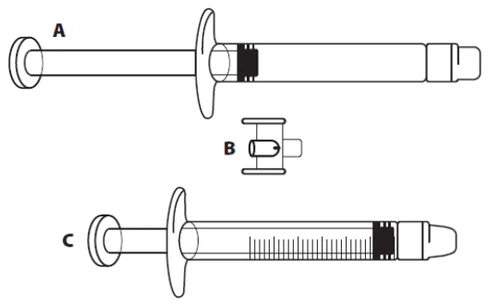
The required dose volume in milliliters should be drawn into an empty 3 mL graduated syringe (see
table below).
Table 1: Dosing schedule for children and adolescents
Body weight Solution volume
12 kg to 25 kg 1.0 mL
26 kg to 40 kg 1.5 mL
41 kg to 50 kg 2.0 mL
51 kg to 65 kg 2.5 mL
Patients with body weight above 65 kg should receive the entire contents of the pre-filled syringe (3 mL).

If the patient is uncertain about the volume of solution to draw, consult the physician,
pharmacist, or nurse.
- Remove the protective cover from both ends of the adapter.

Avoid touching the ends and tip of the adapter and syringe to prevent contamination.
2) Attach the adapter to the pre-filled syringe.
3) Attach the graduated syringe to the other end of the adapter so that both ends are securely connected.

Drawing icatibant solution into the graduated syringe:
- To draw the icatibant solution dose, press the plunger of the pre-filled syringe (on the left in the illustration below).

- If the icatibant solution does not begin to flow into the graduated syringe, gently pull back on the plunger of the syringe until the icatibant solution begins to flow into it (see illustration below).

- Continue pressing the plunger of the pre-filled syringe until the required volume of solution (dose) has transferred into the graduated syringe. Dosing information is provided in Table 1.
If air is present in the graduated syringe:
- Rotate the connected syringes so that the pre-filled syringe is on top (see illustration below).

- Press the plunger of the graduated syringe to return the air into the pre-filled syringe (this step may need to be repeated several times).
- Draw the required volume of icatibant solution.
- Disconnect the pre-filled syringe with adapter from the graduated syringe.
- Place the pre-filled syringe with adapter into a designated sharps container.
2b) Preparation of the pre-filled syringe and needle for injection:
All patients (adults, children, and adolescents)
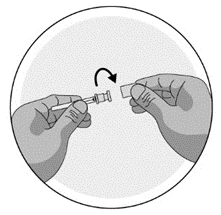
- Remove the needle cover from its packaging. Do not remove the needle from the cover.
- Twist the upper part of the needle cover to break the seal (the needle should remain in the cover).
- Firmly hold the pre-filled syringe. Carefully place the needle onto the pre-filled syringe containing the clear solution.
- Screw the pre-filled syringe onto the needle while it is still in the cover.
- Remove the needle from the cover by pulling the body of the pre-filled syringe. Do not pull on the plunger of the pre-filled syringe.
- The pre-filled syringe is now ready for injection.
3) Preparation of the injection site
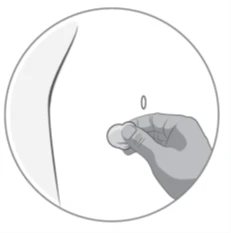
- Select the injection site. The injection site should be a skin fold on the abdomen, approximately 5–10 cm below the navel, on either side. This area should be at least 5 cm away from any scars. Do not select injection sites with bruises, swelling, or tenderness.
- Clean the injection site by wiping it with an alcohol-soaked gauze pad and allow it to dry.
4) Administration of the solution
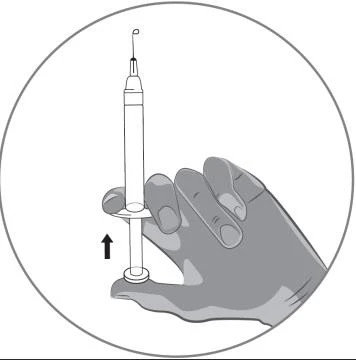
- Hold the pre-filled syringe in one hand, between two fingers, with the thumb on the plunger end.
- Ensure there are no air bubbles in the pre-filled syringe by pressing the plunger until the first drop appears at the needle tip.
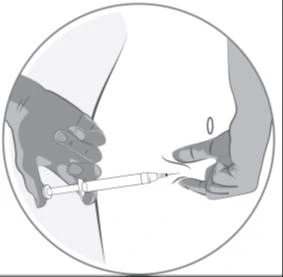
- Hold the pre-filled syringe at a 45–90 degree angle to the skin, with the needle pointing toward the skin.
- While holding the pre-filled syringe with one hand, use the other hand to gently pinch the skin fold between the thumb and fingers at the previously disinfected site.
- Hold the skin fold, bring the pre-filled syringe close to the skin, and quickly insert the needle into the skin fold.
- Slowly press the plunger of the pre-filled syringe while keeping the hand steady, until the entire fluid is injected into the skin and the pre-filled syringe is completely emptied.
- Press the plunger slowly over approximately 30 seconds.
- Release the skin fold and gently withdraw the needle.
5) Disposal of injection equipment
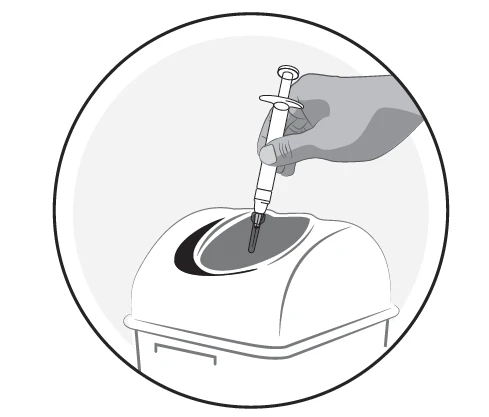
- Place the pre-filled syringe, needle, and needle cover into a sharps container designed for the disposal of waste materials that may cause cuts or injuries.
4. Possible adverse reactions
Like all medicines, this medicine may cause adverse reactions, although not everybody will experience them.
A reaction at the injection site (irritation, swelling, pain, itching, redness of the skin, and burning sensation) occurs in almost all patients receiving Icatibant Medical Valley.
These reactions are usually mild and resolve without the need for additional treatment.
Very common (may affect more than 1 in 10 people):
Additional reactions at the injection site (feeling of pressure, bruising, sensory disturbance and/or numbness, itchy raised rash, and feeling of warmth).
Common (may affect up to 1 in 10 people):
Nausea
Headache
Dizziness
Fever
Itching
Rash
Skin redness
Abnormal liver function test results
Frequency not known (frequency cannot be estimated from available data):
Urticaria
Patients should immediately inform their doctor if they notice worsening of symptoms or exacerbation of the disease episode after administration of Icatibant Medical Valley.
If any adverse reactions occur, including any possible adverse reactions not listed in this leaflet, consult a doctor.
Reporting of adverse reactions
If any adverse reactions occur, including any adverse reactions not listed in this leaflet, inform a doctor or pharmacist. Adverse reactions can be reported directly to the Department of Monitoring Adverse Drug Reactions of the Office for Registration of Medicinal Products, Medical Devices and Biocidal Products, Al. Jerozolimskie 181 C, 02-222 Warsaw, Tel.: +48 22 49 21 301, Fax: +48 22 49 21 309, Website: https://smz.ezdrowie.gov.pl
Reporting adverse reactions helps to provide more information on the safety of the medicine.
Adverse reactions can also be reported to the responsible entity.
5. How to store Icatibant Medical Valley
Keep the medicine out of the sight and reach of children.
Do not use this medicine after the expiry date stated on the label following: "Expiry date (EXP)". The expiry date refers to the last day of the stated month.
Do not store above 30°C. Do not freeze.
Do not use this medicine if the syringe or needle packaging is damaged or if there are any visible signs of deterioration, for example if the solution is cloudy, contains solid particles, or has changed colour.
Medicines must not be disposed of via wastewater or household waste. Ask your pharmacist how to dispose of medicines no longer in use. This will help protect the environment.
6. Contents of the package and other information
What Icatibant Medical Valley contains
- The active substance in Icatibant Medical Valley is icatibant. Each pre-filled syringe contains 30 milligrams of icatibant (as acetate).
- The other ingredients are: sodium chloride, glacial acetic acid, sodium hydroxide, and water for
injections.
What Icatibant Medical Valley looks like and contents of the pack
Icatibant Medical Valley is a clear, colourless solution for injection in a 3 mL glass pre-filled syringe. A subcutaneous needle is supplied with the pack.
Icatibant Medical Valley is available in a cardboard pack containing one pre-filled syringe and one needle.
Marketing Authorisation Holder
Medical Valley Invest AB
Brädgårdsvägen 28
236 32 Höllviken
Sweden
Manufacturer
Universal Farma S.L.
Calle El Tejido 2, Polígono Industrial Miralcampo
19200 Azuqueca De Henares, Guadalajara
Spain
This medicinal product is authorised in the Member States of the European Economic Area
and in the United Kingdom (Northern Ireland) under the following
names:
Denmark Icatibant Medical Valley
Spain Icatibant Exeltis 30 mg solución inyectable en jeringa precargada
Netherlands Icatibant Xiromed 30 mg oplossing voor injectie, in voorgevulde spuit
Iceland Icatibant Medical Valley 30 mg stungulyf, lausn í áfylltri sprautu.
Germany Icatibant AXiromed 30 mg Injektionslösung in einer Fertigspritze
Norway Icatibant Medical Valley
Poland Icatibant Medical Valley
Sweden Icatibant Medical Valley 30 mg injektionsvätska, lösning, i förfylld spruta
Other sources of information
Detailed information about this medicine is available on the website of the European Medicines Agency
http://www.ema.europa.eu . There you will also find links to websites on rare diseases and treatment methods.