Ibuxal forte for children
Poland
Table of Contents
Patient Information Leaflet
Ibuxal Forte Dla Dzieci, 40 mg/mL, oral suspension
Ibuprofen
Please read all of this leaflet carefully before taking this medicine, because it contains
important information for you.
Always use this medicine exactly as described in this patient leaflet or as directed by your
doctor, pharmacist, or nurse.
- Keep this leaflet. You may need to read it again.
- If you need advice or additional information, please consult your pharmacist.
- If you experience any adverse reactions, including any possible side effects not listed in this leaflet, inform your doctor, pharmacist, or nurse. See section 4.
- If there is no improvement within 24 hours (if the child is under 6 months of age) or within 3 days (if the patient is 6 months of age or older), or if the patient feels worse, consult a doctor.
Contents of the leaflet
- What Ibuxal Forte Dla Dzieci is and what it is used for
- Important information before taking Ibuxal Forte Dla Dzieci
- How to take Ibuxal Forte Dla Dzieci
- Possible side effects
- How to store Ibuxal Forte Dla Dzieci
- Contents of the pack and other information
1. What Ibuxal Forte Dla Dzieci is and what it is used for
Ibuxal Forte Dla Dzieci contains ibuprofen, which belongs to a group of medicines called non-steroidal anti-inflammatory drugs (NSAIDs). It works by reducing pain, inflammation, and fever. Ibuxal Forte Dla Dzieci is used in the following cases:
- fever of various causes (including viral infections and post-vaccination reactions);
- mild to moderate pain of various origins, such as:
- headache, sore throat, and muscle pain (e.g. during viral infections);
- muscle, joint, and bone pain due to musculoskeletal injuries (strains, sprains);
- pain due to soft tissue injuries, postoperative pain;
- teething pain, toothache, and pain following dental procedures;
- headache (including migraine);
- ear pain associated with middle ear inflammation.
2. Information before using Ibuxal Forte Dla Dzieci
When not to use Ibuxal Forte Dla Dzieci:
- if the patient is allergic to ibuprofen or any of the other ingredients of this medicine (listed in section 6), or to other non-steroidal anti-inflammatory drugs (NSAIDs);
- if the patient has ever experienced hypersensitivity reactions such as bronchial asthma, rhinitis, itchy skin rash, or swelling of the lips, face, tongue or throat after taking medicines containing acetylsalicylic acid (such as aspirin) or other non-steroidal anti-inflammatory drugs (NSAIDs);
- if the patient has bleeding disorders;
- if the patient currently has or has had peptic ulceration of the stomach and/or duodenum, with perforation or bleeding, or if the patient has had two or more such episodes in the past;
- if the patient has experienced gastrointestinal bleeding or perforation associated with previous use of non-steroidal anti-inflammatory drugs (NSAIDs) (the child may vomit blood or dark particles resembling coffee grounds, or have tarry stools containing blood);
- if the patient has an increased tendency to bleed or problems with production of certain blood components (such as thrombocytopenia - low platelet count);
- if the patient has severe liver, kidney or heart failure;
- if the patient is in the third trimester of pregnancy;
- if the patient is dehydrated;
- if the child weighs less than 5 kg and is under 3 months of age;
- if the patient has a bleeding diathesis.
Warnings and precautions
Before starting treatment with Ibuxal Forte Dla Dzieci, consult a doctor, pharmacist or nurse.
This is particularly important:
- if the patient has systemic lupus erythematosus or mixed connective tissue disease;
- if the patient has gastrointestinal disorders or chronic inflammatory bowel diseases such as Crohn's disease or ulcerative colitis;
- if the patient has hypertension and/or a history of heart function disorders;
- if the patient has impaired kidney or liver function;
- if the patient has recently undergone surgery;
- if the patient is taking anticoagulant medicines;
- if the patient is dehydrated (especially in children and adolescents), as there is a risk of kidney function impairment;
- if the patient has chickenpox;
- if the patient has an infection – see below, section titled "Infections".
Bronchospasm may occur in patients with bronchial asthma or a history of allergic diseases.
In elderly patients, there is an increased risk of adverse effects during treatment with NSAIDs, particularly those affecting the stomach and intestines.
Patients who have previously experienced adverse effects involving the gastrointestinal tract, especially elderly patients, should report any unusual abdominal symptoms (particularly gastrointestinal bleeding), especially during the initial phase of treatment.
Concurrent long-term use of painkillers may lead to kidney disease.
Severe skin reactions associated with the use of Ibuxal Forte Dla Dzieci have been reported. If any skin rash, mucosal lesions, blisters or other signs of allergy appear, administration of Ibuxal Forte Dla Dzieci must be discontinued immediately and medical help should be sought without delay, as these may be the first signs of a very serious skin reaction. See section 4.
Taking pain-relieving and anti-inflammatory medicines such as Ibuxal Forte Dla Dzieci may be associated with a small increased risk of heart attack or stroke, particularly when used at high doses. Do not exceed the recommended dose or duration of treatment (see section 3).
During long-term treatment with high doses of painkillers, headaches may occur, which should not be treated with increased doses of medication. In general, habitual use of painkillers, especially in combination with other painkillers, may cause permanent kidney damage and risk of kidney failure.
Serious skin reactions such as exfoliative dermatitis, erythema multiforme, Stevens-Johnson syndrome, toxic epidermal necrolysis, drug reaction with eosinophilia and systemic symptoms (DRESS), and acute generalized exanthematous pustulosis (AGEP) have occurred with the use of ibuprofen. If the patient experiences any of the symptoms related to these serious skin reactions described in section 4, Ibuxal Forte Dla Dzieci must be stopped immediately and medical help should be sought.
Before using Ibuxal Forte Dla Dzieci, the patient should consult a doctor or pharmacist if:
- the patient has heart conditions such as heart failure, angina (chest pain), history of heart attack, coronary artery bypass surgery, peripheral arterial disease (poor blood circulation in the legs due to narrowed or blocked arteries), or has had any stroke (including mini-stroke or transient ischemic attack - TIA);
- the patient has hypertension, diabetes, high cholesterol levels, a family history of heart disease or stroke, or if the patient smokes.
Ibuxal Forte Dla Dzieci may cause visual disturbances (scotoma, colour vision disturbances). In such cases, the medicine should be discontinued and an ophthalmological examination should be performed.
Allergic reactions to ibuprofen, including difficulty breathing, facial and neck swelling (angioedema), and chest pain, have been reported during treatment. If any of these symptoms occur, Ibuxal Forte Dla Dzieci should be stopped immediately and the patient should contact a doctor or emergency medical services without delay.
Infections
Ibuxal Forte Dla Dzieci may mask symptoms of infection such as fever and pain. Therefore, Ibuxal Forte Dla Dzieci may delay appropriate treatment of infection and consequently increase the risk of complications. This has been observed in bacterial pneumonia and bacterial skin infections associated with chickenpox.
If the patient takes this medicine during an ongoing infection and symptoms of infection persist or worsen, medical advice should be sought immediately.
Ibuxal Forte Dla Dzieci and other medicines
Tell your doctor or pharmacist about all medicines the patient is currently taking or has recently taken, as well as any medicines the patient plans to take.
This is particularly important if the patient is taking:
- other medicines containing ibuprofen or other non-steroidal anti-inflammatory drugs (NSAIDs), including those available without prescription, and COX-2 inhibitors (such as celecoxib or etoricoxib);
- acetylsalicylic acid (aspirin) used to prevent heart attacks and strokes – protection may be reduced after taking ibuprofen;
- anticoagulants (e.g. warfarin);
- antiplatelet agents (e.g. dipyridamole, clopidogrel);
- mifepristone (used for medical termination of pregnancy);
- zidovudine (used in the treatment of HIV);
- sulfonylurea derivatives such as glibenclamide (used in the treatment of diabetes);
- methotrexate (used in the treatment of psoriasis, arthritis and certain types of cancer);
- cardiac glycosides (e.g. digoxin used in the treatment of certain heart conditions);
- diuretics (water pills);
- antihypertensive medicines (e.g. captopril, atenolol, losartan);
- corticosteroids (anti-inflammatory medicines);
- SSRIs (antidepressants used in depression);
- aminoglycoside antibiotics (used in infections);
- lithium (used in mood disorders);
- cyclosporine or tacrolimus (used to prevent transplant rejection);
- cholestyramine (used to lower cholesterol levels);
- voriconazole or fluconazole (types of antifungal medicines);
- probenecid and sulfinpyrazone (used in the treatment of gout);
- baclofen (a muscle relaxant);
- ritonavir (a medicine used in the treatment of HIV);
- products containing Ginkgo biloba, as they may increase the risk of bleeding.
If in doubt whether any of the above situations apply, consult a doctor or pharmacist before use.
If the patient or caregiver is unsure about which medicines are being taken, show the medicines to the doctor or pharmacist.
Ibuxal Forte Dla Dzieci may affect the action of other medicines or other medicines may affect the action of Ibuxal Forte Dla Dzieci. For example:
- anticoagulant medicines (i.e. blood thinners, preventing clot formation, such as aspirin - acetylsalicylic acid, warfarin, ticlopidine);
- medicines that lower blood pressure (ACE inhibitors such as captopril, beta-blockers such as atenolol-containing medicines, angiotensin II receptor antagonists such as losartan).
Also, some other medicines may be affected by or may affect treatment with Ibuxal Forte Dla Dzieci. Therefore, always consult a doctor or pharmacist before using Ibuxal Forte Dla Dzieci with other medicines.
Ibuxal Forte Dla Dzieci with food, drink and alcohol
The medicine should preferably be taken after food.
Alcohol consumption should be avoided during treatment with Ibuxal Forte Dla Dzieci, as it may increase the risk of adverse effects.
Pregnancy, breastfeeding and fertility
If the patient is pregnant or breastfeeding, suspects she may be pregnant, or is planning to become pregnant, she should consult a doctor or pharmacist before using this medicine.
Pregnancy
DO NOT use Ibuxal Forte Dla Dzieci if the patient is in the last three months of pregnancy, as it may harm the unborn child or cause complications during delivery.
Ibuxal Forte Dla Dzieci may cause kidney and heart problems in the unborn child. It may increase the tendency to bleeding in both mother and child and may delay or prolong labour.
During the first six months of pregnancy, Ibuxal Forte Dla Dzieci should not be used unless the doctor considers it absolutely necessary. If treatment is required during this period or when trying to conceive, the lowest possible dose for the shortest possible time should be used. From week 20 of pregnancy, Ibuxal Forte Dla Dzieci may cause narrowing of a blood vessel (ductus arteriosus) in the baby's heart or kidney problems, which may lead to low levels of amniotic fluid surrounding the baby (oligohydramnios). If treatment is required for longer than a few days, the doctor may recommend additional monitoring.
Breastfeeding
Ibuprofen passes into breast milk in small amounts and is unlikely to have a negative effect on the infant, especially if used short-term.
Fertility
Ibuprofen belongs to a group of medicines (NSAIDs) which may impair fertility in women. This effect is reversible after stopping the medicine. Inform the doctor if the patient has difficulty becoming pregnant before using the medicine.
Driving and operating machinery
For short-term use, the medicine has no effect or negligible effect on the ability to drive and operate machinery.
Ibuxal Forte Dla Dzieci contains sorbitol 70% (E 420)
The medicine contains 40 mg of 70% sorbitol in each 1 mL of oral suspension.
Sorbitol is a source of fructose. If fructose intolerance has previously been diagnosed in the adult or child patient, or if hereditary fructose intolerance, a rare genetic disorder in which the patient's body does not break down fructose, has been diagnosed, contact a doctor before taking the medicine or giving it to a child.
Ibuxal Forte Dla Dzieci contains propylene glycol
The medicine contains 10 mg of propylene glycol in each 1 mL of oral suspension.
Ibuxal Forte Dla Dzieci contains sodium benzoate (E 211)
The medicine contains 2 mg of sodium benzoate (E 211) in each 1 mL of oral suspension.
Ibuxal is considered sodium-free
The medicine contains less than 1 mmol (23 mg) of sodium per maximum single dose (i.e. 7.5 mL), meaning the medicine is considered "sodium-free".
3. How to use Ibuxal Forte Dla Dzieci
This medicine should always be used exactly as described in this patient leaflet or as directed by a doctor, pharmacist, or nurse. If in doubt, consult a doctor, pharmacist, or nurse.
Use the lowest effective dose for the shortest duration necessary to relieve symptoms. If symptoms of infection (such as fever and pain) persist or worsen, consult a doctor immediately (see section 2).
This medicine is intended for short-term use only.
Do not exceed the recommended dose.
Dosage may vary depending on the patient, age, and condition being treated.
Each 5 mL of suspension contains 200 mg of ibuprofen.
The medicine does not contain sugar and may therefore be used by patients with diabetes.
Information for diabetic patients: 1 mL of Ibuxal Forte Dla Dzieci suspension contains 40 mg of sorbitol, equivalent to approximately 0.003 carbohydrate exchange units.
Shake the bottle well before use.
Use in children and adolescents
Ibuxal Forte Dla Dzieci is not recommended for children under 3 months of age or weighing less than 5 kg due to insufficient data on use in this age group.
Children under 6 months of age should only be given this medicine after consulting a doctor.
For children aged 3 to 6 months, consult a doctor if symptoms worsen or do not improve within 24 hours.
Do not use in children over 6 months of age for longer than 3 days without consulting a doctor.
If symptoms worsen or do not improve after 3 days of treatment, consult a doctor.
The recommended daily dose is 20 to 30 mg/kg body weight, administered in 3 or 4 divided doses. At least 6 hours should elapse between consecutive doses.
- Infants aged 3 to 6 months (body weight above 5 kg): 1.25 mL (50 mg ibuprofen) - 3 times daily.
- Infants aged 6 to 12 months (body weight 7–9 kg): 1.25 mL (50 mg ibuprofen) - 3 to 4 times daily.
- Children aged 1 to 3 years (body weight 10–15 kg): 2.5 mL (100 mg ibuprofen) - 3 times daily.
- Children aged 4 to 6 years (body weight 16–20 kg): 3.75 mL (150 mg ibuprofen) - 3 times daily.
- Children aged 7 to 9 years (body weight 21–29 kg): 5 mL (200 mg ibuprofen) - 3 times daily.
- Children aged 10 to 12 years (body weight 30–40 kg): 7.5 mL (300 mg ibuprofen) - 3 times daily.
- Children over 12 years of age (body weight above 40 kg): 7.5 mL (300 mg ibuprofen) - 3 to 4 times daily.
Use in adult patients
For adult patients, other pharmaceutical forms of ibuprofen at doses of 200 mg, 400 mg, or 600 mg are recommended. However, in cases of swallowing difficulties, the suspension may be administered 4 times daily at 7.5 mL (equivalent to 300 mg ibuprofen).
The maximum recommended daily dose for adult patients and adolescents is 1200 mg of ibuprofen.
If it is necessary to use the medicine for longer than 3 days for fever reduction or longer than 4 days for pain relief, or if the patient's condition worsens, consult a doctor.
Elderly patients
Dosage adjustment is not usually required, except in cases of renal or hepatic impairment. In such cases, the dose should be individually adjusted.
A measuring spoon or an oral dosing syringe with a 5 mL capacity and dose markings to aid accurate dosing is supplied with the packaging.
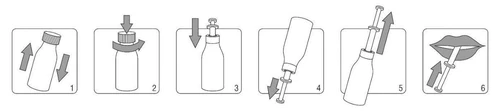
Instructions for using Ibuxal Forte Dla Dzieci with the oral dosing syringe:
- Shake the bottle vigorously before use to mix the contents.
- Unscrew the bottle cap (press down and turn counterclockwise, as indicated on the cap).
- Firmly insert the syringe into the neck of the bottle.
- To fill the syringe, invert the bottle, then gently push the plunger down to draw the suspension up to the desired mark on the syringe scale.
- Return the bottle to an upright position and carefully remove the syringe.
- Place the tip of the syringe into the patient's mouth, then slowly press the plunger to gently empty the contents.
- If the dose required is greater than 5 mL, repeat steps 2 to 6 to administer the correct amount of medicine.
- After use, close the bottle by replacing the cap, and wash and dry the syringe.
Use of a higher than recommended dose of Ibuxal Forte Dla Dzieci
If a patient takes more than the recommended dose of Ibuxal Forte Dla Dzieci or if a child accidentally ingests the medicine, always contact a doctor or go to the nearest hospital for assessment of potential health risks and advice on appropriate actions.
Symptoms may include nausea, stomach pain, vomiting (possibly with blood), headache, tinnitus, confusion, and nystagmus. After ingestion of a large dose, drowsiness, chest pain, palpitations, loss of consciousness, seizures (especially in children), weakness, dizziness, blood in urine, feeling cold, and breathing difficulties may occur.
Missed dose of Ibuxal Forte Dla Dzieci
Do not take a double dose to make up for a missed dose.
If a dose is missed, administer the next dose as needed, maintaining the dosing interval described above.
If you have any questions or doubts about using this medicine, contact your doctor, pharmacist, or nurse.
4. Possible adverse effects
Like all medicines, this medicine can cause adverse effects, although not everyone will experience them.
The risk of adverse effects can be reduced by using the lowest effective dose for the shortest duration necessary to relieve symptoms.
A child may experience one of the known adverse effects associated with NSAIDs. If adverse effects occur, or if there is any doubt, administration of the medicine should be discontinued and medical advice should be sought as soon as possible.
Elderly patients using this medicine belong to a group at increased risk of adverse effects.
DISCONTINUE USE of the medicine and seek immediate medical help if the patient experiences:
- Red, flat, non-raised, target-like or circular skin rashes, often with blisters in the center, skin peeling, and mucosal ulcers in the mouth, throat, nose, genital organs, or eyes. These severe skin reactions may be preceded by fever and flu-like symptoms (exfoliative dermatitis, erythema multiforme, Stevens-Johnson syndrome, toxic epidermal necrolysis) (frequency unknown – frequency cannot be estimated from available data).
- Severe skin reactions known as DRESS syndrome. Symptoms of DRESS syndrome include: skin rash, fever, swollen lymph nodes, and increased eosinophil count (a type of white blood cell); severe skin and soft tissue infections as complications during chickenpox (frequency unknown – frequency cannot be estimated from available data).
- Red, scaly rash with subcutaneous nodules and blisters, predominantly located in skin folds, on the trunk, and upper limbs, accompanied by fever. Symptoms usually appear at the beginning of treatment (acute generalized exanthematous pustulosis) (frequency unknown – frequency cannot be estimated from available data).
- Chest pain, which may indicate a potentially serious allergic reaction called Kounis syndrome.
Very rare ( occurring in no more than 1 in 10,000 patients ):
- Blood in the stool or black, tarry stools;
- Vomiting blood or material resembling coffee grounds;
- Severe allergic reactions manifesting as: facial, tongue, neck, or throat swelling, difficulty breathing, rapid heartbeat, fainting, dizziness, or collapse;
- Wheezing (asthma), worsening of asthma attacks, breathing difficulties;
- Symptoms of meningitis such as: neck stiffness, fever, disorientation, headache, nausea, vomiting. The risk of meningitis is increased
- in patients with pre-existing autoimmune diseases such as systemic lupus erythematosus or mixed connective tissue disease;
- severe skin allergic reactions which may include skin peeling, blistering, and skin damage;
- worsening of pre-existing severe skin infections;
- gastric and/or duodenal ulcers and gastrointestinal bleeding;
- kidney disorders which may lead to kidney failure (the patient may pass more or less urine, blood may be present in the urine, or the urine may be cloudy, the patient may have shortness of breath, feel weak and fatigued, have loss of appetite, or swollen ankles);
- high blood pressure, heart failure (the patient may feel excessively tired, have difficulty breathing, or have swollen legs).
Furthermore, if the patient experiences any of the following adverse effects, discontinue use of the medicine and contact a doctor immediately:
Uncommon ( occurring in 1 to 10 out of 1,000 patients )
- Skin allergic reactions such as: itching, urticaria (red rash);
- Visual disturbances;
- Abdominal pain, indigestion, nausea.
Rare ( occurring in 1 to 10 out of 10,000 patients )
- Dizziness, insomnia, restlessness, irritability, feeling tired;
- Optic nerve damage;
- Vomiting.
Very rare ( occurring in less than 1 in 10,000 patients )
- Yellowing of the skin or eyes, pale stools, or upper abdominal pain (these symptoms may be due to liver dysfunction);
- Fatigue, unusual bruising or unexplained bleeding, sore throat, mouth ulcers, flu-like symptoms including fever; these may be caused by changes in blood counts.
Other possible adverse effects:
Common ( affecting 1 to 10 out of 100 patients )
- Feeling of fatigue.
Uncommon ( affecting 1 to 10 out of 1,000 patients )
- Headache.
Rare ( affecting 1 to 10 out of 10,000 patients )
- Swelling, diarrhea, bloating, constipation. Consult a doctor if bloating persists for more than a few days and is bothersome.
Very rare ( affecting less than 1 in 10,000 patients )
- Exacerbation of colitis and Crohn's disease; swelling or ulceration of the oral mucosa.
Frequency not known (frequency cannot be estimated from available data)
- Fluid retention, which may cause limb swelling; high blood pressure;
- Increased risk of heart attack or stroke (may be caused by long-term use of high-dose ibuprofen). At the dose used in children, the likelihood of these adverse effects is low;
- Skin photosensitivity.
Medicines such as Ibuxal Forte Dla Dzieci may cause a small increase in the risk of heart attack (myocardial infarction) or stroke.
Fluid retention (edema), increased blood pressure, and heart failure have been observed in association with the use of NSAIDs.
Reporting of adverse effects
If any adverse effects occur, including any not listed in this leaflet, inform a doctor, pharmacist, or nurse. Adverse effects can be reported directly to the Department of Monitoring Adverse Drug Reactions, Office for Registration of Medicinal Products, Medical Devices and Biocidal Products:
Al. Jerozolimskie 181C,
02-222 Warsaw,
tel.: 22 49-21-301,
fax: 22 49-21-309,
Website: https://smz.ezdrowie.gov.pl
Adverse effects can also be reported to the marketing authorization holder.
Reporting adverse effects helps provide more information on the safety of the medicine.
5. How to store Ibuxal Forte Dla Dzieci
Do not store above 25°C.
Keep the medicine in a place invisible and inaccessible to children.
Shake well before use.
Shelf life after first opening of the bottle: 3 months.
Do not use this medicine after the expiry date stated on the label of the bottle and the cardboard
package after EXP. The expiry date refers to the last day of the stated month.
Medicines must not be disposed of via wastewater or household waste. Ask your pharmacist how to
dispose of medicines no longer required. This will help protect the environment.
6. Contents of the package and other information
What the medicine Ibuxal Forte Dla Dzieci contains
- The active substance is ibuprofen. 1 mL of oral suspension contains 40 mg of ibuprofen.
- The other ingredients are: propylene glycol, anhydrous citric acid, sodium benzoate (E 211), sodium saccharin (E 954), sodium citrate (E 331), sorbitol 70% (E 420), glycerol (E 422), xanthan gum, polysorbate 80, orange flavour (Aroma Narnja 61.0282/202600 containing: ethanol, purified water, orange oil, citral, dodecanal), purified water.
What Ibuxal Forte Dla Dzieci looks like and contents of the pack
Ibuxal Forte Dla Dzieci is a white or almost white, homogeneous suspension with an orange flavour after mixing.
The bottle has a capacity of 100 mL or 200 mL made of amber glass type III, with a PP screw cap with child-resistant closure (with or without LDPE connector), supplied with a measuring spoon made of polypropylene (PP) with a capacity of 5 mL and graduations every 1.25 mL, or an oral syringe with a 5 mL capacity, an opaque plunger made of high-density polyethylene (HDPE), and a cylinder with graduations every 0.25 mL made of polypropylene (PP), packed in a cardboard box.
Not all pack sizes may be marketed.
Marketing Authorisation Holder
Biofarm Sp. z o.o.
ul. Wałbrzyska 13
60-198 Poznań
tel.: +48 61 66 51 500
fax: +48 61 66 51 505
e-mail: [email protected]
Manufacturer
Laboratórios Basi – Indústria Farmacêutica, S.A.
Parque Industrial Manuel Lourenço Ferreira, Lotes 8, 15 e 16
3450-232 Mortágua
Portugal