Ibuvit d3 2000 iu
Poland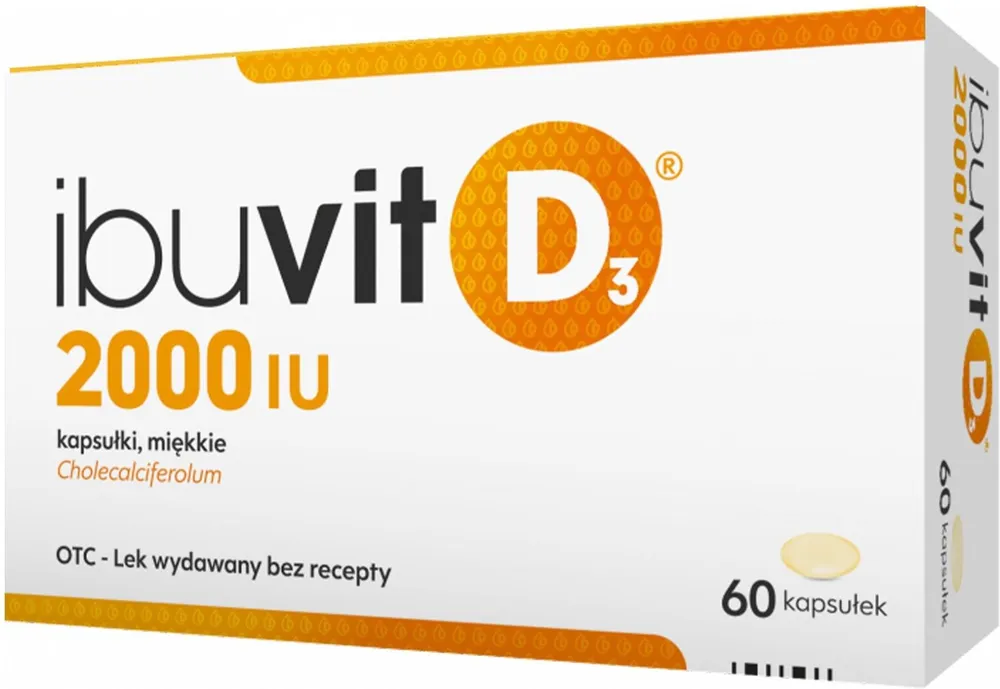
Table of Contents
Patient Information Leaflet
Ibuvit D 2000 IU, soft capsules
Cholecalciferolum
Please read all of this leaflet carefully before taking this medicine, because it contains
important information for you.
This medicine should always be taken exactly as described in this patient leaflet or as advised by
your doctor or pharmacist.
- Keep this leaflet so that you can read it again if necessary.
- If you need advice or further information, please contact your pharmacist.
- If you experience any side effects, including any not listed in this leaflet, inform your doctor or pharmacist. See section 4.
- If your condition does not improve or if you feel worse, consult your doctor.
Table of contents
- What Ibuvit D 2000 IU is and what it is used for
- Important information before taking Ibuvit D 2000 IU
- How to take Ibuvit D 2000 IU
- Possible side effects
- How to store Ibuvit D 2000 IU
- Contents of the pack and other information
1. What Ibuvit D 2000 IU is and what it is used for
Ibuvit D 2000 IU (International Units) contains cholecalciferol as the active substance, which is vitamin D. It plays an important role in bone formation and in supporting the immune system.
Cholecalciferol is identical to the vitamin D produced naturally in the human body.
Vitamin D increases calcium absorption from the intestines and reduces its excretion by the kidneys, thus supporting bone health.
Vitamin D deficiency may lead to impaired bone mineralization (rickets – defective bone mineralization in children) or loss of calcium from bones (osteomalacia – inadequate bone mineralization in adults), as well as weakened immune function. Prolonged vitamin D deficiency may lead to more serious conditions, such as osteoporosis and bone deformities.
Ibuvit D 2000 IU is indicated:
- for the prevention of vitamin D deficiency in adults with normal body weight, and in children and adolescents with normal body weight aged 11 years and above;
- as adjunctive treatment in osteoporosis in adults;
- for the prevention of vitamin D deficiency in women planning pregnancy, during pregnancy, and during breastfeeding, in consultation with a doctor.
Vitamin D is found in certain foods and is also produced in the body when the skin is exposed to sunlight.
Prophylactic intake of vitamin D is recommended during months with insufficient sunlight exposure (from October to April).
During periods of high sunlight exposure in the summer months (from May to September), it is recommended to temporarily discontinue vitamin D supplementation.
2. Important information before using Ibuvit D 2000 IU
When not to use Ibuvit D 2000 IU:
- if the patient is allergic to cholecalciferol or any of the other ingredients of this medicine (listed in section 6);
- if the patient has elevated calcium levels in blood (hypercalcemia) or in urine (hypercalciuria);
- if the patient has severe kidney failure, kidney stones (nephrolithiasis), or a tendency to form kidney stones;
- if the patient has elevated vitamin D levels in blood (hypervitaminosis D);
- in children under 11 years of age.
Warnings and precautions
Before starting treatment with Ibuvit D 2000 IU, discuss the following with your doctor or pharmacist:
- if the patient is taking certain medicines used for heart conditions (e.g. cardiac glycosides such as digoxin);
- if the patient has sarcoidosis (an immune system disorder which may increase vitamin D levels in the body);
- if the patient is taking other medicines and/or dietary supplements containing vitamin D or consuming foods rich in vitamin D, because additional doses of vitamin D should only be taken under medical supervision;
- if the patient is taking additional calcium supplements;
- if the patient is likely to be exposed to significant sunlight during treatment with Ibuvit D 2000 IU (adequate sun exposure – see section 1.);
- if the patient has impaired or diseased kidneys;
- if vitamin D treatment is long-term, as in such cases the doctor should monitor serum and urinary calcium levels and assess kidney function by measuring blood creatinine levels.
Ibuvit D 2000 IU and other medicines
Tell your doctor or pharmacist about all medicines the patient is currently taking or has recently taken, as well as any medicines the patient plans to take.
This is particularly important if the patient is taking:
- medicines affecting the heart or kidneys, such as cardiac glycosides (e.g. digoxin) or thiazide diuretics (e.g. bendroflumethiazide). Concomitant use with vitamin D may cause a significant increase in calcium levels in blood and urine;
- medicines containing vitamin D, calcitriol, or other vitamin D metabolites and analogs, as well as foods rich in vitamin D;
- actinomycin (a medicine used to treat certain types of cancer) and imidazole antifungal medicines (e.g. clotrimazole and ketoconazole, used to treat fungal infections);
- anticonvulsant (antiepileptic) medicines;
- barbiturates (sedatives, anticonvulsants);
- glucocorticosteroids (steroid hormones, such as hydrocortisone or prednisolone);
- medicines that lower blood cholesterol levels (such as cholestyramine or colestipol);
- certain medicines used to treat obesity that reduce fat absorption (e.g. orlistat);
- certain laxatives (such as liquid paraffin);
- medicines used in hypercalcemia (elevated blood calcium levels), such as calcitonin, etidronate, pamidronate;
- antacids containing magnesium or aluminium (used for heartburn and indigestion);
- medicines used to treat tuberculosis (e.g. rifampicin, isoniazid).
Ibuvit D 2000 IU with food and drink
This medicine should be taken with a main meal to facilitate absorption of vitamin D.
Pregnancy and breastfeeding
If the patient is pregnant or breastfeeding, suspects she may be pregnant, or is planning to have a child, she should consult her doctor or pharmacist before using this medicine.
Ibuvit D 2000 IU should be used during pregnancy and breastfeeding only under medical supervision.
Administration of vitamin D during pregnancy at a dose of 2000 IU per day has beneficial effects for pregnant women and their newborns.
During pregnancy, women should follow the advice of their attending physician, as individual requirements may vary depending on the degree of deficiency and response to treatment.
Driving and operating machinery
Ibuvit D 2000 IU has no effect on the ability to drive or operate machinery.
3. How to use Ibuvit D 2000 IU
This medicine should always be taken exactly as described in this patient information leaflet or as directed by your doctor or pharmacist. If in doubt, consult your doctor or pharmacist.
Prevention of vitamin D deficiency and conditions resulting from vitamin D deficiency in adults
and children and adolescents aged 11 years and above
The usual recommended dose is 2000 IU (1 capsule) daily for patients with normal body weight, from October to April, or throughout the year if effective cutaneous synthesis of vitamin D is not ensured during summer months.
Adjunctive treatment in osteoporosis in adults
The usual recommended dose is 2000 IU (1 capsule) daily, regardless of the time of year.
Prevention of vitamin D deficiency in women planning pregnancy, during pregnancy and breastfeeding,
in consultation with a doctor
The usual recommended dose is 2000 IU (1 capsule) daily, regardless of the time of year, unless otherwise advised by a doctor.
Do not take other medicines, dietary supplements or foods containing vitamin D
(cholecalciferol), calcitriol, or other vitamin D metabolites and analogues without medical supervision.
Method of administration
The capsules should be swallowed whole with water, preferably during a main meal.
Taking more Ibuvit D 2000 IU than recommended
If a patient accidentally takes one extra capsule, the occurrence of symptoms of overdose is unlikely.
In case of overdose, inform your doctor or pharmacist, or contact the nearest hospital emergency department for further advice. If possible, bring the pack and this leaflet along to show the doctor.
If you miss a dose of Ibuvit D 2000 IU
Do not take a double dose to make up for the missed dose.
If you have any further questions about the use of this medicine, consult your doctor or pharmacist.
4. Possible adverse reactions
Like all medicines, this medicine can cause adverse reactions, although not everyone experiences them.
Some adverse reactions may be serious and may require immediate medical attention.
You should immediately consult a doctor if symptoms of angioedema occur, such as:
- swelling of the face, tongue or throat (larynx)
- difficulty swallowing
- urticaria and breathing difficulties.
Other adverse reactions associated with the use of Ibuvit D 2000 IU include:
Not common (occur in less than 1 in 100 patients)
- elevated calcium levels in blood (hypercalcaemia)
- elevated calcium levels in urine (hypercalciuria)
Rare (occur in less than 1 in 1000 patients)
- rash
- itching
- urticaria
Frequency not known (cannot be estimated from available data)
- constipation
- gas (bloating)
- nausea
- abdominal pain
- diarrhoea.
Reporting of adverse reactions
If any adverse reactions occur, including any not listed in this leaflet, inform your doctor or pharmacist. Adverse reactions can be reported directly to the Department of Monitoring Adverse Drug Reactions of the Office for Registration of Medicinal Products, Medical Devices and Biocidal Products:
Al. Jerozolimskie 181C
02-222 Warsaw
Phone: + 48 22 49 21 301
Fax: + 48 22 49 21 309
Website: https://smz.ezdrowie.gov.pl
Adverse reactions can also be reported to the marketing authorization holder.
Reporting adverse reactions helps to provide more information on the safety of the medicine.
5. How to store Ibuvit D 2000 IU
Keep this medicine out of sight and reach of children.
Do not store above 30°C. Store in the original packaging to protect from light.
Do not use this medicine after the expiry date stated on the carton and blister pack after EXP.
The expiry date refers to the last day of the stated month.
Medicines should not be disposed of via wastewater or household waste. Ask your pharmacist how to dispose of medicines no longer required. Such measures help protect the environment.
6. Contents of the packaging and other information
What Ibuvit D 2000 IU contains
- The active substance is cholecalciferol. Each capsule contains 50 micrograms of cholecalciferol, equivalent to 2000 IU of vitamin D.
- The other ingredients are: capsule contents: purified crocus oil; capsule shell composition: gelatin, glycerol, purified water, medium-chain triglycerides.
What Ibuvit D 2000 IU looks like and contents of the pack
Ibuvit D 2000 IU is in the form of light yellow, oval, soft capsules (shorter diameter approx. 6 mm) with a central seam, filled with a light yellow oily liquid.
The pack contains 30, 60, 90, 120 or 150 capsules in PVC/PVDC/Aluminium blisters, packed in a cardboard box.
Not all pack sizes may be marketed.
Marketing Authorisation Holder
Zakłady Farmaceutyczne POLPHARMA S.A.
Pelplińska Street 19, 83-200 Starogard Gdański
tel. +48 22 364 61 01
Manufacturer
Zakłady Farmaceutyczne POLPHARMA S.A.
Medana Branch in Sieradz
Władysława Łokietka Street 10, 98-200 Sieradz