Ibuprofen tzf
Poland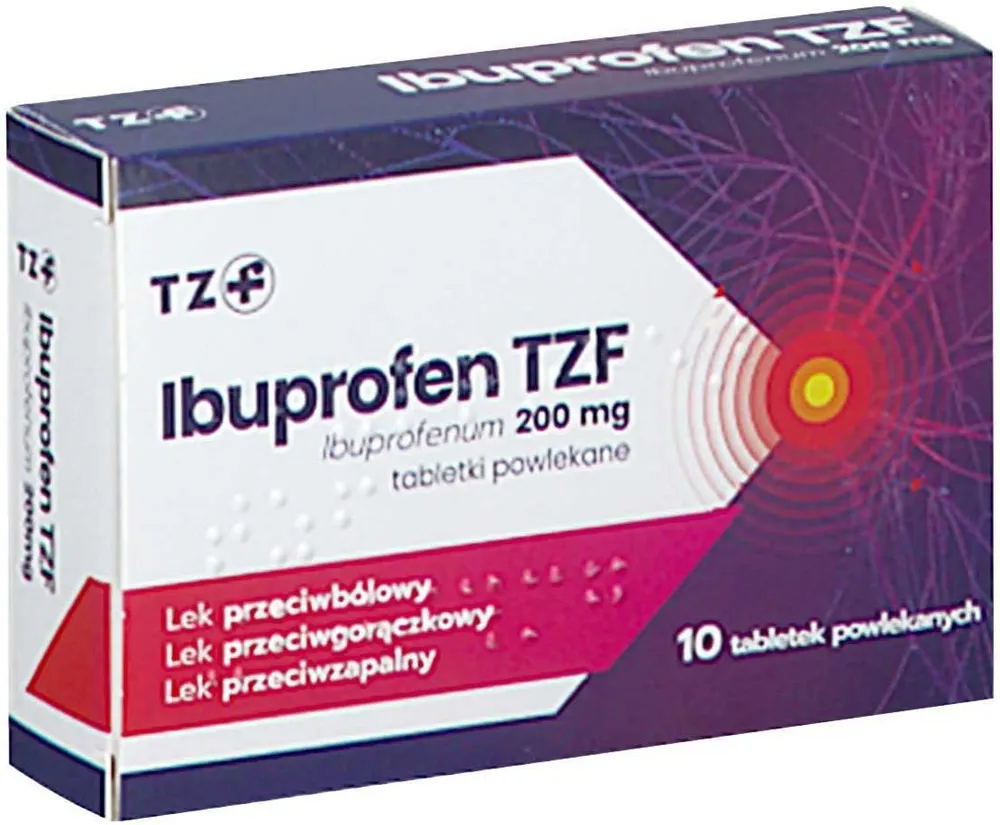
Table of Contents
Package leaflet: Information for the patient
Ibuprofen TZF, 600 mg, coated tablets
Ibuprofenum
Please read all of this leaflet carefully before taking this medicine, because it contains
important information for you.
This medicine should always be used exactly as described in this patient leaflet or as directed by
your doctor or pharmacist.
- Keep this leaflet so that you can read it again if necessary.
- If you need advice or further information, please consult your pharmacist.
- If you experience any adverse reactions, including any possible adverse reactions not listed in this leaflet, inform your doctor, pharmacist or nurse. See section 4.
- If there is no improvement after 3 days, or if you feel worse, consult your doctor.
Contents of the leaflet
- What Ibuprofen TZF is and what it is used for
- Important information before taking Ibuprofen TZF
- How to take Ibuprofen TZF
- Possible side effects
- How to store Ibuprofen TZF
- Contents of the pack and other information
1. What Ibuprofen TZF is and what it is used for
Ibuprofen TZF belongs to a group of medicines called NSAIDs (non-steroidal anti-inflammatory drugs)
which have analgesic, anti-inflammatory and antipyretic properties.
Indications:
For short-term, temporary relief in adults with acute, moderate pain of various origins such as:
- headaches (including migraines),
- toothaches,
- muscle, joint and bone pain (including back pain),
- neuralgic pain,
- pain due to injury or following surgery, including dental procedures,
- painful menstruation.
2. Important information before using Ibuprofen TZF
When not to use Ibuprofen TZF
if the patient is allergic to the active substance, other nonsteroidal anti-inflammatory drugs (NSAIDs), or any of the other ingredients of this medicine (listed in section 6);
if the patient has ever previously experienced allergic symptoms such as rhinitis, urticaria, or bronchial asthma following intake of ibuprofen, aspirin (acetylsalicylic acid), or other nonsteroidal anti-inflammatory drugs (NSAIDs);
if the patient has ever previously experienced gastrointestinal bleeding or gastrointestinal perforation associated with prior use of NSAIDs;
if the patient has active or recurrent peptic ulcer disease of the stomach and/or duodenum, or gastrointestinal bleeding (previous serious bleeding, two or more independent episodes of confirmed ulceration or bleeding);
in patients with haemorrhagic diathesis (tendency to bleed);
if severe hepatic or severe renal impairment is present;
if severe heart failure is present;
if coronary artery disease is present;
during the last three months of pregnancy;
- if cerebral haemorrhage or any other active bleeding is present;
- if the patient is significantly dehydrated (due to vomiting, diarrhoea, or insufficient fluid intake);
in patients under 18 years of age.
Warnings and precautions
Ibuprofen TZF should be used in adults with concomitant chronic diseases only after consultation with a physician.
Allergic reactions to ibuprofen, including breathing difficulties, facial and neck swelling (angioedema), and chest pain, have been reported.
If any of these symptoms occur, Ibuprofen TZF should be discontinued immediately and medical help should be sought without delay.
The risk of adverse effects can be minimized by using the lowest effective dose for the shortest duration necessary to control symptoms.
Inform your pharmacist or doctor if the patient has an infection – see section below titled "Infections".
Infections
Ibuprofen TZF may mask symptoms of infection such as fever and pain. Therefore, Ibuprofen TZF may delay appropriate treatment of infection and consequently increase the risk of complications. This has been observed in bacterial pneumonia and bacterial skin infections associated with chickenpox. If the patient takes this medicine during an ongoing infection and symptoms persist or worsen, medical advice should be sought immediately.
Before starting treatment with Ibuprofen TZF, discuss the treatment with your doctor or pharmacist if:
the patient has heart diseases such as heart failure, ischaemic heart disease, angina pectoris (chest pain), history of myocardial infarction, coronary artery bypass surgery, peripheral arterial disease (poor blood circulation in the legs due to narrowed or blocked arteries), or if the patient has ever had a stroke (including mini-stroke or transient ischaemic attack – TIA);
the patient has hypertension, diabetes, elevated cholesterol levels, a family history of heart disease or stroke, or if the patient smokes;
the patient has autoimmune diseases (such as systemic lupus erythematosus or mixed connective tissue disease) – there is an increased risk of developing aseptic meningitis;
the patient is taking other analgesic NSAIDs or acetylsalicylic acid at daily doses exceeding 75 mg;
the patient has a diagnosed congenital porphyria metabolism disorder (e.g. acute intermittent porphyria);
the patient has previously experienced fluid retention and oedema associated with NSAID use;
the patient has impaired kidney or liver function;
the patient is taking anticoagulants, diuretics, cardiac glycosides, or corticosteroids;
the patient has diagnosed blood clotting disorders (ibuprofen may temporarily inhibit platelet aggregation and prolong bleeding time);
the patient is dehydrated (especially elderly patients) – there is an increased risk of kidney dysfunction;
the patient has recently undergone major surgery;
the patient has asthma, hay fever, or allergic reactions – bronchospasm, urticaria, or angioedema may occur after taking the medicine;
the patient has a history of gastrointestinal disease (ulcerative colitis, Crohn's disease) – symptoms may worsen;
the patient is elderly (see section 3).
Concomitant use of ibuprofen with other NSAIDs, including selective COX-2 inhibitors (e.g. celecoxib or etoricoxib), should be avoided due to increased risk of gastrointestinal bleeding.
Patients with a history of gastrointestinal disorders, especially elderly patients, should report any unusual gastrointestinal symptoms (particularly bleeding), especially at the beginning of treatment.
Elderly patients are more susceptible to adverse effects, particularly gastrointestinal bleeding and ulceration. Elderly patients should report any unusual abdominal symptoms (especially gastrointestinal bleeding), especially at the beginning of treatment.
Particular caution and consultation with a doctor or pharmacist are advised before using the medicine in patients with hypertension or heart failure with fluid retention, or with a history of hypertension and oedema associated with previous NSAID use.
Use of anti-inflammatory and analgesic medicines such as ibuprofen may be associated with a small increased risk of myocardial infarction or stroke, especially when used at high doses. Do not exceed the recommended dose or duration of treatment.
Long-term use of ibuprofen, especially in combination with other analgesics, may cause permanent kidney damage and risk of renal failure.
Patients at highest risk of such reactions include those with impaired kidney function, heart failure, impaired liver function, those taking diuretics and antihypertensive agents (ACE inhibitors), and elderly patients. Patients who discontinue treatment with NSAIDs generally return to their pre-treatment condition.
In cases of long-term ibuprofen therapy, periodic monitoring of liver and kidney function, as well as blood morphology with blood smear, is necessary, especially in high-risk patients.
Ibuprofen may cause sodium, potassium, and fluid retention in patients without prior kidney disease. This may lead to oedema or even heart failure or hypertension in patients predisposed to such disorders.
Serious skin reactions such as exfoliative dermatitis, erythema multiforme, Stevens-Johnson syndrome, toxic epidermal necrolysis, drug reaction with eosinophilia and systemic symptoms (DRESS), and acute generalised exanthematous pustulosis (AGEP) have been reported with ibuprofen use. If any of the symptoms associated with these serious skin reactions described in section 4 occur, Ibuprofen TZF should be discontinued immediately and medical help sought.
Prolonged use of analgesic medicines may lead to headache, which should not be treated with increased doses of the medicine. The medicine should be discontinued and medical advice sought.
Ibuprofen TZF should be avoided during chickenpox.
Alcohol consumption should be avoided during treatment, as it may increase the risk of adverse effects, particularly gastrointestinal and nervous system effects.
If new symptoms occur or existing symptoms worsen, contact your doctor or pharmacist.
Interaction of Ibuprofen TZF with other medicines
Inform your doctor or pharmacist about all medicines currently or recently taken, as well as any medicines planned for future use.
Ibuprofen TZF may affect the action of other medicines, and other medicines may affect the action of Ibuprofen TZF.
- other NSAIDs (including COX-2 inhibitors such as celecoxib or etoricoxib);
- diuretics and potassium-sparing agents;
- antiplatelet agents (such as acetylsalicylic acid) and selective serotonin reuptake inhibitors (antidepressants), as they increase the risk of gastrointestinal adverse effects;
- methotrexate (used in cancer or rheumatic disease treatment), as ibuprofen may increase methotrexate effects;
- lithium (used in depression treatment), as ibuprofen may increase lithium effects;
- cardiac glycosides (e.g. digoxin), as ibuprofen may increase serum levels of this medicine;
- phenytoin (antiepileptic), as ibuprofen may increase serum levels of this medicine;
- corticosteroids (such as prednisolone or dexamethasone), as they may increase the risk of gastrointestinal ulceration or bleeding;
- tacrolimus (immunosuppressant), as there is an increased risk of nephrotoxic effects;
- cyclosporine (immunosuppressant), as limited data suggest an increased risk of nephrotoxic effects;
- zidovudine (used in AIDS treatment), as use of Ibuprofen TZF may increase the risk of joint bleeding or bleeding leading to oedema (in haemophilia patients with positive HIV antibody test);
- ritonavir (used in HIV therapy): ritonavir may increase plasma concentrations of NSAIDs;
- antibiotics (quinolones or aminoglycosides);
- sulfonylureas (antidiabetic agents): clinical interactions with NSAIDs may occur; blood glucose monitoring is recommended;
- probenecid and sulfinpyrazone (used in gout treatment): may delay ibuprofen elimination;
- cholestyramine: may delay and reduce absorption of NSAIDs;
- voriconazole and fluconazole (antifungals): may increase exposure to NSAIDs;
- baclofen (muscle relaxant): toxic effects of baclofen may occur after starting ibuprofen;
- aminoglycosides (a class of antibiotics): NSAIDs may reduce aminoglycoside excretion;
- mifepristone: NSAIDs should not be used within 8–12 days after mifepristone administration, as they may weaken its effect;
- calcium channel blockers: reduced antihypertensive efficacy and increased risk of gastrointestinal bleeding;
- desipramine: increased desipramine toxicity typical of tricyclic antidepressants;
- levofloxacin and ofloxacin: increased risk of serious central nervous system effects;
- thienopyridine derivatives: increased bleeding risk due to additive antiplatelet and anticoagulant effects;
- bisphosphonates: increased risk of gastrointestinal adverse effects;
- anticoagulant medicines (i.e. blood thinners or those preventing clot formation, such as aspirin – acetylsalicylic acid, warfarin, ticlopidine);
- blood pressure-lowering medicines (ACE inhibitors such as captopril, beta-blockers such as atenolol-containing medicines, angiotensin II receptor antagonists such as losartan);
- Concomitant use of ibuprofen with herbal products containing Ginkgo biloba or Filipendula ulmaria may increase bleeding risk due to antiplatelet effects. Concurrent use of ibuprofen and products containing Ephedra sinica may increase the risk of gastrointestinal mucosal damage.
Some other medicines may also influence or be influenced by treatment with Ibuprofen TZF.
Therefore, always consult a doctor or pharmacist before using Ibuprofen TZF with other medicines.
Ibuprofen TZF with food, drink, and alcohol
The medicine can be taken with food or drink.
In patients with sensitive stomachs, taking the medicine with meals is recommended to avoid gastrointestinal discomfort.
Avoid concomitant use of ibuprofen with alcohol due to the potential for increased adverse effects.
Pregnancy, breastfeeding, and fertility
If the patient is pregnant or breastfeeding, suspects she may be pregnant, or plans to become pregnant, she should consult a doctor or pharmacist before using this medicine.
Pregnancy
Ibuprofen TZF must not be used during the last three months of pregnancy, as it may harm the unborn child or cause delivery complications. This medicine may cause kidney and heart problems in the unborn child. Ibuprofen TZF may increase bleeding tendency in the pregnant woman and her child and may delay or prolong labour. During the first six months of pregnancy, Ibuprofen TZF should not be used unless absolutely necessary and only on a doctor's advice.
If Ibuprofen TZF is to be used when trying to conceive or during the first and/or second trimester of pregnancy, the lowest possible effective dose and shortest possible duration of treatment should be used. Use of Ibuprofen TZF for longer than a few days beyond 20 weeks of pregnancy may cause kidney dysfunction in the unborn child, leading to reduced amniotic fluid volume (oligohydramnios) or narrowing of a blood vessel (ductus arteriosus) in the child's heart. If Ibuprofen TZF use continues beyond a few days, the doctor may recommend additional monitoring.
Breastfeeding
Ibuprofen passes into breast milk in small amounts. Short-term use of ibuprofen at therapeutic doses is unlikely to harm the infant. However, if prolonged use of ibuprofen is recommended, early discontinuation of breastfeeding should be considered.
Fertility
Ibuprofen may impair fertility. If the patient plans to conceive or has difficulty conceiving, she should inform her doctor.
Driving and operating machinery
Ibuprofen TZF has no effect or negligible effect on the ability to drive and operate machinery when used short-term and according to recommended dosing.
However, patients experiencing adverse effects such as dizziness, fatigue, visual disturbances, or other adverse symptoms should not drive or operate machinery.
Ibuprofen TZF contains monohydrate lactose and sodium
Monohydrate lactose
If the patient has previously been diagnosed with intolerance to certain sugars, he or she should consult a doctor before taking this medicine.
Sodium
Ibuprofen TZF contains less than 1 mmol (23 mg) of sodium per tablet, meaning the medicine is considered "sodium-free".
3. How to use Ibuprofen TZF
This medicine should always be taken exactly as described in this patient leaflet or as directed by your doctor or pharmacist. If in doubt, consult your doctor or pharmacist.
Method of administration
Ibuprofen TZF is for oral use.
To avoid gastrointestinal discomfort, it is recommended to take this medicine during or after a meal.
Ibuprofen TZF tablets should be taken with a glass of water. The tablets should be swallowed whole and not chewed, broken, crushed, or sucked, to avoid oral discomfort and throat irritation.
Dosage
Use the lowest effective dose for the shortest duration necessary to relieve symptoms. If symptoms of an infection (such as fever and pain) persist or worsen, consult your doctor immediately (see section 2).
If it is necessary to use the medicine for longer than 3 days or if symptoms worsen, consult your doctor.
The maximum daily dose must not exceed 1,200 mg.
Adults
The recommended dose is 600 mg of ibuprofen (1 tablet) as a single dose.
If needed, the single dose of 600 mg (1 tablet) may be repeated, maintaining an interval of 6–8 hours. The maximum daily dose without prior consultation with a doctor must not exceed 1,200 mg (2 tablets).
Ibuprofen TZF should only be used if the patient does not experience improvement after using ibuprofen at a dose of 400 mg (maximum 1,200 mg of ibuprofen per day). In such a case, a 600 mg dose of ibuprofen may be administered, provided that a 6–8 hour interval has elapsed since the 400 mg dose was taken.
Elderly patients
Do not use without consulting a doctor. Non-steroidal anti-inflammatory drugs (NSAIDs) should be used with caution, especially in elderly patients, who are more susceptible to adverse effects and at increased risk of potentially fatal gastrointestinal bleeding, ulcers, and perforation.
Patients with impaired liver or kidney function
Do not use without consulting a doctor. Dose adjustment is not required in patients with mild to moderate impairment of renal or hepatic function. However, in these patients, it is recommended to use the lowest effective dose for the shortest possible duration needed to control symptoms.
Use of a higher than recommended dose of Ibuprofen TZF
If a patient has taken more than the recommended dose of Ibuprofen TZF or if a child has accidentally ingested the medicine, always contact a doctor or go to the nearest hospital to assess potential health risks and receive advice on necessary actions.
Symptoms of overdose may include nausea, stomach pain, vomiting (possibly with blood), gastrointestinal bleeding (see also section 4 below), diarrhoea, headache, tinnitus, disorientation, and nystagmus. Excitement, drowsiness, or coma may also occur. Seizures may occur in some patients. After ingestion of a large dose, drowsiness, chest pain, palpitations, loss of consciousness, seizures (mainly in children), weakness, dizziness, blood in urine, low blood potassium levels, feeling cold, and breathing difficulties may occur. In addition, prothrombin time/INR may be prolonged, probably due to interference with circulating coagulation factors. In severe poisoning, metabolic acidosis may occur. During severe intoxication, acute renal failure and liver damage, hypotension, respiratory depression, bradycardia, or cyanosis may occur. In patients with asthma, worsening of asthma symptoms may occur.
Treatment
There is no specific antidote. Symptomatic and supportive treatment should be administered. Oral activated charcoal may be considered within 1 hour of overdose.
If symptoms of overdose occur, discontinue the medicine immediately and contact your doctor or go to the nearest emergency department.
Missed dose of Ibuprofen TZF
Do not take a double dose to make up for a missed dose.
If you have any further questions about the use of this medicine, consult your doctor or pharmacist.
4. Possible adverse reactions
Like all medicines, this medicine can cause adverse reactions, although not everyone will experience them.
The most commonly observed serious adverse reactions affect the gastrointestinal tract,
such as ulcers, perforation (piercing) or gastrointestinal bleeding, sometimes with fatal outcomes (especially in elderly patients).
These may occur without preceding warning signs or may occur in patients who have previously experienced such warning symptoms.
The risk of gastrointestinal bleeding is particularly dose-dependent and increases with the duration of ibuprofen use.
If any of the following symptoms occur in a patient, ibuprofen should be discontinued immediately and medical help should be sought:
Red, scaly rash with subcutaneous nodules and blisters, accompanied by fever.
Symptoms usually appear at the beginning of treatment (acute generalized pustular eruption).
Serious skin reactions may include erythematous, flat, disc-shaped or circular lesions on the trunk, often with blisters in the center, skin peeling, and mucosal ulcers in the mouth, throat, nose, genital organs, and eyes.
These severe skin rashes may be preceded by fever and flu-like symptoms (exfoliative dermatitis, erythema multiforme, Stevens-Johnson syndrome, toxic epidermal necrolysis).
Severe skin reactions known as DRESS syndrome may also occur. Symptoms of DRESS syndrome include: widespread skin rash, high fever, enlarged lymph nodes, and increased eosinophil count (a type of white blood cell).
Another serious adverse effect is chest pain, which may indicate a potentially severe allergic reaction called Kounis syndrome (frequency unknown).
Taking ibuprofen, particularly long-term at high doses (2,400 mg per day), may be associated with a small increased risk of arterial thrombotic events (e.g. myocardial infarction or stroke).
Other adverse reactions
Common (occur in 1 to 10 out of 100 treated patients):
- heartburn, indigestion, diarrhoea, nausea, vomiting, abdominal pain, bloating, constipation, gastrointestinal bleeding.
Uncommon (occur in 1 to 10 out of 1,000 treated patients):
- hypersensitivity reactions, urticaria, itching, episodes of breathlessness (possibly associated with a drop in blood pressure); in such cases, discontinue the medicine and seek immediate medical advice;
- insomnia, drowsiness;
- headache, dizziness;
- restlessness, irritability or fatigue;
- visual disturbances;
- gastrointestinal ulcers, potentially with bleeding and perforation, oral mucosal ulcers, exacerbation of ulcerative colitis, Crohn's disease, gastric mucosal inflammation, tarry stools, vomiting blood.
Rare (occur in 1 to 10 out of 10,000 treated patients):
- tinnitus (ringing in the ears);
- kidney tissue damage (papillary necrosis) and increased blood uric acid levels.
Very rare (occur in less than 1 out of 10,000 treated patients):
- severe generalized hypersensitivity reactions. These may present as, for example, facial swelling, tongue swelling, internal laryngeal swelling with impaired airway patency, respiratory failure, rapid heartbeat, drop in blood pressure, up to life-threatening shock. If any of these symptoms occur, which may happen even after the first dose, immediate medical assistance is required;
- blistering skin reactions, including erythema multiforme, Stevens-Johnson syndrome, toxic epidermal necrolysis, and exfoliative dermatitis. The highest risk of these severe reactions occurs at the beginning of treatment, in most cases within the first month of taking the medicine;
- blood system disorders (anaemia, leukopenia, thrombocytopenia, pancytopenia, agranulocytosis). Initial symptoms may include fever, sore throat, oral ulcers, flu-like symptoms, marked weakness, nosebleeds, and subcutaneous haemorrhages. During prolonged treatment, regular monitoring of blood morphology parameters is recommended;
- development of oedema, particularly in patients with hypertension or renal insufficiency, nephrotic syndrome, interstitial nephritis, which may be accompanied by acute renal failure. Therefore, kidney function should be monitored regularly during long-term treatment;
- liver function disturbances, liver damage (especially with prolonged use), liver failure, acute hepatitis. Therefore, liver function should be monitored regularly during long-term treatment;
- palpitations, heart failure, myocardial infarction;
- arterial hypertension;
- oesophagitis, pancreatitis, formation of diaphragm-like intestinal strictures;
- psychotic reactions, depression;
- infections associated with conditions for which non-steroidal anti-inflammatory drugs are used (e.g. necrotizing fasciitis). If signs of infection appear or worsen during ibuprofen use, the patient should seek medical advice immediately. The physician will assess whether antimicrobial treatment (antibiotic therapy) is indicated. Cases of aseptic meningitis with symptoms such as neck stiffness, headache, nausea, vomiting, fever, or disturbances in consciousness have been observed during ibuprofen use. Patients with autoimmune diseases (SLE, mixed connective tissue disease) appear to be particularly susceptible;
- in exceptional cases, during varicella virus infection, severe skin infections and soft tissue complications may occur.
Frequency not known (frequency cannot be estimated from available data):
- skin becomes sensitive to light.
Reporting of adverse reactions
If any adverse reactions occur, including any not listed in this leaflet, inform your doctor, pharmacist, or nurse.
Adverse reactions can be reported directly to the Department of Monitoring Adverse Drug Reactions of the Office for Registration of Medicinal Products, Medical Devices and Biocidal Products:
Al. Jerozolimskie 181C, 02-222 Warsaw
Tel.: +48 22 49 21 301, Fax: +48 22 49 21 309, Website: https://smz.ezdrowie.gov.pl
Adverse reactions can also be reported to the marketing authorization holder.
Reporting adverse reactions helps to provide more information on the safety of the medicine.
5. How to store Ibuprofen TZF
Store below 30°C.
Keep the medicine out of sight and reach of children.
Do not use this medicine after the expiry date (EXP) stated on the blister and carton. The expiry date (EXP) refers to the last day of the stated month.
Do not use this medicine if the blister is damaged.
Medicines must not be disposed of via wastewater or household waste. Ask your pharmacist how to dispose of medicines no longer required. This will help protect the environment.
6. Contents of the pack and other information
What Ibuprofen TZF contains
- The active substance is ibuprofen (Ibuprofenum). Each coated tablet contains 600 mg of ibuprofen.
- The other ingredients (excipients) are: maize starch, sodium lauryl sulfate, colloidal anhydrous silica, sodium croscarmellose, povidone K-30, microcrystalline cellulose, talc, stearic acid, Opadry White 32K580000 coating: hypromellose, monohydrate lactose, titanium dioxide (E 171), triacetin.
What Ibuprofen TZF looks like and contents of the pack
White, biconvex, coated tablets, smooth on both sides.
PVC/PVDC/Aluminium blister pack containing 10 coated tablets. The blister is placed in a cardboard box.
Marketing Authorisation Holder and Importer
Tarchomin Pharmaceutical Works "Polfa" Joint Stock Company
A. Fleminga 2 Street
03-176 Warsaw
Phone number: (22) 811-18-14
For further information on this medicinal product, please contact the Marketing Authorisation Holder.