Ibuprofen kabi
Poland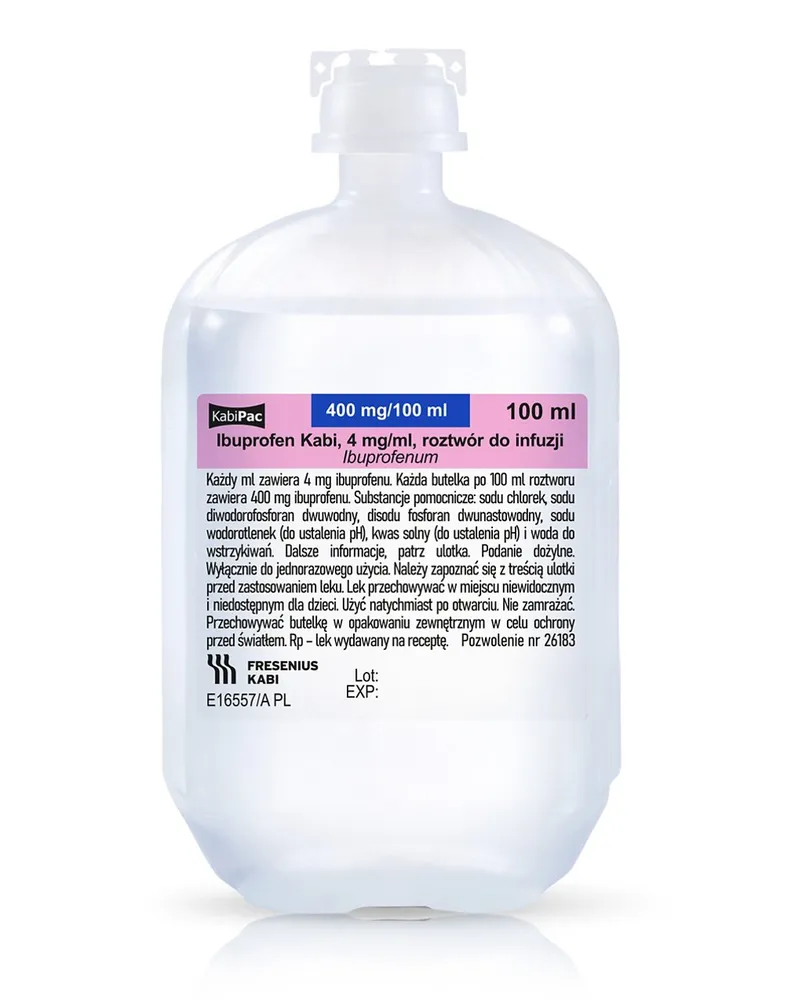
Table of Contents
Package leaflet: Information for the patient
Ibuprofen Kabi, 4 mg/ml, solution for infusion
Ibuprofenum
Please read the entire leaflet carefully before using the medicine, as it contains
important information for the patient.
- Keep this leaflet so that you can read it again if necessary.
- If you have any questions, please consult your doctor, pharmacist, or nurse.
- If any adverse reactions occur in the patient, including any adverse reactions not listed in this leaflet, inform your doctor, pharmacist, or nurse. See section 4.
Table of contents
- What Ibuprofen Kabi is and what it is used for
- Important information before using Ibuprofen Kabi
- How to use Ibuprofen Kabi
- Possible side effects
- How to store Ibuprofen Kabi
- Contents of the pack and other information
1. What Ibuprofen Kabi is and what it is used for
Ibuprofen belongs to a group of medicines called non-steroidal anti-inflammatory drugs (NSAIDs).
This medicine is indicated for use in adults for the short-term symptomatic treatment of acute moderate pain and for the short-term symptomatic treatment of fever in situations where intravenous administration is clinically justified and other routes of administration are not feasible.
2. Important information before using Ibuprofen Kabi
When not to use Ibuprofen Kabi:
- if the patient is allergic to ibuprofen or any of the other ingredients of this medicine (listed in section 6);
- if the patient has ever had asthma, difficulty breathing, skin rash, runny nose or facial swelling after taking ibuprofen, acetylsalicylic acid or other similar painkillers (NSAIDs);
- if the patient has a condition causing a tendency to bleeding, or active bleeding;
- if the patient currently has (or has had more than twice in the past) stomach ulcer or gastrointestinal bleeding;
- if the patient has ever previously experienced bleeding or perforation of the stomach or intestines while taking NSAIDs;
- if the patient has bleeding in the brain or any other active bleeding;
- if the patient has severe kidney, liver or heart disease;
- if the patient is severely dehydrated (due to vomiting, diarrhoea or inadequate fluid intake);
- if the patient is in the last trimester of pregnancy.
Warnings and precautions
Before starting treatment with Ibuprofen Kabi, discuss this with your doctor, pharmacist or
nurse.
Use of anti-inflammatory and pain-relieving medicines such as ibuprofen may be associated
with a small increased risk of heart attack or stroke, particularly when used at high doses. Do not exceed the recommended dose or duration of treatment.
Allergic reactions to ibuprofen, including difficulty breathing, facial or neck swelling (angioedema), or chest pain, have been reported.
If any of these symptoms occur, stop taking Ibuprofen Kabi immediately and seek urgent medical advice.
Before using Ibuprofen Kabi, the patient should discuss treatment with a doctor or
pharmacist:
- if the patient has heart disease, such as heart failure, angina (chest pain), history of heart attack, coronary artery bypass surgery, peripheral arterial disease (poor blood circulation in the legs due to narrowed or blocked arteries), or has had any stroke (including mini-stroke or transient ischaemic attack - TIA);
- if the patient has high blood pressure, diabetes, high cholesterol levels, a family history of heart disease or stroke, or if the patient smokes;
- if the patient has recently undergone major surgery;
- if the patient has ever had stomach or duodenal ulcers, gastrointestinal bleeding or perforation; in such cases, the doctor may consider prescribing a stomach-protecting medicine;
- if the patient has asthma or other respiratory disorders;
- if the patient has an infection – see below, section titled “Infections”;
- if the patient has kidney or liver disease, is over 60 years of age, or is taking ibuprofen long-term, the doctor may perform regular monitoring tests. The doctor will inform the patient how often these tests should be performed;
- if the patient is dehydrated, e.g. due to diarrhoea, they should drink plenty of fluids and contact a doctor promptly, as ibuprofen may cause kidney failure under such conditions;
- serious skin reactions such as exfoliative dermatitis, erythema multiforme, Stevens-Johnson syndrome (SJS), toxic epidermal necrolysis (TEN), drug reaction with eosinophilia and systemic symptoms (DRESS syndrome), or acute generalized exanthematous pustulosis (AGEP) have been reported during ibuprofen use. Immediately discontinue Ibuprofen Kabi and seek medical help if any of the symptoms associated with these serious skin reactions described in section 4 occur;
- if the patient has Crohn’s disease or ulcerative colitis, as ibuprofen may worsen these conditions;
- if the patient notices any injury, swelling or redness of the skin, or develops breathing difficulties (dyspnoea), treatment should be stopped immediately and medical advice sought;
- if the patient has chickenpox, as complications may occur;
- if the patient has a congenital porphyria disorder (e.g. acute intermittent porphyria);
- if the patient has hay fever, nasal polyps or chronic respiratory diseases with obstructive breathing difficulties, as there is an increased risk of allergic reactions. These may present as asthma attacks (so-called analgesic-induced asthma), sudden swelling (angioedema) or skin rash;
- it is very important that the patient receives the lowest effective dose needed to relieve and control pain, and does not take this medicine longer than necessary to control symptoms;
- during treatment with this medicine, especially at the beginning, allergic reactions may occur; in such cases, treatment should be discontinued;
- aseptic meningitis has been reported with ibuprofen use. The risk of this complication is higher in patients with systemic lupus erythematosus and similar connective tissue diseases;
- avoid concomitant use of this medicine with other NSAIDs, including selective COX-2 inhibitors.
Infections
Ibuprofen Kabi may mask symptoms of infection such as fever and pain. Therefore,
Ibuprofen Kabi may delay appropriate treatment of infection and consequently
increase the risk of complications. This has been observed in bacterial pneumonia and bacterial skin infections associated with chickenpox. If the patient takes this medicine during an infection and symptoms persist or worsen, medical advice should be sought immediately.
Generally, habitual use of (multiple types of) painkillers may lead to permanent, severe kidney damage.
Long-term use of painkillers may cause headache, which should not be treated with increased doses of ibuprofen.
Ibuprofen may affect the results of the following laboratory tests:
- bleeding time (may be prolonged for up to 24 hours after treatment ends);
- blood glucose levels (may decrease);
- creatinine clearance (may decrease);
- haematocrit or haemoglobin concentration (may decrease);
- blood urea nitrogen, serum creatinine and potassium levels (may increase);
- liver function tests: increased transaminase activity.
Children and adolescents
The safety and efficacy of Ibuprofen Kabi in children and adolescents have not been established.
This medicine should not be used in children and adolescents (under 18 years of age).
Ibuprofen Kabi with other medicines
Tell your doctor or pharmacist about all medicines you are currently taking, have recently taken or plan to take.
Ibuprofen may affect the action of certain other medicines, or they may affect its action. For example:
- other NSAIDs, including COX-2 inhibitors (e.g. celecoxib), may increase the risk of gastrointestinal ulcers and bleeding due to additive effects;
- anticoagulant medicines (blood thinners and medicines preventing blood clots), such as acetylsalicylic acid, warfarin, ticlopidine;
- digoxin (used in heart failure treatment), phenytoin (used in epilepsy treatment), and lithium salts (used in depression treatment) may have increased blood concentrations when used concomitantly with ibuprofen;
- methotrexate (used in treatment of certain cancers and rheumatic diseases) used together with ibuprofen (within 24 hours) may increase its blood concentration and enhance the risk of toxic effects;
- mifepristone (a medicine used for medical abortion);
- antidepressants of the SSRI class, e.g. fluoxetine, may also increase the risk of gastrointestinal bleeding;
- antihypertensive medicines (ACE inhibitors, e.g. captopril; beta-blockers, e.g. atenolol; angiotensin II receptor antagonists, e.g. losartan);
- corticosteroids (e.g. hydrocortisone) (used in inflammatory diseases), as they increase the risk of stomach and intestinal ulcers and bleeding;
- diuretics (water tablets, e.g. bendroflumethiazide), as NSAIDs may reduce their effectiveness and increase the risk of kidney damage (concomitant use of potassium-sparing diuretics with ibuprofen may lead to elevated blood potassium levels);
- medicines containing probenecid or sulfinpyrazone may slow down the elimination of ibuprofen from the body;
- cyclosporine and tacrolimus (medicines used to prevent transplant rejection) may increase the risk of kidney damage;
- sulfonylurea derivatives, e.g. glibenclamide (medicines used in diabetes treatment); blood glucose monitoring is recommended during concomitant use;
- quinolone antibiotics, e.g. ciprofloxacin, due to increased risk of seizures;
- voriconazole, fluconazole (CYP2C9 inhibitors) (medicines used in fungal infections) may increase ibuprofen blood levels;
- zidovudine (used in HIV infection), due to increased risk of joint haemorrhages and bruising;
- aminoglycoside antibiotics (a type of antibiotic); NSAIDs may impair the excretion of aminoglycoside antibiotics;
- Ginkgo biloba extract (a herbal medicine often used in dementia) may increase the risk of bleeding.
Other medicines may also interact with or be affected by ibuprofen treatment. Therefore,
always consult a doctor or pharmacist before combining ibuprofen with other medicines.
Ibuprofen Kabi and alcohol
If the patient consumes alcohol around the same time as taking this medicine,
this may increase the risk of unwanted effects on the stomach, intestines and
nervous system.
Pregnancy, breastfeeding and fertility
If the patient is pregnant or breastfeeding, suspects she may be pregnant, or is planning to have a
child, she should consult a doctor or pharmacist before using this medicine.
Ibuprofen Kabi must not be given to women during the third trimester (last three months)
of pregnancy, as it may harm the unborn child or cause problems during delivery. This medicine may cause kidney and heart problems in the unborn child. It may increase the tendency to bleeding in both mother and child and may delay or prolong labour.
During the first and second trimesters of pregnancy, Ibuprofen Kabi should be used only if absolutely necessary and prescribed by a doctor. If treatment is required during this period or when trying to conceive, the lowest possible dose should be used for the shortest possible time.
If this medicine is used for longer than a few days after week 20 of pregnancy, the unborn child may experience impaired kidney function. This may lead to low levels of amniotic fluid surrounding the baby (oligohydramnios) or narrowing of the ductus arteriosus in the baby’s heart. If treatment is required for longer than a few days, the doctor may recommend additional monitoring.
Ibuprofen and its metabolites pass into human milk in small amounts. To date, no harmful effects have been observed in infants; therefore, breastfeeding need not be interrupted during short-term use of ibuprofen at recommended doses.
Ibuprofen may impair fertility. If the patient is planning pregnancy or has difficulty conceiving, she should inform her doctor.
Driving and operating machinery
When used occasionally or for short periods, no special precautions are required. However, during prolonged treatment, adverse effects such as fatigue or dizziness may impair the ability to drive or operate machinery. This is particularly important when alcohol is consumed concurrently.
Ibuprofen Kabi contains sodium
This medicine contains 371 mg of sodium (main component of table salt) per bottle. This corresponds to 18.6% of the maximum daily recommended sodium intake in the adult diet.
3. How to use Ibuprofen Kabi
This medicine will be administered by a doctor or nurse.
The recommended dose for adults is 400 mg; a further dose of 400 mg may be given after 6 to 8
hours, depending on the patient's condition and response to treatment. The maximum daily dose of
1200 mg must not be exceeded.
To avoid adverse effects, the doctor will advise the patient to use the lowest effective dose for the
shortest possible duration. Furthermore, the doctor will ensure that the patient receives adequate
fluid intake to minimize the risk of renal adverse effects.
The lowest effective dose should be used for the shortest duration necessary to relieve symptoms.
If signs of infection (such as fever and pain) persist or worsen, immediate medical advice should
be sought (see section 2).
Use of this medicine should be limited to situations where oral administration is not appropriate.
Patients should be switched to oral therapy as soon as possible.
This medicine is indicated for short-term treatment of acute symptoms and should not be used for
longer than 3 days.
Method of administration
Intravenous infusion (intravenous drip). The solution should be administered as a 30-minute
intravenous infusion.
Ibuprofen Kabi is for single-use only. The solution should be visually inspected prior to
administration. Do not use if particulate matter or discoloration is observed.
Use of a higher than recommended dose of Ibuprofen Kabi
If the patient thinks that a higher dose of Ibuprofen Kabi than recommended has been
administered, contact a doctor, pharmacist, or nurse immediately.
Symptoms of overdose may include nausea, stomach pain, vomiting (possibly with blood),
headache, tinnitus, confusion, and nystagmus. Following large doses, drowsiness, chest pain,
palpitations, loss of consciousness, seizures (particularly in children), coordination disturbances,
weakness, dizziness, blood in urine, low blood potassium levels, feeling cold, and breathing
difficulties have been reported.
Hypotension, bluish discoloration of the skin or mucous membranes (cyanosis), gastrointestinal
bleeding, as well as liver and kidney dysfunction may also occur.
If there are any further doubts concerning the use of this medicine, consult a doctor, pharmacist,
or nurse.
4. Possible adverse effects
Like all medicines, this medicine can cause adverse effects, although not everyone experiences them.
Adverse effects can be minimised by using the lowest effective dose for the shortest duration necessary
to relieve symptoms. The patient may experience one or more of the adverse effects typical for NSAIDs
(see below). If any of the listed adverse effects occur, treatment with this medicine should be discontinued
and medical advice should be sought as soon as possible. Elderly patients using this medicine are at increased
risk of experiencing problems associated with these adverse effects.
The most commonly observed adverse effects involve the gastrointestinal system (stomach and intestines).
These may include gastrointestinal ulcers (stomach or intestinal ulcers), perforation (piercing of the stomach
or intestinal wall), or bleeding from the stomach or intestines, sometimes fatal, particularly in elderly patients.
The following adverse effects have also been reported: nausea, vomiting, diarrhoea, flatulence, constipation,
dyspepsia, abdominal pain, tarry stools, vomiting of blood, ulcerative inflammation of the oral mucosa,
exacerbation of colitis and Crohn’s disease. Gastritis (inflammation of the stomach lining) has been reported less frequently.
The risk of gastrointestinal bleeding, in particular, depends on the dose and duration of treatment.
Use of NSAIDs has been associated with cases of fluid retention (oedema), hypertension, and heart failure.
Use of medicines such as ibuprofen may be linked to a slightly increased risk of myocardial infarction or stroke.
If any of the following symptoms occur in a patient, ibuprofen should be stopped immediately and medical help sought:
- symptoms of intestinal bleeding, which may occur frequently (in fewer than 1 in 10 patients), such as severe abdominal pain, vomiting blood or dark brown particles resembling coffee grounds in vomit, sometimes fatal, particularly in elderly patients;
- symptoms of very rare but serious hypersensitivity reactions (less than 1 in 10,000 patients), such as worsening of asthma, unexplained wheezing or shortness of breath, swelling of the face, tongue or throat, difficulty breathing, palpitations, drop in blood pressure, leading to life-threatening shock; these may occur even after the first dose;
- worsening of inflammatory conditions caused by infections (e.g. development of necrotising fasciitis), associated with the use of NSAIDs (less than 1 in 10,000 patients);
- red, flat, target-like or circular skin rashes on the trunk, often with blisters in the centre, skin peeling, and ulceration in the mouth, throat, nose, genital organs and eyes (may occur in up to 1 in 10,000 patients). These severe skin reactions may be preceded by fever and flu-like symptoms (exfoliative dermatitis, erythema multiforme, Stevens-Johnson syndrome, toxic epidermal necrolysis);
- widespread rash, high fever, and enlarged lymph nodes (DRESS syndrome) (may occur in up to 1 in 10,000 patients);
- widespread rash, high fever, and enlarged lymph nodes (DRESS syndrome) (may occur in up to 1 in 10,000 patients);
- red, scaly rash with subcutaneous nodules and blisters, accompanied by fever. Symptoms usually appear at the beginning of treatment (acute generalised exanthematous pustulosis) (frequency cannot be determined from available data).
Very common (may affect more than 1 in 10 patients):
- fatigue or insomnia, headache and dizziness;
- heartburn, abdominal pain, nausea, vomiting, flatulence, diarrhoea, constipation, and slight blood loss from the stomach and intestines, which may exceptionally lead to anaemia.
Common (may affect fewer than 1 in 10 patients):
- vertigo of labyrinthine origin;
- skin rash;
- pain and burning sensation at the injection site;
- gastrointestinal ulcers, which may lead to bleeding and perforation; ulcerative inflammation of the oral mucosa, exacerbation of colitis and Crohn’s disease.
Uncommon (may affect fewer than 1 in 100 patients):
- insomnia, psychomotor agitation, irritability or fatigue, anxiety and motor restlessness;
- visual disturbances;
- tinnitus (ringing or buzzing in the ears);
- reduced urine output and development of oedema, particularly in patients with hypertension, kidney disease, nephrotic syndrome, interstitial nephritis, which may be accompanied by acute renal failure;
- urticaria, pruritus, purpura (including allergic purpura), skin rash;
- allergic reactions with skin changes and itching, and asthma attacks (which may be accompanied by drops in blood pressure);
- gastritis (inflammation of the stomach lining).
Rare (may affect fewer than 1 in 1,000 patients):
- reversible toxic visual impairment (double vision);
- hearing disturbance;
- oesophageal stricture (narrowing of blood vessels in the oesophagus), complications of diverticulosis of the colon, non-specific haemorrhagic colitis; anaemia may occur if bleeding from the stomach or intestines develops;
- kidney tissue damage (papillary necrosis), particularly with long-term use, increased serum uric acid levels;
- jaundice (yellowing of the skin or sclera of the eyes), liver function disorders, liver damage, particularly after prolonged use, acute hepatitis;
- psychotic reactions, nervousness, irritability, confusion or disorientation, and depression;
- neck stiffness.
Very rare (may affect fewer than 1 in 10,000 patients):
- blood disorders (anaemia, leukopenia, thrombocytopenia, pancytopenia, agranulocytosis); initial symptoms include: fever, sore throat, superficial oral ulcers, flu-like symptoms, severe fatigue, nosebleeds, and subcutaneous bleeding;
- palpitations (rapid heartbeat), heart failure, myocardial infarction;
- hypertension;
- aseptic meningitis (neck stiffness, headache, nausea, vomiting, fever or confusion); patients with autoimmune diseases (SLE, mixed connective tissue disease) appear particularly predisposed;
- oesophagitis or pancreatitis, intestinal stricture;
- asthma, breathing difficulties (bronchospasm), dyspnoea, and wheezing;
- systemic lupus erythematosus (an autoimmune disease);
- erythema multiforme, hair loss (alopecia);
- photosensitivity and vasculitis;
- in exceptional cases during chickenpox, severe skin infections and complications in subcutaneous tissue may occur.
Frequency not known (cannot be estimated from available data):
-
liver failure;
-
injection site reactions, e.g. swelling, bruising or bleeding;
-
severe skin reactions known as DRESS syndrome (drug reaction with eosinophilia and systemic symptoms); symptoms of DRESS syndrome include: skin rash, fever, lymph node swelling, and increased eosinophil count (a type of white blood cell);
-
red, scaly rash with subcutaneous nodules and blisters, mainly located in skin folds, trunk, and upper limbs, accompanied by fever at the beginning of treatment
(acute generalised exanthematous pustulosis); treatment with Ibuprofen Kabi should be discontinued immediately if such symptoms occur. See also section 2; -
chest pain, which may be a symptom of a potentially serious allergic reaction called Kounis syndrome.
Reporting of adverse effects
If any adverse effects occur, including any not listed in this leaflet, inform your doctor, pharmacist, or nurse.
Adverse effects can be reported directly to the Department of Monitoring of Adverse Drug Reactions,
Office for Registration of Medicinal Products, Medical Devices and Biocidal Products
Al. Jerozolimskie 181C
02-222 Warsaw
Tel: +48 22 49 21 301
Fax: +48 22 49 21 309
Website: https://smz.ezdrowie.gov.pl
Adverse effects can also be reported to the marketing authorisation holder.
Reporting adverse effects helps to provide more information on the safety of the medicine.
5. How to store Ibuprofen Kabi
Keep the medicine out of the sight and reach of children.
Do not use this medicine after the expiry date stated on the label after: EXP.
The expiry date refers to the last day of the stated month.
No special temperature storage requirements.
Do not freeze. Store the bottle in the outer packaging to protect from light.
Use immediately after opening.
Do not use this medicine if you notice any solid particles or change in colour.
For single use only. Any unused solution remaining must be discarded.
Medicines must not be disposed of via wastewater or household waste. Ask your pharmacist how to dispose of medicines no longer required. Such measures will help protect the environment.
6. Contents of the pack and other information
What Ibuprofen Kabi contains
- The active substance is ibuprofen. Each ml of solution contains 4 mg of ibuprofen. Each 100 ml vial contains 400 mg of ibuprofen.
- The other ingredients are: sodium chloride, sodium dihydrogen phosphate dihydrate, disodium phosphate dodecahydrate, sodium hydroxide (for pH adjustment), hydrochloric acid (for pH adjustment), and water for injections.
What Ibuprofen Kabi looks like and contents of the pack
Ibuprofen Kabi is a clear, colourless infusion solution.
Infusion solution in 100 ml LDPE bottles (KabiPac), packaged in packs of 10, 20, and 40 bottles.
Not all pack sizes may be marketed.
Marketing Authorisation Holder
Fresenius Kabi Polska Sp. z o.o.
Al. Jerozolimskie 134
02-305 Warsaw
Manufacturer
Fresenius Kabi Polska Sp. z o.o.
ul. Sienkiewicza 25
99-300 Kutno
Poland
This medicinal product is authorised in the European Economic Area countries under the following names:
Austria, Germany: Ibuprofen Kabi 400 mg Infusionslösung
Belgium: Ibuprofen Fresenius Kabi 400 mg oplossing voor infusie / Ibuprofen Fresenius Kabi 400 mg solution pour perfusion / Ibuprofen Fresenius Kabi 400 mg Infusionslösung
Czech Republic, Poland, Slovakia: Ibuprofen Kabi
Hungary: Ibuprofen Kabi 400 mg oldatos infúzió
Netherlands: Ibuprofen Fresenius Kabi 400 mg oplossing voor infusie
Portugal: Ibuprofeno Kabi
Romania: Ibuprofen Kabi 400 mg soluţie perfuzabilă
Slovenia: Ibuprofen Kabi 400 mg raztopina za infundiranje
Spain: Ibuprofeno Kabi 400 mg solución para perfusión