Ibunoven zatoki
Poland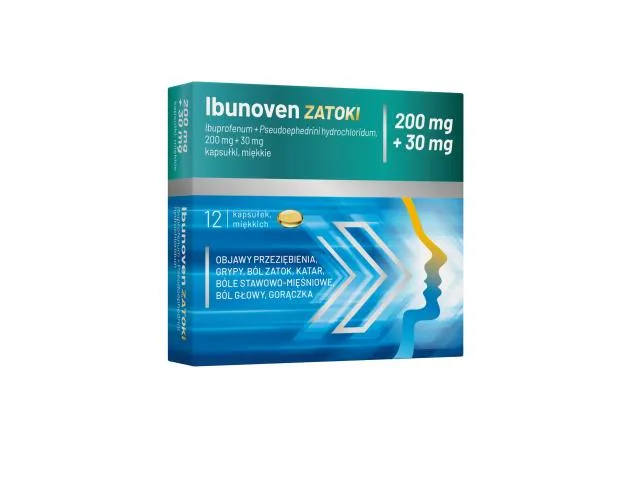
Table of Contents
Package leaflet: information for the patient
Ibunoven ZATOKI, 200 mg + 30 mg, soft capsules
Ibuprofenum + Pseudoephedrini hydrochloridum
Please read this leaflet carefully before using the medicine, as it contains
important information for the patient.
This medicine should always be used exactly as described in this patient leaflet or as directed by a
physician or pharmacist.
- Keep this leaflet, as you may need to read it again.
- If you need advice or further information, please consult your pharmacist.
- If you experience any adverse reactions, including any not listed in this leaflet, inform your doctor or pharmacist. See section 4.
- If there is no improvement after 3 days, or if you feel worse, consult your doctor.
Table of contents of the leaflet
- What Ibunoven is and what it is used for
- Important information before taking Ibunoven
- How to take Ibunoven
- Possible side effects
- How to store Ibunoven
- Contents of the package and other information
1. What Ibunoven is and what it is used for
Ibunoven is used to relieve symptoms associated with nasal mucosal congestion, as well as sinus headache, fever, and pain related to cold and influenza.
This medicine contains ibuprofen, a non-steroidal anti-inflammatory drug (NSAID), which also has analgesic and antipyretic properties. The capsules also contain pseudoephedrine hydrochloride, a decongestant that helps clear the nasal passages and reduce nasal mucosal congestion.
This medicine should be used only if nasal congestion is present together with headache, pain, and/or fever simultaneously. It should not be used if only one of these symptoms is present.
2. Important information before using Ibunoven
When not to use Ibunoven:
- if the patient is allergic to ibuprofen, acetylsalicylic acid (aspirin), or other non-steroidal anti-inflammatory drugs (NSAIDs), or if in the past they experienced skin rashes, urticaria, itching, breathing difficulties, chest tightness, swelling of the lips, face, mouth or tongue while taking these medicines; or if the patient is allergic to any of the other ingredients of this medicine (listed in section 6),
- if the patient has active or previous peptic ulcer disease, gastrointestinal bleeding or perforation,
- if the patient has diabetes, prostate problems, thyroid disease, glaucoma, or a phaeochromocytoma (a tumour of the adrenal gland),
- if the patient has severe kidney disease (renal failure), severe liver disease, heart conditions, severe heart failure, uncontrolled high blood pressure (hypertension), or circulatory disorders,
- if the patient is taking, or has taken within the last 14 days, medicines used to treat depression called monoamine oxidase inhibitors (MAOIs) or tricyclic antidepressants,
- if the patient has other bleeding disorders,
- if the patient has previously had a stroke,
- if the patient is taking other non-steroidal anti-inflammatory drugs (NSAIDs), painkillers, or other medicines reducing nasal congestion taken orally,
- in children under 12 years of age,
- during pregnancy or breastfeeding.
Warnings and precautions
Taking anti-inflammatory/pain-relieving medicines such as ibuprofen may be associated with a small increased risk of heart attack or stroke, especially when used at high doses. Do not exceed the recommended dose or duration of treatment.
Serious cases of effects on cerebral blood vessels have been reported, known as posterior reversible encephalopathy syndrome (PRES) and reversible cerebral vasoconstriction syndrome (RCVS).
If any of the following symptoms occur, stop taking the medicine and contact your doctor immediately: sudden severe headache, malaise, vomiting, confusion, seizures, or visual disturbances (see section 4).
Important information before taking Ibunoven
Allergic reactions to ibuprofen have occurred, including breathing difficulties, facial and neck swelling (angioedema), and chest pain.
If any of these symptoms occur, stop taking Ibunoven immediately and contact your doctor or emergency medical services without delay.
Special caution is required when using Ibunoven:
Severe skin reactions have been reported with ibuprofen use, such as exfoliative dermatitis, erythema multiforme, Stevens-Johnson syndrome (SJS), toxic epidermal necrolysis (TEN), drug reaction with eosinophilia and systemic symptoms (DRESS), and acute generalized exanthematous pustulosis (AGEP). If the patient develops any of the symptoms associated with these serious skin reactions (described in section 4), Ibunoven must be stopped immediately and a doctor contacted.
Before starting Ibunoven, discuss with your doctor or pharmacist if:
- the patient has heart conditions such as heart failure, angina (chest pain), history of heart attack, coronary artery bypass surgery, peripheral arterial disease (poor blood circulation in the legs due to narrowed or blocked arteries), or has had any stroke (including mini-stroke or transient ischaemic attack - TIA);
- the patient has high blood pressure, diabetes, high cholesterol levels, a family history of heart disease or stroke, or if the patient smokes. The risk increases with higher doses and prolonged treatment. Do not exceed the recommended dose or duration of treatment;
- the patient has blood clotting disorders;
- the patient has stomach ulcers or inflammatory bowel disease (e.g. ulcerative colitis or Crohn’s disease);
- during treatment with Ibunoven, sudden abdominal pain or rectal bleeding may occur due to inflammation of the large intestine (ischaemic colitis). If such gastrointestinal symptoms occur, stop taking Ibunoven and seek immediate medical advice. See section 4;
- if the patient has asthma or allergies;
- if the patient has heart, kidney, liver or prostate disease;
- in elderly patients – they are more susceptible to adverse effects such as stomach bleeding and perforation, which may be fatal;
- in systemic lupus erythematosus (SLE) – a disease affecting the immune system, causing joint pain, skin changes and other disorders;
- if trying to become pregnant;
- in dehydrated adolescents aged 12–17 years, as there is a risk of kidney disease. If adolescents aged 12–17 years are not drinking fluids or are losing fluids due to persistent vomiting or diarrhoea, consult a doctor before using this medicine;
- if the patient has an infection – see below, section titled “Infections”.
Stop taking this medicinal product immediately and contact your doctor if any of the following occur:
- Sudden pain or discomfort in the chest, accompanied by shortness of breath.
- Sudden abdominal pain or blood in the stool.
- Sudden and severe headache, accompanied by nausea or visual disturbances.
Pseudoephedrine causes vasoconstriction (narrowing of blood vessels). This effect may be associated with the following acute conditions, which require immediate medical attention:
- Acute coronary syndrome (ACS): includes conditions such as myocardial infarction (heart attack) or unstable angina, characterised by severe chest pain due to blocked blood flow to part of the heart. Sudden pain or discomfort in the chest (a feeling of pressure or tightness) may radiate to the arms, jaw, neck, back or abdomen. Dizziness, sweating or shortness of breath at rest may also occur. Stop taking this medicine immediately and contact your doctor without delay if symptoms suggestive of ACS occur.
- Cases of posterior reversible encephalopathy syndrome (PRES) and reversible cerebral vasoconstriction syndrome (RCVS) have been reported after taking medicines containing pseudoephedrine. PRES and RCVS are rare conditions that may involve reduced blood flow to the brain. If symptoms suggestive of PRES or RCVS occur, stop taking this medicine immediately and contact your doctor without delay (see section 4).
When to exercise special caution when using Ibunoven
Skin reactions
Severe skin reactions have been reported with Ibunoven. If any skin rash, mucosal lesions, blisters or other signs of allergy appear, stop taking Ibunoven immediately and seek medical help, as these may be early signs of a very serious skin reaction. See section 4.
During treatment with Ibunoven, reduced blood flow in the optic nerve may occur. If sudden vision loss occurs, stop taking Ibunoven immediately and contact your doctor or seek medical help. See section 4.
Alcohol consumption should be avoided during treatment.
Pseudoephedrine hydrochloride may result in a positive doping test.
Use of Ibunoven is not recommended in cases of chickenpox.
Infections
Ibunoven may mask symptoms of infection such as fever and pain. Therefore, Ibunoven may delay appropriate treatment of infection, thereby increasing the risk of complications. This has been observed in bacterial pneumonia and bacterial skin infections associated with chickenpox. If the patient takes this medicine during an infection and symptoms persist or worsen, consult a doctor immediately.
Children and adolescents
Ibunoven may be used in adults and adolescents over 12 years of age.
Ibunoven should not be used in children under 12 years of age.
Ibunoven and other medicines
Inform your doctor or pharmacist about all medicines currently taken, recently taken, or planned for use.
Do not use this medicine if taking:
- other non-steroidal anti-inflammatory drugs (NSAIDs),
- nasal or oral decongestants,
- monoamine oxidase inhibitors (MAOIs) in the past or within the last two weeks,
- tricyclic antidepressants (used to treat depression).
Inform your doctor if you are taking:
- anticoagulant medicines (i.e. blood thinners/preventing blood clots), such as warfarin, ticlopidine, acetylsalicylic acid (aspirin),
- blood pressure-lowering medicines (ACE inhibitors such as captopril, beta-blockers such as atenolol, angiotensin II receptor antagonists such as losartan) or any diuretic,
- cardiac glycosides such as digoxin (digitalis) or quinidine used to treat heart conditions,
- phenytoin (used to treat epilepsy),
- lithium (used to treat mood disorders),
- methotrexate (used to treat arthritis),
- antacids (medicines used to treat symptoms of stomach ulcers, e.g. heartburn),
- cyclosporine (used to suppress the immune system, e.g. after transplantation),
- mifepristone (used to terminate pregnancy),
- quinolone antibiotics (used to treat a wide range of infections),
- tacrolimus (used after transplantation),
- sulfonylurea derivatives such as glibenclamide (used to treat diabetes),
- corticosteroids (a type of anti-inflammatory medicine, e.g. hydrocortisone),
- selective serotonin reuptake inhibitors (SSRIs, e.g. fluoxetine) (used to treat depression),
- aminoglycosides (e.g. gentamicin or amikacin) (used to treat infections),
- the antibacterial medicine furazolidone (used to treat infections),
- zidovudine (used to treat HIV infections),
- guanethidine, reserpine or methyldopa (used in heart and circulatory diseases),
- sulfinpyrazone and probenecid (used to treat gout),
- potassium-sparing diuretics (used in heart conditions),
- ergot derivatives (used to treat migraine),
- dopamine agonists (used to treat symptoms of Parkinson’s disease),
- heparin, Ginkgo biloba (used to treat blood clots).
If anaesthesia is required, discontinue the medicine beforehand and inform the anaesthesiologist.
Other medicines may also interact with or be affected by Ibunoven treatment. Therefore, always consult your doctor or pharmacist before combining Ibunoven with other medicines.
Pregnancy, breastfeeding and effects on fertility
If the patient is pregnant or breastfeeding, suspects she may be pregnant, or is planning to have a child, she should consult her doctor or pharmacist before using this medicine.
Ibunoven taken during the last three months of pregnancy may harm the unborn child or cause complications during delivery. It may cause kidney and heart problems in the unborn child. It may increase the tendency to bleeding in both the mother and the child and may delay or prolong labour.
Ibunoven taken for more than a few days from week 20 of pregnancy may cause kidney problems in the unborn child, leading to reduced amniotic fluid surrounding the baby (oligohydramnios), or narrowing of a blood vessel (ductus arteriosus) in the baby’s heart.
If treatment is necessary during attempts to conceive, use the lowest possible dose for the shortest possible time.
Ibunoven should not be used in pregnant or breastfeeding women.
Ibuprofen belongs to the group of NSAIDs, which may adversely affect female fertility. This effect is reversible after discontinuation of the medicine. Occasional use of ibuprofen is unlikely to affect the ability to conceive. However, if difficulties in conceiving occur, inform the doctor about taking this medicine.
Driving and operating machinery
The medicine has no effect on the ability to drive or operate machinery. However, Ibunoven may cause adverse effects in some individuals, such as dizziness, hallucinations, unusual headaches, or visual or hearing disturbances. If any of these side effects occur, driving should be discontinued.
Ibunoven contains sorbitol
Liquid, partially dehydrated sorbitol
The medicine contains 63 mg of liquid, partially dehydrated sorbitol per capsule. Sorbitol is a source of fructose. If the patient has previously been diagnosed with intolerance to certain sugars or hereditary fructose intolerance, a rare genetic disorder in which the body cannot break down fructose, the patient should consult a doctor before taking the medicine or giving it to adolescents.
3. How to use Ibunoven
This medicine should always be taken exactly as described in this patient information leaflet or as directed by a doctor or pharmacist. If in doubt, consult a doctor or pharmacist.
This combined medicinal product should only be used when both the decongestant effect of pseudoephedrine hydrochloride in reducing nasal mucosal congestion and the analgesic and (or) anti-inflammatory effect of ibuprofen are required. If only one symptom predominates (either nasal mucosal congestion alone or headache and (or) fever), treatment with a single active ingredient is more appropriate.
The medicine should be taken orally and only for a short duration.
Adults, elderly patients, and adolescents over 12 years of age
Use the lowest effective dose for the shortest duration necessary to relieve symptoms. If symptoms of infection (such as fever and pain) persist or worsen, consult a doctor immediately (see section 2).
The recommended dose is 1 or 2 capsules every 4 to 6 hours. Capsules should be taken with water. Take as many capsules as needed, ensuring a 4- to 6-hour interval between doses. Do not exceed 6 capsules in 24 hours. If symptoms persist for more than 3 days, consult a doctor.
Do not use in children under 12 years of age.
Do not exceed the recommended dose.
Taking more Ibunoven than recommended
If a patient takes more than the recommended dose of Ibunoven or if a child accidentally ingests the medicine, seek medical advice immediately from a doctor or go to the nearest hospital to assess potential health risks and receive guidance on necessary actions. Bring the medicine with you to show the doctor.
Symptoms of overdose may include nausea, stomach pain, vomiting (possibly with blood), gastrointestinal bleeding (see also section 4 below), diarrhoea, headache, tinnitus, confusion. Restlessness, agitation, disorientation, and coma may also occur. Occasionally, seizures may develop. With large doses, drowsiness, chest pain, palpitations, loss of consciousness, seizures (particularly in children), weakness, dizziness, blood in urine, low blood potassium levels, feeling cold, and breathing difficulties may occur. Prothrombin time/INR may be prolonged, likely due to interference with circulating coagulation factors. Acute kidney failure and liver damage may also occur. In asthmatics, asthma may be exacerbated. Additionally, low blood pressure and breathing difficulties may occur.
Missing a dose of Ibunoven
Ibunoven is taken on an as-needed basis. If a dose is missed and symptoms persist, take the next dose as soon as possible. Do not take a double dose to make up for a missed dose.
If you have any further questions about the use of this medicine, consult your doctor or pharmacist.
4. Possible adverse reactions
If any of the following symptoms occur in a patient, ibuprofen should be discontinued immediately and medical help should be sought:
- Red, flat, target-like or circular rash lesions on the trunk, often with blisters in the center, skin peeling, and mucosal ulcers in the mouth, throat, nose, genital organs, and eyes. These severe skin reactions may be preceded by fever and flu-like symptoms (exfoliative dermatitis, erythema multiforme, Stevens-Johnson syndrome, toxic epidermal necrolysis) – very rare.
- Widespread rash, high body temperature, and enlarged lymph nodes (DRESS syndrome) – frequency unknown.
- Red, scaly rash with subcutaneous nodules and blisters, accompanied by fever. Symptoms usually appear at the beginning of treatment (acute generalized exanthematous pustulosis) – frequency unknown.
In case any of the following symptoms occur:
- sudden, severe headache,
- malaise, vomiting,
- confusion (disturbances of consciousness),
- seizures,
- visual disturbances,
the use of this medicine should be discontinued and immediate contact with a physician should be established, as these may be symptoms of effects on cerebral blood vessels and serious disorders such as reversible posterior encephalopathy syndrome (PRES) and reversible cerebral vasoconstriction syndrome (RCVS), which have been reported after using products containing pseudoephedrine.
Like all medicines, this medicine can cause adverse reactions, although not everybody will experience them.
The risk of adverse reactions can be reduced by using the lowest effective dose for the shortest duration necessary to relieve symptoms.
If any of the adverse reactions listed below occur, STOP using the medicine and consult a doctor or pharmacist:
| Common (occur in fewer than 1 in 10 patients) |
|
| Uncommon (occur in fewer than 1 in 100 patients) |
|
| Very rare (occur in fewer than 1 in 10,000 patients) |
|
| Frequency unknown (frequency cannot be determined from available data) |
|
In addition to the above-mentioned symptoms, the following adverse reactions may occur during treatment:
| Common (occur in less than 1 in 10 patients) |
|
| Uncommon (occur in less than 1 in 100 patients) |
|
| |
| Rare (occur in less than 1 in 1,000 patients) |
|
| Very rare (occur in less than 1 in 10,000 patients) |
|
| Frequency not known (frequency cannot be estimated from available data) |
|
Reporting adverse reactions
If any adverse reactions occur, including any adverse reactions not listed
in this leaflet, tell your doctor, pharmacist, or nurse. Adverse reactions can be reported directly to the Department of Monitoring Adverse Drug Reactions of the Office for Registration of Medicinal Products, Medical Devices and Biocidal Products: Al. Jerozolimskie 181C, 02-222 Warsaw, tel.: +48 22 49 21 301,
fax: +48 22 49 21 309, website: https://smz.ezdrowie.gov.pl.
Adverse reactions can also be reported to the marketing authorization holder.
By reporting adverse reactions, additional information on the safety of the medicine can be collected.
5. How to store Ibunoven
Keep this medicine out of sight and reach of children.
Do not use this medicine after the expiry date stated on the blister and carton after: EXP.
The expiry date refers to the last day of the stated month.
Do not store above 25°C.
Medicines should not be disposed of via wastewater or household waste. Ask your pharmacist how to dispose of medicines no longer required. Such practices will help protect the environment.
6. Contents of the packaging and other information
What Ibunoven contains
- The active substances in the medicine are ibuprofen and pseudoephedrine hydrochloride. Each capsule contains 200 mg of ibuprofen and 30 mg of pseudoephedrine hydrochloride.
- Other ingredients are:
Capsule filling: macrogol 600 (E 1521), potassium hydroxide, purified water.
Gelatin capsule: gelatin, liquid sorbitol partially dehydrated, purified water, natural beta-carotene 10% CWD, composed of: natural carotene (E 160a), modified food starch, all-rac-α-tocopherol (E 307).
Printing ink Opacode Black Ink (S-1-17823): shellac, isopropyl alcohol, iron oxide black (E 172), n-butyl alcohol, propylene glycol, ammonium hydroxide.
What Ibunoven looks like and contents of the packaging
Ibunoven is in the form of light orange, transparent, oval, soft gelatin capsules filled with a liquid ranging from transparent to light orange in colour, printed with "IBP" measuring 16.00 mm ± 1.00 mm in length and 9.5 mm ± 1.00 mm in width.
The capsules are packed in PVC/PVDC/Aluminium blisters, placed in a cardboard carton.
Pack sizes contain either 12 capsules or 24 capsules.
Not all pack sizes may be marketed.
Marketing Authorisation Holder
Synoptis Pharma Sp. z o.o.
ul. Krakowiaków 65
02-255 Warsaw
tel. 607 696 231
Importer
Synoptis Industrial Sp. z o.o.
ul. Rabowicka 15
62-020 Swarzędz