Ibuprofen
Poland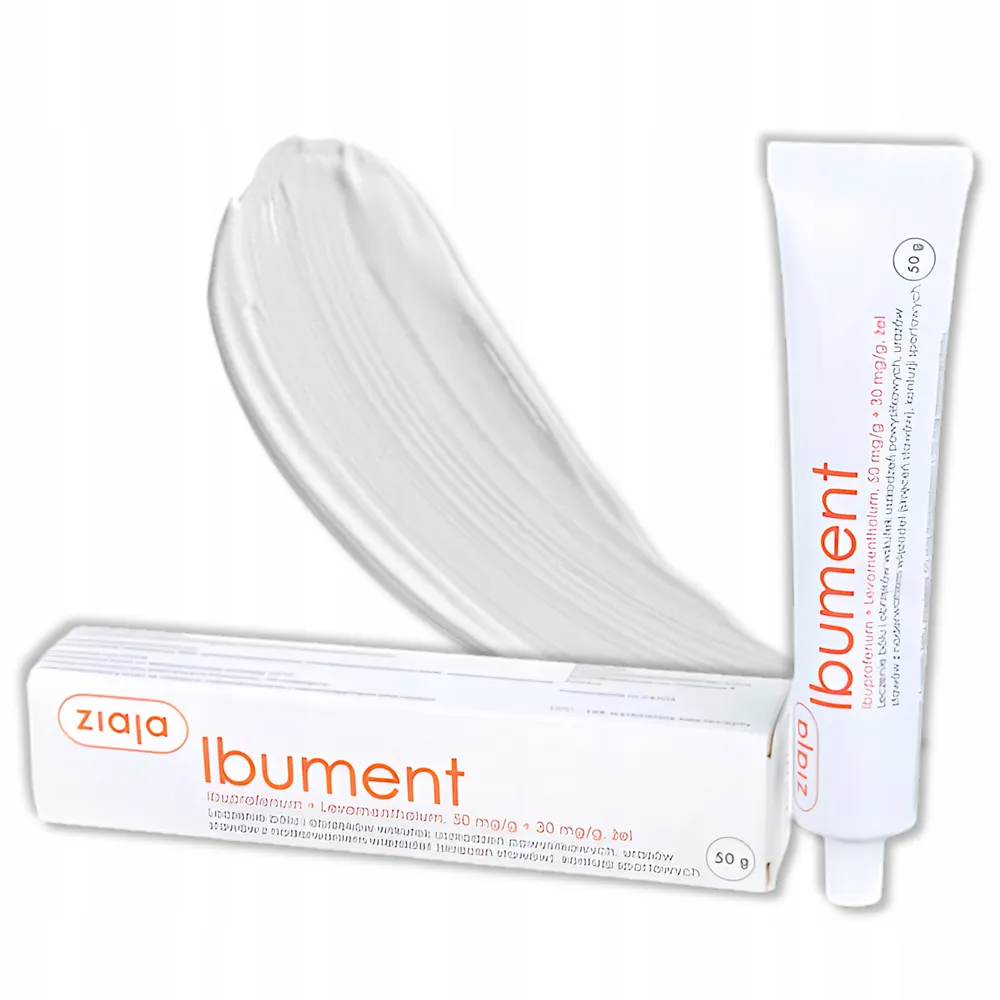
Table of Contents
Package leaflet: information for the patient
Ibument, 50 mg/g + 30 mg/g, gel
Ibuprofenum + Levomentholum
Please read this leaflet carefully before using the medicine, as it contains
important information for the patient.
This medicine should always be used exactly as described in this patient leaflet or as directed by a
physician or pharmacist.
- Keep this leaflet, as you may need to read it again.
- If you need advice or further information, please consult your pharmacist.
- If you experience any adverse reactions, including any not listed in this leaflet, inform your doctor or pharmacist. See section 4.
- If there is no improvement after 7 days, or if you feel worse, consult your doctor.
Table of contents
- What Ibument is and what it is used for
- Important information before using Ibument
- How to use Ibument
- Possible side effects
- How to store Ibument
- Contents of the package and other information
1. What Ibument is and what it is used for
Ibument is a topical gel with analgesic and anti-inflammatory effects, containing ibuprofen (50 mg per 1 g of gel) and levomenthol (30 mg per 1 g of gel).
Ibuprofen belongs to the group of non-steroidal anti-inflammatory drugs (NSAIDs), which reduce inflammation at the site of pathological changes, relieve pain, and decrease swelling.
Levomenthol exerts local anesthetic action and causes local hyperemia of tissues.
The combined action of both components results in rapid pain relief after application to the skin, lasting for several hours.
Indications for use
Ibument may be used without a doctor's prescription for the treatment of:
- pain and swelling due to strains, joint injuries with ligament sprains (joint sprains), sports injuries.
After consultation with a doctor, it may also be used for the treatment of:
- rheumatic pain, including joint pain caused by inflammatory and degenerative changes;
- back pain, lumbago, muscular pain, pain in fibrous tissue, tendons, and ligaments.
If there is no improvement after 7 days, or if you feel worse, consult your doctor.
2. Important information before using Ibument
When not to use Ibument
- if the patient is allergic to ibuprofen, levomenthol, other non-steroidal anti-inflammatory drugs, or any of the other ingredients of this medicine (listed in section 6),
- in patients with asthma, or a history of bronchospasm, rash, or rhinitis after taking acetylsalicylic acid or other non-steroidal anti-inflammatory drugs,
- if the patient is in the last three months of pregnancy.
Warnings and precautions
Before starting to use Ibument, consult a doctor or pharmacist:
- if the patient has kidney disease,
- if the patient is taking acetylsalicylic acid or other medications,
- if the patient has active peptic ulcer disease. The gel should not be applied to mucous membranes, damaged or inflamed skin, or near the eyes. Do not use under occlusive dressings. Discontinue use if urticaria occurs and consult a doctor.
Children and adolescents
Use in children under 12 years of age is not recommended.
Interaction of Ibument with other medicines
Inform the doctor or pharmacist about all medicines currently used, recently used, or planned to be used.
Concurrent use of this medicine with acetylsalicylic acid or other non-steroidal anti-inflammatory drugs may increase the frequency of adverse reactions typical of this class of drugs.
Pregnancy, breastfeeding and effects on fertility
If the patient is pregnant, suspects she may be pregnant, or is planning to become pregnant, she should consult a doctor before using this medicine.
If the patient becomes pregnant while using this medicine, she should inform her doctor immediately. Ibument must not be used during the last three months of pregnancy. During the first and second trimesters of pregnancy, the medicine should only be used on a doctor's advice.
- During the first and second trimesters of pregnancy, the doctor will prescribe this medicine only if absolutely necessary due to the potential risk of miscarriage or developmental abnormalities. In such cases, the dose should be as low as possible and the duration of treatment as short as possible.
- During the third trimester of pregnancy, use of this medicine is contraindicated: the patient should NEVER use this medicine, as it may have serious or even fatal effects on the fetus, particularly on the heart, lungs, and/or kidneys, even after a single dose.
If the patient has used this medicine during pregnancy, she should immediately consult her doctor or midwife to consider appropriate monitoring.
Ibuprofen passes into human milk in small amounts and is not expected to affect the breastfed infant. Topical ibuprofen may be used during breastfeeding. However, there is insufficient data on the passage of levomenthol, the second active ingredient in Ibument, into human milk. Due to the lack of sufficient data, the use of Ibument is not recommended during breastfeeding.
Driving and operating machinery
Ibument has no effect on the ability to drive or operate machinery.
Ibument contains propylene glycol (E 1520) and 96% ethanol
This medicine contains 100 mg of propylene glycol (E 1520) in each gram of gel. Propylene glycol may cause skin irritation.
This medicine contains 300 mg of alcohol (96% ethanol) in each gram of gel. It may cause a burning sensation on damaged skin.
3. How to use Ibument
This medicine should always be used exactly as described in this patient leaflet or as directed by a doctor or pharmacist. If in doubt, consult a doctor or pharmacist.
Recommended dose
Adults and children over 12 years of age
Apply the gel to the painful area and gently massage until the gel is fully absorbed. Use a single dose of 1 to 4 cm of gel. If necessary, repeat the application, up to a maximum of 3 times daily. Do not apply the gel more frequently than every 4 hours.
After applying the gel, wash your hands unless the hands are the treated area.
Do not cover the area where the gel has been applied with dressings such as bandages or plasters.
The maximum duration of treatment is two weeks. If there is no improvement after 7 days, or if symptoms worsen, consult a doctor.
Use in children
Use in children under 12 years of age is not recommended.
Use of a higher than recommended dose of Ibument
Overdose after topical application is unlikely.
Symptoms of ibuprofen overdose include headache, vomiting, drowsiness, and hypotension.
Severe electrolyte disturbances should be corrected.
Missed dose of Ibument
Do not use a double dose to make up for a missed dose.
4. Possible adverse reactions
Like any medicine, this medicine can cause adverse reactions, although not everybody will experience them.
The most commonly reported adverse reactions are local reactions at the application site, such as
redness, itching and urticaria.
Rarely reported adverse reactions include gastrointestinal disorders, such as
abdominal pain and dyspepsia.
In predisposed individuals who have or have had asthma attacks or allergic diseases, bronchospasm may occur.
Skin photosensitivity – frequency unknown.
Reporting of adverse reactions
If any adverse reactions occur, including any adverse reactions not listed
in this leaflet, inform your doctor or pharmacist.
Adverse reactions can be reported directly to the Department of Monitoring Adverse Drug Reactions at the Office for Registration of Medicinal Products, Medical Devices and Biocidal Products
Al. Jerozolimskie 181C
02-222 Warsaw
Phone: +48 22 49 21 301
Fax: +48 22 49 21 309
Website: https://smz.ezdrowie.gov.pl
Adverse reactions can also be reported to the marketing authorization holder.
Reporting adverse reactions helps to provide more information on the safety of the medicine.
5. How to store Ibument
Keep the medicine out of sight and reach of children.
Store below 25°C.
Keep the tube tightly closed after opening.
Do not use this medicine after the expiry date stated on the packaging after "EXP".
The expiry date refers to the last day of the stated month.
Medicines should not be disposed of via wastewater or household waste. Ask your pharmacist how to dispose of medicines no longer required. This will help protect the environment.
6. Contents of the pack and other information
What Ibument contains
- The active substances in this medicine are ibuprofen and levomenthol. 1 gram of gel contains 50 mg of ibuprofen and 30 mg of levomenthol.
- The other ingredients are: ethanol 96%, carbomer 980, propylene glycol (E 1520), diisopropanolamine 85%, purified water.
What Ibument looks like and contents of the pack
Ibument is a clear, colourless to slightly yellowish gel with a characteristic menthol odour.
Pack: aluminium tube with an epoxy-phenolic lacquer coating inside, fitted with a polyethylene cap, containing 50 g or 100 g of gel, packed in a cardboard box.
Not all pack sizes may be marketed.
Marketing Authorisation Holder
ZIAJA Ltd Zakład Produkcji Leków sp. z o.o.
Jesienna 9 Street
80-298 Gdańsk
Poland
Tel.: +48 58 521 34 00
Manufacturer
ZIAJA Ltd Zakład Produkcji Leków sp. z o.o.
Przemysłowa 12 Street
83-050 Kolbudy
Poland