Hypnomidate
Poland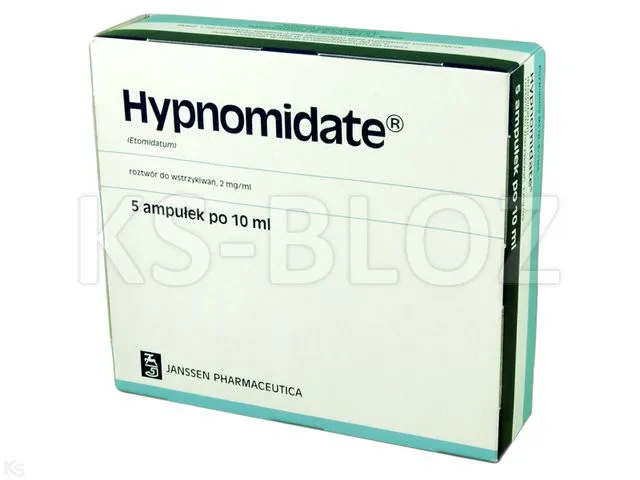
Table of Contents
- Package leaflet: Information for the user
- 1. What Hypnomidate is and what it is used for
- 2. Important information before using Hypnomidate
- 3. How to use Hypnomidate
- 4. Possible adverse reactions
- 5. How to store Hypnomidate
- 6. Contents of the packaging and other information
- THE FOLLOWING INFORMATION IS INTENDED FOR PROFESSIONAL
- 1. Preparation of the medicinal product for use
- 2. Special warnings and precautions for use
- 3. Overdose
Package leaflet: Information for the user
Warning! Keep the leaflet. Information on the immediate packaging in a foreign language.
Hypnomidate, 2 mg/ml, solution for injection
Etomidatum
Please read the entire leaflet carefully before using the medicine, as it contains
important information for the patient.
- Keep this leaflet to be able to read it again if necessary.
- If you have any doubts, consult your doctor or pharmacist.
- This medicine has been prescribed for a specific individual. Do not pass it on to others. The medicine may harm another person, even if their symptoms appear identical.
- If any adverse reactions occur in the patient, including any adverse reactions not listed in this leaflet, inform your doctor, pharmacist, or nurse. See section 4.
Table of contents of the leaflet
- What Hypnomidate is and what it is used for
- Important information before using Hypnomidate
- How to use Hypnomidate
- Possible side effects
- How to store Hypnomidate
- Contents of the pack and other information
1. What Hypnomidate is and what it is used for
The active substance in Hypnomidate is etomidate.
Hypnomidate is indicated for induction of general anaesthesia, as well as for supplemental anaesthesia during local anaesthesia.
Hypnomidate is indicated for short diagnostic procedures or procedures performed under outpatient conditions where rapid awakening of the patient is required.
Hypnomidate is particularly indicated in cardiac surgery and in patients with heart disease.
2. Important information before using Hypnomidate
When not to use Hypnomidate
Do not use this medicine if the patient is allergic to the active substance or to any of the other ingredients of this medicine (listed in section 6).
An allergic reaction may present as: rash, itching, facial and lip swelling, shortness of breath.
All such reactions must be reported to a doctor immediately.
Warnings and precautions
Hypnomidate should be used with caution in patients:
- with adrenal insufficiency, such as patients with sepsis;
- with liver cirrhosis;
- who are receiving neuroleptic drugs, opioids, or sedatives (see below - Hypnomidate and other medicines);
- in advanced age.
Single induction doses of etomidate may lead to transient adrenal insufficiency and reduced serum cortisol levels.
Etomidate should be used with caution in critically ill patients, including those with sepsis, as in some studies this has been associated with an increased risk of death in this patient group.
Hypnomidate must be administered only by physicians trained in endotracheal intubation. Resuscitation equipment must be available in case respiratory disturbances or apnea occur.
The induction of general anesthesia with Hypnomidate may be accompanied by a slight, transient decrease in blood pressure. In weakened patients, the physician should take appropriate countermeasures.
Administration of Hypnomidate may be associated with spontaneous muscle movements, particularly if premedication (administration of a sedative prior to the anesthetic) has not been given.
Hypnomidate has no analgesic effect; therefore, an appropriate analgesic should be administered 1–2 minutes before injection of Hypnomidate during surgical procedures.
Hypnomidate and other medicines
Inform your doctor or pharmacist about all medicines currently or recently taken, including those obtained without a prescription.
The effect of Hypnomidate may be enhanced by:
- neuroleptic drugs – used in the treatment of psychiatric disorders;
- opioids – analgesics, e.g. morphine, fentanyl;
- drugs with sedative effects;
- alcohol.
Hypnomidate may enhance the effect of:
- antihypertensive drugs (medicines that lower arterial blood pressure).
Pregnancy, breastfeeding, and effects on fertility
If the patient is pregnant or breastfeeding, suspects she may be pregnant, or is planning to become pregnant, she should consult a doctor before using this medicine. The doctor will then decide whether to administer Hypnomidate.
Breastfeeding should not be performed during treatment and for 24 hours after administration of Hypnomidate.
Animal fertility studies have not shown that Hypnomidate, when used at recommended doses, affects fertility.
Driving and operating machinery
Hypnomidate has a major influence on the ability to drive and operate machinery. It is not recommended to operate potentially dangerous machinery or drive vehicles within the first 24 hours after administration of the medicine. The time required to return to normal functioning may vary depending on the duration of the procedure, the total dose administered, and other concomitant medications.
Therefore, the decision to allow the patient to drive or operate machinery must be made by the anesthesiologist.
Hypnomidate contains propylene glycol
This medicine contains 3.626 g of propylene glycol in each ampoule.
Before administering the medicine to a child under 5 years of age, consult a doctor or pharmacist, especially if the child is taking other medicines containing propylene glycol or alcohol.
Pregnant or breastfeeding women should not take this medicine without medical advice. The doctor may decide to perform additional tests in such patients.
Patients with impaired liver or kidney function should not take this medicine without medical advice. The doctor may decide to perform additional tests in such patients.
3. How to use Hypnomidate
Hypnomidate is intended for administration only by trained medical personnel.
If in doubt, consult a physician.
How Hypnomidate should be administered
- intravenously only – by slow injection or infusion;
- may be diluted with physiological saline or glucose solution.
Dosage of Hypnomidate
The dose is determined by the physician, depending on:
- type of surgical procedure,
- body weight,
- age,
- general health status.
The effective dose inducing sleep is 0.3 mg/kg body weight. Therefore, in adult patients, one ampoule is usually sufficient to induce sleep lasting 4–5 minutes. Sleep may be prolonged by administering additional doses of Hypnomidate, up to a maximum of 3 ampoules (30 ml).
Elderly patients
In elderly patients, the initial single dose should be 0.15–0.2 mg/kg body weight, which may then be individually adjusted according to the patient's response (see section 2. Important information before using Hypnomidate).
Children
In children under 15 years of age, an increased dose may be necessary to achieve the same depth and duration of sleep as in adults. Sometimes, the dose may need to be increased by approximately 30% above the standard adult dose.
Overdose of Hypnomidate
In case of etomidate overdose administered as a bolus, sleep becomes deeper and hypotension, adrenal cortex suppression, respiratory depression, or even respiratory arrest may occur. If respiratory arrest occurs, appropriate measures to support breathing must be taken immediately. Disorientation and prolonged emergence may also occur.
4. Possible adverse reactions
Like all medicines, this medicine can cause adverse reactions, although not everyone experiences them.
In clinical trials, the most commonly reported adverse reactions were dyskinesia and venous pain.
The adverse reactions listed below (including those mentioned above) were observed during the use of Hypnomidate in clinical trials or after the medicine was marketed.
Very common adverse reactions (may affect at least 1 in 10 patients):
- dyskinesia (movement disorders);
- decreased cortisol concentration.
Common adverse reactions (may affect fewer than 1 in 10 patients):
- myoclonic muscle jerks;
- venous pain, hypotension (low blood pressure);
- apnoea, hyperventilation (increased or deepened breathing), stridor;
- vomiting, nausea;
- rash.
Uncommon adverse reactions (may affect fewer than 1 in 100 patients):
- hypertonia (increased muscle tension), involuntary muscle contractions, nystagmus;
- bradycardia (slow heart rate), extrasystoles, ventricular extrasystoles;
- phlebitis, hypertension (high blood pressure);
- hypoventilation (slowed and weakened breathing), hiccups, cough;
- excessive salivation;
- erythema;
- muscle stiffness;
- pain at injection site;
- anaesthesia complications, delayed recovery of consciousness after anaesthesia, inadequate analgesic effect, nausea during procedures.
Adverse reactions with unknown frequency (frequency cannot be estimated from available data):
- hypersensitivity reactions (including anaphylactic shock (sudden circulatory failure)), anaphylactic reactions (severe allergic reactions causing breathing difficulties or dizziness) and pseudoanaphylactic reactions;
- adrenal insufficiency;
- seizures (including generalized tonic-clonic seizures);
- cardiac arrest, complete atrioventricular block;
- shock, thrombophlebitis (deep and superficial);
- respiratory depression, bronchospasm (including fatal cases);
- Stevens-Johnson syndrome (characterized by transient blisters on mucous membranes, mainly in the oral cavity and genital organs, which rupture and form painful erosions making feeding difficult). Fever, joint pain, and urticaria may also occur;
- jaw spasm.
Reporting of adverse reactions
If any adverse reactions occur, including any adverse reactions not listed in this leaflet, inform your doctor, pharmacist, or nurse. Adverse reactions can also be reported directly to the Department of Monitoring of Adverse Drug Reactions of the Office for Registration of Medicinal Products, Medical Devices and Biocidal Products:
Al. Jerozolimskie 181C
02-222 Warsaw
Tel.: +48 22 49 21 301
Fax: +48 22 49 21 309
Website: https://smz.ezdrowie.gov.pl
Reporting adverse reactions helps to provide more information on the safety of the medicine.
5. How to store Hypnomidate
Do not store above 25°C.
Keep this medicine out of sight and reach of children.
Do not use this medicine after the expiry date stated on the packaging. The expiry date refers to the last day of the stated month.
Medicines must not be disposed of via wastewater or household waste. Ask your pharmacist how to dispose of medicines no longer required. This will help protect the environment.
6. Contents of the packaging and other information
What Hypnomidate contains
- The active substance is etomidate. Hypnomidate vials contain 10 ml (20 mg of etomidate) of ready-to-use solution (2 mg of etomidate per 1 ml of solution).
- The other excipients are: propylene glycol and water for injections.
What Hypnomidate looks like and contents of the pack
A 10 ml vial containing a sterile, clear, colourless aqueous solution for intravenous injection.
1 pack contains 5 vials of 10 ml each.
For further information, please contact the Marketing Authorisation Holder or the Parallel Importer.
Marketing Authorisation Holder in Germany, the country of export:
Piramal Critical Care B.V.
Rouboslaan 32
2252 TR Voorschoten
The Netherlands
Manufacturer:
Piramal Critical Care B.V.
Rouboslaan 32
2252 TR Voorschoten
The Netherlands
Parallel Importer:
Delfarma Sp. z o.o.
ul. Św. Teresy od Dzieciątka Jezus 111
91-222 Łódź
Repackaged in:
Delfarma Sp. z o.o.
ul. Św. Teresy od Dzieciątka Jezus 111
91-222 Łódź
Marketing Authorisation number in Germany, the country of export: 319.00.00
Parallel Import Authorisation number: 167/23
THE FOLLOWING INFORMATION IS INTENDED FOR PROFESSIONAL
MEDICAL PERSONNEL ONLY
This medicinal product must be administered exclusively by physicians trained in endotracheal intubation. When using Hypnomidate, resuscitation equipment must be readily available in case of respiratory depression or apnea.
1. Preparation of the medicinal product for use
Put on protective gloves before opening the ampoule.
Ampoules
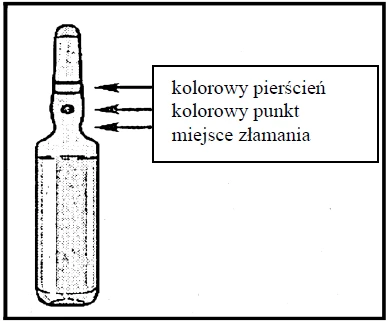
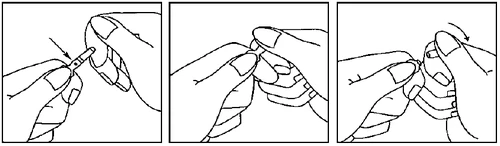
- Hold the ampoule between the thumb and index finger, leaving the top end free.
- With the other hand, grasp the top end of the ampoule, placing the index finger against the top and the thumb on the coloured dot aligned parallel to the coloured ring at the end of the ampoule.
- While keeping the thumb firmly on this spot, sharply snap off the top end of the ampoule, holding the rest of the ampoule securely with the other hand.
In case of accidental skin contact with the product, wash the affected area thoroughly with water. Avoid using soap, alcohol, or other cleansing agents, which may cause chemical or mechanical skin damage.
2. Special warnings and precautions for use
Hypnomidate must be administered intravenously only.
Induction of anesthesia with Hypnomidate may be accompanied by a slight, transient decrease in blood pressure due to reduced peripheral vascular resistance. In weakened patients, where hypotension may be dangerous, the following precautionary measures should be taken:
- The patient should be in the supine position during induction.
- Venous access must be established to ensure adequate circulating blood volume.
- Hypnomidate should be injected slowly (e.g., 10 ml over 1 minute).
- If possible, avoid concomitant use of other induction agents.
Resuscitation equipment must be available when administering Hypnomidate, in case of respiratory depression or apnea.
Doses of etomidate used for induction of anesthesia have been associated with reduced plasma cortisol and aldosterone concentrations. In patients under severe stress, particularly those with adrenal cortical dysfunction, cortisol supplementation should be considered.
A direct consequence of etomidate, when administered as a continuous infusion or in repeated doses, may be prolonged suppression of endogenous cortisol and aldosterone secretion. Therefore, this mode of administration should be avoided.
In such cases, adrenal stimulation with ACTH (adrenocorticotropic hormone) does not yield the desired response.
Etomidate should be used with caution in patients with pre-existing adrenal cortical insufficiency, such as those with sepsis.
The dose of etomidate should be reduced in patients with hepatic cirrhosis and in those who have already received neuroleptics, opioids, or sedative agents.
Spontaneous muscle movements or myoclonic jerks may occur, particularly if premedication has not been administered. These movements are attributed to subcortical disinhibition. They can usually be prevented by intravenous administration of a small dose of an opioid such as fentanyl, together with diazepam, 1–2 minutes before induction with Hypnomidate.
During administration of Hypnomidate, myoclonic seizures and injection site pain have been reported, especially when injected into small veins. These effects can usually be prevented by intravenous administration of a small dose of an appropriate opioid, e.g., fentanyl, 1–2 minutes before induction.
Caution should be exercised when administering Hypnomidate to elderly patients, as it may reduce cardiac output, particularly when doses higher than recommended are used.
Hypnomidate has no analgesic effect; therefore, an appropriate analgesic must be administered during surgical procedures.
Neuroleptics, opioids, sedatives, and alcohol may enhance the hypnotic effect of etomidate.
Etomidate induction may be accompanied by mild and transient reduction in peripheral resistance, which may potentiate the effects of other antihypertensive drugs.
Effect of other medicinal products on etomidate
Concomitant administration of etomidate with alfentanil reduces the terminal half-life of etomidate to 29 minutes. Caution is required when using etomidate and alfentanil simultaneously, as etomidate concentrations may fall below the hypnotic threshold.
Total plasma clearance and volume of distribution of etomidate are reduced by 2 to 3 times without affecting half-life when etomidate is administered with intravenous fentanyl. Dose reduction may therefore be necessary when etomidate is used concomitantly with intravenous fentanyl.
Effect of etomidate on other medicinal products
Concomitant administration of etomidate and ketamine does not significantly affect plasma concentrations or pharmacokinetic parameters of ketamine or its main metabolite, norketamine.
3. Overdose
In case of etomidate overdose administered as a bolus, sedation becomes deeper and hypotension, adrenal cortical suppression, respiratory depression, or even respiratory arrest may occur. If respiratory arrest occurs, appropriate measures to support respiration must be initiated immediately. Disorientation and prolonged emergence may also occur.
In addition to supportive measures (e.g., assisted ventilation), administration of 50 mg–100 mg hydrocortisone (but not adrenocorticotropic hormone - ACTH) may be necessary.