Hygroton
Poland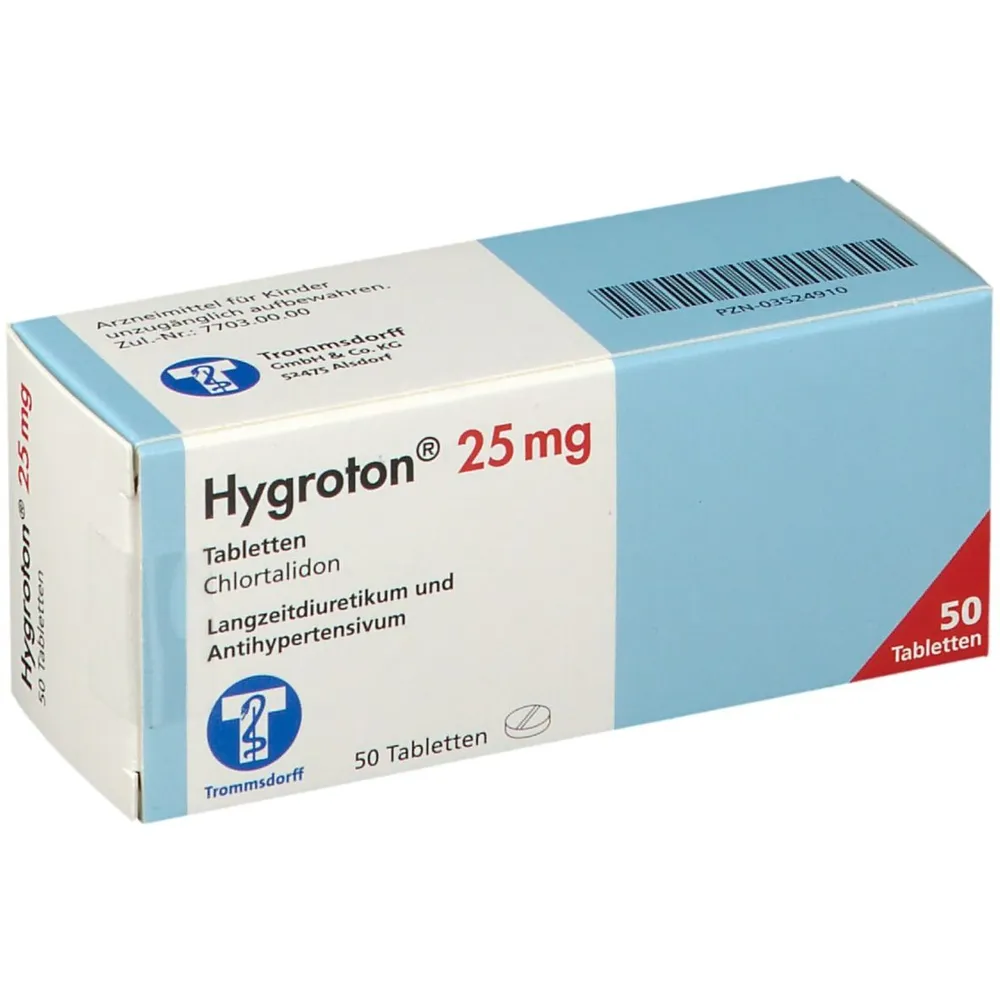
Table of Contents
Patient Information Leaflet
Warning! Keep this leaflet! The information on the immediate packaging is in a foreign language.
Hygroton
50 mg, tablets
Chlortalidonum
Please read this leaflet carefully before using the medicine, as it contains
important information for the patient.
- Keep this leaflet so that you can read it again if necessary.
- If you have any questions, please consult your doctor or pharmacist.
- This medicine has been prescribed for a specific individual. Do not pass it on to others. The medicine may harm someone else, even if their symptoms are the same.
- If the patient experiences any adverse reactions, including any not listed in this leaflet, inform a doctor or pharmacist immediately. See section 4.
Table of Contents
- What Hygroton is and what it is used for
- Important information before taking Hygroton
- How to take Hygroton
- Possible side effects
- How to store Hygroton
- Contents of the pack and other information
1. What Hygroton is and what it is used for
Hygroton is a diuretic medicine that reduces the amount of salt and water in the body by increasing urine output. With long-term use, it helps lower and control arterial blood pressure.
Hygroton is used in:
Hypertension: as monotherapy or in combination with other antihypertensive medicines.
Mild to moderate, chronic, stable heart failure (weakening of the heart muscle).
Edema of specific origin, such as:
- due to circulatory failure,
- ascites (fluid accumulation in the abdominal cavity) caused by liver cirrhosis (late-stage liver scarring) in patients who are stable and under close supervision,
- edema occurring in nephrotic syndrome (non-specific kidney function disorders).
Renal diabetes insipidus (a kidney-related disorder causing excessive thirst and urination).
2. Important information before using Hygroton
When not to use Hygroton:
- if the patient is allergic to chlorthalidone or any of the other ingredients of this medicine (listed in section 6);
- if the patient has anuria (lack of urine excretion), severe renal insufficiency (impaired kidney function), or severe hepatic insufficiency (impaired liver function);
- if the patient has treatment-resistant hypokalemia (low potassium levels in the blood) or conditions leading to increased potassium loss, hyponatremia (low sodium levels in the blood), or hypercalcemia (abnormally high calcium levels in the blood);
- if the patient has symptomatic hyperuricemia (gouty diathesis or history of uric acid deposits);
- if the patient has hypertension during pregnancy (see section "Pregnancy and breastfeeding");
- if the patient is concurrently taking lithium-containing medicines;
- if the patient has untreated Addison's disease (a disorder caused by insufficient amounts of certain hormones produced by the adrenal glands).
Warnings and precautions
Before starting treatment with Hygroton, discuss this with your doctor or pharmacist.
Exercise particular caution when using Hygroton.
You must inform your doctor immediately if:
- the patient has impaired liver function or progressive liver disease;
- severe kidney disease;
- gout;
- low potassium or sodium levels, or high calcium levels;
- Low potassium levels in the blood may cause muscle weakness, muscle cramps, or irregular heartbeat.
- Low sodium levels in the blood may cause fatigue, confusion, muscle twitching, seizures, or coma.
- High calcium levels in the blood may cause loss of appetite, fatigue, or muscle weakness.
- diabetes;
- the patient is undergoing treatment for elevated blood cholesterol (hypercholesterolemia);
- the patient is taking other medicines—please also read section "Hygroton with other medicines";
- if the patient experiences blurred vision or eye pain. These may be symptoms of fluid accumulation in the vascular layer surrounding the eye (excessive fluid buildup between choroid and sclera) or increased intraocular pressure, which may occur within a few hours to a week after taking Hygroton. This may lead to permanent vision loss if not treated. Patients who previously had an allergic reaction to penicillin or sulfonamides may be at increased risk of developing such symptoms.
Due to increased electrolyte excretion, a strict low-salt diet is not recommended.
If any of the above warnings apply to the patient, or have applied in the past, discuss this with the doctor. The doctor will take these factors into account when managing treatment. It is important that the doctor regularly monitors the patient's condition to ensure the medicine is working properly. Regular blood tests may be necessary, especially in patients over 65 years of age, those with cardiac disorders, impaired liver or kidney function, or patients taking potassium supplements. Periodic monitoring of electrolyte levels should be performed in all patients, with attention to possible development of hyponatremia, hypokalemia, hypomagnesemia, and hypercalcemia.
Children and adolescents
Hygroton may cause dizziness and affect concentration, especially at the beginning of treatment. Parents/guardians must ensure that children/adolescents do not drive or operate machinery until these effects have subsided.
Hygroton with other medicines
Inform your doctor or pharmacist about all medicines the patient is currently taking, has recently taken, or plans to take. Dosage adjustment may be necessary,
and in some cases, discontinuation of treatment may be required.
Inform the doctor if the patient is taking:
- lithium (a medicine used to treat psychiatric disorders);
- curare-like agents (muscle relaxants used during anesthesia);
- medicines used to treat high blood pressure (e.g. guanethidine, methyldopa, β-adrenolytics, vasodilators, calcium channel blockers, ACE inhibitors);
- glucocorticosteroids;
- adrenocorticotropic hormone;
- β-mimetics (bronchodilators);
- amphotericin and carbenoxolone;
- cardiac glycosides (medicines used in heart conditions);
- non-steroidal anti-inflammatory drugs (e.g. indomethacin);
- allopurinol (a medicine used in gout);
- amantadine (a medicine used in Parkinson's disease);
- diazoxide;
- cytotoxic agents (e.g. cyclophosphamide, methotrexate)—medicines used in cancer treatment;
- anticholinergic medicines (e.g. atropine, biperiden);
- ion-exchange resins such as cholestyramine (a medicine used in high cholesterol);
- vitamin D or calcium salts;
- cyclosporine (an immunosuppressant used to prevent organ transplant rejection and in the treatment of rheumatic diseases and dermatological disorders);
- medicines used in the treatment of diabetes. Recalibration of insulin and oral hypoglycemic agent doses may be necessary.
Hygroton with food, drink, and alcohol
Avoid alcohol unless otherwise advised by your doctor. Alcohol may further lower blood pressure and/or increase the likelihood of dizziness or fainting.
Pregnancy and breastfeeding
If the patient is pregnant or breastfeeding, suspects she may be pregnant, or is planning to become pregnant, she should consult her doctor before using this medicine.
Do not use Hygroton during pregnancy or while breastfeeding.
Pregnancy
Do not use Hygroton if the patient is pregnant or planning to become pregnant (see section "When not to use Hygroton"). If pregnancy occurs during treatment with Hygroton, inform the doctor immediately.
Breastfeeding
Do not use Hygroton while breastfeeding, as the active ingredient passes into human milk and may harm the infant.
For safety reasons, it is recommended to discontinue breastfeeding during treatment with Hygroton.
Driving and operating machinery
Hygroton, particularly at the beginning of treatment, may impair patient reactions, such as those required when driving or operating mechanical equipment. Therefore, before driving, operating machinery, or performing other tasks requiring quick reactions, the patient should assess how Hygroton affects them.
Hygroton contains monohydrate lactose
If the patient has previously been diagnosed with intolerance to certain sugars, they should consult their doctor before taking this medicine.
This medicine contains sodium
This medicine contains less than 1 mmol of sodium (23 mg) per tablet, meaning the medicine is considered "sodium-free".
3. How to use Hygroton
This medicine should always be taken exactly as your doctor has told you. If you are unsure, you should
consult your doctor.
At the beginning of treatment, the lowest possible dose should be used. The dose is determined based on
the individual patient's response to the medicine.
The recommended single dose, taken daily or on alternate days, should be taken in the morning with food.
Arterial hypertension
An initial dose of 25 mg once daily is recommended. The full therapeutic effect with a single daily dose
is achieved after 3–4 weeks. If blood pressure reduction is insufficient with doses of 25 mg or 50 mg
once daily, combination therapy with other antihypertensive medicines should be considered.
Heart failure (weakening of the heart muscle)
The recommended initial dose is 25 mg to 50 mg daily; in severe cases, this dose may be increased to
100–200 mg daily. The usual maintenance dose is the lowest effective dose, e.g. 25–50 mg daily or on
alternate days. If the patient's response is inadequate, cardiac glycosides or angiotensin-converting enzyme
inhibitors, or both groups of medicines, may be added (see section 2).
Edema of various origins
The lowest effective dose should be determined based on the individual patient's response to the medicine
and should be used only for a limited period of time. The dose should not exceed 50 mg daily.
Nephrogenic diabetes insipidus (a kidney-related disorder causing excessive thirst and urination)
The recommended initial dose in adults is 100 mg twice daily. The usual maintenance dose is 50 mg daily.
Use in children
The lowest effective dose should be used. The dose must be determined by the doctor.
Elderly patients and patients with impaired kidney function
The lowest effective dose, determined by the doctor, should be used.
Taking more Hygroton than recommended
If you take more Hygroton than prescribed, or if someone else takes this medicine by mistake, you should
seek immediate advice from your doctor or pharmacist.
In case of overdose, the following symptoms may occur: dizziness, nausea, drowsiness, reduced blood volume,
hypotension, and electrolyte disturbances with associated cardiac arrhythmias and muscle cramps.
If the patient is conscious, you may try to induce vomiting while waiting for medical help.
If you forget to take Hygroton
If you miss a dose of Hygroton, contact your doctor.
Do not take a double dose to make up for a missed dose.
Stopping Hygroton
Expected symptoms of the disease if Hygroton treatment is stopped.
No disease symptoms are known.
If you have any further doubts about using this medicine, consult your doctor or pharmacist.
4. Possible adverse effects
Like all medicines, this medicine can cause adverse effects, although not everyone will get them.
The patient should consult a doctor as soon as possible if any of the following symptoms occur:
Very common: low blood potassium levels, which may cause muscle weakness, muscle twitching, or irregular heartbeat.
Common: hives and other forms of skin rash; low blood sodium levels, which may cause fatigue, confusion, muscle twitching, seizures, or coma; low magnesium levels; high blood sugar levels, which may cause fatigue, weakness, or thirst.
Rare: sore throat, fever, or chills (symptoms of blood disorders); yellowing of the eyes or skin (jaundice); sensation of pricking and burning, bleeding, or unexpected bruising (symptoms of thrombocytopenia); blurred vision; irregular heartbeat; presence of sugar in urine (a sign detected by a doctor or nurse during urine testing); worsening of diabetes; increased calcium levels in blood, which may cause excitement, eye pain, or abdominal pain.
Very rare: abdominal pain with nausea, vomiting, or fever (symptoms of pancreatitis); breathing difficulties (symptoms of lung inflammation and pulmonary edema); kidney inflammation or blood vessel inflammation with or without pain; pain or difficulty when passing urine; inflammation of blood vessels, often with skin rash; low chloride levels in blood, symptoms include dryness of the mouth, thirst, gastrointestinal disturbances (including nausea, vomiting), weakness, lethargy, drowsiness, restlessness, seizures, confusion, headache, muscle pain or cramps, hypotension.
Frequency not known: impaired vision or eye pain due to increased pressure (possible symptoms of fluid accumulation in the vascular membrane surrounding the eye (excessive fluid accumulation between choroid and sclera) or acute angle-closure glaucoma).
Many adverse effects resolve without the need to discontinue treatment. The doctor should be informed if any of the following effects persist or cause problems:
Very common: increased blood cholesterol levels; increased blood uric acid levels.
Common: dizziness or feeling faint when standing up from lying or sitting position; stomach discomfort; unusual tiredness or weakness (sometimes a sign of potassium loss); loss of appetite; difficulty achieving erection or decreased libido.
Rare: headaches; vomiting; nausea; diarrhoea; stomach pain; constipation; joint pain (symptoms of gout); increased skin sensitivity to light.
Reporting of adverse effects
If any adverse effects occur, including any not listed in this leaflet, inform a doctor or pharmacist. Adverse effects can be reported directly to the Department of Monitoring Adverse Drug Reactions at the Office for Registration of Medicinal Products, Medical Devices and Biocidal Products, Al. Jerozolimskie 181C, 02-222 Warsaw, tel.: +48 22 49 21 301, fax: +48 22 49 21 309, website: https://smz.ezdrowie.gov.pl.
Reporting adverse effects helps to provide more information on the safety of the medicine.
5. How to store Hygroton
Keep this medicine out of the sight and reach of children.
Protect from moisture.
Do not use this medicine after the expiry date stated on the packaging.
The expiry date refers to the last day of the stated month.
Translation of some information on the immediate packaging:
Ch.-B./ verw. bis: see imprint – Batch number/Expiry date: see imprint.
Medicines must not be disposed of via wastewater or household waste. Ask your pharmacist how to dispose of medicines no longer required. Such measures will help protect the environment.
6. Contents of the pack and other information
What Hygroton contains
The active substance is chlorthalidone. Each tablet contains 50 mg of chlorthalidone.
The other ingredients are: microcrystalline cellulose, lactose monohydrate, sodium carboxymethyl starch
(type A), povidone K 30, colloidal anhydrous silica, magnesium stearate, iron oxide yellow (E 172).
What Hygroton looks like and contents of the pack
Flat, round, light yellow, speckled tablets with bevelled edges. There is a score line on one side of the tablet.
The tablet can be divided into equal doses.
Hygroton is available in packs containing 20 tablets.
For further detailed information, please contact the responsible party or the parallel importer.
Responsible party in Germany, the country of export:
Trommsdorff GmbH & Co. KG, Trommsdorffstraße 2 - 6, D-52477 Alsdorf, Germany
Manufacturer:
mibe GmbH Arzneimittel, Münchener Straße 15, 06796 Brehna, Germany
Parallel importer:
InPharm Sp. z o.o., Strumykowa 28/11, 03-138 Warsaw, Poland
Repackaged by:
InPharm Sp. z o.o. Services sp. k., Chełmżyńska 249, 04-458 Warsaw, Poland
Authorisation number in Germany, the country of export: 7703.01.00
Parallel import authorisation number: 598/15