Hydroxyurea medac
Poland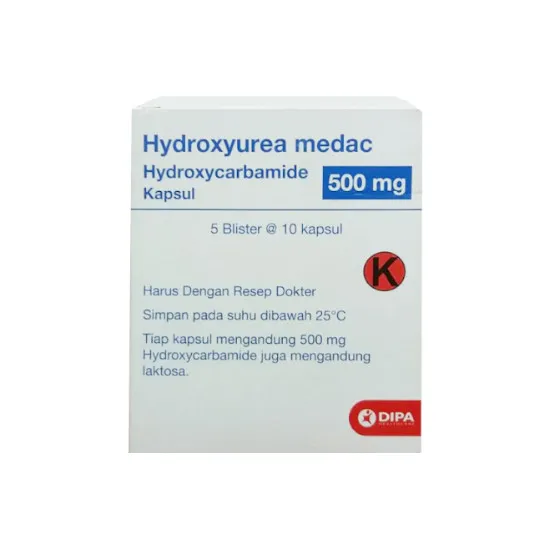
Table of Contents
Package leaflet: information for the patient
HYDROXYUREA medac, 500 mg, hard capsules
Hydroxycarbamidum
Please read the entire leaflet carefully before taking this medicine, as it contains
important information for the patient.
- Keep this leaflet so that you can read it again if necessary.
- If you have any doubts, consult your doctor.
- This medicine has been prescribed for a specific individual. Do not give it to others. This medicine may harm someone else, even if their symptoms are identical.
- If you experience any adverse reactions, including any adverse reactions not listed in this leaflet, inform your doctor or pharmacist. See section 4.
Table of contents
- What Hydroxyurea medac is and what it is used for
- Important information before taking Hydroxyurea medac
- How to take Hydroxyurea medac
- Possible side effects
- How to store Hydroxyurea medac
- Contents of the pack and other information
1. What Hydroxyurea medac is and what it is used for
One of the most important effects of hydroxycarbamide is the inhibition of ribonucleotide reductase activity, which leads to suppression of DNA synthesis.
Indications
Treatment of chronic myeloid leukemia (CML) in the chronic phase or in the accelerated phase.
Treatment of essential thrombocythemia or polycythemia vera associated with a high risk of thromboembolic complications.
2. Important information before taking Hydroxyurea medac
When not to take Hydroxyurea medac:
- if the patient is allergic to hydroxycarbamide or any of the other ingredients of this medicine (listed in section 6);
- if the patient has significant bone marrow suppression, leukopenia (< 2.5 x 10^9 white blood cells/L), thrombocytopenia (< 100 x 10^9 platelets/L), or severe anemia.
Warnings and precautions
Before starting treatment with Hydroxyurea medac, discuss this with your doctor or
pharmacist.
Treatment with hydroxycarbamide may cause bone marrow suppression
(consequently leading to leukopenia, thrombocytopenia, and anemia).
After determining the individual optimal dose, your doctor will also establish the frequency of necessary control tests (measurement of hemoglobin concentration, total white blood cell count, and platelet count). If the white blood cell count is less than 2.5 x 10^9/L or the platelet count is less than 100 x 10^9/L, your doctor may recommend discontinuing treatment with hydroxycarbamide until these values return to near-normal levels.
Inform your doctor if the patient has ever experienced an attack of gout.
Inform your doctor if the patient has folic acid deficiency.
If a decrease in red blood cells (anemia) occurs before or during treatment, your doctor may, if necessary, recommend red blood cell transfusions. If hemolytic anemia (a condition in which red blood cells are destroyed faster than they can be produced) is detected during routine blood tests, your doctor will discontinue treatment with Hydroxyurea medac.
Patients with impaired kidney and/or liver function should inform their doctor before starting treatment with this medicine.
Secondary leukemia may develop in patients receiving long-term hydroxycarbamide therapy.
The relationship to treatment or underlying disease is currently unknown.
Megaloblastic erythropoiesis is frequently observed at the beginning of hydroxycarbamide treatment. The morphological changes resemble pernicious anemia but are not dependent on vitamin B\12 or folic acid deficiency.
During treatment with Hydroxyurea medac, liver and kidney function parameters should be monitored frequently.
Serum uric acid levels may increase, which may require appropriate dose adjustment of the drug.
Cases of skin cancer have been reported in patients receiving long-term hydroxycarbamide therapy. During and after treatment with hydroxycarbamide, skin should be protected from sunlight, and patients should perform regular self-examinations of the skin. Additionally, the treating physician will perform skin examinations during routine follow-up visits.
Patients may develop leg ulcers. In such cases, the treating physician will decide whether the patient should continue taking this medicine. After discontinuation of this medicine, ulcers usually heal slowly over several weeks.
If the patient has diabetes and uses a continuous glucose monitoring (CGM) system to test blood glucose, hydroxycarbamide (also known as hydroxyurea) may cause falsely high glucose readings from certain sensors. This may lead to administration of more insulin than needed, resulting in blood sugar levels that are too low (hypoglycemia). Talk to the doctor who prescribed the CGM system about whether it is safe to use during treatment with Hydroxyurea medac.
Children
These diseases rarely occur in children; therefore, dosing for this age group has not been established.
Hydroxyurea medac and other medicines
Tell your doctor or pharmacist about all medicines the patient is currently taking or has recently taken, as well as any medicines the patient plans to take.
Hydroxycarbamide should be administered with caution to patients who are currently or previously treated with antineoplastic agents or radiation therapy, as adverse reactions occur more frequently and are more severe when hydroxycarbamide is used in combination with antineoplastic drugs or radiation therapy than when used alone. Primary reduction in blood cells (bone marrow suppression), gastric mucosal irritation, and mucositis may occur.
Exacerbation of radiation dermatitis may occur in patients undergoing radiation therapy during or prior to hydroxycarbamide treatment.
Studies have shown that hydroxycarbamide may enhance the cytotoxic effects of both ara-C (cytosine arabinoside) and fluoropyrimidines.
Hydroxycarbamide may increase the activity of nucleoside reverse transcriptase inhibitors (NRTIs), which are drugs used in the treatment of HIV infections (e.g., didanosine, stavudine). It has been shown that hydroxycarbamide in combination with didanosine, stavudine, and indinavir causes a reduction in white blood cells (decrease in CD4 lymphocyte count). Hydroxycarbamide in combination with NRTIs may increase the risk of adverse effects associated with nucleoside reverse transcriptase inhibitors.
Patients who have recently been vaccinated or plan to be vaccinated should inform their doctor.
Impaired kidney and/or liver function
Dosage recommendations cannot be provided for patients with impaired kidney or liver function.
Elderly patients
Elderly patients may be more sensitive to the effects of hydroxycarbamide and may require lower doses.
Pregnancy, breastfeeding, and effects on fertility
If the patient is pregnant or breastfeeding, suspects she may be pregnant, or plans to have a child, she should consult her doctor or pharmacist before using this medicine.
Women of childbearing potential / Contraception in women and men
Women of childbearing potential should use an effective method of contraception during treatment with Hydroxyurea medac and for 6 months after completion of treatment.
Men are advised to use effective contraception and avoid fathering a child during treatment with Hydroxyurea medac and for 3 months after completion of treatment.
Pregnancy
Hydroxyurea medac should not be used during pregnancy unless otherwise directed by a doctor.
Breastfeeding
Hydroxyurea medac must not be used during breastfeeding. The active substance of Hydroxyurea medac passes into human milk. Consult your doctor for advice.
Fertility
Ask your doctor about the possibility of sperm cryopreservation before starting treatment for the first time.
Genetic counseling is recommended for patients planning to have children after completion of treatment.
Driving and operating machinery
The ability to react may be impaired during treatment with Hydroxyurea medac. This should be taken into account when increased concentration is required, e.g., when driving a car.
Hydroxyurea medac contains lactose and sodium
If the patient has previously been diagnosed with intolerance to certain sugars, the patient should contact the doctor before taking this medicine.
This medicine contains less than 1 mmol (23 mg) of sodium per capsule, meaning the medicine is considered "sodium-free".
3. How to take Hydroxyurea medac
This medicine should always be taken as prescribed by your doctor. If in doubt, consult your doctor or pharmacist.
Treatment should be supervised by a doctor experienced in oncology or hematology. Dosing is based on the patient's actual or ideal body weight, whichever is lower.
The initial dose for the treatment of chronic myeloid leukemia (CML) is 40 mg/kg body weight (bw) per day, adjusted according to white blood cell count. The dose is individually determined by the doctor so that the white blood cell count remains within the range of 5–10 x 10⁹/L.
The doctor may reduce the dose by 50% (to 20 mg/kg bw) if the white blood cell count is less than 20 x 10⁹/L. If the white blood cell count falls below 2.5 x 10⁹/L or the platelet count is less than 100 x 10⁹/L, the doctor may suspend treatment until blood cell and platelet counts return to near-normal levels.
The initial dose for the treatment of essential thrombocythemia is 15 mg/kg bw per day, adjusted to maintain platelet counts below 600 x 10⁹/L and white blood cell counts above 4 x 10⁹/L.
Treatment of polycythemia vera begins with an initial dose of 15–20 mg/kg bw per day. The dose is individually adjusted to maintain hematocrit values below 45% and platelet counts below 400 x 10⁹/L.
Capsules should be swallowed whole without crushing or breaking them in the mouth.
Adequate fluid intake is recommended during treatment.
If you feel that the effect of Hydroxyurea medac is too strong or too weak, consult your doctor.
Taking more Hydroxyurea medac than prescribed
If you take more of this medicine than prescribed by your doctor, you should immediately contact your doctor or go to hospital. Patients may experience mucosal and skin symptoms.
In patients who have taken multiple daily doses, acute mucocutaneous symptoms have been observed. These include pain, purple nodules, swelling of the palms and soles leading to skin peeling, generalized skin discoloration, and oral mucositis.
Immediate treatment includes gastric lavage, followed by supportive therapy to maintain vital functions and monitoring of the hematopoietic system.
Missing a dose of Hydroxyurea medac
Do not take a double dose to make up for a missed dose.
If you have any further questions about the use of this medicine, consult your doctor or pharmacist.
4. Possible adverse reactions
Like all medicines, this medicine can cause adverse reactions, although not everyone will experience them.
You should contact your doctor immediately if any of the following symptoms occur:
- Fever, cough or difficulty breathing, as these may be related to a serious lung disease (frequency unknown)
- High fever (>39°C) with gastrointestinal, pulmonary, muscular, hepatic, cutaneous and cardiac symptoms within 6 weeks of taking Hydroxyurea medac (frequency: rare)
Myelosuppression is an adverse reaction that limits dosing.
Very common (may occur in more than 1 in 10 people)
- Absence or low number of sperm in semen (azoospermia or oligospermia)
- Decreased blood cell counts (myelosuppression), especially white blood cells (leukopenia), including the type of white blood cells that help the body fight infections (reduced CD4 lymphocyte count), red blood cells (anemia), and platelets (thrombocytopenia)
- Nausea, vomiting, loss of appetite, inflammation of the mucous membranes of the mouth, diarrhea, constipation, abdominal pain, mucositis, digestive problems (dyspepsia)
- Black tarry stools or blood in the stool
- In combination with certain anti-HIV drugs: pancreatitis with stomach or abdominal pain
- Drug-induced fever, chills, malaise, weakness, loss of energy
- Skin ulcers, especially leg ulcers
- Skin rashes consisting of spots and blisters (maculopapular rash), facial flushing, redness of the palms and soles (hand-foot syndrome)
- Skin changes such as purpuric rash, skin thinning; discoloration and damage to nails and skin, itching, small purple nodules on the skin; skin peeling, darkening and necrosis of the skin
- Hair loss
- Transient kidney function disorders with increased levels of certain blood parameters such as uric acid, urea and creatinine
- Difficulty urinating
Common (may occur in up to 1 in 10 patients)
- Increased immature red blood cells (megaloblastic changes)
- Skin cancer
- Increased liver enzyme activity
- Hepatitis, causing flu-like symptoms including fatigue, loss of appetite, fever, pain and nausea/vomiting, feeling of pressure or pain below the right rib cage, and possibly also yellowing of the skin or eyes (jaundice)
- Biliary flow disorders (cholestasis). Bile produced by the liver to aid digestion may not flow properly. Accumulation of bile may cause itching, yellow skin, very dark urine and very pale stools
- Neurological disorders, including headache, dizziness, drowsiness, disorientation, hallucinations and seizures
- Acute and chronic pulmonary reactions with changes in lung tissue observed on X-ray and shortness of breath, as well as fever in acute reactions and dry cough in chronic reactions
- In combination with certain drugs used to treat HIV infections: numbness, tingling or pain in arms and legs (peripheral neuropathy), and abdominal pain, nausea or vomiting, or yellow skin (hepatotoxicity)
Uncommon (may occur in up to 1 in 100 patients)
- Thick, scaly skin lesions (actinic keratosis)
- High levels of a breakdown product of red blood cells (bilirubin) in the blood
Rare (may occur in fewer than 1 in 1,000 people)
- Allergic reactions
- Metabolic disturbances resulting from the breakdown of tumor cells (tumor lysis syndrome)
- Skin ulceration with severe infection
Very rare (may occur in fewer than 1 in 10,000 people)
- Skin inflammation causing red, scaly patches, possibly accompanied by joint pain
- Kidney function disorder
Frequency not known (frequency cannot be estimated from available data)
- High levels of potassium in the blood, which may cause irregular heart rhythm
- Fever, cough or difficulty breathing, which may be symptoms of a serious lung disease, allergic alveolitis
- Hemolytic anemia
- Dry skin
Cases of low sodium levels in the blood have been observed after marketing of the medicine, which may cause fatigue, confusion, muscle twitching, seizures or coma.
Megaloblastic changes may occur during treatment with hydroxycarbamide and are unresponsive to treatment with folic acid or vitamin B.
However, myelosuppression resolves when treatment is discontinued.
Severe gastrointestinal disturbances (nausea, vomiting, loss of appetite) resulting from combined treatment with hydroxycarbamide and radiotherapy can usually be alleviated by temporarily interrupting hydroxycarbamide administration.
Hydroxycarbamide may intensify mucosal inflammation, an adverse effect of radiotherapy. This may resemble erythema and pigmentation changes in previously irradiated tissues.
Erythema, skin and nail atrophy, skin peeling, purple nodules, hair loss, fungal skin changes, radiation keratosis, leg ulcers, skin vasculitis, itching, skin and nail discoloration, and dry skin have been observed after years of long-term daily maintenance treatment with hydroxycarbamide.
Hydroxycarbamide may reduce serum iron levels and impair iron utilization by red blood cells. However, this does not alter the lifespan of red blood cells.
Reporting of adverse reactions
If any adverse reactions occur, including any not listed in this leaflet, inform your doctor, pharmacist or nurse. Adverse reactions can be reported directly to the Department of Monitoring Adverse Drug Reactions of the Office for Registration of Medicinal Products, Medical Devices and Biocidal Products:
Al. Jerozolimskie 181C, PL-02-222 Warsaw, tel.: +48 22 49-21-301, fax: +48 22 49-21-309,
website: https://smz.ezdrowie.gov.pl
Adverse reactions can also be reported to the marketing authorization holder.
Reporting adverse reactions helps provide more information on the safety of this medicine.
5. How to store Hydroxyurea medac
Keep this medicine out of sight and reach of children.
Do not use this medicine after the expiry date stated on the packaging after: Expiry
date. The expiry date refers to the last day of the stated month.
Do not store above 25 °C.
Medicines must not be disposed of via wastewater or household waste. Ask your pharmacist how to dispose of medicines no longer required. These measures will help protect the environment.
6. Contents of the pack and other information
What Hydroxyurea medac contains
- The active substance is hydroxycarbamide (Hydroxycarbamidum). Each capsule contains 500 mg of hydroxycarbamide.
- Other ingredients are:
- capsule contents: calcium citrate, disodium citrate, magnesium stearate, lactose monohydrate.
- capsule shell: titanium dioxide (E 171), gelatin.
What Hydroxyurea medac looks like and contents of the pack
White, hard capsules.
Packaging: Aluminium and PVC/PVDC blister, coated with titanium dioxide.
Pack sizes: 50 or 100 capsules in a cardboard box.
Marketing Authorisation Holder and Manufacturer
medac
Gesellschaft für klinische Spezialpräparate mbH
Theaterstr. 6
22880 Wedel
Germany
Tel.: +48 22 43000-30
Fax: +48 22 43000-31
e-mail: [email protected]