Hydrocortisone allefin max
Poland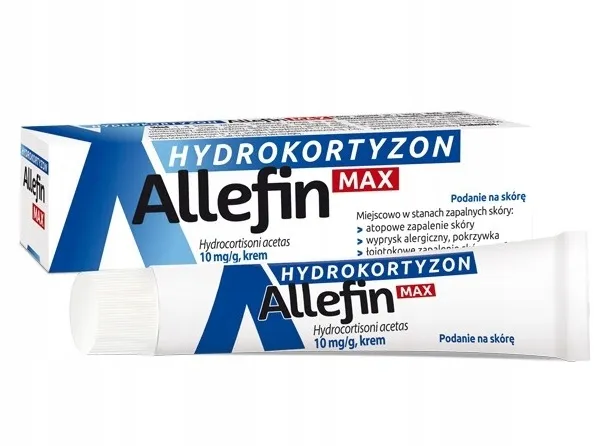
Table of Contents
- Package leaflet: Information for the patient
- 1. What is Hydrokortyzon Allefin Max and what is it used for
- 2. Important information before using Hydrokortyzon Allefin Max
- 3. How to use Hydrokortyzon Allefin Max
- 4. Possible adverse reactions
- 5. How to store Hydrokortyzon Allefin Max
- 6. Contents of the packaging and other information
Package leaflet: Information for the patient
Hydrokortyzon Allefin Max, 10 mg/g, cream
Hydrocortisoni acetas
Please read this leaflet carefully before using this medicine, as it contains
important information for the patient.
This medicine should always be used exactly as described in this patient leaflet or as directed by a
physician, pharmacist, or nurse.
- Keep this leaflet for future reference.
- If advice or further information is needed, consult a pharmacist.
- If any adverse reactions occur, including any adverse reactions not listed in this leaflet, inform a physician, pharmacist, or nurse. See section 4.
- If there is no improvement after 7 days of treatment, or if the patient feels worse, consult a physician.
Table of contents of the leaflet
- What is Hydrokortyzon Allefin Max and what is it used for
- Important information before using Hydrokortyzon Allefin Max
- How to use Hydrokortyzon Allefin Max
- Possible side effects
- How to store Hydrokortyzon Allefin Max
- Contents of the pack and other information
1. What is Hydrokortyzon Allefin Max and what is it used for
Hydrokortyzon Allefin Max is a cream intended for topical application to the skin.
Hydrokortyzon Allefin Max cream contains hydrocortisone (as acetate) – a weak-acting corticosteroid which, when applied topically, exerts anti-inflammatory, antipruritic, and vasoconstrictive effects.
Indications
Hydrokortyzon Allefin Max is used topically in inflammatory skin conditions of various origins, particularly those of allergic origin, of moderate severity, which respond to glucocorticosteroids.
The product is used topically in the following indications:
- atopic dermatitis, allergic eczema, urticaria,
- seborrheic dermatitis,
- relief of symptoms following insect bites.
2. Important information before using Hydrokortyzon Allefin Max
When not to use Hydrokortyzon Allefin Max
- if the patient is allergic to hydrocortisone, other corticosteroids, or any of the other ingredients of this medicine (listed in section 6);
- in bacterial, viral, fungal infections, or systemic mycosis;
- in acne vulgaris or rosacea;
- if skin atrophy (thinning of the skin) is present;
- in skin tumours or pre-cancerous skin conditions;
- in perioral dermatitis (dermatitis perioralis);
1/5
- in tuberculous skin lesions;
- on open wounds or damaged skin.
Warnings and precautions
Before starting treatment with Hydrokortyzon Allefin Max, discuss the following with your doctor or pharmacist:
- if the patient has diabetes – the medicine should not be used long-term;
- if the patient has glaucoma or cataracts, as the medicine applied to the eyelids or skin around the eyes may worsen symptoms of these conditions. The medicine should not be applied to the eyelids or skin around the eyes due to the risk of developing glaucoma or cataracts.
While using Hydrokortyzon Allefin Max, observe the following warnings:
- Do not use large doses, over large areas of skin, or for prolonged periods, as corticosteroids may be absorbed into the bloodstream and cause adverse effects (see section 4).
- If a skin infection develops at the site of application, contact your doctor.
- If the patient experiences blurred vision or other visual disturbances, contact your doctor.
- Avoid contact of the medicine with the eyes and mucous membranes.
- The medicine may be applied to the facial skin and to the armpits and groin only when absolutely necessary. Due to significantly increased absorption in these areas, there is a risk of adverse effects, even after short-term use. In such cases, consult your doctor.
- Use on facial skin is permitted only for a short period (up to 3 days).
- After applying Hydrokortyzon Allefin Max, do not cover the treated area with any dressing (especially plastic film or occlusive dressings), as this increases absorption of the medicine.
Children
Do not use in children under 12 years of age without consulting a doctor. In children, the medicine should be used with caution and prolonged use should be avoided due to a higher risk of systemic adverse effects, including disturbances in growth and development, compared to adults.
Hydrokortyzon Allefin Max and other medicines
Inform your doctor or pharmacist about all medicines the patient is currently using, has recently used, or plans to use.
No interactions between Hydrokortyzon Allefin Max cream and other medicines are known.
Pregnancy and breastfeeding
If the patient is pregnant, breastfeeding, suspects she may be pregnant, or is planning to become pregnant, she should consult a doctor or pharmacist before using this medicine.
Pregnancy
During pregnancy, the medicine should be used only under medical supervision, solely when clearly necessary, for short durations, and on small skin areas. Use with particular caution during the first three months of pregnancy.
Breastfeeding
During breastfeeding, the medicine should be used only under medical supervision. It is not known whether topically applied corticosteroids pass into breast milk; therefore, the medicine should be used cautiously, for short durations, and on small skin areas. The medicine should not be applied to the skin of the breasts immediately before breastfeeding.
2/5
Driving and operating machinery
This medicine has no effect or has a negligible effect on the ability to drive and operate machinery.
Hydrokortyzon Allefin Max contains methyl parahydroxybenzoate (E 218), propyl parahydroxybenzoate (E 216), cetyl alcohol, stearyl alcohol, and propylene glycol (E 1520)
Due to the presence of methyl parahydroxybenzoate and propyl parahydroxybenzoate, this medicine may cause allergic reactions (delayed-type reactions possible).
Due to the presence of cetyl alcohol and stearyl alcohol, the medicine may cause local skin reactions (e.g. contact dermatitis).
The medicine contains 30 mg of propylene glycol per 1 g of cream. Propylene glycol may cause skin irritation.
3. How to use Hydrokortyzon Allefin Max
This medicine should always be used exactly as described in this patient leaflet or as directed by a
doctor, pharmacist, or nurse. If in doubt, consult a doctor,
pharmacist, or nurse.
This medicine is intended for topical application to the skin.
Recommended dose
Apply a thin layer of cream to the affected skin area 2 or 3 times daily.
After applying the medicine, wash your hands unless the hands are the area being treated.
Do not use on large areas of skin without prior consultation with a doctor.
Duration of treatment
Without prior consultation with a doctor, do not use the medicine for longer than 7 days. On the face,
do not use for longer than 3 days.
If there is no improvement after 7 days, or if symptoms worsen, consult a
doctor.
Children
Do not use in children under 12 years of age without medical advice.
Use of a higher than recommended dose of Hydrokortyzon Allefin Max
Hydrokortyzon Allefin Max used in high doses, over large skin areas, or for prolonged periods may
cause disturbances in growth and development in children and suppression of the hypothalamic-pituitary-adrenal axis (this is the name of a system of interrelated endocrine glands producing hormones).
Symptoms of overdose may include: elevated blood glucose levels, glucose in urine, and Cushing's syndrome.
In case of overdose, contact a doctor immediately.
Missed dose of Hydrokortyzon Allefin Max
Apply the medicine as soon as possible. Do not use a double dose to make up for a missed application.
If you have any further doubts regarding the use of this medicine, consult a
doctor, pharmacist, or nurse.
3/5
4. Possible adverse reactions
Like all medicines, Hydrokortyzon Allefin Max may cause adverse reactions, although not everyone experiences them.
Prolonged use of hydrocortisone cream (for longer than 14 days), application over large areas of skin, use under occlusive dressings, and use in children may lead to the occurrence of adverse reactions such as:
- atrophic dermatitis, striae (stretch marks) on the skin;
- recurrence of infection;
- post-steroid purpura (skin discoloration and depigmentation);
- superficial dilation of blood vessels;
- acne;
- perioral dermatitis;
- periorbital dermatitis;
- folliculitis, excessive hair growth;
- delayed wound and ulcer healing;
- bacterial, fungal, and viral superinfections;
- petechiae (small red or purple spots on the skin);
- skin irritation such as burning, redness, excessive dryness, contact allergy;
- glaucoma or cataract – when the medicine is applied to the eyelid skin;
- blurred vision (may occur in up to 1 in 100 patients);
- suppression of the hypothalamic-pituitary-adrenal axis (a term referring to the interdependent system of endocrine glands producing hormones);
- increased blood glucose levels (hyperglycaemia);
- presence of glucose in urine (glycosuria);
- growth and development retardation in children;
- Cushing's syndrome (a disorder of growth and development associated with characteristic changes in body appearance: moon face, rounded trunk, and thin limbs).
If any of the above symptoms occur, treatment with the medicine should be discontinued and medical advice should be sought.
Reporting of adverse reactions
If any adverse reactions occur, including any possible adverse reactions not listed in this leaflet, inform your doctor or pharmacist. Adverse reactions can be reported directly to the Department of Monitoring Adverse Drug Reactions at the Office for Registration of Medicinal Products, Medical Devices and Biocidal Products:
Aleje Jerozolimskie 181C, 02-222 Warsaw
tel.: +48 22 49 21 301, fax: +48 22 49 21 309,
website: https://smz.ezdrowie.gov.pl
Adverse reactions can also be reported to the responsible entity.
Reporting adverse reactions helps to provide more information on the safety of the medicine.
5. How to store Hydrokortyzon Allefin Max
Keep this medicine out of sight and reach of children.
Store below 25°C. Do not store in the refrigerator or freeze.
Do not use this medicine after the expiry date stated on the packaging. The expiry date refers to the last day of the stated month.
4/5
Shelf life after first opening of the tube: 6 months.
Medicines must not be disposed of via wastewater or household waste. Ask your pharmacist how to dispose of medicines no longer required. These measures will help protect the environment.
6. Contents of the packaging and other information
What Hydrokortyzon Allefin Max contains
- The active substance is hydrokortyzonu octan. 1 g of cream contains 10 mg of hydrokortyzonu octan.
- The other ingredients (excipients) are: macrogol cetostearyl ether, cetyl alcohol, stearyl alcohol, liquid paraffin, white soft paraffin, sorbitan stearate, propylene glycol (E 1520), methyl parahydroxybenzoate (E 218), propyl parahydroxybenzoate (E 216) and purified water.
What Hydrokortyzon Allefin Max looks like and contents of the pack
Hydrokortyzon Allefin Max is a homogeneous cream, white to slightly yellowish in colour.
One pack contains 15 g of cream in an aluminium tube with a sealing membrane internally coated with epoxy-phenolic varnish, fitted with a polyethylene (HDPE) cap with a plug, packed in a cardboard box.
Marketing Authorisation Holder and Manufacturer
„PRZEDSIĘBIORSTWO PRODUKCJI FARMACEUTYCZNEJ HASCO-LEK” S.A.
51-131 Wrocław, ul. Żmigrodzka 242 E
Medicinal Product Information
tel.: (22) 742 00 22
e-mail: [email protected]
5/5