Hydrocortisone chema
Poland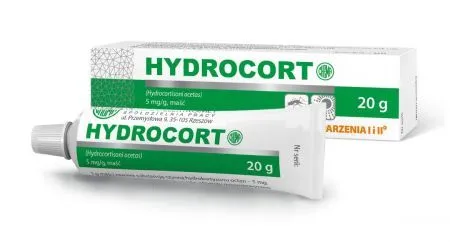
Table of Contents
Package leaflet: Information for the patient
HYDROCORT CHEMA, 5 mg/g, ointment
(Hydrocortisoni acetas)
Please read the entire leaflet carefully before using the medicine, as it contains
important information for the patient.
This medicine should always be used exactly as described in this patient leaflet or as directed by
a doctor or pharmacist.
- Keep this leaflet for future reference.
- If you need advice or further information, please consult your pharmacist.
- If you experience any adverse reactions, including any adverse reactions not listed in this leaflet, inform your doctor or pharmacist. See section 4.
- If there is no improvement after a few days, or if your condition worsens, consult your doctor.
Table of contents
- What Hydrocort CHEMA is and what it is used for
- Important information before using Hydrocort CHEMA
- How to use Hydrocort CHEMA
- Possible side effects
- How to store Hydrocort CHEMA
- Contents of the pack and other information
1. What Hydrocort CHEMA is and what it is used for
Hydrocort CHEMA is an ointment containing the active substance hydrocortisone acetate, which is
a corticosteroid hormone with weak activity. The medicine exerts anti-inflammatory, antipruritic (anti-itch), and vasoconstrictive effects.
Indications
Hydrocort CHEMA is used topically on the skin for symptomatic treatment of the following non-infectious skin lesions occurring in skin diseases such as:
- acute allergic inflammatory conditions (atopic dermatitis);
- scalp psoriasis;
- chronic psoriasis;
- lichen planus;
- erythema multiforme;
- pruritic flat lichen;
- seborrheic dermatitis;
- lichenified eczema;
- acute allergic or inflammatory skin diseases;
- reactions to insect bites;
- drug-induced skin reactions;
- first- and second-degree burns;
- neurodermatitis.
2. Important information before using Hydrocort CHEMA
When not to use Hydrocort CHEMA
- if the patient is allergic to hydrocortisone acetate or any of the other ingredients of this medicine (listed in section 6);
- in bacterial, viral, and fungal skin infections;
- in pre-cancerous conditions and skin tumours;
- in acne vulgaris;
- in rosacea;
- in perioral dermatitis;
- after vaccinations;
- in granulomatous angiitis;
- in patients with Buerger's disease, due to worsening of trophic (atrophic) disorders and delayed wound healing;
- on ulcers, wounds;
- in children under 12 years of age without prior consultation with a physician;
- during breastfeeding.
Do not apply the medicine to the eyelids or the skin around the eyes due to the risk of glaucoma or cataract. Also, do not use in patients with glaucoma or cataract, as symptoms of the disease may worsen.
Warnings and precautions
Before starting treatment with Hydrocort CHEMA, discuss it with your doctor or pharmacist.
If skin irritation or allergic reactions occur, discontinue use of the medicine.
If symptoms of the disease do not improve after several days of treatment, contact your doctor. Your doctor will recommend alternative treatment.
Avoid applying the medicine over large areas of skin, wounds, or damaged skin, using large doses, prolonged treatment, or use in skin diseases associated with excessive dryness and/or thinning of the skin or elevated body temperature, as well as in acute inflammatory skin conditions. In such cases, absorption of hydrocortisone acetate may be significantly increased, leading to suppression of adrenal cortex function.
If signs of skin infection appear at the treated site, contact your doctor. Your doctor will initiate antibacterial or antifungal treatment.
Protect the eyes and mucous membranes from contact with the medicine.
The medicine should be used on the face, armpits, and groin areas only when absolutely necessary, due to increased absorption of hydrocortisone acetate through delicate skin, and the associated increased risk of capillary dilation, perioral dermatitis, and skin atrophy, even after short-term use.
Avoid using the medicine under occlusive dressings (such as adhesive plasters or diapers), as occlusive dressings enhance systemic absorption of hydrocortisone acetate.
Use Hydrocort CHEMA with caution:
- when treating patients with tuberculosis;
- when treating patients with diabetes;
- when treating patients with psoriasis, as topical corticosteroids in psoriasis may lead to tachyphylaxis (loss of efficacy), risk of generalized pustular psoriasis, and systemic toxic effects due to impaired skin integrity.
Children
Use with particular caution in children, as suppression of the hypothalamic-pituitary-adrenal axis (the system regulating certain hormones) and adverse effects typical of corticosteroids, including growth and developmental disturbances, may occur more easily than in adults.
If hydrocortisone is administered to premature infants, monitoring of cardiac function and myocardial status may be necessary.
Hydrocort CHEMA and other medicines
Inform your doctor about all medicines currently used or recently used, as well as any medicines you plan to use.
Pregnancy and breastfeeding
If you are pregnant, breastfeeding, think you may be pregnant, or are planning to have a baby, consult your doctor or pharmacist before using this medicine.
Hydrocort CHEMA may be used during pregnancy only if, in the opinion of the doctor, the benefits outweigh the potential risks to the fetus.
Do not use the medicine during breastfeeding, as safety has not been established.
Driving and operating machinery
Hydrocort CHEMA has no effect or has a negligible effect on the ability to drive vehicles and operate machinery.
Hydrocort CHEMA contains propylparaben (E 216) and methylparaben (E 218), which may cause allergic reactions (including delayed-type reactions).
3. How to use Hydrocort CHEMA
This medicine should always be used exactly as described in this patient information leaflet, or as directed by your doctor or pharmacist. If in doubt, consult your doctor or pharmacist.
Before starting to use the medicine, pierce the tube membrane with the reverse side of the cap. In the case of a sachet, tear open the packaging; apply the ointment immediately after opening the sachet.
Apply a thin layer of the ointment to the clean, affected skin area 2 or 3 times daily. If improvement occurs, continue using the medicine 2 or 3 times per week, for no longer than 10 to 14 days.
After using the medicine, wash your hands.
Use in children and adolescents
Do not use in children under 12 years of age without consulting a doctor and without medical supervision.
Use of a higher than recommended dose of Hydrocort CHEMA
When used over large skin areas, for prolonged periods, under occlusive dressings, or on damaged skin, systemic adverse effects of corticosteroids due to absorption of hydrocortisone into the bloodstream may occur, such as suppression of the hypothalamic-pituitary-adrenal axis and Cushing's syndrome.
If a higher than recommended dose has been used, contact your doctor.
Missed dose of Hydrocort CHEMA
Do not use a double dose to make up for a missed dose.
If you have any further doubts regarding the use of this medicine, consult your doctor or pharmacist.
Stopping treatment with Hydrocort CHEMA
If you have any further doubts about using this medicine, consult your doctor or pharmacist.
4. Possible adverse effects
Like all medicines, this medicine can cause adverse effects, although not everyone will experience them.
Using the medicine for longer than 14 days may lead to atrophic dermatitis, skin striae, and delayed scar formation.
When applied to the facial skin, the medicine may relatively quickly cause perioral dermatitis, atrophic dermatitis, and persistent dilation of blood vessels.
Skin mottling, skin irritation symptoms (burning, redness, excessive dryness), skin atrophy, dilation of blood vessels, skin discoloration, bacterial, viral, and fungal superinfections—mainly after using occlusive dressings—may occur, as well as delayed healing of wounds and ulcers.
When the medicine is applied to the eyelid skin, glaucoma or cataract may occasionally occur.
Due to systemic absorption of hydrocortisone acetate into the bloodstream, systemic adverse effects characteristic of corticosteroids may also occur, including suppression of the hypothalamic–pituitary–adrenal (HPA) axis and Cushing's syndrome.
These occur primarily with prolonged use of the medicine, application over a large skin surface area, use under occlusive dressings, or use in children.
In children, additionally, growth and development retardation may occur.
Allergic reactions due to sensitization to excipients may occur.
Exacerbation of pre-existing skin conditions may rarely occur.
Frequency unknown (cannot be estimated from available data):
hypertrophic cardiomyopathy in preterm infants, weight gain.
Reporting of adverse effects
If any adverse effects occur, including any adverse effects not listed in this leaflet, inform your doctor or pharmacist. Adverse effects can be reported directly to the Department of Monitoring of Adverse Drug Reactions of the Office for Registration of Medicinal Products, Medical Devices and Biocidal Products
02-222 Warsaw
Tel.: +48 22 49 21 301
Fax: +48 22 49 21 309
Website: https://smz.ezdrowie.gov.pl
Adverse effects can also be reported to the marketing authorization holder.
Reporting adverse effects helps to provide more information on the safety of the medicine.
5. How to store Hydrocort Chema
Do not store above 25°C.
Do not store the ointment in an open sachet; use the ointment immediately after opening the sachet.
Keep the tube tightly closed.
Keep the medicine out of the sight and reach of children.
Take care to check the expiry date of the medicine.
Do not use this medicine after the expiry date stated on the cardboard box and
on the immediate packaging (tube or sachet). The expiry date refers to the last day of the stated month.
Medicines must not be disposed of via wastewater or household waste. Ask your pharmacist how to dispose of medicines no longer required. This will help protect the environment.
6. Contents of the pack and other information
What Hydrocort Chema contains
- The active substance is hydrocortisone acetate. 1 g of the ointment contains 5 mg of hydrocortisone acetate.
- The other ingredients are: white vaseline, glycerol monostearate, propyl parahydroxybenzoate (E 216), methyl parahydroxybenzoate (E 218), purified water.
What Hydrocort Chema looks like and contents of the pack
Hydrocort Chema is a homogeneous, white ointment.
The medicine is available in the following pack sizes:
- An aluminium tube containing 20 g of ointment, with a patient leaflet, packed in a cardboard box;
- 10 sachets made of laminate (Paper/Polyethylene/Aluminium/Surlyn), each containing 1 g of ointment, packed in a cardboard box.
Marketing authorisation holder and manufacturer
CHEMA-ELEKTROMET
Cooperative Company
ul. Przemysłowa 9
35-105 Rzeszów
tel. 17 862 05 90