Humulin n
Poland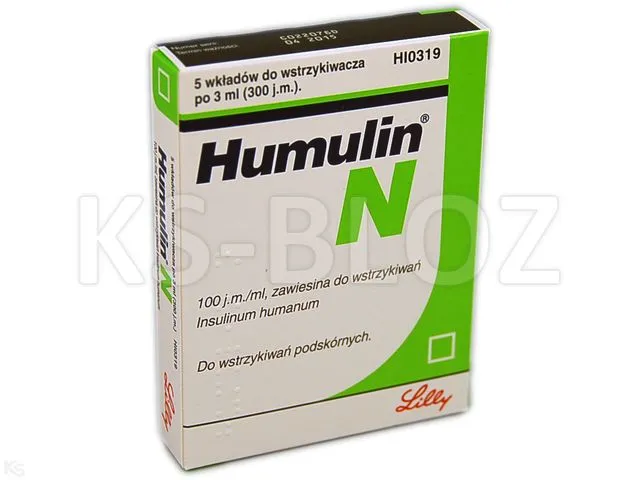
Table of Contents
Patient Information Leaflet
Humulin N 100 IU/ml suspension for injection in cartridge
(Insulinum humanum)
Please read all of this leaflet carefully before using this medicine because it contains important information for you.
- Keep this leaflet. You may need to read it again.
- If you have any further questions, please ask your doctor, pharmacist, or nurse.
- This medicine has been prescribed for you personally. Do not pass it on to others. It may harm them, even if their symptoms are the same as yours.
- If you experience any side effects, including any not listed in this leaflet, please inform your doctor, pharmacist, or nurse. See section 4.
Table of contents
- What Humulin N is and what it is used for
- What you need to know before you use Humulin N
- How to use Humulin N
- Possible side effects
- How to store Humulin N
- Contents of the pack and other information
1. What Humulin N is and what it is used for
Humulin N contains human insulin as the active substance and is used in the treatment of diabetes.
Diabetes is caused by the inability of the pancreas to produce insulin in amounts sufficient to control blood glucose (blood sugar) levels. Humulin N is used to provide long-term control of blood glucose levels. The duration of action of this insulin has been prolonged by the addition of protamine sulphate to the suspension.
Your doctor may recommend using Humulin N together with a fast-acting insulin. Your doctor will advise you on how to use each type. When changing from one type of insulin to another, extreme caution should be exercised. Each type of insulin has a different symbol and colour on the packaging and cartridge to help distinguish them easily.
2. Important information before using Humulin N
Humulin N in cartridges is intended exclusively for subcutaneous injection using a reusable insulin pen. If insulin must be administered by another method, consult your doctor.
When not to use Humulin N
- if you experience symptoms indicating hypoglycemia (low blood glucose levels). Information on managing mild hypoglycemia will be provided later in this leaflet ( see section 4A ).
- if you are allergic to human insulin or to any of the other ingredients of this medicine (listed in section 6).
Warnings and precautions
Before starting Humulin N, speak with your doctor, pharmacist, or nurse.
- If your current treatment provides good glycemic control, the warning symptoms of low blood glucose levels may become less noticeable. Warning symptoms are listed later in this leaflet. It is important to plan meal times, frequency and level of physical activity carefully. You should also monitor your blood sugar levels frequently by testing blood glucose concentration.
- Some people who experienced hypoglycemia (low blood glucose) after switching from animal to human insulin reported that the warning signs of hypoglycemia were less pronounced or different than before. If you frequently experience hypoglycemia or have difficulty recognizing its warning symptoms, consult your doctor.
- Inform your diabetes nurse, doctor, or pharmacist if:
- you have recently been ill;
- you have kidney or liver disease;
- you increase your physical activity.
- Your insulin requirement may also change after consuming alcohol.
- Inform your diabetes nurse, doctor, or pharmacist if you are planning to travel abroad. Time zone differences may require adjustments in the timing of injections and meals.
- Cases of heart failure have been reported in some patients with type 2 diabetes who were treated long-term and who had heart disease or a history of stroke, when pioglitazone was used concomitantly with insulin. Inform your doctor immediately if symptoms of heart failure occur, such as shortness of breath, sudden weight gain, or localized swelling.
Skin changes at the injection site
Rotate injection sites to prevent skin changes such as lumps under the skin (lipohypertrophy). Insulin injected into an area with such lumps may not be properly absorbed (see "How to use Humulin N"). If you are currently injecting insulin into an area with lumps, consult your doctor before changing the site. Your doctor may recommend more frequent blood glucose monitoring and adjustment of the insulin dose or other antidiabetic medications.
Humulin N and other medicines
Tell your doctor or pharmacist about all medicines you are currently taking or have recently taken, as well as any you plan to take.
Your insulin requirement may change when taking concomitantly:
- corticosteroids,
- thyroid hormone replacement therapy,
- oral glucose-lowering agents (antidiabetic drugs),
- acetylsalicylic acid (aspirin),
- growth hormone,
- octreotide, lanreotide,
- selective β-adrenergic receptor agonists (e.g. ritodrine, salbutamol, terbutaline),
- β-adrenolytic agents (beta-blockers),
- thiazides or certain antidepressants (monoamine oxidase inhibitors),
- danazol,
- certain angiotensin-converting enzyme inhibitors (e.g. captopril, enalapril) or angiotensin II receptor antagonists.
Pregnancy, breastfeeding, and effects on fertility
Insulin requirements usually decrease during the first three months of pregnancy and increase during the following six months. Women who are breastfeeding may need to adjust their insulin dose or eating habits.
If you are pregnant, breastfeeding, think you might be pregnant, or are planning to have a child, consult your doctor or pharmacist before using this medicine.
Driving and operating machinery
In the event of hypoglycemia (low blood glucose), your ability to concentrate and reaction time may be reduced. Keep this in mind in any situation where this could pose a risk to yourself or others (e.g. when driving a vehicle or operating machinery).
Consult your diabetes nurse or doctor about driving if:
- you frequently experience hypoglycemia;
- you have weak or absent symptoms of hypoglycemia.
Important information about some ingredients of Humulin N
This medicine contains less than 1 mmol of sodium (23 mg) per dose, i.e. it is essentially "sodium-free".
3. How to use Humulin N
The 3 ml cartridge is intended exclusively for use in 3 ml insulin pens. Do not use it in 1.5 ml pens.
Always check the name and type of insulin on the label and packaging of the cartridge when
purchasing the medicine at the pharmacy. Make sure it is the Humulin medicine prescribed by your doctor.
This medicine should always be used according to the instructions of your doctor or pharmacist. If you have any doubts,
consult your doctor or pharmacist. To avoid possible transmission of diseases, each
cartridge must be used by only one person, even if the needle is changed.
Dosage
- Humulin N should be injected as isophane insulin. Your doctor will recommend the appropriate type of insulin, the dose, and the timing and frequency of injections. These instructions are intended solely for the specific patient. Follow your doctor's recommendations carefully and visit your diabetes clinic regularly.
- Changing the type of insulin used (e.g., from animal insulin to human insulin) may require a decrease or increase in dose. This change may affect only the first injection or may be introduced gradually over several weeks or months.
- Humulin N in cartridges is intended exclusively for subcutaneous injection using a reusable insulin pen. If insulin must be administered by another method, consult your doctor.
Preparing Humulin N medicine
- Before each injection, rotate the Humulin N cartridge gently between your palms 10 times, then invert it 10 times to obtain a uniformly cloudy or milky suspension. If this does not happen, repeat these steps until the contents are fully mixed. The cartridges contain a small glass bead to help mix the components. Do not shake, as this may cause foaming, which can make accurate dose measurement difficult. Frequently check the appearance of the insulin in the cartridge. Do not use if clumps or white particles adhering to the bottom or sides of the cartridge are visible, or if the glass appears dull. Check this before each injection.
Preparing the pen for use
- Wash your hands first. Disinfect the rubber membrane of the cartridge.
- Humulin N cartridges must be used only with Lilly insulin pens to ensure proper dose delivery. They cannot be used with any other reusable insulin pen.
- Follow the instructions provided with the pen. Insert the cartridge into the pen.
- Set the dose to 1 or 2 units. Then, holding the pen with the needle pointing upward, tap the sides gently so that air bubbles move to the top. With the needle still pointing upward, press the injection mechanism until a drop of Humulin N appears at the needle tip. A few small air bubbles may still remain inside the pen. These are harmless, but a large air bubble may result in an inaccurate dose.
Injecting Humulin N
- Before injection, disinfect the skin according to the instructions provided.
- Inject the medicine subcutaneously as instructed. Do not inject the medicine directly into a vein. After injection, leave the needle in the skin for five seconds to ensure the full dose has been delivered. Do not rub the injection site. Make sure the injection site is at least 1 cm away from the previous injection site. Rotate injection sites as instructed.
Do not administer Humulin N intravenously.
Humulin N should be injected according to the instructions of your doctor or diabetes nurse.
After injection
- After injecting the medicine, remove the needle from the pen using the outer needle cap. This helps maintain sterility of the medicine, prevents insulin leakage, avoids air entering back into the pen, and prevents needle blockage. Never share your needles or pen with anyone else. Replace the cap back onto the pen.
Subsequent injections
- Leave the cartridge in the pen. Before each injection, select 1 or 2 units and press the injection mechanism while holding the pen upright until a drop of Humulin N appears at the needle tip. You can check how much Humulin N remains by looking at the indicator on the side of the cartridge. The distance between indicator marks corresponds to approximately 20 units. If the remaining amount of medicine is less than the prescribed dose, replace the cartridge.
Do not mix any other insulin with Humulin N in the cartridge. Do not reuse the cartridge after it has been emptied.
Use of a higher than recommended dose of Humulin N
If a higher dose of Humulin N than recommended is administered, low blood glucose levels may occur. Check your blood glucose level (see section A in point 4).
Missing a dose of Humulin N
If a smaller dose of Humulin N than recommended is administered, high blood glucose levels may occur. Check your blood glucose level. Do not inject a double dose to make up for a missed dose.
Interrupting treatment with Humulin N
If less than the recommended dose of Humulin N is administered, blood glucose levels may increase. Do not change the insulin you are using unless advised by your doctor.
If you have any further questions about the use of this medicine, consult your doctor, pharmacist, or diabetes nurse.
4. Possible adverse reactions
Like all medicines, this medicine can cause adverse reactions, although not everyone will experience them.
Human insulin may cause hypoglycaemia (low blood glucose levels). See further information on
hypoglycaemia below under the section "Common problems associated with diabetes".
Possible adverse reactions
Generalised allergy occurs very rarely (in less than 1 in 10,000 patients). Symptoms include:
- drop in blood pressure • rash over the entire body
- difficulty breathing • wheezing
- rapid heartbeat • sweating
If any of these symptoms occur while using Humulin N, contact your doctor immediately.
Local allergy occurs frequently (in less than 1 in 10 patients). Symptoms may include redness, swelling or itching of the skin around the injection site. These symptoms usually disappear after a few days or weeks. If any of the above symptoms occur, inform your doctor.
Skin changes at the injection site
If insulin is injected too frequently into the same site, fatty tissue may shrink (lipoatrophy) or thicken (lipohypertrophy) (less than 1 in 100 patients). Lumps under the skin may also be caused by accumulation of a protein called amyloid (cutaneous amyloidosis, frequency unknown). Insulin injected into an area with lumps may not work properly. Always rotate injection sites—this helps prevent these skin changes.
Swelling (e.g. swelling of arms, ankles; fluid retention) has been reported, particularly at the beginning of insulin treatment or during changes in therapy aimed at improving blood glucose control.
Common problems associated with diabetes
A. Hypoglycaemia
Hypoglycaemia (low blood glucose) is a condition in which there is too little sugar in the blood. It may occur if the patient:
- takes too high a dose of Humulin N or another insulin;
- skips or delays a meal, or changes their diet;
- exercises too intensely or works physically shortly before or after a meal;
- is ill (especially with an illness involving diarrhoea or vomiting);
- experiences changes in insulin requirements, or
- has worsening kidney or liver function disorders.
Alcohol and certain medicines may affect blood glucose levels.
Early symptoms of low blood glucose usually appear quickly and include:
- fatigue • rapid heartbeat
- nervousness or trembling • nausea
- headache • cold sweats
If you are unsure about recognising the warning signs of hypoglycaemia, avoid situations where you might endanger yourself or others (e.g. driving a car).
Do not use Humulin N if you are experiencing warning signs of hypoglycaemia (low blood glucose).
If blood glucose is low, consume glucose tablets, sugar or a sweet drink. Then eat a piece of fruit, biscuits or a sandwich, as advised by your doctor, and rest. This is usually sufficient in cases of mild hypoglycaemia or minor insulin overdose. If the condition worsens, with shallow breathing and pale skin, contact your doctor immediately. An injection of glucagon may help in cases of severe hypoglycaemia. After glucagon injection, consume glucose tablets or sugar. If there is no improvement after glucagon administration, go to hospital. For information about glucagon, consult your doctor.
B. Hyperglycaemia and diabetic ketoacidosis
Hyperglycaemia (too high blood glucose) means the body is not receiving enough insulin. Hyperglycaemia may be caused by:
- not taking Humulin N or another insulin;
- injecting less insulin than prescribed by your doctor;
- eating very large meals compared to dietary requirements; or
- fever, infection or stressful events.
Hyperglycaemia may lead to diabetic ketoacidosis. Symptoms develop slowly over several hours or days. They include:
- drowsiness • loss of appetite
- flushed face • fruity odour of breath
- thirst • nausea or vomiting.
Severe symptoms include difficulty breathing and rapid pulse. Seek medical help immediately.
Untreated hypoglycaemia (low blood glucose) or hyperglycaemia (high blood glucose) may lead to serious disturbances and cause headache, nausea, vomiting, dehydration, loss of consciousness, coma or even death.
Three simple ways to avoid hypoglycaemia or hyperglycaemia:
- Always carry a spare injection device and a cartridge of Humulin N insulin.
- Always carry something that informs others that you have diabetes.
- Always carry sugar cubes.
C. Illness
During illness, especially when associated with nausea or vomiting, your body's insulin requirements may change. People with diabetes need insulin even when they are unable to eat normal meals. Perform urine or blood tests, follow general illness management guidelines, and contact your diabetes nurse or doctor.
Reporting adverse reactions
If any adverse reactions occur, including any not listed in this leaflet, tell your doctor, pharmacist or nurse. Adverse reactions can be reported directly to the Department of Monitoring Adverse Reactions of Medicinal Products at the Office for Registration of Medicinal Products, Medical Devices and Biocidal Products: Al. Jerozolimskie 181C, 02-222 Warsaw, tel.: +48 22 49 21 301, fax: +48 22 49 21 309, website: https://smz.ezdrowie.gov.pl.
Adverse reactions can also be reported to the marketing authorisation holder or its representative. By reporting adverse reactions, more information on the safety of this medicine can be collected.
5. How to store Humulin N
Keep this medicine out of the sight and reach of children.
Before first use, Humulin N should be stored in a refrigerator (2°C - 8°C). Do not freeze.
When in use, the pen and cartridge should be stored at room temperature (below 30°C) and
used within 28 days. Do not store the used pen or cartridges in the refrigerator.
Do not place them near heat sources or expose them to direct sunlight.
Do not use this medicine after the expiry date stated on the label and carton. The expiry date refers to the last day of the specified month.
Do not use this medicine if you notice clumps or white particles adhering to the bottom or sides of the cartridge, or if the glass appears cloudy. Check the appearance of the insulin before each injection.
Medicines should not be disposed of via wastewater or household waste. Ask your pharmacist how to properly dispose of medicines no longer in use. This will help protect the environment.
6. Contents of the pack and other information
What Humulin N contains
- The active substance is human insulin produced by recombinant DNA technology. It has the same structure as the natural hormone produced by the pancreas and therefore differs from animal insulins. The human insulin contained in Humulin N forms a suspension with protamine sulfate.
- Other ingredients are: m-cresol, glycerol, phenol, protamine sulfate, disodium phosphate heptahydrate, zinc oxide, water for injections, 10% hydrochloric acid solution and 10% sodium hydroxide solution (for pH adjustment).
What Humulin N looks like and contents of the pack
Humulin N is a white, sterile suspension of isophane human insulin. One millilitre of the suspension contains 100 international units of insulin (100 IU/ml). Each cartridge contains 300 units (3 ml of suspension).
Cartridges are supplied in packs of 5.
Marketing Authorisation Holder and Manufacturer
Marketing Authorisation Holder:
Eli Lilly Nederland B.V., Papendorpseweg 83, 3528 BJ Utrecht, The Netherlands
Manufacturers:
Lilly France S.A.S., Rue du Colonel Lilly, 67640 Fegersheim, France
Eli Lilly Italia S.p.A., Via A. Gramsci 731-733, 50019 Sesto Fiorentino, Italy
For further information, contact the local representative of the Marketing Authorisation Holder:
Eli Lilly Polska Sp. z o.o.
ul. Żwirki i Wigury 18A
02-092 Warsaw, Poland
Tel: +48 22 440 33 00
This medicinal product is authorised in the member states of the European Economic Area under the following names:
Huminsulin „Lilly“ Basal (Austria)
Humuline NPH (Belgium, Luxembourg, The Netherlands)
Humulin N (Bulgaria, Croatia, Estonia, Hungary, Latvia, Lithuania, Poland, Romania, Slovenia)
Humulin N (NPH) Cartridge (Czech Republic, Slovakia)
Huminsulin Basal (NPH) für Pen 3 ml (Germany)
Humulin NPH (Cyprus, Greece, Norway, Portugal, Sweden)
Humulin I (Ireland, Italy, Malta, United Kingdom)
Umuline NPH (France)