Chlorchinaldin vp
Poland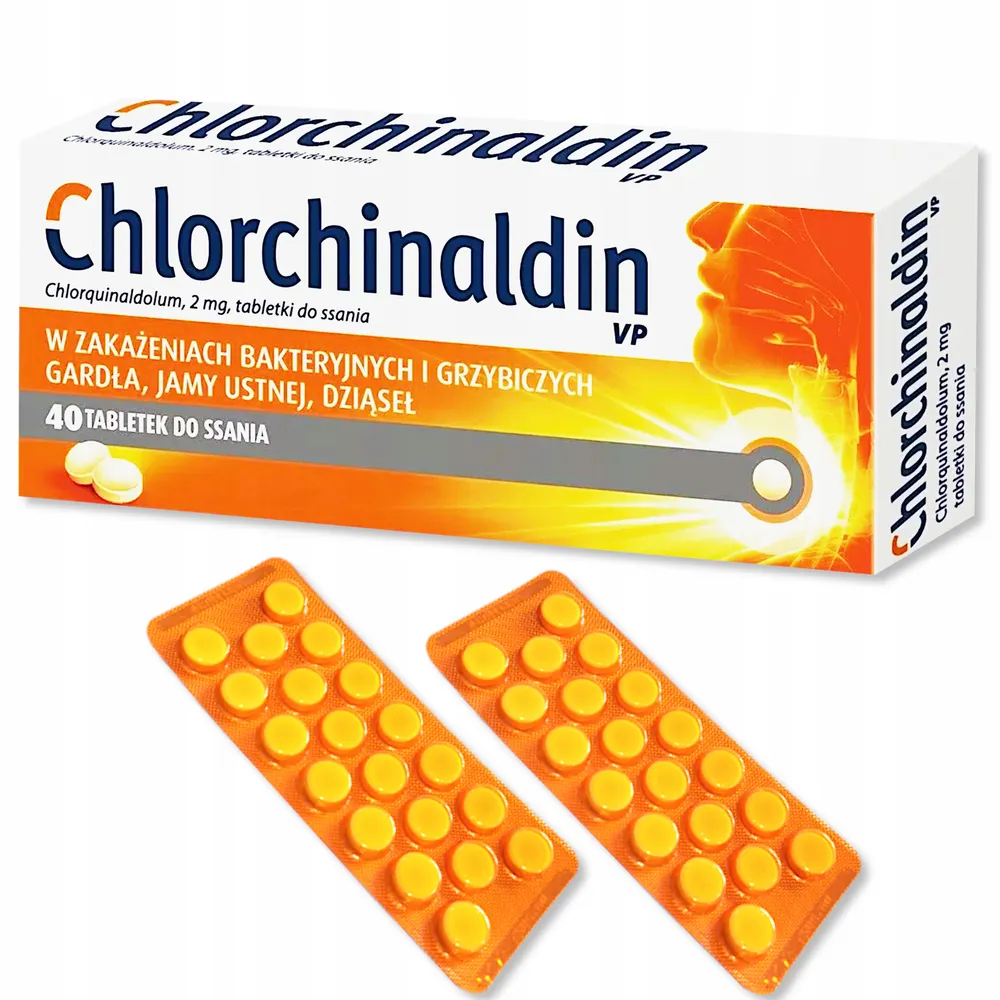
Table of Contents
Patient Information Leaflet
Chlorchinaldin VP, 2 mg, effervescent tablets for oral use
Chlorquinaldolum
Please read all of this leaflet carefully before you start using this medicine, because it contains
important information for you.
This medicine should always be taken exactly as described in this patient leaflet or as directed by
your doctor or pharmacist.
- Keep this leaflet so that you can read it again if necessary.
- If you need advice or further information, consult your pharmacist.
- If you experience any adverse reactions, including any not listed in this leaflet, inform your doctor or pharmacist. See section 4.
- If after a few days there is no improvement or your condition worsens, contact your doctor.
Table of Contents
- What Chlorchinaldin VP is and what it is used for
- Important information before using Chlorchinaldin VP
- How to use Chlorchinaldin VP
- Possible side effects
- How to store Chlorchinaldin VP
- Contents of the pack and other information
1. What Chlorchinaldin VP is and what it is used for
Chlorchinaldin VP is an antimicrobial agent with antibacterial, antifungal,
and antiprotozoal properties.
It is indicated for local use:
- in bacterial infections of the oral cavity and gums,
- in mycoses,
- in fungal infections of the mouth and throat following antibiotic treatment.
2. Important information before using Chlorchinaldin VP
When not to use Chlorchinaldin VP
- if the patient is allergic to chlorquinaldol or any of the other ingredients of this medicine (listed in section 6).
Warnings and precautions
Before starting treatment with Chlorchinaldin VP, discuss it with your doctor or pharmacist.
If symptoms persist or worsen despite using the medicine for several days, consult a doctor who will recommend appropriate treatment. In bacterial infections, an appropriate systemic-acting antibiotic is often necessary, and Chlorchinaldin VP should be used only as an adjunct.
Chlorchinaldin VP and other medicines
Inform your doctor about all medicines currently or recently taken, as well as any medicines planned for future use.
Metallic compounds and iodine preparations reduce the effectiveness of the medicine.
Chlorchinaldin VP with food and drink
This medicine should not be used during meals.
Pregnancy, breastfeeding, and fertility
If the patient is pregnant, breastfeeding, suspects she might be pregnant, or is planning to have a child, she should consult a doctor or pharmacist before using this medicine.
Chlorchinaldin VP should not be used during pregnancy unless the physician considers it absolutely necessary.
Do not use during breastfeeding.
Driving and operating machinery
Chlorchinaldin VP does not affect the ability to drive or operate machinery.
Chlorchinaldin VP contains sucrose
If the patient has previously been diagnosed with intolerance to certain sugars, he or she should consult a doctor before taking this medicine. This medicine may have harmful effects on teeth.
Chlorchinaldin VP contains sodium
This medicine contains less than 1 mmol (23 mg) of sodium per tablet; therefore, it is considered "sodium-free".
3. How to use Chlorchinaldin VP
This medicine should always be used exactly as described in this patient leaflet or as directed by your doctor or pharmacist. If in doubt, consult your doctor or pharmacist.
Recommended dose
Suck 1 tablet every 1–2 hours. Do not exceed 10 tablets for sucking per day.
Do not chew the tablets.
Do not use the medicine during meals.
If symptoms worsen or do not improve within a few days of using the medicine, consult your doctor.
Do not use the medicine for prolonged periods or in doses higher than recommended.
Use of a higher than recommended dose of Chlorchinaldin VP
No cases of overdose have been reported so far.
Due to the dosage of the medicine and its low absorption, the occurrence of severe adverse effects following overdose is unlikely. However, study results indicate that chlorinated derivatives of quinoline (chlorquinaldol belongs to this group), especially when used in high doses and over prolonged periods, may cause subacute myelo-optic neuropathy (a type of nervous system disorder), characterized by sensory disturbances, muscle weakness, pain, and visual disturbances. Symptoms are often preceded by persistent diarrhoea and abdominal pain, and a characteristic sign is green discoloration of urine and tongue.
If a higher than recommended dose of Chlorchinaldin VP has been used, consult a doctor.
Management in case of overdose includes inducing vomiting and gastric lavage, as well as symptomatic treatment.
Missed dose of Chlorchinaldin VP
If you forget to take the next dose at the scheduled time, take it as soon as possible. However, if it is almost time for the next dose, skip the missed dose. Do not take a double dose to make up for a missed one.
If you have any further doubts regarding the use of this medicine, consult your doctor or pharmacist.
4. Possible adverse reactions
Like all medicines, this medicine can cause adverse reactions, although not everybody gets them.
The frequency of occurrence of the adverse reactions listed below is unknown (cannot be
determined from the available data).
General disorders and administration site conditions: mucous membrane irritation, itching, allergic symptoms.
Immune system disorders: allergic symptoms (rash or urticaria) in hypersensitive individuals.
If any of the adverse reactions worsen or if any adverse reactions not listed in this leaflet occur, a doctor or pharmacist should be consulted.
Reporting of adverse reactions
If any adverse reactions occur, including any adverse reactions not listed in this leaflet, inform a doctor or pharmacist. Adverse reactions can be reported directly to the Department of Monitoring Adverse Drug Reactions of the Office for Registration of Medicinal Products, Medical Devices and Biocidal Products:
Al. Jerozolimskie 181C, 02-222 Warsaw, tel.: + 48 22 49 21 301, fax: + 48 22 49 21 309,
Website: https://smz.ezdrowie.gov.pl
Adverse reactions can also be reported to the marketing authorization holder.
By reporting adverse reactions, additional information on the safety of this medicine can be collected.
5. How to store Chlorchinaldin VP
Store below 25°C. Keep in the original packaging to protect from light and moisture.
The medicine should be stored out of sight and reach of children.
Do not use this medicine after the expiry date stated on the packaging. The expiry date refers to the last day of the stated month.
Medicines must not be disposed of via wastewater or household waste. Ask your pharmacist how to dispose of medicines no longer required. Such measures will help protect the environment.
6. Contents of the pack and other information
What Chlorchinaldin VP contains
- The active substance is chlorquinaldol. One lozenge contains 2 mg of chlorquinaldol.
- The other ingredients are: citric acid monohydrate, sucrose, sodium carmellose, talc, magnesium stearate.
What Chlorchinaldin VP looks like and contents of the pack
Chlorchinaldin VP lozenges are round, flat on both sides, with a marbled surface.
The medicine is available in packs containing 20 or 40 lozenges (1 or 2 blisters made of Aluminium/PVC foil containing 20 lozenges, in a cardboard box).
Marketing Authorisation Holder
Bausch Health Ireland Limited
3013 Lake Drive
Citywest Business Campus
Dublin 24, D24PPT3
Ireland
Manufacturer
ICN Polfa Rzeszów S.A.
Przemysłowa 2 Street
35-105 Rzeszów
Poland