Herbapini
Poland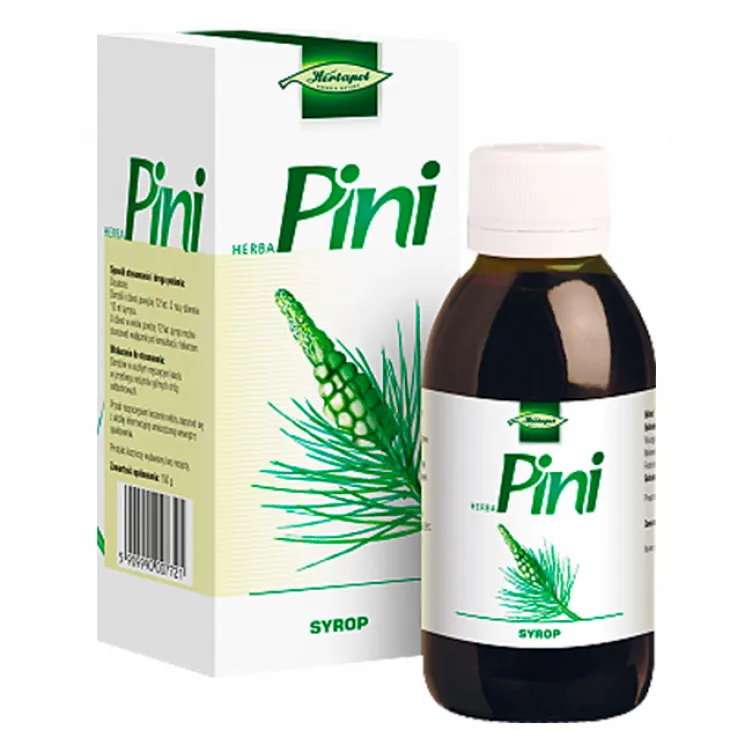
Table of Contents
Package leaflet: Information for the patient
HERBAPINI, (424 mg + 64 mg + 3 mg)/5 ml, syrup
Pini extractum fluidum + Foeniculi tinctura + Codeini phosphas hemihydricus
Please read carefully the entire leaflet before using this medicine, as it contains
important information for the patient.
This medicine should always be used exactly as described in this patient leaflet or as directed by
a physician or pharmacist.
- Keep this leaflet, so that you can read it again if necessary.
- If you need advice or further information, please consult your pharmacist.
- If you experience any adverse reactions, including any adverse reactions not listed in this leaflet, inform your doctor or pharmacist. See section 4.
- If there is no improvement after 7 days, or if you feel worse, you should contact your doctor.
Table of contents
- What Herbapini is and what it is used for
- Important information before taking Herbapini
- How to take Herbapini
- Possible side effects
- How to store Herbapini
- Contents of the pack and other information
1. What Herbapini is and what it is used for
Herbapini is a medicine containing codeine phosphate, which has antitussive (cough suppressant) action.
Indications
For temporary relief of dry, exhausting cough associated with upper respiratory tract infections.
Herbapini is indicated for use in adults and adolescents above 12 years of age.
2. Important information before using HERBAPini
When not to use HERBAPini
- if the patient is allergic to the active substances or other opioids, or to plants of the Apiaceae/Umbelliferae family (anise, caraway, celery, coriander, and dill), or to anethole, or to any of the other ingredients of this medicine (listed in section 6);
- in patients with asthma or tendency to bronchospasm, or acute respiratory failure;
- in patients with chronic constipation;
- in patients at risk of paralytic ileus (due to the presence of codeine);
- in respiratory diseases associated with accumulation of thick secretions in the bronchial tree and difficulty in expectoration;
- in patients dependent on drugs and opioid substances, and in individuals taking medications from the morphine agonist or antagonist group;
- if the patient knows they metabolize codeine to morphine very rapidly;
- in patients in a state of coma;
- in patients with severe liver disorders;
- in children under 12 years of age;
- in breastfeeding women.
Use of this medicine should be avoided in patients with increased intracranial pressure or head injury (in addition to the risk of respiratory depression and increased intracranial pressure, it may affect pupil response and other physiological reactions important for neurological assessment).
Children and adolescents
Do not use HERBAPini in children under 12 years of age due to increased risk of developing severe and life-threatening adverse reactions.
Adolescents over 12 years of age
HERBAPini is not recommended for use in adolescents over 12 years of age with respiratory disorders for symptomatic treatment of cough and (or) cold.
Warnings and precautions
Before starting treatment with HERBAPini, consult your doctor or pharmacist.
Patients with renal impairment, hyperthyroidism, abdominal pain, prostate enlargement, bronchial asthma, chronic obstructive pulmonary disease, seizures, head injuries, or who have undergone gastrointestinal or urogenital surgery should consult a doctor before using this medicine.
There is a risk of central nervous system stimulation and depression when opioids are used concomitantly with monoamine oxidase inhibitors (MAOIs), and such combination is not recommended.
Liver function disorders – HERBAPini should not be used in cases of severe liver dysfunction. Codeine may cause coma.
Inflammatory bowel disease – codeine reduces intestinal peristalsis, increases tone and segmentation in the intestines, and may elevate colonic pressure. Therefore, caution is advised when using in acute colitis, diverticulitis, diarrhea associated with pseudomembranous colitis, or after surgery on the large intestine.
Gallbladder and gallstones – opioids may cause spasm of the bile ducts. The use of this medicine should be avoided in biliary tract disorders.
Pheochromocytoma – opioids may stimulate the release of endogenous histamine via induction of catecholamine release.
Codeine phosphate should be used with caution in the following conditions:
- hypothyroidism;
- adrenal insufficiency, e.g., Addison's disease;
- hypotension and shock;
- myasthenia gravis (muscle weakness).
In elderly patients, metabolism and elimination of opioid analgesics occur more slowly than in younger individuals.
Codeine is converted into morphine in the liver by an enzyme. Morphine is the substance responsible for codeine's effects. Some individuals have a genetic variation of this enzyme, leading to variable responses. In some people, morphine is not formed or is formed in very small amounts, resulting in lack of antitussive effect. In others, there is a higher likelihood of severe adverse reactions due to very high levels of morphine produced. If any of the following adverse symptoms occur, discontinue use of this medicine immediately and consult a doctor without delay:
slow or shallow breathing, disorientation, drowsiness, pinpoint pupils, nausea or vomiting, constipation, loss of appetite.
Prolonged use of this medicine, especially at high doses, may lead to dependence. Therefore, use for longer than 7 days or exceeding the recommended doses is not advised.
HERBAPini with other medicines
Inform your doctor or pharmacist about all medicines currently or recently taken, as well as any medicines planned for use.
Due to the presence of codeine phosphate, concurrent use of HERBAPini is not recommended with:
- MAO inhibitors (e.g., linezolid, moclobemide, selegiline) and for up to 2 weeks after discontinuation of these agents.
Due to the presence of codeine phosphate, HERBAPini should be used cautiously with:
- alcohol;
- first-generation sedating antihistamines;
- hypnotics and anxiolytics;
- anticholinergic drugs (e.g., atropine);
- metoclopramide and domperidone;
- antidiarrheal agents (e.g., loperamide, kaolin);
- anesthetics;
- tricyclic antidepressants;
- antipsychotics;
- opioid receptor antagonists, e.g., buprenorphine, naltrexone, naloxone;
- quinidine;
- antihypertensive drugs;
- ciprofloxacin;
- ritonavir;
- mexiletine;
- cimetidine.
Pregnancy and breastfeeding
If the patient is pregnant or breastfeeding, suspects she may be pregnant, or is planning to become pregnant, she should consult her doctor or pharmacist before using this medicine.
HERBAPini should not be used during pregnancy.
HERBAPini is contraindicated during breastfeeding. Codeine and morphine pass into breast milk.
Driving and operating machinery
Due to the possibility of drowsiness, caution should be exercised when driving or operating machinery. It is best to avoid driving immediately after taking the medicine.
HERBAPini contains sucrose and ethanol
Sucrose
The medicine contains 12 g of sucrose in 15 ml of syrup (36 g in 45 ml of syrup). This should be taken into account in patients with diabetes.
If a patient has previously been diagnosed with intolerance to certain sugars, they should consult their doctor before taking this medicine.
Ethanol
This medicine contains 1.05 g of alcohol (ethanol) in each 15 ml of syrup (3.15 g of alcohol (ethanol) in each 45 ml of syrup). The alcohol content of this product is equivalent to 26 ml of beer or 11 ml of wine per 15 ml of syrup (78 ml of beer or 33 ml of wine per 45 ml of syrup).
The alcohol in this medicine may alter the effects of other medicines. If the patient is taking other medicines, they should consult their doctor or pharmacist.
If the patient is pregnant or breastfeeding, they should consult their doctor or pharmacist before using this medicine.
If the patient is alcohol-dependent, they should consult their doctor or pharmacist before using this medicine.
The alcohol in this medicine may affect children. Symptoms may include drowsiness and behavioral changes. It may also affect concentration and physical activity.
If the patient has epilepsy or liver problems, they should consult their doctor or pharmacist before using this medicine.
3. How to use Herbapini medicine
This medicine should always be used exactly as described in this patient information leaflet, or as directed by a doctor or pharmacist. If in doubt, consult a doctor or pharmacist.
Oral administration:
Adults and adolescents over 12 years of age: 15 ml of syrup three times daily.
Use in children and adolescents
Children under 12 years of age:
Herbapini medicine is contraindicated in children under 12 years of age.
Adolescents from 12 to 18 years of age:
The use of Herbapini medicine is not recommended in adolescents aged 12 to 18 years with respiratory system function disorders.
Use of a higher than recommended dose of Herbapini medicine
There have been no reports of overdose so far. In case of significant overdose, respiratory center suppression, central nervous system depression, seizures, and loss of consciousness may occur. In such a case, seek immediate medical advice from a doctor or pharmacist.
Symptoms of overdose may be intensified by concomitant consumption of alcohol and psychotropic medicines.
Missed dose of Herbapini medicine
Missing a dose of the medicine does not have a significant impact on the course of ongoing treatment. Continue treatment as previously prescribed. Do not use a double dose to make up for a missed dose.
If you have any further doubts regarding the use of this medicine, consult a doctor or pharmacist.
4. Possible adverse effects
Like all medicines, this medicine can cause adverse effects, although not everyone will experience them.
Phosphate codeine
The following may occur:
- rash, urticaria, itching, breathing difficulties, increased sweating, skin redness or facial flushing, facial swelling; fever, enlarged spleen and lymph nodes;
- hyperglycaemia (increased blood sugar levels);
- loss of appetite;
- confusion, drowsiness, malaise, fatigue, dizziness, mood changes, hallucinations, central nervous system stimulation (motor restlessness/agitation), seizures, depression, headache, nightmares, increased intracranial pressure, tolerance or dependence, mood disturbances, hypothermia;
- constricted pupils, blurred or double vision;
- bradycardia, palpitations, hypotension, orthostatic hypotension, tachycardia;
- respiratory depression at higher doses;
- constipation (including constipation due to long-term use), biliary tract spasm, nausea, vomiting, dry mouth, abdominal pain, pancreatitis;
- muscle tremor or muscle stiffness;
- ureteric spasm, antidiuretic effect, urinary retention;
- decreased libido and potency, sexual dysfunction, erectile dysfunction.
Regular long-term use of codeine may lead to dependence and tolerance. Discontinuation of the medicine may cause symptoms of restlessness and irritability.
Fennel fruit
Allergic reactions affecting the skin or respiratory system may occur. Frequency unknown.
If symptoms of hypersensitivity such as urticaria, itching or skin rash occur, the use of the syrup should be discontinued.
Reporting of adverse effects
If any adverse effects occur, including any adverse effects not listed in this leaflet, inform your doctor or pharmacist. Adverse effects can be reported directly to the Department of Monitoring of Adverse Drug Reactions of the Office for Registration of Medicinal Products, Medical Devices and Biocidal Products
Al. Jerozolimskie 18 C
02-222 Warsaw
Phone: +48 22 49 21 301
Fax: +48 22 49 21 309
Website: https://smz.ezdrowie.gov.pl
Adverse effects can also be reported to the marketing authorization holder.
Reporting adverse effects helps to provide more information on the safety of the medicine.
5. How to store HERBAPini
Keep the container tightly closed and store at a temperature not exceeding 25°C.
Keep the medicine out of sight and reach of children.
Do not use this medicine after the expiry date stated on the packaging. The expiry date refers to the last day of the specified month.
Medicines must not be disposed of via wastewater or household waste. Ask your pharmacist how to properly dispose of medicines no longer in use. This will help protect the environment.
6. Contents of the packaging and other information
What the medicine Herbapini contains
- The active substances in the medicine are pine extract, fennel tincture, and codeine phosphate. 100 g of the syrup contains:
phosphate of codeine (Codeini phosphas hemihydricus) – 0.05 g,
liquid extract from Pinus sylvestris L., turiones (dried pine shoots) (DER: 1:1.6) – 6.6 g, [extracting solvent:
ethanol 90% (v/v)],
tincture from Foeniculum vulgare Miller subsp. vulgare var. vulgare, fructus (fruit of bitter fennel) (DER: 1:5) – 1 g, [extracting solvent: ethanol 70% (v/v)].
- Other ingredients: sucrose, phosphoric acid 85%, calcium lactate pentahydrate, purified water.
Ethanol content not more than 7% (m/v).
15 ml of syrup contains 9 mg of codeine phosphate.
What Herbapini looks like and contents of the pack
A bottle made of coloured glass with a polyethylene cap and a measuring cup, in a cardboard package.
1 bottle of 116 ml
Marketing Authorisation Holder
POLPHARMA Pharmaceutical Works S.A.
Pelplińska Street 19, 83-200 Starogard Gdański
tel. +48 22 364 61 01
Manufacturer
Herbapol-Lublin S.A.
Diamentowa 25, 20-471 Lublin