Havrix 720 junior
Poland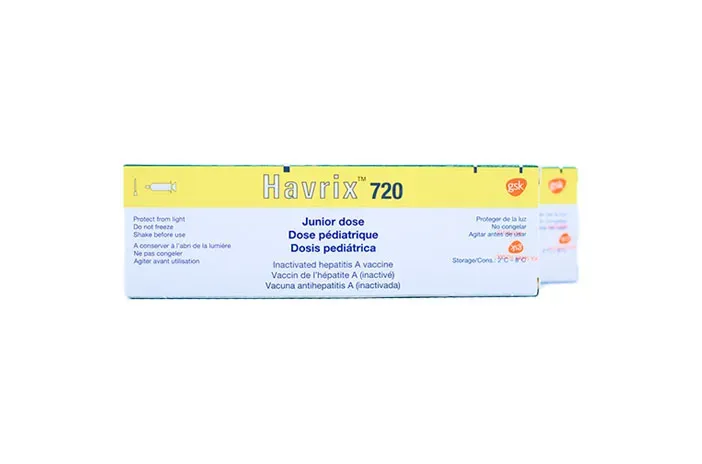
Table of Contents
- 1. What Havrix 720 Junior vaccine is and what it is used for
- 2. Important information before using Havrix 720 Junior vaccine
- 3. How to use Havrix 720 Junior vaccine
- 4. Possible adverse reactions
- 5. How to store Havrix 720 Junior vaccine
- 6. Contents of the pack and other information
- Information intended exclusively for healthcare professionals:
- 1. What is Havrix 720 Junior vaccine and what is it used for
- 2. Important information before using Havrix 720 Junior vaccine
- 3. How to use Havrix 720 Junior vaccine
- 4. Possible side effects
- 5. How to store Havrix 720 Junior vaccine
- 6. Contents of the pack and other information
- Information intended exclusively for medical professionals:
Havrix 720 Junior, injection suspension
Vaccine against hepatitis A virus, inactivated, adsorbed
Please read the entire leaflet carefully before vaccination, as it contains
important information for the patient.
- Keep this leaflet for future reference.
- If you have any questions, consult your doctor, pharmacist, or nurse.
- This vaccine has been prescribed for a specific individual only. Do not pass it on to others.
- If the patient experiences any adverse reactions, including those not listed in this leaflet, inform a doctor, pharmacist, or nurse. See section 4.
The content of this leaflet has been prepared with the assumption that it will be read by the person
receiving the vaccine. However, since this vaccine may also be administered to children and adolescents,
it is possible that the information will be reviewed by a parent or guardian.
Table of contents:
- What Havrix 720 Junior vaccine is and what it is used for
- Important information before receiving Havrix 720 Junior
- How to use Havrix 720 Junior
- Possible side effects
- How to store Havrix 720 Junior
- Contents of the pack and other information
1. What Havrix 720 Junior vaccine is and what it is used for
What Havrix 720 Junior vaccine is used for
Havrix 720 Junior vaccine is used to prevent hepatitis A (HAV) in individuals from the completed first year of life up to 15 years of age inclusive.
If necessary, Havrix 720 Junior may also be administered to adolescents aged 16 to 18 years inclusive.
What is hepatitis A:
‐ Hepatitis A is a liver disease caused by the hepatitis A virus (HAV).
‐ The HAV virus spreads from person to person or through contact with contaminated water, food, and drinks.
‐ Symptoms of hepatitis A vary from mild to severe and may include fever, malaise, loss of appetite, diarrhoea, nausea, abdominal discomfort, darkening of urine, and jaundice (yellowing of the eyes and skin). Most patients recover completely, but in some cases the disease may be severe, requiring hospitalization, and in rare cases may lead to acute liver failure.
How Havrix 720 Junior works:
‐ Havrix 720 Junior helps the body develop its own protection (antibodies) against the virus. These antibodies help protect the body against the disease.
‐ As with all vaccines, Havrix 720 Junior may not fully protect all vaccinated individuals.
2. Important information before using Havrix 720 Junior vaccine
When not to use Havrix 720 Junior vaccine
- if the patient is allergic to the active substance or to any of the other ingredients of this
vaccine (listed in section 6) or to neomycin or formaldehyde,
- if an allergic reaction has ever occurred after any hepatitis A vaccine.
Symptoms of an allergic reaction may include itchy skin rash, difficulty breathing, swelling of the face or tongue.
Havrix 720 Junior vaccine must not be given if any of the above situations apply to the patient. If in doubt, consult a
doctor, pharmacist or nurse before administering Havrix 720 Junior vaccine.
Warnings and precautions
Before receiving Havrix 720 Junior vaccine, discuss with a doctor, pharmacist or nurse if:
- the patient has a severe infection with high fever. In such a case, vaccination will be postponed. A mild infection, such as a cold, should not prevent vaccination, but the doctor should be informed first,
- the patient has a weakened immune system due to illness and/or medications. The doctor will decide whether additional doses are needed,
- the patient has bleeding disorders or bruises easily.
Fainting may occur during or even after any injectable vaccination. Therefore, inform the doctor, pharmacist or nurse if the patient has ever fainted during an injection.
Havrix 720 Junior vaccine and other medicines
Tell the doctor, pharmacist or nurse about all medicines the patient is currently taking or has recently taken, as well as any medicines the patient plans to take and any recently received vaccines.
Havrix 720 Junior vaccine can be given at the same time as certain other vaccines and immunoglobulins, provided that different injection sites are used.
Pregnancy and breastfeeding
If the patient is pregnant or breastfeeding, suspects she may be pregnant, or is planning to have a child, she should consult a doctor, pharmacist or nurse before using this vaccine.
Driving and operating machinery
Havrix 720 Junior vaccine has no effect or negligible effect on the ability to drive and operate machinery.
Havrix 720 Junior contains phenylalanine, polysorbate 20, sodium and potassium
This vaccine contains 0.083 mg of phenylalanine per dose.
Phenylalanine may be harmful for patients with phenylketonuria, a rare genetic disorder in which phenylalanine accumulates in the body because the body cannot remove it properly.
This vaccine contains 0.025 mg of polysorbate 20 per dose. Polysorbates may cause allergic reactions.
Inform the doctor if the patient has any known allergies.
This vaccine contains less than 1 mmol (23 mg) of sodium per dose, meaning the vaccine is considered "sodium-free".
This vaccine contains potassium, less than 1 mmol (39 mg) per dose, meaning the vaccine is considered "potassium-free".
3. How to use Havrix 720 Junior vaccine
How Havrix 720 Junior vaccine is given
- Havrix 720 Junior is administered by intramuscular injection, usually into the upper arm in children and adolescents.
- In young children, the vaccine may be given into the thigh muscle.
- In patients with reduced platelet count or with severe disorders of blood coagulation, Havrix 720 Junior may exceptionally be administered subcutaneously.
Dosage
- The patient will receive 1 dose of Havrix 720 Junior vaccine (0.5 ml suspension) on a date agreed with the doctor or nurse.
- The second dose (booster dose) is recommended to be given between 6 and 12 months after the first dose, but may be administered up to five years after the first dose to ensure long-term protection.
If more Havrix 720 Junior vaccine has been administered than recommended
Overdose is very unlikely because the vaccine is supplied in a single-dose vial or syringe and is administered by a doctor or nurse. A few cases of accidental administration of a larger dose have been reported, and the adverse reactions reported were similar to those observed with normal administration (listed in section 4).
If the next dose of Havrix 720 Junior vaccine has not been received on time
You should contact your doctor, who will decide whether a further dose is needed.
4. Possible adverse reactions
Like any medicine, this vaccine may cause adverse reactions, although not everyone experiences
them.
Serious adverse reactions
Inform a doctor immediately if any of the following serious adverse reactions occur – urgent
treatment may be required:
- allergic reactions – symptoms may include localised or widespread rash, which may be itchy or
blistering, swelling of the eyes and face, difficulty breathing or swallowing, sudden drop in blood
pressure and loss of consciousness.
These reactions may occur before leaving the doctor's office.
If any of the serious adverse reactions listed above occur, inform a doctor immediately.
During clinical trials of Havrix 720 Junior, the following adverse reactions occurred:
Very common (may occur in more than 1 in 10 doses of the vaccine):
- irritability
- pain and redness at the injection site
Common (may occur in not more than 1 in 10 doses of the vaccine):
- decreased appetite
- headache
- dizziness
- nausea
- general malaise
- fever ≥ 37.5°C
- swelling at the injection site
Uncommon (may occur in not more than 1 in 100 doses of the vaccine):
- stuffy or runny nose
- vomiting
- diarrhoea
- rash
- hardening at the injection site
The following adverse reactions have been reported after marketing of Havrix 720 Junior:
- seizures
- vasculitis leading to narrowing or blockage of blood vessels (vasculitis)
- severe allergic reaction causing swelling of the face, tongue or throat, which may lead to
difficulty swallowing or breathing - urticaria, red, often itchy patches starting on the limbs and sometimes on the face and rest of the body
- joint pain
Reporting of adverse reactions
If any adverse reactions occur, including any not listed in this leaflet, inform a doctor, pharmacist or nurse. Adverse reactions can be reported directly to the Department of Monitoring Adverse Drug Reactions at the Office for Registration of Medicinal Products, Medical Devices and Biocidal Products: Al. Jerozolimskie 181C, 02-222 Warsaw, tel.: 22 49-21-301, fax: 22 49-21-309,
Website: https://smz.ezdrowie.gov.pl
Adverse reactions can also be reported to the marketing authorisation holder.
By reporting adverse reactions, additional information on the safety of the medicine can be collected.
5. How to store Havrix 720 Junior vaccine
Keep this medicine out of sight and reach of children.
Do not use this vaccine after the expiry date stated on the packaging. The expiry date (EXP) refers to the last day of the specified month.
Batch number (Lot).
Store in a refrigerator (2 °C – 8 °C).
Do not freeze.
Keep in the original packaging to protect from light.
Medicines must not be disposed of via wastewater or household waste. Ask your pharmacist how to dispose of medicines no longer required. These measures help protect the environment.
6. Contents of the pack and other information
What Havrix 720 Junior vaccine contains
The active substance is inactivated hepatitis A virus, adsorbed on aluminium hydroxide. Each 0.5 mL dose of vaccine contains 720 ELISA units of hepatitis A virus.
Other components are: amino acids for injection (including phenylalanine), sodium hydrogen phosphate, potassium dihydrogen phosphate, polysorbate 20 (E432), potassium chloride, sodium chloride, water for injections (see section 2).
What Havrix 720 Junior vaccine looks like and contents of the pack
Injection suspension.
Havrix 720 Junior is a milky liquid for injection.
Havrix 720 Junior is available in a single-dose vial, in pack sizes of 1, 5, 10, 25 and 100 units.
Not all pack sizes may be marketed.
Marketing Authorisation Holder and Manufacturer
GlaxoSmithKline Biologicals S.A.
Rue de l’Institut 89
1330 Rixensart, Belgium
For further information, contact the local representative of the Marketing Authorisation Holder:
GSK Services Sp. z o.o.
ul. Rzymowskiego 53
02-697 Warsaw
Tel. +48 (22) 576 90 00
This medicinal product is authorised in the European Economic Area Member States under the following names:
Austria Havrix (Hepatitis A-Impfstoff)
Junior 720 EI.U/0,5 ml
Belgium, Cyprus, Luxembourg Havrix Junior 720
Bulgaria HAVRIX 720 suspension for injection (Junior
monodose)
Хаврикс 720 инжекционна суспензия (доза за
деца)
Czech Republic Havrix Junior monodose
Denmark, Finland, Iceland, Norway Havrix
Estonia Havrix, 720 ELISA ühikut/ml süstesuspensioon
France HAVRIX NOURRISSONS ET ENFANTS 720
U/0,5 ml
Germany Havrix 720 Kinder
Greece, Italy HAVRIX
Hungary HAVRIX 720 Junior
| Ireland | Havrix Junior Monodose |
| Latvia | Havrix 720 ELISA units/0.5 ml suspension for injection |
| Lithuania | Havrix 720 ELISA units/0.5 ml injectable suspension |
| Malta | Havrix Junior Monodose Vaccine |
| Netherlands | Havrix Junior |
| Poland | HAVRIX 720 JUNIOR |
| Portugal | Havrix 720 Junior |
| Romania | HAVRIX JUNIOR 720 VACCINE HEPATITIS A |
| Slovakia | HAVRIX 720 Junior monodose |
| Slovenia | HAVRIX 720 PAEDIATRIC |
| Spain | Havrix 720 Junior, injectable suspension in a pre-filled syringe |
| Sweden | Havrix 720 ELISA U/0.5 ml |
Other sources of information
Detailed information about this vaccine is available on the website of the Office for Registration of Medicinal Products, Medical Devices and Biocidal Products.
Information intended exclusively for healthcare professionals:
Havrix 720 Junior is a cloudy liquid suspension. During storage, a fine white sediment and a clear liquid above may form.
Before administration, inspect the vaccine for the presence of foreign particles and (or) physical changes. Prior to use, the Havrix 720 Junior vial should be shaken to obtain a white, slightly opaque suspension. Do not administer if the vaccine appears different.
Disposal
Any unused medicinal product or waste material should be disposed of in accordance with local regulations.
Havrix 720 Junior, suspension for injection in pre-filled syringe
Hepatitis A vaccine (inactivated, adsorbed)
Please read the entire leaflet carefully before using the vaccine, as it contains important information for the patient.
- Keep this leaflet for future reference.
- If you have any questions, consult your doctor, pharmacist, or nurse.
- This vaccine has been prescribed for a specific individual. Do not pass it on to others.
- If the patient experiences any adverse reactions, including those not listed in this leaflet, inform your doctor, pharmacist, or nurse. See section 4.
The content of this leaflet has been prepared with the assumption that it will be read by the person receiving the vaccine. However, since this vaccine may also be administered to adolescents and children, it is possible that the information will be reviewed by a parent or guardian.
Leaflet contents:
- What is Havrix 720 Junior vaccine and what is it used for
- Important information before using Havrix 720 Junior vaccine
- How to use Havrix 720 Junior vaccine
- Possible side effects
- How to store Havrix 720 Junior vaccine
- Contents of the pack and other information
1. What is Havrix 720 Junior vaccine and what is it used for
What is Havrix 720 Junior vaccine used for?
Havrix 720 Junior vaccine is used to prevent hepatitis A virus infection (HAV) in individuals from 1 year of age up to and including 15 years of age.
If necessary, Havrix 720 Junior may also be administered to adolescents aged 16 to 18 years inclusive.
What is hepatitis A?
‐ Hepatitis A is a liver disease caused by the hepatitis A virus (HAV).
‐ The HAV virus spreads from person to person or through contact with contaminated water, food, or drinks.
‐ Symptoms of hepatitis A range from mild to severe and may include fever, malaise, loss of appetite, diarrhea, nausea, abdominal discomfort, dark urine, and jaundice (yellowing of the eyes and skin). Most patients recover fully, but sometimes the disease can be severe and require hospitalization, and in rare cases may lead to acute liver failure.
How Havrix 720 Junior works:
‐ Havrix 720 Junior helps the body produce its own protection (antibodies) against the virus. These antibodies help protect the body against disease.
‐ As with all vaccines, Havrix 720 Junior may not fully protect all vaccinated individuals.
2. Important information before using Havrix 720 Junior vaccine
When not to use Havrix 720 Junior vaccine
‐ if the patient is allergic to the active substance or to any of the other components of this vaccine (listed in section 6) or to neomycin or formaldehyde,
‐ if an allergic reaction occurred after any previous hepatitis A vaccine.
Symptoms of an allergic reaction may include itchy skin rash, difficulty breathing, swelling of the face or tongue.
Do not administer Havrix 720 Junior vaccine if any of the above situations apply to the patient. If in doubt, consult your doctor, pharmacist, or nurse before administering Havrix 720 Junior.
Warnings and precautions
Before administering Havrix 720 Junior vaccine, discuss with your doctor, pharmacist, or nurse if:
‐ the patient has a severe infection with high fever. In such cases, vaccination will be postponed. A mild infection, such as a cold, should not prevent vaccination, but you should inform the doctor first,
‐ the patient has a weakened immune system due to illness and/or medications. The doctor will decide whether additional doses are needed,
‐ the patient has bleeding problems or bruises easily.
Fainting may occur during or even before administration of any injectable vaccine. Therefore, inform the doctor, pharmacist, or nurse if the patient has ever fainted during an injection.
Havrix 720 Junior and other medicines
Inform your doctor, pharmacist, or nurse about all medicines currently or recently taken by the patient, any medicines the patient plans to take, and any vaccines recently received.
Havrix 720 Junior may be administered simultaneously with certain other vaccines and immunoglobulins, provided different injection sites are used.
Pregnancy and breastfeeding
If the patient is pregnant or breastfeeding, suspects she may be pregnant, or plans to become pregnant, she should consult her doctor, pharmacist, or nurse before using this vaccine.
Driving and operating machinery
Havrix 720 Junior has no effect or negligible effect on the ability to drive and operate machinery.
Havrix 720 Junior contains phenylalanine, polysorbate 20, sodium, and potassium
This vaccine contains 0.083 mg of phenylalanine per dose.
Phenylalanine may be harmful to patients with phenylketonuria, a rare genetic disorder in which phenylalanine accumulates in the body because it is not properly eliminated.
This vaccine contains 0.025 mg of polysorbate 20 per dose. Polysorbates may cause allergic reactions.
Inform your doctor if the patient has any known allergies.
This vaccine contains less than 1 mmol (23 mg) of sodium per dose, meaning the vaccine is considered "sodium-free".
This vaccine contains potassium, less than 1 mmol (39 mg) per dose, meaning the vaccine is considered "potassium-free".
3. How to use Havrix 720 Junior vaccine
How is Havrix 720 Junior administered?
‐ Havrix 720 Junior is administered by intramuscular injection, usually into the upper arm in children and adolescents.
‐ In young children, the vaccine may be administered into the thigh muscle.
‐ In patients with low platelet counts or serious coagulation disorders, Havrix 720 Junior may exceptionally be administered subcutaneously.
Dosage
‐ The patient will receive one dose of Havrix 720 Junior vaccine (0.5 ml suspension) on a date agreed with the doctor or nurse.
‐ A second dose (booster dose) is recommended between 6 and 12 months after the first dose, but may be given up to five years after the first dose to ensure long-term protection.
Accidental overdose of Havrix 720 Junior vaccine
Overdose is very unlikely because the vaccine is supplied in a single-dose vial or syringe and administered by a doctor or nurse. A few cases of accidental overdose have been reported, and the adverse reactions reported were similar to those observed with normal administration (listed in section 4).
If the next dose of Havrix 720 Junior vaccine is not received on time
Contact your doctor, who will decide whether another dose is needed.
4. Possible side effects
Like all medicines, this vaccine may cause side effects, although not everyone will experience them.
Serious side effects
Immediately inform your doctor if any of the following serious side effects occur – urgent medical treatment may be required:
‐ allergic reactions – symptoms may include local or widespread rashes, which may be itchy or blistering, swelling of the eyes and face, difficulty breathing or swallowing, sudden drop in blood pressure, and loss of consciousness.
These reactions may occur before leaving the doctor's office.
If any of the serious side effects listed above occur, inform your doctor immediately.
The following side effects were observed during clinical trials with Havrix 720 Junior:
Very common (may affect more than 1 in 10 doses of vaccine):
- irritability
- pain and redness at the injection site
Common (may affect up to 1 in 10 doses of vaccine):
- decreased appetite
- headache
- dizziness
- nausea
- general malaise
- fever ≥ 37.5°C
- swelling at the injection site
Uncommon (may affect up to 1 in 100 doses of vaccine):
- stuffy nose or runny nose
- vomiting
- diarrhea
- rash
- hardening at the injection site
The following side effects have been reported after marketing of Havrix 720 Junior:
‐ seizures
‐ vasculitis leading to narrowing or blockage of blood vessels (vasculitis)
‐ severe allergic reaction causing swelling of the face, tongue, or throat, which may cause difficulty swallowing or breathing
‐ urticaria (hives), red, often itchy spots that start on the limbs and sometimes spread to the face and rest of the body
‐ joint pain
Reporting of side effects
If any adverse reactions occur, including those not listed in this leaflet, inform your doctor, pharmacist, or nurse. Side effects can be reported directly to the Department of Monitoring of Adverse Drug Reactions of the Office for Registration of Medicinal Products, Medical Devices and Biocidal Products: Al. Jerozolimskie 181C, 02-222 Warsaw, tel.: 22 49-21-301, fax: 22 49-21-309,
Website: https://smz.ezdrowie.gov.pl
Side effects can also be reported to the marketing authorization holder.
Reporting side effects helps to provide more information on the safety of the medicine.
5. How to store Havrix 720 Junior vaccine
Keep the medicine out of sight and reach of children.
Do not use this vaccine after the expiry date stated on the packaging. The expiry date (EXP) refers to the last day of the stated month.
Batch number (Lot).
Store in a refrigerator (2°C – 8°C).
Do not freeze.
Store in the original packaging to protect from light.
Medicines must not be disposed of via wastewater or household waste. Ask your pharmacist how to dispose of medicines no longer in use. Such measures help protect the environment.
6. Contents of the pack and other information
What Havrix 720 Junior vaccine contains
The active substance is hepatitis A virus (inactivated), adsorbed on aluminium hydroxide. Each 0.5 ml dose of vaccine contains 720 ELISA units of hepatitis A virus.
Other components are: amino acids for injection (including phenylalanine), monosodium phosphate, potassium dihydrogen phosphate, polysorbate 20 (E432), potassium chloride, sodium chloride, water for injection (see section 2).
What Havrix 720 Junior vaccine looks like and contents of the pack
Suspension for injection.
Havrix 720 Junior is a cloudy liquid for injection.
Havrix 720 Junior is available as a single-dose pre-filled syringe with or without needles, in packs of 1, 5, 10, and 25 units.
Not all pack sizes may be marketed.
Marketing authorization holder and manufacturer
GlaxoSmithKline Biologicals S.A.
Rue de l’Institut 89
1330 Rixensart, Belgium
For further information, contact the local representative of the marketing authorization holder:
GSK Services Sp. z o.o.
ul. Rzymowskiego 53
02-697 Warsaw
Tel. +48 (22) 576 90 00
This medicine is authorized for marketing in the European Economic Area under the following names:
Austria Havrix (Hepatitis A-Impfstoff)
Junior 720 EI.U/0.5 ml
Belgium, Cyprus, Luxembourg Havrix Junior 720
Bulgaria HAVRIX 720 suspension for injection (Junior
monodose)
Хаврикс 720 инжекционна суспензия (доза за
деца)
Czech Republic Havrix Junior monodose
Denmark, Finland, Iceland, Norway Havrix
Estonia Havrix, 720 ELISA ühikut/ml süstesuspensioon
France HAVRIX NOURRISSONS ET ENFANTS 720
U/0.5 ml
Germany Havrix 720 Kinder
Greece, Italy HAVRIX
Hungary Havrix 720 Junior
| Latvia | Havrix 720 ELISA units/0.5 ml suspension for injection |
| Lithuania | Havrix 720 ELISA units/0.5 ml injectable suspension |
| Malta | Havrix Junior Monodose Vaccine |
| Netherlands | Havrix Junior |
| Poland | HAVRIX 720 JUNIOR |
| Portugal | Havrix 720 Junior |
| Romania | HAVRIX JUNIOR 720 VACCINE HEPATITIS A |
| Slovak Republic | HAVRIX 720 Junior monodose |
| Slovenia | HAVRIX 720 PAEDIATRIC |
| Spain | Havrix 720 Junior, injectable suspension in pre-filled syringe |
| Sweden | Havrix 720 ELISA U/0.5 ml |
Other sources of information
Detailed information about this vaccine is available on the website of the Office for Registration of Medicinal Products, Medical Devices and Biocidal Products.
Information intended exclusively for medical professionals:
Havrix 720 Junior vaccine is a cloudy, liquid suspension. During storage, a fine white sediment and a clear supernatant liquid may form.
Before administration, the vaccine should be inspected visually for the presence of foreign particles and/or any physical changes. Prior to use, Havrix 720 Junior prefilled syringe should be shaken to obtain a white, slightly opaque suspension. Do not administer if the vaccine appears different.
Instructions for the prefilled syringe:
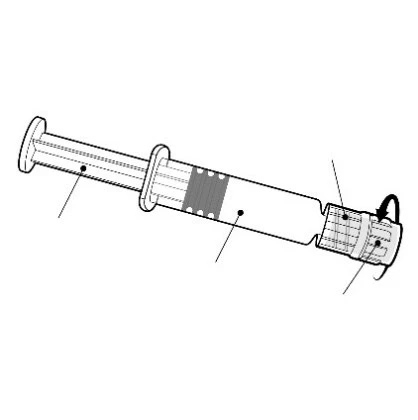
Hold the prefilled syringe by the barrel, not by the plunger.
Luer Lock adapter
Unscrew the tip cap by turning it counterclockwise.
Plunger
Barrel
Tip cap
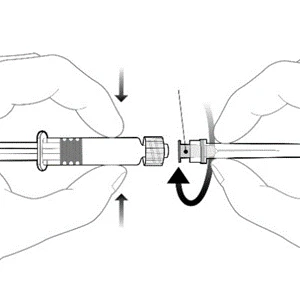
Needle adaptor
Attach the needle to the prefilled syringe by connecting the needle adaptor to the Luer Lock adapter (LLA) and turning it a quarter turn clockwise until a click is felt, indicating secure attachment.
Do not remove the plunger from the syringe barrel. If this occurs, do not administer the vaccine.
Disposal
Any unused portions of the medicinal product or its waste materials must be disposed of in accordance with local regulations.