Gynazol
Poland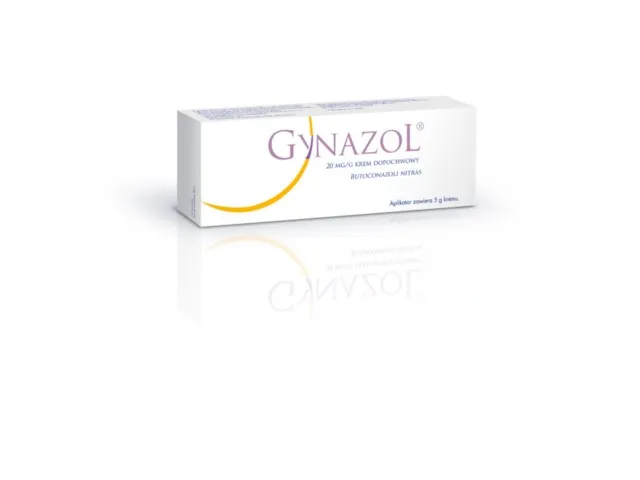
Table of Contents
Package leaflet: Information for the patient
GYNAZOL, 20 mg/g, vaginal cream
Butoconazole nitrate
Please read carefully the entire leaflet before using the medicine, as it contains
important information for the patient.
- Keep this leaflet, so that you can read it again if necessary.
- If you have any questions, please consult your doctor or pharmacist.
- This medicine has been prescribed for a specific individual. Do not pass it on to others. The medicine may harm another person, even if their symptoms are the same.
- If the patient experiences any adverse reactions, including any adverse reactions not listed in this leaflet, they should inform their doctor or pharmacist. See section 4.
Table of contents of the leaflet
- What Gynazol, 20 mg/g vaginal cream (hereinafter referred to as Gynazol) is and what it is used for
- Important information before using Gynazol
- How to use Gynazol
- Possible side effects
- How to store Gynazol
- Contents of the package and other information
1. What Gynazol is and what it is used for
Gynazol vaginal cream is indicated for the local treatment of vulvovaginal inflammation
caused by yeast known as Candida albicans.
2. Important information before using Gynazol
When not to use Gynazol
Do not use this medicine if the patient is allergic to butoconazole or to any of the other ingredients of this medicine (listed in section 6).
The efficacy and safety of Gynazol have not been established in pregnant women or in children.
Warnings and precautions
Before starting treatment with Gynazol, discuss it with your doctor or pharmacist.
- If symptoms of infection persist, the patient should inform her doctor. The doctor may recommend repeating tests to confirm the initial diagnosis and to exclude other causes that may be responsible for recurrent fungal vaginal infections.
- If the patient experiences recurrent yeast infections of the vagina, she should inform her doctor, as these may be early signs of human immunodeficiency virus (HIV) infection, especially in women who are at risk of HIV infection.
- Gynazol contains mineral oil, which may damage products made of rubber or latex, such as condoms or vaginal contraceptive rings. Therefore, use of such products by the patient or her partner is not recommended within 72 hours (approximately 3 days) after administration of Gynazol.
- If allergic reactions or irritation occur during treatment with Gynazol, discontinue use and consult a doctor.
Children and adolescents
The efficacy and safety of Gynazol have not been established in children and adolescents.
Gynazol with other medicines
Inform your doctor or pharmacist about all medicines currently used or recently used, as well as any medicines the patient plans to take.
Pregnancy and breastfeeding
If the patient is pregnant or breastfeeding, suspects she may be pregnant, or is planning to become pregnant, she should consult her doctor or pharmacist before using this medicine.
Gynazol may be used during pregnancy only on medical advice and under strict medical supervision.
It is not known whether the active substance of Gynazol passes into human breast milk. Therefore, always consult your doctor whether this medicine can be used during breastfeeding.
Driving and operating machinery
Gynazol does not affect the ability to drive or operate machinery.
Gynazol contains methyl parahydroxybenzoate, propyl parahydroxybenzoate, and propylene glycol
Propylene glycol may cause skin irritation.
Methyl parahydroxybenzoate and propyl parahydroxybenzoate may cause allergic reactions (delayed-type reactions possible).
3. How to use Gynazol
This medicine should always be used exactly as your doctor has instructed. If you are unsure, consult your doctor or pharmacist.
Gynazol is intended for vaginal use only. The medicine comes in a single-dose disposable applicator containing one dose of the medicine.
The entire contents of the applicator should be administered once into the vagina (see below – Step 3).
The recommended dose is approximately 100 mg of butoconazole nitrate (5 g of cream contained in one applicator). The medicine should be administered vaginally as a single dose, regardless of the time of day (preferably in the evening).
Step 1 – Preparing the applicator
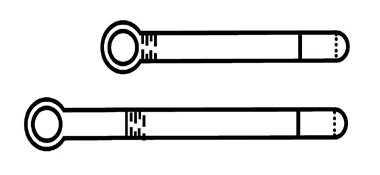
Plunger with ring Tip
Fig. 1 Applicator
- Remove the protective foil and take out the applicator.
- Use the applicator with the tip as originally attached.
- Do not remove the tip.
- Do not use the applicator if the tip has been removed.
- Do not heat the applicator before use.
- Holding the applicator gently, pull the ring until the plunger is fully drawn back (see Fig. 1).
Step 2 – Inserting the applicator
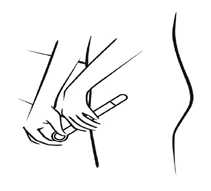
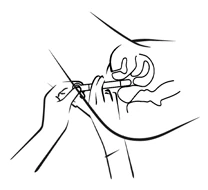
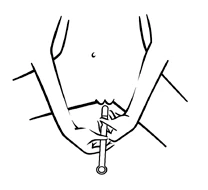
Fig. 2 Fig. 3 Fig. 4
- Carefully insert the applicator into the vagina as deeply as possible without causing discomfort (see Fig. 2, 3).
- To make insertion easier, this can be done while lying down (see Fig. 4).
Step 3 – Administering the medicine - Slowly administer the medicine into the vagina by pressing the plunger.
- After administering the cream, remove the empty applicator from the vagina and dispose of it properly.
Use of a higher than recommended dose of Gynazol
If Gynazol is accidentally swallowed, seek immediate advice from a doctor or pharmacist, as gastric lavage may be necessary.
If you have any further doubts regarding the use of this medicine, consult your doctor or pharmacist.
4. Possible adverse reactions
Like all medicines, this medicine can cause adverse reactions, although not everyone will experience them.
The following adverse reactions may occur: burning sensation, itching, pain and swelling in the
vulvar or vaginal area, pain and/or cramps in the lower abdomen. Two or more of these symptoms may
occur simultaneously.
The possible local adverse reactions of Gynazol are very similar to the clinical symptoms of
fungal infection of the vagina or vulva. If these symptoms do not resolve during treatment,
contact your doctor as quickly as possible.
Allergic reactions (hypersensitivity reactions) may occur after administration of any medicine.
Therefore, inform your doctor immediately if any of the following signs of allergy occur after using Gynazol: exfoliative dermatitis (redness or peeling of the skin), skin lesions or mucosal changes, or urticaria.
Reporting of adverse reactions
If any adverse reactions occur, including any adverse reactions not listed in this leaflet, inform your doctor or pharmacist. Adverse reactions can be reported directly to the Department of Monitoring Adverse Drug Reactions of the Office for Registration of Medicinal Products, Medical Devices and Biocidal Products:
Al. Jerozolimskie 181C, 02-222 Warsaw
Tel.: + 48 22 49 21 301
Faks: + 48 22 49 21 309
e-mail: [email protected]
Adverse reactions can also be reported to the marketing authorization holder.
Reporting adverse reactions helps to provide more information on the safety of the medicine.
5. How to store Gynazol
Keep the medicine out of sight and reach of children.
Do not use this medicine after the expiry date stated on the packaging. The expiry date refers to the last day of the stated month.
Do not store above 25°C.
Medicines must not be disposed of via wastewater or household waste. Ask your pharmacist how to dispose of medicines no longer in use. This will help protect the environment.
6. Contents of the package and other information
What Gynazol contains
- The active substance is butoconazole nitrate (20 mg per 1 g of cream).
Each filled applicator contains 5 g of vaginal cream, including 100 mg of butoconazole nitrate.
- Other ingredients are: sorbitol liquid, crystallizing; liquid paraffin; glycerol monooleate isostearate; polyglyceryl-3 oleate; microcrystalline wax; colloidal anhydrous silica; disodium edetate; methyl parahydroxybenzoate; propyl parahydroxybenzoate; propylene glycol; purified water.
What Gynazol looks like and contents of the pack
A homogeneous, soft cream, white or almost white in colour.
Gynazol cream is contained in a polypropylene applicator. Each filled applicator is placed on a polystyrene tray inside a laminate pouch.
The pouch is packed in a cardboard box.
Marketing Authorisation Holder and Manufacturer
Gedeon Richter Plc.
Gyömrői út 19-21
1103 Budapest
Hungary
For further information, please contact the representative of the Marketing Authorisation Holder:
GEDEON RICHTER POLSKA Sp. z o.o.
Medical Department
ul. ks. J. Poniatowskiego 5
05-825 Grodzisk Mazowiecki
Poland
Tel. +48 22 755 96 48
[email protected]
Fax: +48 22 755 96 24