Grypostop
Poland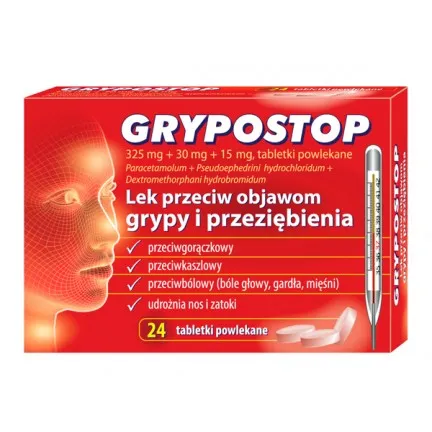
Table of Contents
Package leaflet: Information for the user
Grypostop, 325 mg + 30 mg + 15 mg, coated tablets
Paracetamolum + Pseudoephedrini hydrochloridum + Dextromethorphani hydrobromidum
Please read the entire leaflet carefully before use, as it contains
important information for the patient.
This medicine should always be used exactly as described in this patient leaflet or as directed by a
physician or pharmacist.
- Keep this leaflet for future reference.
- If you need advice or further information, please consult your pharmacist.
- If you experience any adverse reactions, including any possible adverse reactions not listed in this leaflet, inform your doctor or pharmacist. See section 4.
- If there is no improvement or if you feel worse after 3 days, consult your doctor.
Table of contents:
- What Grypostop is and what it is used for
- Important information before taking Grypostop
- How to take Grypostop
- Possible side effects
- How to store Grypostop
- Contents of the pack and other information
1. What Grypostop is and what it is used for
A combination medicine with analgesic, antipyretic, antitussive, nasal decongestant, and sinus-opening effects, reducing mucus secretion as well as congestion and swelling of the nasal mucosa.
Indications:
Short-term symptomatic treatment of colds, influenza, and influenza-like conditions (fever, nasal congestion, cough, sore throat, headache, muscle and joint pain).
2. Important information before using Grypostop
When not to use Grypostop
- if the patient is allergic to the active substances or any of the other ingredients of this medicine (listed in section 6),
- if the patient has severe liver or kidney impairment,
- if the patient has anaemia (reduced number of red blood cells),
- if the patient is concurrently using other medicines containing paracetamol, dextromethorphan, or pseudoephedrine, or other sympathomimetics (such as nasal decongestants, appetite suppressants, or psychostimulant drugs with amphetamine-like effects),
- if the patient is concurrently using monoamine oxidase inhibitors (MAO inhibitors), such as phenelzine, isocarboxazid, selegiline, or moclobemide. Grypostop should not be used within two weeks after discontinuation of treatment with MAO inhibitors,
- in children under 12 years of age,
- during pregnancy and breastfeeding,
- if the patient has a productive cough with a large amount of mucus,
- if the patient has bronchial asthma or cough associated with bronchial asthma,
- if the patient has severe hypertension,
- if the patient has severe ischemic heart disease,
- if the patient has cystic fibrosis (a hereditary genetic disease characterized, among others, by a tendency to bronchitis and pneumonia),
- if the patient has very high blood pressure (severe arterial hypertension) or hypertension that cannot be controlled with medication,
- if the patient has severe acute (sudden) or chronic (long-term) kidney disease or kidney failure.
Warnings and precautions
Use of this medicine may lead to dependence. Therefore, treatment should be short-term.
Before starting to use Grypostop, consult a doctor or pharmacist:
- if the patient has liver and/or kidney impairment;
- if the patient is elderly, due to increased risk of adverse effects on the nervous system;
- if the patient is weakened or immobilized for a prolonged period;
- if the patient is using sedatives;
- if the patient has breathing difficulties, pulmonary emphysema, asthma, chronic bronchitis, benign prostatic hyperplasia, hyperthyroidism, diabetes, high blood pressure, heart disease, vascular disease, narrow-angle glaucoma, or pheochromocytoma (characterized by high blood pressure);
- if the patient is taking certain antidepressants or antipsychotics, Grypostop may interact with them, causing changes in mental state (e.g. agitation, hallucinations, stupor) and other symptoms such as body temperature above 38°C, increased heart rate, unstable blood pressure, exaggerated reflexes, muscle rigidity, lack of coordination, and/or gastrointestinal symptoms (e.g. nausea, vomiting, diarrhoea).
- Do not use without consulting a doctor if breathing difficulties occur.
- During treatment with Grypostop, sudden abdominal pain or rectal bleeding due to inflammation of the large intestine (ischaemic colitis) may occur. If such gastrointestinal symptoms occur, discontinue use of Grypostop and seek immediate medical advice or assistance. See section 4.
- If excessive nervousness, dizziness, or insomnia occur, discontinue the medicine and contact a doctor.
- Do not use doses higher than recommended.
- Consult a doctor if symptoms persist for more than 3 days.
- Do not consume alcohol during treatment, as it increases the risk of liver damage.
- Do not use other medicines that depress the central nervous system (e.g. sedatives, hypnotics).
- If fever occurs with generalized skin redness and vesicular rash, discontinue use of Grypostop and contact a doctor or seek immediate medical help. See section 4.
- During treatment with Grypostop, reduced blood flow in the optic nerve may occur. If sudden vision loss occurs, discontinue use of Grypostop and seek immediate medical advice or assistance. See section 4.
Cases of posterior reversible encephalopathy syndrome (PRES) and reversible cerebral vasoconstriction syndrome (RCVS) have been reported following use of medicines containing pseudoephedrine.
PRES and RCVS are rare conditions that may involve reduced blood flow to the brain.
If symptoms suggestive of PRES or RCVS occur, discontinue use of Grypostop immediately and seek immediate medical help (symptoms, see section 4 "Possible side effects").
Grypostop and other medicines
Inform your doctor or pharmacist about all medicines currently used, recently used, or planned for use.
Do not use Grypostop with other medicines containing paracetamol, dextromethorphan, or pseudoephedrine, or other sympathomimetics (such as nasal decongestants, appetite suppressants, or psychostimulant drugs with amphetamine-like effects).
Medicines that accelerate gastric emptying, such as metoclopramide and domperidone, accelerate paracetamol absorption, whereas medicines that delay gastric emptying, such as cholestyramine and all anticholinergic drugs, may delay its absorption and effect. Opioid analgesics (pentazocine, pethidine, diamorphine) also delay paracetamol absorption into the bloodstream.
Salicylamide prolongs the action of paracetamol.
Sedatives and hypnotics enhance the analgesic effect.
Inform your doctor or pharmacist if the patient is using flucloxacillin (an antibiotic), due to a serious risk of a fluid and electrolyte disorder (metabolic acidosis with a high anion gap), which requires urgent treatment and may occur particularly in patients with severe kidney dysfunction, sepsis (a condition in which bacteria and their toxins circulate in the blood, leading to organ damage), malnutrition, chronic alcoholism, or in patients taking maximum daily doses of paracetamol.
Use of medicines such as propranolol (for heart conditions), nizatidine (for peptic ulcer), zidovudine (an antiviral drug), and probenecid (for gout) may increase the harmful effects of paracetamol by increasing its blood concentration.
Oral salbutamol may reduce the rate of paracetamol absorption.
Paracetamol may enhance the effects of antidiabetic drugs and anticoagulants such as warfarin (coumarins), and may enhance the effects of caffeine on the nervous system.
Paracetamol may increase the harmful effects of chloramphenicol.
Concurrent use of paracetamol with rifampicin, antiepileptic drugs, barbiturates, and other medicines affecting liver metabolism increases the risk of liver damage.
Paracetamol administered with MAO inhibitors may cause increased blood pressure, cardiac arrhythmias, agitation, and fever.
Pseudoephedrine enhances the effects of other sympathomimetic drugs (bronchodilators), but may reduce the effects of methyldopa, guanethidine, and reserpine.
Tricyclic antidepressants enhance the effects of pseudoephedrine.
When anaesthetic gases and pseudoephedrine are used concurrently, cardiac arrhythmias may occur.
Propranolol and MAO inhibitors may enhance the effects of sympathomimetic drugs, including pseudoephedrine, and may cause hypertensive crises (sudden increase in blood pressure); concurrent use of pseudoephedrine and MAO inhibitors is contraindicated, and at least 14 days should elapse between discontinuation of MAO inhibitors and administration of pseudoephedrine.
Aluminium hydroxide (used, for example, in antacids) increases pseudoephedrine absorption, whereas kaolin reduces pseudoephedrine absorption.
Dextromethorphan may enhance the effects of MAO inhibitors, central nervous system depressants, alcohol, and antidiarrheal drugs.
Medicines such as serotonin reuptake inhibitors (e.g. fluoxetine, paroxetine), quinidine, terbinafine, amiodarone, flecainide, propafenone, sertraline, bupropion, methadone, cinacalcet, haloperidol, perphenazine, and thioridazine, venlafaxine, risperidone may increase blood levels of dextromethorphan.
Dextromethorphan administered simultaneously with lidocaine or non-steroidal anti-inflammatory drugs may potentiate their effects.
Grypostop with food, drink or alcohol
Food may delay the absorption of paracetamol.
Dextromethorphan may enhance the effects of alcohol.
Pregnancy, breastfeeding and fertility
If the patient is pregnant, breastfeeding, suspects she may be pregnant, or plans to have a child, she should consult a doctor or pharmacist before using this medicine. Use of Grypostop during pregnancy and breastfeeding is contraindicated.
Driving and operating machinery
Grypostop may affect the ability to drive and operate machinery. Exercise caution when driving or operating machinery during treatment with Grypostop.
3. How to use Grypostop
This medicine should always be taken exactly as described in the patient leaflet or as directed by a doctor or pharmacist. If in doubt, consult a doctor or pharmacist.
The medicine is taken orally.
The recommended dose is:
Adults and adolescents over 12 years of age:
2 tablets, if necessary, 3 to 4 times daily, no more frequently than every 4 hours. Do not take more than 8 tablets per day. Do not use for longer than 3 days without consulting a doctor.
Use in children and adolescents
Do not use in children and adolescents under 12 years of age.
Taking more Grypostop than recommended
Do not take doses higher than recommended, due to the high probability of adverse effects such as: nausea, vomiting, abdominal pain, diarrhoea, involuntary muscle spasms, psychiatric disturbances, drowsiness, coma, stimulation, confusion, disturbances of consciousness, visual disturbances, pupil dilation, nystagmus, involuntary rapid eye movements, profuse sweating, cardiac arrhythmias, increased blood pressure, cardiovascular disturbances (rapid heartbeat), coordination disturbances, psychosis with visual hallucinations, and increased excitability. Liver and/or kidney damage, respiratory depression, and urinary retention may also occur.
Other symptoms of severe overdose may include: coma, severe respiratory depression, and convulsions.
If any of the above symptoms occur, seek immediate medical attention or go to a hospital.
Missed dose of Grypostop
Do not take a double dose to make up for a missed dose.
Stopping Grypostop
If you have any further doubts regarding the use of this medicine, consult your doctor or pharmacist.
4. Possible adverse reactions
Like all medicines, this medicine can cause adverse reactions, although not everyone experiences them.
The active substances in Grypostop may cause the following adverse reactions:
Frequency unknown: frequency cannot be estimated from the available data
- Severe disorders affecting blood vessels in the brain, known as posterior reversible encephalopathy syndrome (PRES) and reversible cerebral vasoconstriction syndrome (RCVS).
You should immediately stop taking Grypostop and seek immediate medical help if symptoms indicating posterior reversible encephalopathy syndrome (PRES) or reversible cerebral vasoconstriction syndrome (RCVS) occur. These include:
- Sudden, severe headache,
- Nausea,
- Vomiting,
- Confusion,
- Seizures,
- Visual disturbances.
Rare (occurs in 1 to 10 out of 10,000 patients):
drowsiness, dizziness, euphoria, excessive sedation, feeling of emptiness in the head, anxiety,
nervousness, irritability, mood disturbances, psychomotor agitation;
nausea, vomiting, abdominal pain, constipation; allergic reactions.
Very rare (occurs in fewer than 1 out of 10,000 patients):
agranulocytosis (lack of white blood cells), thrombocytopenia (lack of platelets), neutropenia (lack of white blood cells).
Frequency unknown (cannot be estimated from the available data):
Sudden fever, skin redness, or numerous small pustules (possible symptoms of acute generalized exanthematous pustulosis – AGEP) may occur within the first 2 days of taking Grypostop. See section 2.
Ischaemic colitis (inflammation of the large intestine due to inadequate blood supply).
Reduced blood flow within the optic nerve (ischaemic optic neuropathy).
If any of these symptoms occur, stop taking Grypostop and contact your doctor or seek immediate medical assistance.
Additionally, Grypostop may cause:
- Heart rhythm disturbances.
- Shallow breathing.
- Rash, itching.
- Changes in blood pressure.
- Liver-related symptoms of varying severity, ranging from insignificant elevation of liver enzymes to liver damage. Harmful effects on the liver are greater in cases of malnutrition, alcoholism, presence of other diseases, and during concomitant use of certain medicines. Some symptoms such as nausea, vomiting, drowsiness, dizziness, and shallow breathing may occur more frequently and severely in immobilized patients.
Reporting of adverse reactions
If any adverse reactions occur, including those not listed in this leaflet, inform your doctor or pharmacist. Adverse reactions can be reported directly to the Department of Monitoring Adverse Drug Reactions at the Office for Registration of Medicinal Products, Medical Devices and Biocidal Products:
Al. Jerozolimskie 181C
02-222 Warsaw
Phone: +48 22 49 21 301
Fax: +48 22 49 21 309
Website: https://smz.ezdrowie.gov.pl
Adverse reactions can also be reported to the marketing authorization holder.
Reporting adverse reactions helps provide more information on the safety of the medicine.
5. How to store Grypostop
Store below 25°C.
Keep out of sight and reach of children.
Do not use this medicine after the expiry date stated on the packaging after EXP.
The expiry date refers to the last day of the stated month.
Medicines should not be disposed of via wastewater or household waste. Ask your pharmacist how to dispose of medicines you no longer use. This will help protect the environment.
6. Contents of the pack and other information
What Grypostop contains
One coated tablet contains: 325 mg of paracetamol, 30 mg of pseudoephedrine hydrochloride, and 15 mg of dextromethorphan hydrobromide.
- The active substances are: paracetamol (Paracetamolum), pseudoephedrine hydrochloride (Pseudoephedrini hydrochloridum), and dextromethorphan hydrobromide (Dextromethorphani hydrobromidum).
- Other components are: magnesium stearate, microcrystalline cellulose, polyvinylpyrrolidone (povidone), sodium carboxymethyl starch (type A), potato starch, hydroxypropylmethylcellulose, polyethylene glycol, polysorbate 80, titanium dioxide.
What Grypostop looks like and contents of the pack
Grypostop, coated tablets, is packed in blisters containing 12 tablets. The blisters are packed into cardboard boxes. One box contains 12 tablets (1 blister) or 24 tablets (2 blisters).
Marketing Authorisation Holder and Manufacturer
Marketing Authorisation Holder:
Milapharm Sp. z o.o.
Pl. Gen. Józefa Hallera 5/14A
03-464 Warsaw
Poland
Manufacturer:
Medicofarma S.A.
Ul. Tarnobrzeska 13
26-613 Radom
Poland