Gripex control duo
Poland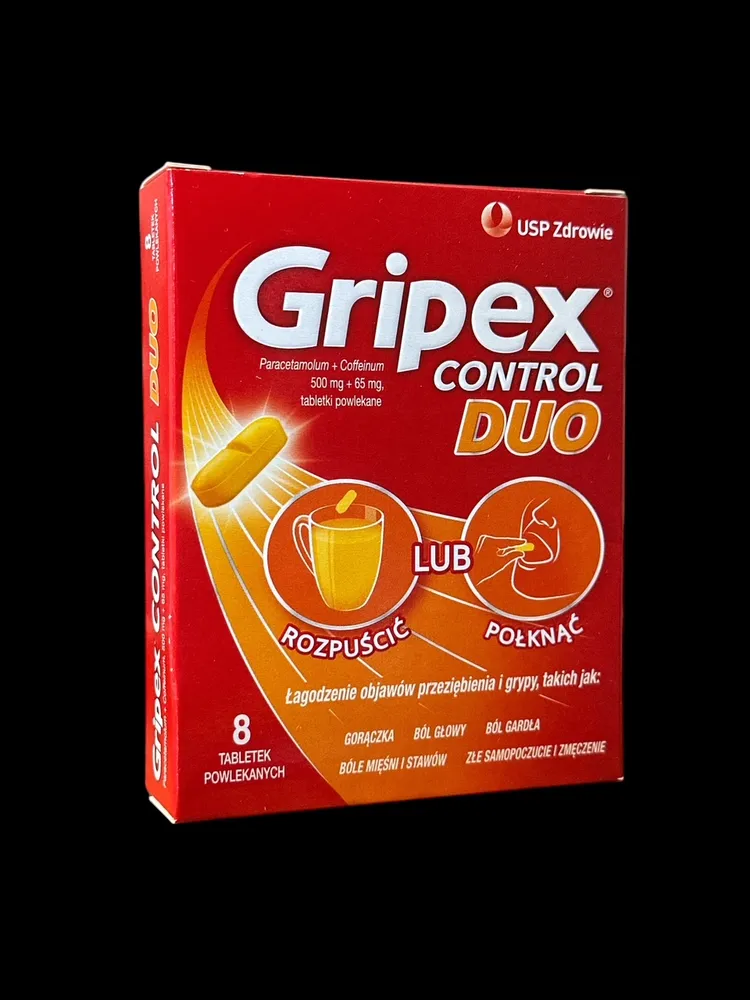
Table of Contents
Patient Information Leaflet
Gripex Control Duo, 500 mg + 65 mg, coated tablets
Paracetamolum + Coffeinum
Please read this leaflet carefully before taking this medicine, as it contains important
information for you.
This medicine should always be used exactly as described in this patient leaflet or as advised
by your doctor or pharmacist.
- Keep this leaflet as you may need to read it again.
- If you need advice or further information, please consult your pharmacist.
- If you experience any adverse reactions, including any possible adverse reactions not listed in this leaflet, inform your doctor or pharmacist. See section 4.
- If there is no improvement after 3 days or if you feel worse, consult your doctor.
Contents of the leaflet
- What is Gripex Control Duo and what is it used for
- Important information before taking Gripex Control Duo
- How to take Gripex Control Duo
- Possible side effects
- How to store Gripex Control Duo
- Contents of the pack and other information
1. What is Gripex Control Duo and what is it used for
Gripex Control Duo is a combination medicine. It contains two active substances with combined effects:
paracetamol and caffeine.
Paracetamol has antipyretic and analgesic effects, while caffeine acts as a stimulant on the central
nervous system, enhances the analgesic effect of paracetamol, and accelerates its absorption into
the bloodstream.
Gripex Control Duo is intended for use in adults and adolescents aged over 12 years.
Indications for use
Relief of symptoms of cold and flu, such as: fever, sore throat, muscle and joint pain, malaise,
fatigue, and impaired concentration.
Pain of various origins: headache, including migraine, muscle pain, toothache, neuralgia,
menstrual pain, bone and joint pain, postoperative and post-traumatic pain.
2. Important information before taking Gripex Control Duo
When not to use Gripex Control Duo:
- if you are allergic to paracetamol or caffeine or any of the other ingredients of this medicine (listed in section 6),
- if you have severe liver or kidney failure,
- if you have cardiac arrhythmias,
- if you have congenital glucose-6-phosphate dehydrogenase deficiency or methemoglobin reductase deficiency,
- do not use in children under 12 years of age,
- do not use during pregnancy or breastfeeding,
Page 1 of 7
- in cases of alcohol-related disease,
- during treatment with MAO inhibitors and within 2 weeks after discontinuation of such treatment.
Warnings and precautions
The medicine contains paracetamol.
Paracetamol overdose may lead to severe, life-threatening liver damage.
Do not take this medicine simultaneously with other medicines containing paracetamol, such as certain painkillers, antipyretics, or medicines used to treat symptoms of flu and cold.
Do not drink alcohol while taking this medicine. Taking this medicine in patients with liver failure, alcohol abusers, or those who are fasting increases the risk of toxic liver damage.
Patients with liver diseases have an increased risk of overdose.
Before starting treatment with Gripex Control Duo, discuss the possibility of use with your doctor or pharmacist if you:
- have liver or kidney failure (liver enzyme activity and kidney function should be monitored),
- have respiratory insufficiency,
- have bronchial asthma,
- have hereditary fructose intolerance,
- are dehydrated,
- are undernourished.
During treatment with Gripex Control Duo, immediately inform your doctor if you develop severe conditions, including severe kidney dysfunction or sepsis (when bacteria and their toxins circulate in the blood, leading to organ damage) or malnutrition, chronic alcoholism, or if you are also taking flucloxacillin (an antibiotic). In these situations, patients have been reported to develop a serious condition called metabolic acidosis (a blood and body fluid imbalance) when taking paracetamol regularly over a long period or when taking paracetamol with flucloxacillin. Symptoms of metabolic acidosis may include: severe breathing difficulties, including rapid deep breathing, drowsiness, nausea, and vomiting.
Paracetamol use may lead to liver damage in patients with the following risk factors:
- patients taking long-term sedatives, antiepileptics, St. John's wort, or medicines used for tuberculosis,
- patients who regularly abuse alcohol.
If a skin rash, often with blisters, or changes in mucous membranes occur, immediately stop
taking Gripex Control Duo and consult a doctor immediately.
Children and adolescents
Do not use in children under 12 years of age.
Patients with impaired kidney and/or liver function
Exercise particular caution in patients with kidney or liver disease.
This medicine is contraindicated in patients with severe liver or kidney failure.
Elderly patients
Exercise caution when using Gripex Control Duo.
Gripex Control Duo and other medicines
Page 2 of 7
Inform your doctor or pharmacist about all medicines you are currently taking or have recently taken, as well as any medicines you plan to use.
The interaction of Gripex Control Duo with other medicines results from the effects of the active substances in the medicine. Do not take this medicine simultaneously with other medicines containing paracetamol or caffeine.
Before taking Gripex Control Duo, consult your doctor if you are taking any of the
following medicines:
- metoclopramide, domperidone (used for nausea and vomiting),
- oral antidiabetic medicines,
- cholestyramine (used to reduce high blood cholesterol levels),
- anticoagulants,
- probenecid (used in the treatment of gout),
- sedatives and antiepileptics,
- rifampicin (an antituberculosis medicine),
- medicines delaying gastric emptying (e.g. propantheline), as they may delay paracetamol absorption,
- flucloxacillin (antibiotic), due to the serious risk of blood and body fluid disorders (called metabolic acidosis), which require urgent treatment (see section 2),
- lithium salts (used, among others, in depression and mania),
- non-steroidal anti-inflammatory drugs (including acetylsalicylic acid),
- disulfiram (used, among others, in the treatment of alcoholism),
- sympathomimetic medicines (used, among others, in upper respiratory tract inflammation, orthostatic circulatory disorders, and low blood pressure),
- theophylline (used in asthma and COPD treatment),
- clozapine (an antipsychotic medicine),
- oral contraceptives,
- St. John's wort,
- MAO inhibitors (used in the treatment of atypical depression and Parkinson's disease),
- cimetidine (used in hyperacidity and peptic ulcer disease),
- quinolones (used in bacterial infection treatment),
- verapamil (used in hypertension and heart diseases).
Drinking alcohol during paracetamol treatment leads to the formation of a toxic metabolite causing necrosis of liver cells, which may subsequently lead to liver failure.
The medicine contains caffeine. During treatment, avoid excessive intake of caffeine (e.g. from coffee, tea, or certain beverages). Excessive caffeine intake may cause difficulty sleeping, tremors, and palpitations. Nicotine (used in nicotine dependence treatment), phenytoin (used in epilepsy), and phenylpropanolamine (used in bronchitis and hypotension) accelerate the elimination of caffeine from the body.
If a dose higher than recommended is taken, contact a doctor immediately, even if you feel well.
Paracetamol use may lead to false results in certain laboratory tests (e.g. blood glucose measurement).
Gripex Control Duo with food, drink, and alcohol
Food slows down the absorption of paracetamol. During treatment with Gripex Control Duo, avoid excessive intake of caffeine (e.g. from coffee, tea, or certain canned beverages), as excess caffeine may cause restlessness, irritability, insomnia, and sometimes rapid heartbeat.
Do not drink alcohol during treatment with this medicine.
Page 3 of 7
Pregnancy, breastfeeding, and effects on fertility
Do not use during pregnancy or breastfeeding.
Driving and operating machinery
Gripex Control Duo has no effect on the ability to drive or operate machinery.
Gripex Control Duo contains sorbitol, glucose (from dehydrated corn syrup), sodium, and tartrazine (E 102).
The medicine contains 180.1 mg of sorbitol per tablet. Sorbitol is a source of fructose. If you or your child have previously been diagnosed with intolerance to certain sugars or hereditary fructose intolerance, a rare genetic disorder in which the body cannot break down fructose, consult your doctor before taking this medicine or giving it to your child.
If you have previously been diagnosed with intolerance to certain sugars, consult your doctor before taking this medicine.
The medicine contains less than 1 mmol (23 mg) of sodium per tablet, meaning it is considered "sodium-free."
The medicine contains the colouring agent tartrazine (E 102), which may cause allergic reactions.
3. How to take Gripex Control Duo
This medicine should always be used exactly as described in this patient leaflet or as advised by your doctor or pharmacist. If in doubt, consult your doctor or pharmacist.
Gripex Control Duo should be taken orally.
The tablet can be swallowed with a glass of water or dissolved to take as a liquid.
To dissolve, place the tablet (whole or broken) into approximately half a glass of warm water (temperature approx. 30-40°C) and stir until dissolved.
Drink the slightly cloudy, light yellow solution within one hour of preparation.
Patients who have difficulty swallowing the tablet whole (including those under 18 years of age
and elderly patients) may split the tablet into two parts.
Recommended dose
Adults and adolescents with body weight above 65 kg
The usual dose is 1-2 tablets every 4 hours, if necessary.
Do not take more than 8 tablets per day (4 g paracetamol and 520 mg caffeine).
Adults and adolescents with body weight from 43 kg to 65 kg
The usual dose is 1 tablet every 4 hours, if necessary.
Do not take more than 6 tablets per day (3 g paracetamol and 390 mg caffeine).
Adults and adolescents with body weight from 33 kg to 43 kg
The usual paracetamol dose is 1 tablet every 6 hours, if necessary.
Do not take more than 4 tablets per day (2 g paracetamol and 260 mg caffeine).
Children under 12 years of age
Do not use in children under 12 years of age.
Page 4 of 7
Do not use Gripex Control Duo for longer than 3 days without consulting a doctor.
Kidney failure:
Dosage adjustment is required in patients with reduced kidney function.
In cases of moderate kidney failure (creatinine clearance 10-50 ml/min), the minimum interval between doses should be 6 hours. In cases of severe kidney failure (creatinine clearance <10 ml/min), the minimum interval between doses should be 8 hours.
Liver failure:
In patients with stable, chronic liver failure, paracetamol use according to the above dosing regimen usually does not cause liver damage. However, it is recommended not to administer maximum doses to these patients and to maintain at least a 6-hour interval between doses.
The daily dose of paracetamol should not exceed 2 g/day (4 tablets of Gripex Control Duo), unless otherwise advised by a doctor.
Taking a higher than recommended dose of Gripex Control Duo
Accidental or intentional overdose may cause symptoms within a few to several hours, such as nausea, vomiting, excessive sweating, drowsiness, general weakness, restlessness, and tremors. Nystagmus, elevated blood pressure, seizures, difficulty urinating, and shortness of breath may also occur. These symptoms may subside the next day, even though life-threatening liver damage may have started developing, later manifesting as upper abdominal discomfort, recurrence of nausea, and jaundice. Therefore, despite temporary symptom relief, seek immediate medical attention in case of overdose. Treatment should be carried out in a hospital and involves accelerating the elimination of the medicine from the body and supporting vital functions.
Missing a dose of Gripex Control Duo
If you miss a dose and symptoms persist, take the next dose of Gripex Control Duo. Do not take a double dose to make up for the missed dose.
Stopping treatment with Gripex Control Duo
If you have any further questions about the use of this medicine, consult your doctor or pharmacist.
4. Possible side effects
Like all medicines, Gripex Control Duo can cause side effects, although not everyone will experience them.
- If the following symptoms occur, do not take the medicine and contact your doctor immediately. These are life-threatening conditions occurring with unknown frequency:
- anaphylactic shock (pale skin, low blood pressure, sweating, reduced urine output, laryngeal edema, rapid breathing, weakness);
- severe skin reactions, which may include ulceration of the mouth, throat, nose, or genital organs, and conjunctivitis (redness and swelling of the eyes). These severe skin rashes are often preceded by fever, headache, and body aches (flu-like symptoms). The rash may spread, causing blisters and skin peeling (toxic epidermal necrolysis, Stevens-Johnson syndrome, acute generalized exanthematous pustulosis, drug eruption).
- Side effects occurring rarely (in 1 to 10 out of 10,000 patients taking the medicine):
- allergic reactions, such as urticaria, rash, itching, facial, lip, tongue, or throat swelling (angioedema), bronchospasm causing breathing difficulties, Page 5 of 7
- bleeding,
- liver failure, liver necrosis, jaundice, manifested by yellowing of the eyes and skin, abdominal pain, loss of appetite,
- acute pancreatitis (severe pain in the middle and upper abdomen, vomiting, bloating, often with gas and stool retention, high fever),
- kidney damage manifested by fever, flank pain, skin rash, red discoloration of urine (hematuria), renal colic, urine retention.
- Side effects occurring very rarely (less than 1 in 10,000 patients taking the medicine):
- severe skin reactions: acute generalized exanthematous pustulosis, Stevens-Johnson syndrome (erythema multiforme bullosum), toxic epidermal necrolysis, with symptoms including: initially red spots on the trunk, often with central blisters, pustular rash over the entire body or erosions in the mouth, eyes, genital organs, and on the skin, or rupturing giant blisters, peeling of large sheets of epidermis, accompanied by weakness, fever, and joint pain.
Possible side effects of the medicine due to the presence of paracetamol.
- Side effects occurring rarely (in 1 to 10 out of 10,000 patients taking the medicine):
- anaemia, bone marrow suppression, thrombocytopenia, agranulocytosis (lack of granulocytes in blood), leukopenia (decreased white blood cell count), neutropenia (decreased number of neutrophils),
- oedema,
- chronic pancreatitis, abdominal pain, diarrhoea, nausea,
- sweating, purpura.
- Side effects for which frequency cannot be determined from available data:
- erythema multiforme,
- dizziness,
- serious condition causing blood acidification (so-called metabolic acidosis) in patients with severe illness taking paracetamol (see section 2).
Possible side effects of the medicine due to the presence of caffeine.
- Side effects for which frequency cannot be determined from available data:
- dizziness and headache,
- palpitations,
- insomnia, motor restlessness, anxiety, irritability, nervousness,
- gastrointestinal disturbances.
Reporting of side effects
If you experience any adverse reactions, including any not listed in this leaflet, inform your doctor or pharmacist.
Side effects can be reported directly to the Department of Monitoring Adverse Drug Reactions, Office for Registration of Medicinal Products, Medical Devices and Biocidal Products
Al. Jerozolimskie 181C, 02-222 Warsaw
tel.: +48 (22) 492-13-01, fax: +48 (22) 492-13-09
Website: https://smz.ezdrowie.gov.pl
Side effects can also be reported to the marketing authorization holder.
Reporting side effects helps provide more information on the safety of the medicine.
Page 6 of 7
5. How to store Gripex Control Duo
Store below 25°C. Keep in the original packaging to protect from moisture.
Store the medicine out of sight and reach of children.
Do not use this medicine after the expiry date stated on the packaging after the abbreviation "EXP". The expiry date refers to the last day of the stated month.
Do not dispose of medicines via the sewage system or household waste.
Ask your pharmacist how to dispose of medicines no longer in use.
This will help protect the environment.
6. Contents of the pack and other information
What Gripex Control Duo contains
- The active substances are: paracetamol and caffeine. One coated tablet contains: 500 mg of paracetamol and 65 mg of caffeine.
- Other ingredients are: citric acid, crospovidone (type A), povidone K29/32, sucralose, sorbitol, microcrystalline cellulose, colloidal anhydrous silica, talc, magnesium stearate, Opadry II 200F220052 (polyvinyl alcohol, talc, titanium dioxide (E 171), macrogol 3350, methacrylic acid and ethyl acrylate copolymer (1:1), type A, quinoline yellow (E 104), tartrazine (E 102), yellow iron oxide (E 172), sodium hydrogen carbonate (E 500), indigo carmine (E 132)), lemon flavour 87.A069 (containing: lemon oil, dehydrated corn syrup).
What Gripex Control Duo looks like and contents of the pack
Yellow, oval tablets, approximately 20 mm x 9 mm in size, biconvex, with the imprint “G” on one side and a breakline on the other side.
The breakline on the tablet is intended only for ease of swallowing and does not allow the tablet to be divided into two equal smaller doses.
Pack contents: 4, 6, 8, 16 or 24 tablets.
Not all pack sizes may be marketed.
Marketing Authorisation Holder and Manufacturer:
US Pharmacia Sp. z o.o.
ul. Ziębicka 40
50-507 Wrocław
For further information about this medicinal product, please contact the representative of the Marketing Authorisation Holder:
USP Zdrowie Sp. z o.o.
ul. Poleczki 35
02-822 Warszawa
tel.: +48 (22) 543 60 00
Page 7 of 7