Gripblocker zatoki
Poland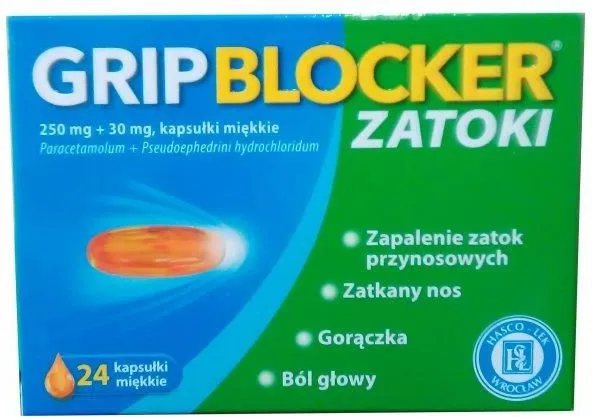
Table of Contents
Package leaflet: Information for the patient
Gripblocker Zatoki
250 mg + 30 mg, soft capsules
Paracetamolum + Pseudoephedrini hydrochloridum
Please read all of this leaflet carefully before using this medicine, because it contains
important information for you.
This medicine should always be used exactly as described in this patient leaflet or as directed
by your doctor or pharmacist.
- Keep this leaflet, so that you can read it again if necessary.
- If you need advice or further information, please consult your pharmacist.
- If you experience any adverse reactions, including any not listed in this leaflet, inform your doctor or pharmacist. See section 4.
- If there is no improvement or if you feel worse after 3 days, you should consult your doctor.
Contents of the leaflet
- What Gripblocker Zatoki is and what it is used for
- Important information before taking Gripblocker Zatoki
- How to take Gripblocker Zatoki
- Possible side effects
- How to store Gripblocker Zatoki
- Contents of the pack and other information
1. What Gripblocker Zatoki is and what it is used for
Gripblocker Zatoki is a combination medicine containing two active substances – paracetamol
and pseudoephedrine hydrochloride. The medicine has analgesic and antipyretic properties and reduces congestion of the mucous membranes of the upper respiratory tract.
Indications
Gripblocker Zatoki is indicated for the treatment of symptoms of influenza and influenza-like infections associated with fever, headache, muscle pain and joint pain, as well as for the treatment of symptoms of rhinitis and sinusitis.
This medicine may be used in patients for whom the use of non-steroidal anti-inflammatory drugs and acetylsalicylic acid derivatives is contraindicated.
2. Information before using Gripblocker Zatoki
When not to use Gripblocker Zatoki:
- if the patient is allergic to paracetamol, pseudoephedrine hydrochloride, or any of the other ingredients of this medicine (listed in section 6),
- during treatment with MAO inhibitors (a group of medicines used to treat depression and hypertension) and within 2 weeks after discontinuation of these medicines,
- in case of severe liver function disorders,
- if the patient has severe acute (sudden) or chronic (long-term) kidney disease or renal failure,
- in case of glucose-6-phosphate dehydrogenase deficiency (risk of hemolysis),
- in case of anemia,
- if the patient has very high blood pressure (severe hypertension) or uncontrolled hypertension,
- in case of ischemic heart disease,
- in case of alcohol-related disease.
Warnings and precautions
Before starting treatment with Gripblocker Zatoki, consult a doctor or pharmacist.
Exercise particular caution when using Gripblocker Zatoki:
- in patients with jaundice or in fasting patients,
- in patients taking antihypertensive medicines, tricyclic antidepressants, and other sympathomimetic drugs (medicines causing vasoconstriction of mucous membranes, appetite suppressants, psychostimulants similar to amphetamines),
- in patients with diabetes, hyperthyroidism, benign prostatic hyperplasia, cardiac arrhythmias, or increased intraocular pressure,
- in elderly patients.
During treatment with Gripblocker Zatoki, immediately inform a doctor if the patient develops severe diseases, including severe kidney function disorders or sepsis (bacteria and their toxins circulating in the blood leading to organ damage), malnutrition, chronic alcoholism, or if the patient is also taking flucloxacillin (an antibiotic). In these situations, severe metabolic acidosis (a disturbance in blood and body fluid balance) has been reported in patients taking paracetamol regularly for prolonged periods or taking paracetamol together with flucloxacillin. Symptoms of metabolic acidosis may include severe breathing difficulties, including rapid deep breathing, drowsiness, nausea, and vomiting.
While using Gripblocker Zatoki, do not take other medicines containing paracetamol and pseudoephedrine.
Prolonged use of the medicine may cause liver damage, kidney inflammation, methemoglobinemia (increased blood levels of methemoglobin, i.e. hemoglobin unable to carry oxygen), and hypochromic anemia (anemia with reduced hemoglobin content in red blood cells).
Note that the maximum daily dose of paracetamol for adults is 4 g, while the maximum single dose of pseudoephedrine for children is 30 mg and daily dose 120 mg; for adults: 60 mg and 240 mg, respectively.
During treatment with Gripblocker Zatoki, sudden abdominal pain or rectal bleeding due to inflammation of the large intestine (ischemic colitis) may occur. If such gastrointestinal symptoms occur, discontinue use of Gripblocker Zatoki immediately and seek medical advice without delay. See section 4.
Cases of posterior reversible encephalopathy syndrome (PRES) and reversible cerebral vasoconstriction syndrome (RCVS) have been reported after using medicines containing pseudoephedrine.
PRES and RCVS are rare conditions that may involve reduced blood flow to the brain. If symptoms suggestive of PRES or RCVS occur, immediately discontinue use of Gripblocker Zatoki and seek immediate medical help (symptoms, see section 4 "Possible side effects").
Children
Due to the presence of pseudoephedrine, this medicine should not be used in children under 12 years of age without medical advice.
Gripblocker Zatoki with other medicines
Inform your doctor or pharmacist about all medicines currently or recently taken, as well as any medicines you plan to take.
The interaction of Gripblocker Zatoki with other medicines results from the effects of its active ingredients:
Paracetamol
- concomitant use of Gripblocker Zatoki and non-steroidal anti-inflammatory drugs (e.g. ibuprofen, naproxen, acetylsalicylic acid) increases the risk of kidney function disorders;
- paracetamol enhances the anticoagulant effect of coumarin derivatives (e.g. warfarin, acenocoumarol) and may prolong bleeding time;
- metoclopramide accelerates, while anticholinergics (e.g. pirenzepine, telenzepine) reduce the absorption of paracetamol;
- concomitant use of paracetamol with rifampicin, antiepileptic drugs (phenobarbital, phenytoin, carbamazepine), barbiturates (e.g. phenobarbital), and ethyl alcohol may lead to hepatic cell necrosis;
- concomitant use of paracetamol with MAO inhibitors or within 2 weeks after discontinuation of such treatment may cause a state of excitation and high fever;
- inform your doctor or pharmacist if the patient is taking flucloxacillin (antibiotic) due to the serious risk of blood and body fluid disturbances (called metabolic acidosis), which require urgent treatment (see section 2).
Pseudoephedrine
- the antibacterial agent furazolidone exhibits dose-dependent inhibition of monoamine oxidase activity. Although there are no reports of hypertensive crisis due to concomitant use of pseudoephedrine and furazolidone, simultaneous use with Gripblocker Zatoki is not recommended;
- concomitant use of Gripblocker Zatoki with tricyclic antidepressants, sympathomimetic drugs (such as nasal decongestants, appetite suppressants, amphetamine-like psychostimulants), and monoamine oxidase inhibitors that interfere with the catabolism of sympathomimetic drugs may increase blood pressure;
- concomitant use of Gripblocker Zatoki with digitalis glycosides may increase the risk of cardiac arrhythmias. Caution and electrocardiographic monitoring are advised;
- pseudoephedrine used with antihypertensive medicines and adrenergic receptor blockers may reduce their effectiveness;
- antacids may increase the absorption of pseudoephedrine;
- MAO inhibitors reduce the elimination of pseudoephedrine from the body and increase its bioavailability.
Gripblocker Zatoki and alcohol
Do not consume alcohol during treatment with this medicine.
Pregnancy and breastfeeding
If the patient is pregnant, suspects she may be pregnant, is planning to become pregnant, or is breastfeeding, she should consult a doctor or pharmacist before using this medicine.
This medicine may be used during pregnancy only if, in the opinion of the doctor, the benefit to the mother outweighs the potential risk to the fetus.
The active substances in Gripblocker Zatoki pass into human milk in small amounts. Breastfeeding women should not take Gripblocker Zatoki.
Driving and operating machinery
Gripblocker Zatoki has no effect or negligible effect on the ability to drive vehicles and operate machinery.
Gripblocker Zatoki contains sorbitol
If the patient has previously been diagnosed with intolerance to certain sugars, the patient should consult a doctor before taking this medicine.
Gripblocker Zatoki contains carmine (E124) and quinoline yellow (E104)
This medicine may cause allergic reactions.
3. How to take Gripblocker Zatoki
This medicine should always be taken exactly as described in this patient information leaflet or as directed by a doctor or pharmacist. If in doubt, consult a doctor or pharmacist.
Recommended dose:
- Adults and adolescents aged over 12 years
- 2 capsules every 4-6 hours, up to a maximum of 8 capsules per day
- Children aged 6-12 years
- 1 capsule every 6 hours, up to a maximum of 4 capsules per day
This medicine should not be used in children under 12 years of age without medical advice.
The medicine is taken orally.
If there is no improvement after 3 days of treatment, or if the patient feels worse, consult a doctor.
Taking more Gripblocker Zatoki than the recommended dose
Accidental or intentional overdose of paracetamol may cause symptoms within several or up to a dozen hours, such as nausea, vomiting, excessive sweating, drowsiness, and general weakness. These symptoms may subside the next day, even though liver damage may already be developing, which subsequently manifests as upper abdominal discomfort, recurrence of nausea, and jaundice.
Symptoms of pseudoephedrine overdose include: irritability, restlessness, tremor, seizures, tachycardia, difficulty in urination, ventricular arrhythmia, and increased pulmonary circulation pressure.
In case of ingestion of more than the recommended dose, seek immediate medical advice from a doctor or pharmacist.
Missing a dose of Gripblocker Zatoki
Do not take a double dose to make up for a missed dose.
Stopping Gripblocker Zatoki
If you have any further questions about the use of this medicine, consult your doctor or pharmacist.
4. Possible adverse effects
Like all medicines, this medicine can cause adverse effects, although not everybody will experience them.
You must immediately stop using Gripblocker Zatoki and seek urgent medical help if symptoms occur indicating posterior reversible encephalopathy syndrome (PRES) or reversible cerebral vasoconstriction syndrome (RCVS). These include:
- sudden severe headache, nausea, vomiting, confusion, seizures, visual disturbances.
Adverse effects of paracetamol used at therapeutic doses are rare and include transient gastrointestinal complaints and skin allergic reactions (rash, erythema, itching). Very rarely, thrombocytopenia (reduced platelet count), leukopenia (reduced white blood cell count), agranulocytosis (reduced number of neutrophil granulocytes), and nephrotoxicity (toxic effect on the kidneys; mainly when used concomitantly with non-steroidal anti-inflammatory drugs) have been observed.
With unknown frequency (cannot be estimated from the available data), a serious condition causing acidification of the blood (so-called metabolic acidosis) has been observed in patients with severe illness receiving paracetamol (see section 2).
Pseudoephedrine rarely causes adverse effects. With unknown frequency, severe conditions affecting cerebral blood vessels have been observed, known as posterior reversible encephalopathy syndrome (PRES) and reversible cerebral vasoconstriction syndrome (RCVS).
The most commonly reported adverse effects include tachycardia (rapid heartbeat), restlessness, and insomnia. Skin rash, urinary retention, and symptoms of central nervous system (CNS) stimulation may also occur, including sleep disturbances and hallucinations, especially in children. Urinary retention has been observed in men. Very rarely, cardiovascular adverse effects have been observed – increased pulmonary arterial pressure and ventricular arrhythmias, even when used at therapeutic doses. With unknown frequency, inflammation of the large intestine caused by insufficient blood flow (ischaemic colitis) has been observed.
Reporting of adverse effects
If any adverse effects occur, including any possible adverse effects not listed in this leaflet, inform your doctor or pharmacist. Adverse effects can be reported directly to the Department of Monitoring Adverse Drug Reactions of the Office for Registration of Medicinal Products, Medical Devices and Biocidal Products:
Aleje Jerozolimskie 181C, 02 - 222 Warsaw,
tel.: + 48 22 49 21 301, fax: + 48 22 49 21 309,
Website: https://smz.ezdrowie.gov.pl
Adverse effects can also be reported to the marketing authorization holder.
Reporting adverse effects helps to provide more information on the safety of the medicine.
5. How to store Gripblocker Zatoki
Keep this medicine out of sight and reach of children.
Store below 25°C. Keep in the original packaging.
Do not use Gripblocker Zatoki after the expiry date stated on the packaging. The expiry date refers to the last day of the stated month.
6. Contents of the pack and other information
What Gripblocker Zatoki contains
- The active substances in this medicine are: paracetamol and pseudoephedrine hydrochloride. Each capsule contains 250 mg of paracetamol and 30 mg of pseudoephedrine hydrochloride.
- Other ingredients (excipients) are: macrogol 400, glycerol, propylene glycol, povidone K-15/17, purified water; and capsule shell: gelatin, glycerol, non-crystallizing liquid sorbitol, carmine red (E 124), quinoline yellow (E 104), purified water.
What Gripblocker Zatoki looks like and contents of the pack
Gripblocker Zatoki is in the form of elongated, smooth and glossy, orange-coloured soft capsules.
One pack contains 12 or 24 soft capsules in blisters, packed in a cardboard box.
Marketing Authorisation Holder and Manufacturer
"PRZEDSIĘBIORSTWO PRODUKCJI FARMACEUTYCZNEJ HASCO–LEK" S.A.
51–131 Wrocław, ul. Żmigrodzka 242 E
tel. +48 (71) 352 95 22
Medicine Information
tel.: (22) 742 00 22
e-mail: [email protected]