Glypressin
Poland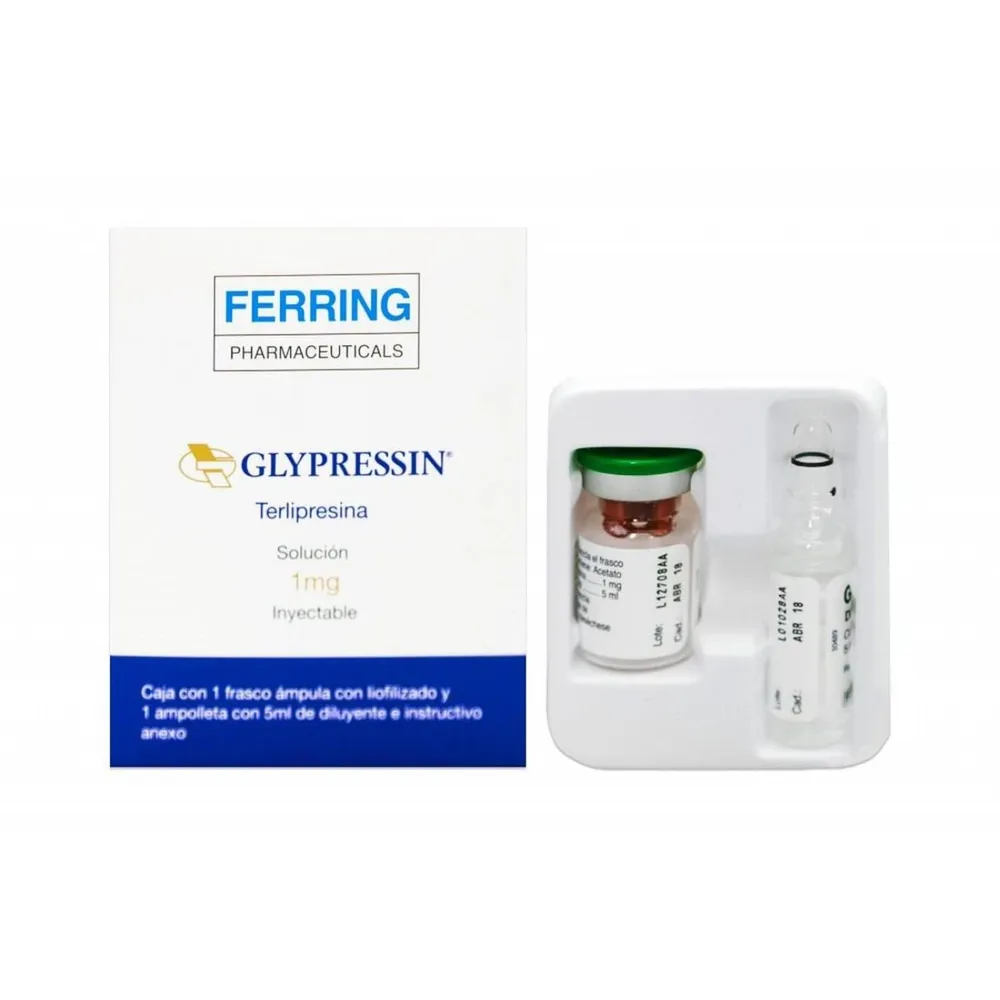
Table of Contents
Patient Information Leaflet
Glypressin, 1 mg, injection solution
Terlipressini acetas
Please read all of this leaflet carefully before use, as it contains important information for the patient.
- Keep this leaflet for future reference.
- If you have any questions, please consult your doctor.
- If you experience any adverse reactions, including those not listed in this leaflet, inform your doctor. See section 4.
Table of contents:
- What Glypressin is and what it is used for
- Important information before using Glypressin
- How to use Glypressin
- Possible side effects
- How to store Glypressin
- Contents of the pack and other information
1. What Glypressin is and what it is used for
Glypressin injection solution contains the active substance terlipressin acetate.
Glypressin is used in the treatment of bleeding from oesophageal varices.
Oesophageal varices are enlarged blood vessels that develop in the oesophagus as a complication of liver disease. These vessels may rupture and bleed, resulting in a serious, life-threatening condition.
After intravenous administration, the active substance terlipressin is metabolized and releases a substance called lysine-vasopressin. This substance acts on the walls of blood vessels, causing them to constrict and reducing blood flow to the varices, thereby helping to control bleeding.
2. Important information before using Glypressin
When not to use Glypressin
- if the patient is allergic to terlipressin acetate or any of the other ingredients of this medicine (listed in section 6),
- if the patient is pregnant.
Warnings and precautions
Caution is advised:
- if the patient has high blood pressure,
- if the patient has heart or lung disease,
- if the patient has diabetes,
- in children and elderly patients, because experience in these age groups is limited,
- if the patient has septic shock; septic shock is a serious condition occurring when a severe infection leads to low blood pressure and reduced blood flow.
If any of these conditions apply, discuss this with a doctor before starting treatment with Glypressin.
During treatment with Glypressin, heart rate, blood pressure and fluid balance should be continuously monitored.
Glypressin contains sodium
This medicine contains 30.7 mg of sodium (the main component of table salt) per vial. This corresponds to 1.5% of the maximum recommended daily dietary sodium intake for adults. Inform your doctor if the patient is on a sodium-controlled diet.
Glypressin and other medicines
Tell the doctor about all medicines the patient is currently taking or has recently taken, as well as any medicines the patient plans to take.
It is especially important to inform the doctor about taking any heart medications, such as beta-blockers, because their effects may be enhanced when used concomitantly with Glypressin.
Immediately inform the doctor if the patient is taking any of the following medicines:
Medicines that may cause irregular heartbeat (arrhythmia):
- antiarrhythmic medicines of class IA (quinidine, procainamide, disopyramide) and class III (amiodarone, sotalol, ibutilide, dofetilide),
- erythromycin (an antibiotic),
- antihistamines (used mainly to treat allergies, but also present in some cough and cold medicines),
- tricyclic antidepressants used to treat depression,
- medicines that may alter blood levels of salts or electrolytes, especially diuretics (water pills used to treat high blood pressure and heart failure).
Pregnancy and breastfeeding
Glypressin must not be used during pregnancy.
Glypressin should not be used during breastfeeding, as it is unknown whether this medicine passes into breast milk.
Driving and operating machinery
This is not relevant, as Glypressin is a medicine used exclusively in hospital settings.
3. How to use Glypressin
Glypressin is a hospital-administered medicine and must be given only by qualified medical staff.
Glypressin is administered intravenously (directly into the bloodstream).
The usual initial dose of Glypressin in acute variceal bleeding of the oesophagus is 2 milligrams (mg). Subsequent doses, usually ranging from 1 mg to 2 mg, are administered every 4 hours for a period of 24 hours, until bleeding is controlled. Treatment should not exceed 48 hours.
After the initial dose, subsequent doses may be adjusted according to the patient's body weight or in the event of any adverse reactions.
4. Possible adverse reactions
Like all medicines, this medicine can cause adverse reactions, although not everyone will experience them.
Very common: may affect more than 1 in 10 treated patients
- abdominal pain
Common: may affect from 1 to 10 out of 100 treated patients
- low blood sodium levels
- headache
- chest pain
- bradycardia (very slow heart rate)
- rapid pulse
- vasoconstriction (narrowing of blood vessels)
- cyanosis (bluish discoloration of the skin due to lack of oxygen)
- pulmonary edema (fluid in the lungs)
- dyspnea (shortness of breath)
- reduced blood flow to the extremities
- pallor (paleness)
- increased blood pressure
- diarrhea
- nausea
- vomiting
Uncommon: may affect from 1 to 10 out of 1,000 treated patients
- irregular heartbeat
- myocardial infarction (heart attack)
- severe cardiac arrhythmias of the Torsade de pointes type
- heart failure. Symptoms include: shortness of breath, feeling tired, swelling of the ankles
- reduced blood flow to the intestines
- hot flush
- acute respiratory distress and respiratory failure (difficulty breathing)
- skin necrosis (dead skin)
- necrosis (dead tissue) at the injection site
Unknown frequency: cannot be estimated from available data
- uterine contractions
- reduced blood flow in the uterus
Reporting of adverse reactions
If any adverse reactions occur, including any not listed in this leaflet, inform your doctor. Adverse reactions can also be reported directly to the Department of Monitoring Adverse Drug Reactions of the Office for Registration of Medicinal Products, Medical Devices and Biocidal Products:
Aleje Jerozolimskie 181C, 02-222 Warsaw,
Phone: +48 22 49 21 301,
Fax: +48 22 49 21 309,
Website: https://smz.ezdrowie.gov.pl
Adverse reactions can also be reported to the marketing authorization holder.
Reporting adverse reactions helps provide more information on the safety of the medicine.
5. How to store Glypressin
Keep this medicine out of the sight and reach of children.
Do not use this medicine after the expiry date stated on the packaging after "EXP:".
The expiry date refers to the last day of the stated month.
Store in a refrigerator (2°C – 8°C). Keep the ampoules in the outer packaging to protect them from light.
Medicines must not be disposed of via wastewater or household waste. Ask your pharmacist how to dispose of medicines no longer required. These measures will help protect the environment.
6. Contents of the pack and other information
What Glypressin contains
- One ampoule with 8.5 millilitres of solution contains 1 mg of terlipressin acetate, equivalent to 0.85 mg of terlipressin. One millilitre of solution contains 0.12 mg of the active substance – terlipressin acetate, equivalent to 0.1 mg of terlipressin.
- The other ingredients are: sodium chloride, acetic acid, sodium acetate trihydrate, water for injections.
What Glypressin looks like and contents of the pack
This medicine is a clear, colourless solution for injection.
Pack size available:
5 ampoules containing 8.5 ml of solution each.
Marketing Authorisation Holder:
Ferring GmbH
Wittland 11
D-24109 Kiel
Germany
Manufacturer:
Ferring-Léčiva a.s.
K Rybníku 475
252 42 Jesenice u Prahy
Czech Republic
Ferring GmbH
Wittland 11
D-24109 Kiel
Germany
For further information about this medicine, please contact the representative of the Marketing Authorisation Holder.
Ferring Pharmaceuticals Poland Sp. z o.o.
ul. Szamocka 8
01-748 Warsaw
Tel.: +48 22 246 06 80