Glurenorm
Poland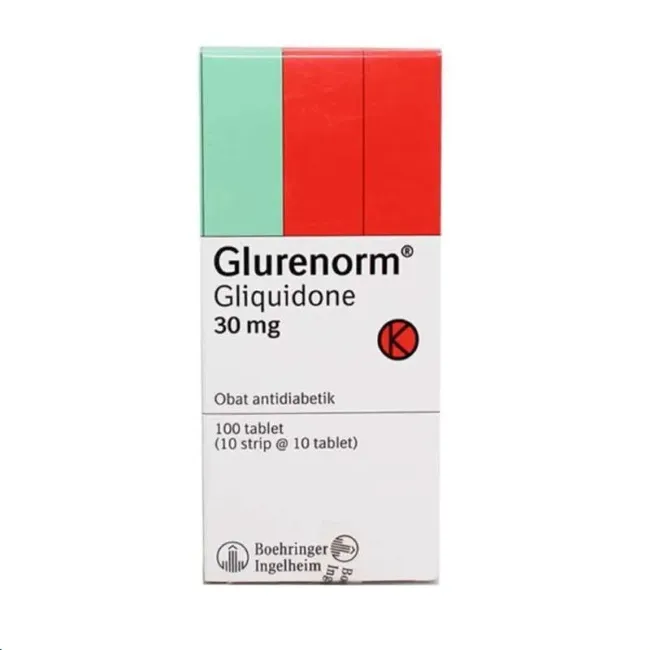
Table of Contents
- Package leaflet: Information for the patient
- 1. What Glurenorm is and what it is used for
- 2. Important information before using Glurenorm
- 3. How to use Glurenorm
- 4. Possible adverse reactions
- 5. How to store Glurenorm
- 6. Contents of the pack and other information
- Information intended exclusively for healthcare professionals:
Package leaflet: Information for the patient
Warning! Keep the leaflet – the information on the immediate packaging is in a foreign language!
Glurenorm
30 mg, tablets
Gliquidonum
Please read the entire leaflet carefully before using the medicine, as it contains
important information for the patient.
- Keep this leaflet, as you may need to read it again.
- If you have any questions, please consult your doctor, pharmacist, or nurse.
- This medicine has been prescribed for a specific individual. Do not share it with others. The medicine may harm another person, even if their symptoms are the same.
- If you experience any adverse effects, including any not listed in this leaflet, inform your doctor or pharmacist. See section 4.
Table of contents
- What Glurenorm is and what it is used for
- What you need to know before taking Glurenorm
- How to take Glurenorm
- Possible side effects
- How to store Glurenorm
- Contents of the pack and other information
1. What Glurenorm is and what it is used for
Glurenorm is a blood glucose-lowering medicine belonging to the sulfonylurea derivatives group.
Glurenorm is indicated for the treatment of type 2 diabetes in middle-aged and elderly patients
in whom dietary measures alone are no longer sufficient to control carbohydrate metabolism.
2. Important information before using Glurenorm
When not to use Glurenorm:
- If the patient is allergic to gliclazide, sulfonylurea derivatives, or any of the other ingredients of this medicine (listed in section 6)
- If the patient has type 1 diabetes
- If the patient's type 2 diabetes is complicated by increased blood acidity or elevated blood ketone levels
- If the patient is experiencing diabetic coma (a life-threatening complication of diabetes causing loss of consciousness) or pre-coma state (partial loss of consciousness preceding coma)
- If the patient has severe infections
- If the patient suffers from acute intermittent porphyria (a hereditary disease causing abdominal pain and neurological symptoms)
- If the patient has undergone pancreatectomy
- If the patient is prior to surgical procedure
- If the patient has liver failure
- If the patient has any hereditary disease that may cause incompatibility with one of the components of the medicine (see also: "Glurenorm contains monohydrate lactose")
Warnings and precautions
Before starting treatment with Glurenorm, discuss this with your doctor, pharmacist, or
nurse:
- If symptoms of hypoglycaemia occur, such as loss of consciousness, rapid heartbeat, moist skin, restlessness, hyperactive reflexes (e.g. tremor), or gastrointestinal disturbances – immediately consume food containing sugar. If low blood sugar levels persist, consult a doctor or go to the nearest hospital due to the need for intensified treatment and monitoring
- If the patient develops fever, skin rash, or nausea – contact a doctor immediately
- If the patient has severe renal impairment – the doctor will closely monitor the patient's condition
- Physical exertion may enhance the blood glucose-lowering effect
- Stress may intensify or weaken the glucose-lowering effect
- If the patient has glucose-6-phosphate dehydrogenase deficiency (a hereditary condition causing destruction of red blood cells) – combination therapy with sulfonylurea antidiabetic drugs may lead to haemolytic anaemia (reduced haemoglobin concentration and breakdown of red blood cells). Alternative treatment options should be considered
- If the patient is taking other medicines – many drugs may affect the blood glucose-lowering effect of Glurenorm (see also "Glurenorm with other medicines")
- If the patient is pregnant, she should immediately consult a doctor, as a change in therapy will be necessary (see also "Pregnancy and breastfeeding")
Diabetes treatment requires regular medical supervision. Remember to attend regular
appointments with your doctor, especially when changing the dose of medication or switching from another medicine to Glurenorm (see: "Driving and operating machinery").
Glurenorm with other medicines
Inform your doctor or pharmacist about all medicines currently taken, recently used, or planned to be taken.
Many medicines have a proven effect on glucose metabolism. Therefore, the doctor must be fully aware of all medications the patient is taking – otherwise, potential drug interactions cannot be taken into account.
Concomitant use of the following medicines may enhance the effect of Glurenorm:
ACE inhibitors (used to treat hypertension), allopurinol (used to treat high blood uric acid levels, including gout), analgesics and non-steroidal anti-inflammatory drugs (used to treat rheumatic diseases and pain), antifungal agents, chloramphenicol, clarithromycin, fluoroquinolones, sulfonamides and tetracyclines (all antibiotics used to treat infections), clofibrate (used to treat high cholesterol), anticoagulants (coumarin derivatives), heparin and sulfinpyrazone (blood-thinning agents), MAO inhibitors and tricyclic antidepressants (used to treat depression), cyclophosphamide and its derivatives (used to treat cancer), insulin, and other blood glucose-lowering medicines.
The following antihypertensive medicines: beta-adrenergic receptor blockers, clonidine, reserpine, and guanethidine – may potentially enhance the blood glucose-lowering effect and mask symptoms of hypoglycaemia.
Concomitant use of the following medicines may weaken the blood glucose-lowering effect of Glurenorm: aminoglutethimide (used to treat cancer), corticosteroids (used to treat inflammatory conditions), diazoxide, thiazide diuretics and loop diuretics (used to treat hypertension), oral contraceptives (to prevent pregnancy), sympathomimetics (such as bronchodilators used to treat asthma), rifamycin and rifampicin (used to treat tuberculosis), thyroid hormones, glucagon (pancreatic hormone), phenothiazines (used to treat psychiatric disorders), nicotinic acid (used as a vitamin supplement and to treat high cholesterol and other lipids), barbiturates (used as sedatives), and phenytoin (used to treat epilepsy).
Enhanced or reduced effect of Glurenorm on blood glucose reduction has been reported after using H-receptor antagonists (e.g. cimetidine, ranitidine – to reduce gastric acid secretion) and alcohol.
Glurenorm with food and drink
Take Glurenorm exactly as prescribed and strictly follow the diet recommended by your doctor. After taking Glurenorm, never skip or delay meals, as this may significantly reduce blood sugar levels and potentially lead to loss of consciousness (e.g. if a tablet is taken before a meal instead of at the beginning of a meal).
Follow dietary recommendations, as in diabetes, diet primarily aims at controlling the patient's body weight and is independent of the treatment prescribed by the doctor.
Alcohol may enhance or weaken the blood glucose-lowering effect of Glurenorm.
Pregnancy and breastfeeding
If the patient is pregnant or breastfeeding, suspects she may be pregnant, or plans to become pregnant, she should consult her doctor or pharmacist before using this medicine.
The doctor will recommend discontinuation of Glurenorm and switch treatment to insulin.
In pregnant women, particularly thorough and intensive monitoring of plasma glucose concentration is required. This is not possible with oral blood glucose-lowering medicines.
For this reason, Glurenorm should not be used during pregnancy or breastfeeding.
Driving and operating machinery
No studies have been conducted on the effect of Glurenorm on the ability to drive vehicles or operate machinery. If drowsiness, dizziness, accommodation disturbances, or other clinical symptoms of hypoglycaemia occur during treatment with Glurenorm, potentially hazardous activities such as driving vehicles or operating machinery should definitely be avoided.
Glurenorm contains monohydrate lactose
If the patient has previously been diagnosed with intolerance to certain sugars, the patient should consult a doctor before taking this medicine.
3. How to use Glurenorm
This medicine should always be taken exactly as your doctor has told you. If you are unsure, you should consult your doctor or pharmacist.
The tablet can be divided into equal doses.
Initial treatment
Treatment with Glurenorm usually starts with half a tablet (15 mg) taken during breakfast. Glurenorm should be taken at the beginning of a meal. After taking a Glurenorm tablet, you should never skip a meal.
If treatment with half a tablet during breakfast proves insufficient, your doctor will gradually increase the dose. If the prescribed dose does not exceed two tablets (60 mg), the daily dose of Glurenorm may be taken once daily during breakfast. If higher daily doses are required, better control may be achieved by taking the medicine in two or three divided doses throughout the day. In such cases, the largest dose should be taken during breakfast.
The maximum recommended daily dose is four tablets (120 mg).
Use in children and adolescents
Glurenorm should not be used in children or adolescents due to lack of data on safety and efficacy.
Taking more Glurenorm than you should
If you take more Glurenorm than prescribed, consult your doctor or pharmacist immediately.
Overdose of Glurenorm may cause low blood sugar levels – even prolonged – with symptoms such as loss of consciousness, rapid heartbeat, moist skin, restlessness, hyperactive reflexes (e.g. tremor), or gastrointestinal disturbances.
If you forget to take Glurenorm
If you miss a dose, take it as soon as possible, but do not take a double dose to make up for the missed dose. Remember to take Glurenorm tablets only at the beginning of a meal. Take the next dose at your usual time.
Stopping Glurenorm
Before stopping treatment with Glurenorm, consult your doctor.
If you have any further questions about the use of this medicine, consult your doctor or pharmacist.
4. Possible adverse reactions
Like all medicines, this medicine can cause adverse reactions, although not everyone experiences them.
The following frequency classification has been used:
Very common: more frequently than in 1 out of 10 patients;
Common: more frequently than in 1 out of 100 patients, but less frequently than in 1 out of 10 patients;
Uncommon: more frequently than in 1 out of 1,000 patients, but less frequently than in 1 out of 100 patients;
Rare: more frequently than in 1 out of 10,000 patients, but less frequently than in 1 out of 1,000 patients;
Very rare: less frequently than in 1 out of 10,000 patients
Blood and lymphatic system disorders
Rare: decreased number of white blood cells (agranulocytosis), decreased number of white blood cells (leukopenia), decreased number of platelets (thrombocytopenia)
Metabolism and nutrition disorders
Common: low blood sugar
Rare: decreased appetite
Nervous system disorders
Uncommon: drowsiness, dizziness, headache
Rare: tingling sensation
Eye disorders
Uncommon: accommodation disorders
Cardiac disorders
Rare: angina pectoris, extrasystoles (cardiac arrhythmias)
Vascular disorders
Rare: cardiovascular insufficiency (heart and circulation disorders), low blood pressure
Gastrointestinal disorders
Uncommon: diarrhoea, vomiting, abdominal discomfort, nausea, constipation, dryness of mucous membranes in the mouth
Hepatobiliary disorders
Rare: reduced bile flow
Skin and subcutaneous tissue disorders
Uncommon: rash, itching
Rare: Stevens-Johnson syndrome (a severe skin disease in which the outer layer of the skin dies and peels off), photosensitivity, urticaria
General disorders and administration site conditions
Rare: chest pain, feeling of fatigue
Reporting of adverse reactions
If any adverse reactions occur, including any adverse reactions not listed in this leaflet, inform your doctor or pharmacist. Adverse reactions can be reported directly to the Department of Monitoring of Adverse Drug Reactions of the Office for Registration of Medicinal Products, Medical Devices and Biocidal Products, Al. Jerozolimskie 181C, 02-222 Warsaw,
Tel.: +48 22 49 21 301,
Fax: +48 22 49 21 309,
Website: https://smz.ezdrowie.gov.pl
By reporting adverse reactions, more information on the safety of the medicine can be collected.
5. How to store Glurenorm
Keep this medicine out of sight and reach of children.
Store at room temperature (15–25 °C).
Do not use this medicine after the expiry date stated on the packaging. The expiry date refers to the last day of the month indicated.
Medicines must not be disposed of via wastewater or household waste. Ask your pharmacist how to dispose of medicines no longer required. This will help protect the environment.
6. Contents of the pack and other information
What Glurenorm contains
- The active substance is gliclazide. Each tablet contains 30 mg of gliclazide ( Gliquidonum ).
- The other ingredients are: monohydrate lactose, corn starch, magnesium stearate, colloidal anhydrous silicon dioxide, talc.
What Glurenorm looks like and contents of the pack
Blister packs in a cardboard box.
Each pack contains 50 tablets.
For further detailed information, please contact the responsible party or parallel importer.
Marketing Authorisation Holder in Belgium, country of export:
Menarini Benelux N.V./S.A.
De Kleetlaan 3
1831 Machelen
Belgium
Manufacturer
Qualiphar N.V.
Rijksweg 9
B-2880 Bornem
Belgium
Parallel importer:
Medezin Sp. z o.o.
ul. Zbąszyńska 3
91-342 Łódź
Repackaged in:
Medezin Sp. z o.o.
ul. Zbąszyńska 3
91-342 Łódź
Laboratorium Galenowe Olsztyn Sp. z o.o.
ul. Spółdzielcza 25A
11-001 Dywity
CEFEA Sp. z o.o. Sp. komandytowa
ul. Działkowa 56
02-234 Warszawa
Pharma Innovations Sp. z o.o.
ul. Jagiellońska 76
03-301 Warszawa
IVA Pharm Sp. z o.o.
ul. Drawska 14/1
02-202 Warszawa
CANPOLAND SPÓŁKA AKCYJNA
ul. Beskidzka 190
91-610 Łódź
Marketing Authorisation Number in Belgium, country of export: BE111851
Parallel Import Licence Number: 244/18
Information intended exclusively for healthcare professionals:
Overdose of drugs from the sulfonylurea group may cause hypoglycemia.
Symptoms
Hypoglycemic reaction (including prolonged) may occur, such as loss of consciousness, tachycardia, moist skin, motor restlessness, hyperreflexia, and gastrointestinal disturbances.
Treatment
Immediate oral or intravenous administration of glucose. Monitoring of plasma glucose concentration and continued glucose administration may be necessary.