Glucose 10 braun
Poland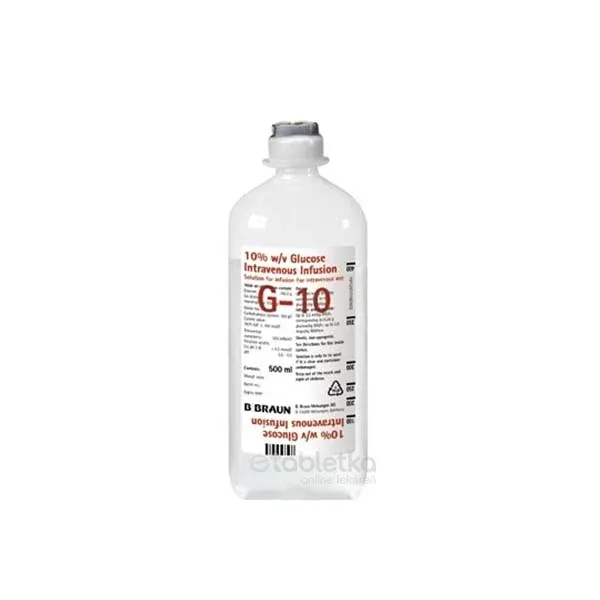
Table of Contents
- PACKAGE LEAFLET: INFORMATION FOR THE PATIENT
- 1. WHAT GLUKOZA 10 BRAUN IS AND WHAT IT IS USED FOR
- 2. IMPORTANT INFORMATION BEFORE USING GLUKOZA 10 BRAUN
- 3. HOW TO USE THE MEDICINAL PRODUCT GLUKOZA 10 BRAUN
- 4. POSSIBLE ADVERSE REACTIONS
- 5. HOW TO STORE GLUKOZA 10 BRAUN
- 6. CONTENTS OF THE PACKAGE AND OTHER INFORMATION
- Information intended exclusively for healthcare professionals:
PACKAGE LEAFLET: INFORMATION FOR THE PATIENT
Glukoza 10 Braun, 100 mg/ml, infusion solution
(Glucosum)
Please read carefully all the information in this leaflet before using this medicine, as it contains
important information for the patient.
- Keep this leaflet, as you may need to read it again.
- If you have any questions, please consult your doctor, pharmacist, or nurse.
- This medicine has been prescribed for a specific individual. Do not pass it on to others. This medicine may harm someone else, even if their symptoms are the same.
- If you experience any adverse reactions, including those not listed in this leaflet, inform your doctor, pharmacist, or nurse. See section 4.
Table of contents
- What Glukoza 10 Braun is and what it is used for
- Important information before using Glukoza 10 Braun
- How to use Glukoza 10 Braun
- Possible side effects
- How to store Glukoza 10 Braun
- Contents of the pack and other information
1. WHAT GLUKOZA 10 BRAUN IS AND WHAT IT IS USED FOR
Glukoza 10 Braun is a glucose solution administered intravenously through a cannula (intravenous infusion).
Glukoza 10 Braun is used to provide carbohydrates to the patient when oral nutrition is impossible or insufficient.
This medicine may also be used when necessary to increase blood glucose levels that are too low.
This product can also be used to dissolve and dilute medicinal products that need to be administered by infusion.
2. IMPORTANT INFORMATION BEFORE USING GLUKOZA 10 BRAUN
When not to use Glukoza 10 Braun:
- if the patient has excessively high blood sugar levels (hyperglycemia) requiring administration of more than 6 units of insulin per hour;
- if the patient has delirium tremens accompanied by severe fluid deficiency;
- if the patient has severe circulatory disorders, such as shock or circulatory collapse;
- if the patient has acidosis;
- if the patient is dehydrated;
- if the patient has pulmonary edema;
- if the patient has severe heart failure.
Warnings and precautions
Before starting treatment with Glukoza 10 Braun, discuss this with the doctor or nurse.
This medicinal product should not be administered to the patient during or after a stroke, unless the doctor considers its use necessary for treatment.
Before and during administration of this medicinal product, blood glucose levels, fluid balance, electrolytes (especially potassium), and acid-base balance should be monitored regularly. For this purpose, blood samples must be taken from the patient. If necessary, blood glucose levels should be controlled by administering insulin.
Before initiating administration of this medicinal product, disturbances in fluid and electrolyte balance should be corrected, such as:
- low blood potassium or sodium levels (hypokalemia, hyponatremia);
- water deficiency and excessive salt loss.
The doctor will carefully consider whether to administer this medicinal product if the patient has:
- diabetes or any other carbohydrate intolerance;
- increased blood volume;
- other metabolic disorders (e.g. after surgery or trauma, in case of inadequate tissue oxygenation, or in organ diseases), which may lead to excessive blood acidification;
- excessively concentrated blood (high blood osmolality);
- kidney or heart disorders.
In case of blood-brain barrier impairment, the doctor will take special precautions, as this medicinal product may increase intracranial and intraspinal pressure.
If irritation or inflammation of the vein wall occurs at the infusion site, the doctor will consider changing the infusion site.
Additional supplementation of electrolytes (especially potassium, magnesium, phosphates) and vitamins (especially vitamin B) should be provided.
Children
Particular caution must be exercised when administering this medicinal product to children under 2 years of age. Abrupt discontinuation of a rapidly administered infusion may, especially in this patient group, lead to a significant drop in blood glucose levels.
Glukoza 10 Braun and other medicinal products
Inform the doctor about all medicinal products currently used or recently used by the patient, as well as any medicinal products the patient plans to use.
When mixing this medicinal product with other medicinal products or substances, the doctor will exercise caution and use only those medicinal products and substances compatible with Glukoza 10 Braun.
Glukoza 10 Braun must not be mixed with concentrated red blood cells, and must not be administered simultaneously with blood, or immediately before or after blood through the same infusion set.
Pregnancy, breastfeeding and fertility
If the patient is pregnant or breastfeeding, suspects she may be pregnant, or is planning to become pregnant, she should consult a doctor before using this medicinal product.
Pregnancy
The doctor will decide whether to use this medicinal product during pregnancy. Blood glucose levels should be monitored during treatment.
Breastfeeding
The doctor will decide whether to use this medicinal product during breastfeeding.
Driving and operating machinery
Glukoza 10 Braun has no effect on the ability to drive or operate machinery.
3. HOW TO USE THE MEDICINAL PRODUCT GLUKOZA 10 BRAUN
The dose of Glukoza 10 Braun will be determined by the physician according to the patient's health condition.
Dosage
For adults and adolescents over 15 years of age, the maximum dose of Glukoza 10 Braun is 40 ml per kg of body weight per day. The infusion rate must not exceed 2.5 ml per kg of body weight per hour.
For children under 14 years of age, the maximum daily dose will be determined according to age and body weight:
- Premature infants: 180 ml per kg of body weight
- Newborns: 150 ml per kg of body weight
- Children aged 1–2 years: 150 ml per kg of body weight
- Children aged 3–5 years: 120 ml per kg of body weight
- Children aged 6–10 years: 100 ml per kg of body weight
- Children aged 11–14 years: 80 ml per kg of body weight
When determining the dose, daily fluid intake recommendations for children should also be considered:
- First day of life: 60–120 ml per kg of body weight
- Second day of life: 80–120 ml per kg of body weight
- Third day of life: 100–130 ml per kg of body weight
- Fourth day of life: 120–150 ml per kg of body weight
- Fifth day of life: 140–160 ml per kg of body weight
- Sixth day of life: 140–180 ml per kg of body weight
- First month, before stable growth phase: 140–170 ml per kg of body weight
- First month, during stable growth phase: 140–160 ml per kg of body weight
- From 2nd to 12th month of life: 120–150 ml per kg of body weight
- Second year of life: 80–120 ml per kg of body weight
- From 3rd to 5th year of life: 80–100 ml per kg of body weight
- From 6th to 12th year of life: 60–80 ml per kg of body weight
- From 13th to 18th year of life: 50–70 ml per kg of body weight
Special conditions
In cases of metabolic disturbances (e.g. after surgery or trauma, inadequate tissue oxygenation, or organ disease), glucose doses should be adjusted to maintain normal blood glucose concentration.
Method of administration
Glukoza 10 Braun is administered intravenously through a cannula (intravenous infusion).
Use of a higher than recommended dose of Glukoza 10 Braun
Since daily doses are determined by a physician, administration of an excessive dose is unlikely.
Overdosage may lead to elevated blood glucose levels, glucose excretion in urine, increased extracellular fluid volume, fluid deficiency, disturbances or loss of consciousness due to high blood glucose concentration or excessive fluid concentration, fluid overload with associated skin tension, venous thrombosis (sensation of heaviness and swelling of the legs), tissue edema (possibly including pulmonary fluid accumulation or cerebral edema), and elevated electrolyte levels in blood. In cases of severe overdose, fat accumulation in the liver may also occur.
In such cases, the infusion should be slowed or, if necessary, stopped. The physician will decide on further treatment steps, such as administration of insulin, fluids, or electrolytes.
Consult a physician or pharmacist if you need advice or further information regarding the use of this medicinal product.
4. POSSIBLE ADVERSE REACTIONS
Like all medicines, this medicine can cause adverse reactions, although they do not occur in everyone.
If this medicine is used according to recommendations, adverse reactions should not be expected.
Reporting suspected adverse reactions
If any adverse reactions occur, including any adverse reactions not listed in this leaflet, inform a doctor, pharmacist, or nurse.
Adverse reactions can be reported directly to the Department of Monitoring Adverse Drug Reactions at the Office for Registration of Medicinal Products, Medical Devices and Biocidal Products:
Al. Jerozolimskie 181C
02-222 Warsaw
tel.: 22 49-21-301
fax: 22 49-21-309
website: https://smz.ezdrowie.gov.pl
Adverse reactions can also be reported to the marketing authorization holder.
Reporting adverse reactions helps provide more information on the safety of this medicine.
5. HOW TO STORE GLUKOZA 10 BRAUN
Keep the medicine out of the reach and sight of children.
Do not use this medicine after the expiry date stated on the label and carton. The expiry date refers to the last day of the specified month.
Use the product only if the solution is clear or almost colourless, and the container and closure are undamaged.
No special storage precautions are required.
Medicines must not be disposed of via wastewater or household waste. Ask your pharmacist how to dispose of medicines no longer required. These measures will help protect the environment.
6. CONTENTS OF THE PACKAGE AND OTHER INFORMATION
What Glukoza 10 Braun contains
- The active substance is monohydrate glucose. Each litre of this medicinal product contains 110 g of glucose monohydrate, equivalent to 100 g of glucose.
- Other components: water for injections
Energy: 1675 kJ/l = 400 kcal/l
Theoretical osmolarity: 555 mOsm/l
Titratable acidity (to pH = 7): < 0.5 mmol/l
pH: 3.5 – 5.5
What Glukoza 10 Braun looks like and contents of the pack
Glukoza 10 Braun is a solution for infusion (for administration using an infusion apparatus).
It is a clear, colourless or almost colourless solution of glucose monohydrate in water.
Glukoza 10 Braun is supplied in:
- colourless glass bottles made of clear glass with a capacity of 500 ml, available in cartons of 10 x 500 ml
- polyethylene containers of Ecoflac plus type, with a capacity of 500 ml and 1000 ml, available in cartons of 10 x 500 ml and 10 x 1000 ml
Not all pack sizes may be marketed.
Marketing Authorisation Holder and Manufacturer
Marketing Authorisation Holder Manufacturers
B. Braun Melsungen AG B. Braun Melsungen AG
Carl-Braun-Strasse 1 Carl-Braun-Strasse 1
34212 Melsungen 34212 Melsungen
Germany Germany
B. Braun Medical SA
Carretera de Terrassa, 121
08191 Rubi (Barcelona)
Spain
Information intended exclusively for healthcare professionals:
Method of administration
Intravenous infusion. This medicinal product may be administered into large peripheral veins.
Special warnings and precautions for use
General
Administration of glucose solutions is not recommended in patients following ischaemic stroke, as
cases of worsening brain injury related to ischaemic stroke and prolonged recovery time due to
hyperglycaemia have been reported.
Infusion of hyperosmolar glucose solutions in patients with impaired blood-brain barrier may
lead to increased intracranial/intraspinal pressure.
Before initiating glucose infusion, fluid and electrolyte imbalances such as dehydration,
hyponatraemia and hypokalaemia should be corrected.
This solution should be administered with particular caution in the following conditions:
- Hypervolaemia
- Renal insufficiency
- Cardiac insufficiency
- Increased plasma osmolality
- Subclinical diabetes mellitus or carbohydrate intolerance.
Unstable metabolism (e.g. after surgery or trauma, in hypoxia or organ failure) impairs oxidative
metabolism of glucose and may lead to metabolic acidosis.
Cases of hyperglycaemia should be closely monitored and treated with insulin. Insulin administration
is associated with additional shift of potassium into cells, which may exacerbate hypoglycaemia.
Sudden interruption of high-rate glucose infusion may result in severe hypoglycaemia due to high
serum insulin concentration. This particularly affects children under 2 years of age, diabetic
patients and patients with other diseases associated with impaired glucose homeostasis. In clear
cases, glucose infusion should be tapered off over 30–60 minutes. As a precaution, it is recommended
to monitor each patient for hypoglycaemia for 30 minutes after discontinuation of parenteral
nutrition on the first day.
Clinical monitoring should include blood glucose concentration, serum electrolyte levels, fluid
balance and acid-base balance. Because administration of glucose solutions delivers free water to
the body, which may cause or worsen hyponatraemia, sodium concentration should be carefully
monitored. Frequency and type of laboratory tests depend on the patient's general condition,
metabolic status, dose administered and duration of treatment. Total amount of administered
glucose should also be monitored.
Initiating parenteral nutrition in malnourished patients with maximum doses and at maximum
infusion rates from the beginning of therapy without additional supplementation of potassium,
magnesium and phosphates may lead to refeeding syndrome, manifested by hypokalaemia,
hypophosphataemia and hypomagnesaemia. Clinical symptoms may appear several days after
initiation of parenteral nutrition. In such patients, infusion regimens should be introduced gradually.
Additional electrolyte supplementation is required depending on deviations from normal values.
Particular caution is required in patients with hypokalaemia. Potassium supplementation is
essential.
Electrolytes and vitamins may be administered as needed. Vitamins of the B group, especially
thiamine, are necessary for glucose metabolism.
Due to the risk of pseudoagglutination, glucose should not be administered through the same
infusion set, simultaneously, immediately before or immediately after blood transfusion.
If signs of irritation, phlebitis or thrombophlebitis occur during peripheral vein infusion, changing
the infusion site should be considered.
Note: When this medicinal product is used as a vehicle for another medicinal product, the safety
information provided by the manufacturer of the co-administered medicinal product should be
taken into account.
Children
Children under 2 years of age are particularly susceptible to the risk of recurrent hypoglycaemia in
case of sudden interruption of high-rate infusion; see above.
Shelf-life after first opening of the packaging
Infusion should be started immediately after connecting the medicinal product container to the
infusion apparatus.
Shelf-life of the medicinal product after reconstitution or dilution
From a microbiological point of view, mixtures with additives or other infusion solutions should be
used immediately. If not used immediately, the user is responsible for conditions and duration of
storage prior to use. Storage time should not exceed 24 hours at a temperature of 2 to 8°C, unless
preparation was carried out under controlled and validated aseptic conditions.
The instructions provided by the manufacturer of the medicinal product administered in combination
with or diluted in Glukoza 10 Braun should be observed.
Incompatibilities
Since glucose solutions are acidic, incompatibilities may occur when mixed with other medicinal
products and blood. Information on compatibility can be obtained from the manufacturers of
medicinal products intended for co-administration with Glukoza 10 Braun.
Due to the risk of pseudoagglutination, a suspension with concentrated red blood cells must not be
prepared in Glukoza 10 Braun.