Glucose 10% fresenius
Poland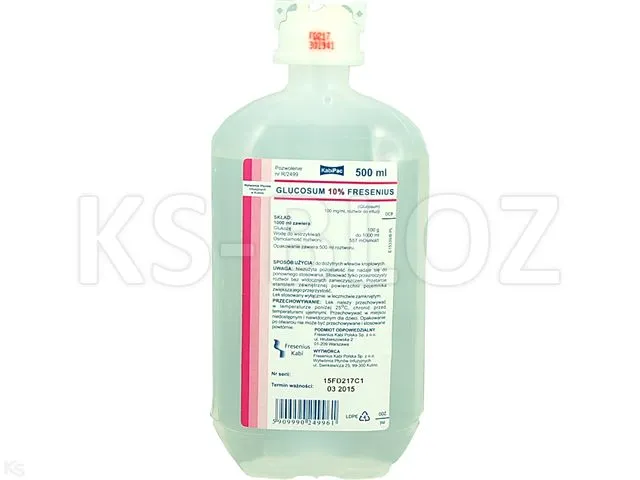
Table of Contents
- Package leaflet: Information for the user
- 1. What GLUCOSUM 10% FRESENIUS is and what it is used for
- 2. Information before using GLUCOSUM 10% FRESENIUS
- 3. How to use GLUCOSUM 10% FRESENIUS
- 4. Possible side effects
- 5. How to store GLUCOSUM 10% FRESENIUS
- 6. Contents of the pack and other information
- Information intended exclusively for healthcare professionals:
Package leaflet: Information for the user
GLUCOSUM 10% FRESENIUS, 100 mg/ml, infusion solution
Glucosum
Please read all of this leaflet carefully before using this medicine, because it contains
important information for you.
- Keep this leaflet, as you may need to read it again.
- If you have any further questions, please ask your doctor, pharmacist, or nurse.
- This medicine has been prescribed for a specific individual. Do not pass it on to others. It may harm them, even if their symptoms are the same.
- If you experience any adverse reactions, including any not listed in this leaflet, inform your doctor, pharmacist, or nurse. See section 4.
Leaflet contents
- What GLUCOSUM 10% FRESENIUS is and what it is used for
- Important information before using GLUCOSUM 10% FRESENIUS
- How to use GLUCOSUM 10% FRESENIUS
- Possible side effects
- How to store GLUCOSUM 10% FRESENIUS
- Contents of the pack and other information
1. What GLUCOSUM 10% FRESENIUS is and what it is used for
GLUCOSUM 10% FRESENIUS is a glucose solution (simple sugar) used by the body as a source of energy. One gram of glucose provides 16.8 kJ (4 kcal) of energy. This medicine is administered intravenously.
Indications:
- To supplement energy deficits as a carbohydrate component in parenteral nutrition (when the patient is not receiving food orally);
- Treatment of hypoglycaemia (low blood glucose concentration);
- Dilution and dissolution of electrolyte concentrates and medicinal products.
2. Information before using GLUCOSUM 10% FRESENIUS
When not to use GLUCOSUM 10% FRESENIUS
Do not use GLUCOSUM 10% FRESENIUS:
- if the patient has hyperglycemia (increased glucose concentration in blood);
- if the patient has hypokalemia (decreased potassium concentration in blood);
- if the patient has acidosis (accumulation in blood of excessive amounts of acidic substances);
- if the patient is overhydrated (excess fluid in the body);
- if the patient is dehydrated (significant decrease in body water due to fluid loss or in alcohol-related disease);
- if the patient has increased serum osmolality (increased concentration of components in blood serum confirmed by laboratory test);
- if the patient has anuria (production of less than 100 ml urine/day by the kidneys);
- if the patient has intracranial hemorrhage;
- if the patient has intramedullary hemorrhage.
Warnings and precautions
- The medicine should be administered with caution if the patient has diabetes or carbohydrate intolerance (disorders in absorption of certain sugars).
- The medicine may cause fluid overload leading to decreased concentration of electrolytes in blood and risk of peripheral edema (swelling around ankles and feet) and pulmonary edema (causing severe shortness of breath).
- During prolonged administration of GLUCOSUM 10% FRESENIUS, the physician will monitor fluid balance (amount of fluids taken in and excreted), blood electrolyte levels, and possible disturbances in acid-base balance.
- Excessively rapid infusion rate or metabolic disorders may cause hyperglycemia and glucosuria (see section "Possible side effects"); the physician will order regular monitoring of blood and urine glucose levels.
- Glucose solutions should not be administered together with blood through the same infusion set.
- The medicine should be used with caution in neonates whose mothers suffer from diabetes.
Before starting treatment with GLUCOSUM 10% FRESENIUS, inform the physician or nurse if the patient has a condition that may cause increased vasopressin levels (a hormone regulating body water content). Increased vasopressin levels may occur:
- if the patient has had an acute or serious illness;
- if the patient experiences severe pain;
- if the patient has undergone surgery;
- if the patient has infection, burns, or central nervous system disease;
- if the patient has heart, liver, or kidney disorders;
- if the patient is taking certain medications. This may increase the risk of low sodium levels in blood, which can lead to headache, nausea, seizures, lethargy, coma, cerebral edema, and death. Cerebral edema increases the risk of death and brain damage. Increased risk of cerebral edema occurs in:
- children;
- women (particularly those of reproductive age);
- patients with disorders of cerebrospinal fluid volume that may be caused by meningitis, intracranial hemorrhage, or brain injury.
Patients should be closely monitored. In cases where proper regulation of blood water content is disturbed due to increased secretion of antidiuretic hormone (ADH), infusion of low-salt concentration fluids (hypotonic fluids) may lead to low sodium levels in blood (hyponatremia). This may cause headache, nausea, seizures, drowsiness, coma, cerebral edema, and death. Therefore, occurrence of these symptoms (severe symptomatic encephalopathy with hyponatremia) is considered a life-threatening condition.
GLUCOSUM 10% FRESENIUS and other medicines
Inform your doctor or pharmacist about all medicines currently or recently taken by the patient, as well as any medicines the patient plans to take.
It is especially important to inform the doctor if the patient is taking certain medicines affecting vasopressin hormone activity, including:
- antidiabetic drugs (chlorpropamide);
- cholesterol-lowering drugs (clofibrate);
- anticonvulsants (carbamazepine);
- amphetamine-like drugs (including MDMA);
- certain anticancer drugs (vincristine, ifosfamide, cyclophosphamide);
- selective serotonin reuptake inhibitors (used in depression treatment);
- antipsychotic drugs;
- opioids used for treatment of severe pain;
- analgesics and (or) anti-inflammatory drugs (also known as non-steroidal anti-inflammatory drugs, NSAIDs);
- drugs mimicking or enhancing vasopressin action such as desmopressin (used to treat excessive thirst and urine output), terlipressin (used to treat esophageal bleeding), and oxytocin (used to induce labor);
- other drugs increasing the risk of hyponatremia, including all diuretics and anticonvulsants such as oxcarbazepine.
The following drugs should not be added to the glucose solution:
- aminophylline (a medicine used to treat asthma);
- soluble barbiturates (medicines used to treat insomnia and epilepsy);
- erythromycin (an antibiotic used to treat bacterial infections);
- hydrocortisone (a steroid medicine used, among others, in treatment of atopic dermatitis);
- warfarin (an anticoagulant used to reduce blood clotting);
- kanamycin (a potent antibiotic used to treat bacterial infections, e.g. sepsis);
- soluble sulfonamides (medicines used to treat bacterial infections);
- vitamin B.
Pregnancy and breastfeeding
If the patient is pregnant or breastfeeding, suspects she may be pregnant, or is planning to have a child, she should consult her doctor or pharmacist before using this medicine.
Glucose solutions may be used in pregnant and breastfeeding women if dosage recommendations, contraindications, and general precautions for use are observed.
GLUCOSUM 10% FRESENIUS should be used with caution in pregnant women due to the risk of fetal hyperglycemia, hyperinsulinemia (increased insulin concentration in blood), and acidosis, followed by neonatal hypoglycemia.
Particular caution should be exercised when administering this medicine to pregnant women during labor, especially in combination with oxytocin (a hormone used to induce labor and control bleeding), due to the risk of hyponatremia.
Driving and operating machinery
Not applicable.
3. How to use GLUCOSUM 10% FRESENIUS
This medicine is administered exclusively by medical personnel. The medicine must not be used on your own.
If in doubt, consult a doctor.
The dosage is determined individually by the doctor for each patient depending on age, body weight,
and clinical condition.
The doctor will monitor fluid levels in the body, blood pH, urine flow, and blood electrolyte concentrations
(in particular sodium), at the beginning of the infusion and during its administration, especially in patients
with high vasopressin hormone activity or in patients taking other medicines that enhance the effect of vasopressin.
Administration of a higher than recommended dose of GLUCOSUM 10% FRESENIUS
If a higher than recommended dose is administered, inform the doctor or nurse immediately.
Overdose of the medicine may cause:
- hyperglycemia and glycosuria, which, if unrecognized, may lead to disturbances in consciousness, coma, dehydration, and ultimately death;
- fluid overload;
- disturbances in blood electrolyte concentrations.
If you have any further doubts regarding the use of this medicine, consult your
doctor or nurse.
4. Possible side effects
Like all medicines, this medicine can cause side effects, although not everybody will experience them.
Frequency unknown (frequency cannot be determined from the available data):
- hyperglycaemia (increased glucose concentration in blood);
- glycosuria (presence of sugar in urine);
- phlebitis or thrombophlebitis at the site of administration (inflammation and small blood clots characterised by palpable vein hardening, redness around the vein, pain and tenderness);
- fluid imbalance (excess or deficiency of fluids);
- acid-base imbalance (changes in blood pH confirmed by laboratory tests);
- decreased concentration of electrolytes in blood (e.g. potassium, magnesium and phosphate);
- peripheral oedema (swelling around ankles and feet);
- deficiency of vitamin B complex;
- low sodium concentration in blood (hyponatraemia), which may lead to brain damage and death due to cerebral oedema (see section "Warnings and precautions").
Reporting of side effects
If any adverse reactions occur, including any adverse reactions not listed in this leaflet, inform a doctor, pharmacist or nurse. Adverse reactions can be reported directly to the Department of Monitoring Adverse Drug Reactions of the Office for Registration of Medicinal Products, Medical Devices and Biocidal Products
Al. Jerozolimskie 181C
02-222 Warsaw
Phone: +48 22 49 21 301
Fax: +48 22 49 21 309
Website: https://smz.ezdrowie.gov.pl
Adverse reactions can also be reported to the Marketing Authorisation Holder.
Reporting adverse reactions helps provide more information on the safety of this medicine.
5. How to store GLUCOSUM 10% FRESENIUS
Polyethylene container KabiPac with cap:
Do not freeze.
Polypropylene container KabiClear with cap, polypropylene bag of the "free flex " or
"free flex +":
Store below 25°C. Do not freeze.
Keep the medicine out of the sight and reach of children.
The container must not be stored or reused after opening. Any unused residue
of the medicine is not suitable for further use.
Do not use this medicine after the expiry date stated on the packaging after: EXP.
The expiry date refers to the last day of the stated month. The packaging label includes: EXP - expiry date, Lot - batch number.
Do not use this medicine if contamination or change in colour occurs, or if the packaging is damaged.
Medicines must not be disposed of via wastewater or household waste. Ask your pharmacist how to dispose of medicines no longer in use. This will help protect the environment.
6. Contents of the pack and other information
What GLUCOSUM 10% FRESENIUS contains
- The active substance is glucose in the form of monohydrated glucose.
1000 ml of solution contains 100 g of glucose in the form of monohydrated glucose (110 g).
- Other components: water for injections, sodium hydroxide (for pH adjustment), and hydrochloric acid (for pH adjustment).
The osmolarity of the solution is 557 mOsmol/l.
What GLUCOSUM 10% FRESENIUS looks like and contents of the pack
The medicine is a colourless and clear solution.
Packaging of the medicine:
- Polyethylene container KabiPac with cap – 100 ml, 250 ml, 500 ml, 1000 ml;
- Polyethylene container KabiPac with cap – 40 x 100 ml, 20 x 250 ml, 10 x 500 ml, 20 x 500 ml, 10 x 1000 ml, in a cardboard box;
- Polypropylene container KabiClear with cap – 100 ml, 250 ml, 500 ml, 1000 ml;
- Polypropylene container KabiClear with cap – 40 x 100 ml, 20 x 250 ml, 10 x 500 ml, 20 x 500 ml, 10 x 1000 ml, in a cardboard box;
- Polypropylene bag of the type "free*flex*" and "free*flex*+" (with a needle-free port) – 250 ml, 500 ml, 1000 ml;
- Polypropylene bag of the type "free*flex*" and "free*flex*+" (with a needle-free port) – 30 x 250 ml, 20 x 500 ml, 10 x 1000 ml, in a cardboard box.
Marketing Authorisation Holder and Manufacturer
Marketing Authorisation Holder
Fresenius Kabi Polska Sp. z o.o.
Al. Jerozolimskie 134
02-305 Warsaw
Manufacturer
Fresenius Kabi Polska Sp. z o.o.
Infusion Fluids Manufacturing Plant
ul. Sienkiewicza 25
99-300 Kutno
Fresenius Kabi France
6, Rue du Rempart
B.P. 611
27400 Louviers Cedex
France
Fresenius Kabi Deutschland GmbH
Werk Friedberg
Freseniusstraße 1
D-61169 Friedberg
Germany
For further information, please contact the Marketing Authorisation Holder:
Fresenius Kabi Polska Sp. z o.o.
Al. Jerozolimskie 134
02-305 Warsaw
tel.: +48 22 345 67 89
Information intended exclusively for healthcare professionals:
Dosage and administration
Dosage must be determined individually by a physician for each patient, depending on age, body weight, and clinical condition.
If the physician does not specify otherwise, GLUCOSUM 10% FRESENIUS should be administered according to the following regimen:
Maximum infusion rate (guideline values):
2.5 ml/kg body weight/h (175 ml/h for a patient weighing 70 kg, corresponding to 17.5 g glucose/h for a 70 kg patient).
Maximum daily dose (guideline values):
40 ml/kg body weight, corresponding to 4.0 g glucose/kg body weight.
The following glucose dosage limitations in adult patients must be strictly observed:
0.5 g/kg body weight/h and up to 6.0 g/kg body weight/day.
General recommendations regarding the use and dosing of carbohydrates and fluids should be followed.
GLUCOSUM 10% FRESENIUS may be administered via peripheral veins. A large vein in the arm should be selected, and the infusion site should be changed daily. Due to the hypertonic nature of GLUCOSUM 10% FRESENIUS, central venous administration is the preferred route.
Because of the risk of hospital-acquired hyponatremia, monitoring of fluid balance, serum glucose concentration, and serum sodium and other electrolyte concentrations may be necessary before and during administration of the medicinal product, especially in patients with non-osmotic stimulation of vasopressin secretion (syndrome of inappropriate antidiuretic hormone secretion – SIADH) and in patients receiving concomitant treatment with vasopressin agonists.
Monitoring of serum sodium concentration is particularly important during administration of fluids hypotonic relative to physiological osmotic pressure. After administration, GLUCOSUM 10% FRESENIUS may become markedly hypotonic due to glucose metabolism in the body.
Overdose
Hyperglycemia and glycosuria, if not recognized, may lead to disturbances of consciousness, hyperosmolar hyperglycemic coma, dehydration, and ultimately death. Appropriate treatment should be initiated, which may include reducing the glucose infusion rate and administering insulin.
Fluid overload and electrolyte imbalances caused by glucose solution overdose should be treated with appropriate corrective measures.
Interactions with other medicinal products and other forms of interaction
As with all parenterally administered medicinal products, compatibility with other medicinal products added to GLUCOSUM 10% FRESENIUS must be verified.
When other medicinal products are added to GLUCOSUM 10% FRESENIUS, the resulting solution should be administered immediately.
Medicinal products enhancing vasopressor effects
The following medicinal products enhance vasopressor effects, leading to reduced renal excretion of electrolyte-free water and may increase the risk of hospital-acquired hyponatremia during inadequately balanced infusion therapy:
- Medicinal products stimulating vasopressin release, e.g. chlorpropamide, clofibrate, carbamazepine, vincristine, selective serotonin reuptake inhibitors, 3,4-methylenedioxy-N-methamphetamine, ifosfamide, antipsychotics, narcotics.
- Medicinal products enhancing the effect of vasopressin, e.g. chlorpropamide, NSAIDs, cyclophosphamide.
- Vasopressin analogues, e.g. desmopressin, oxytocin, vasopressin, terlipressin.
Other medicinal products associated with increased risk of hyponatremia include all diuretics and antiepileptic drugs such as oxcarbazepine.
Preparation of the medicinal product for use
Use only clear solutions.
Unused portions of the medicinal product are not suitable for further use.
Do not use this medicinal product if contamination occurs, if there is a change in color, or if the packaging is damaged.
Follow aseptic procedures.
Instructions for use of the polypropylene bag type "free*flex*" and "free*flex* +":
- Before use, check the appearance of the bag and solution – the solution should be clear and free from particles (do not use damaged and/or previously used bags).
- Preparing the infusion:
a) Remove the bag from the outer packaging.
b) Remove the plastic cover/plug from the larger dark blue port (infusion port) with the arrow pointing outward from the packaging.
c) Connect the infusion set. - Adding medicinal product to the container:
a) Remove the bag from the outer packaging.
b) Remove the plastic cover/plug from the smaller port for injection (white for the "free*flex*" bag, light blue for the "free*flex* +" bag) with the arrow pointing inward toward the packaging, then add the medicinal product:- Into the "free*flex*" bag using a syringe with a needle.
- Into the "free*flex* +" bag using a luer lock syringe screwed directly into the injection port, or using a standard syringe with a needle.
- Using the freeflex+ transfer adapter designed for direct transfer of medicinal product from a vial into the container.
Note: Ports are sterile and do not require disinfection before first use.
Medical devices intended for administration and addition of medicinal products should be used according to their instructions for use. The solution resulting from the addition of a medicinal product should be thoroughly mixed, and precipitation from the solution should be ruled out.
Instructions for use of KabiPac and KabiClear container types:
- Before use, check the appearance of the container and solution – the solution should be clear and free from particles (do not use damaged and/or previously used containers).
- Preparing the infusion:
a) Place the KabiPac/KabiClear container on a stable, flat surface.
b) Remove the plastic cover/plug from the larger port (infusion port) with the arrow pointing outward from the packaging.
c) Insert the spike of the infusion set vertically into the infusion port, rotating the set slightly with one hand while holding the neck of the container with the other hand. - Adding medicinal product to the container:
a) Place the KabiPac/KabiClear container on a stable, flat surface.
b) Remove the plastic cover/plug from the smaller port (injection port) with the arrow pointing inward toward the packaging, then insert the needle into the center of the injection port and add the medicinal product to the KabiPac/KabiClear container.
Note: Ports are sterile and do not require disinfection before first use.
Medical devices intended for administration and addition of medicinal products should be used according to their instructions for use. The solution resulting from the addition of a medicinal product should be thoroughly mixed, and precipitation from the solution should be ruled out.
Pharmaceutical incompatibilities
The following substances are incompatible with glucose solution:
aminophylline, soluble barbiturates, erythromycin, hydrocortisone, warfarin, kanamycin, soluble sulfonamides, vitamin B.
Storage conditions
Polyethylene container KabiPac with cap: Do not freeze.
Polypropylene container KabiClear with cap, polypropylene bag type "free*flex*" or "free*flex* +": Store below 25°C. Do not freeze.
Once opened, the container must not be stored and reused. From a microbiological standpoint, the medicinal product should be used immediately. Otherwise, the responsibility for storage conditions and duration of storage of the remaining medicinal product in the container lies with the user.
Disposal of unused medicinal product or waste
Any unused residues of the medicinal product or its waste must be disposed of in accordance with local regulations.