Glucagen 1 mg hypokit
Poland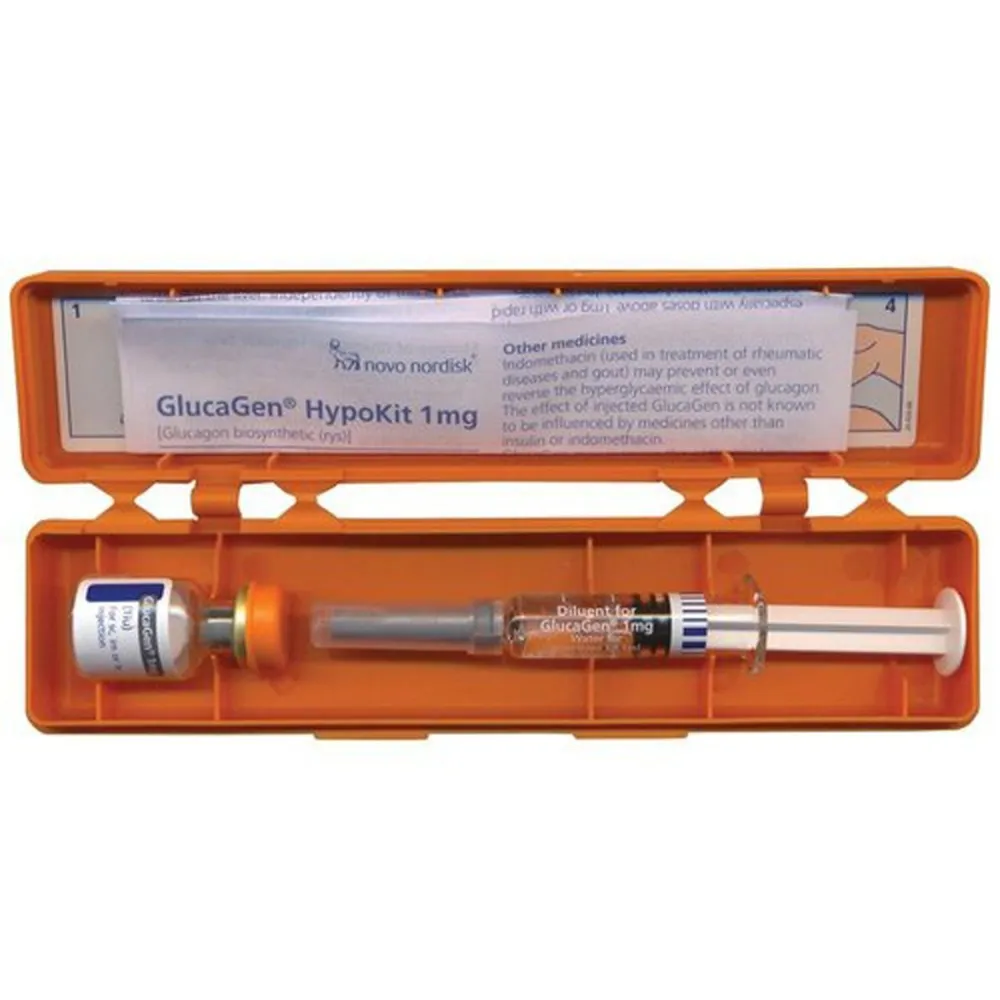
Table of Contents
- Patient Information Leaflet
- 1. What GlucaGen 1 mg HypoKit is and what it is used for
- 2. Important information before using GlucaGen 1 mg HypoKit
- 3. How to use GlucaGen 1 mg HypoKit
- 4. Possible adverse reactions
- 5. How to store GlucaGen 1 mg HypoKit
- 6. Contents of the pack and other information
- Information intended exclusively for healthcare professionals
Patient Information Leaflet
GlucaGen 1 mg HypoKit, 1 mg,
Powder and solvent for solution for injection
glucagon
Please read all of this leaflet carefully before using this medicine, because it contains
important information for you.
- Keep this leaflet. You may need to read it again.
- If you have any further questions, please ask your doctor, pharmacist, or nurse.
- This medicine has been prescribed for a specific individual. Do not pass it on to others. It may harm other people, even if their symptoms are the same.
- If you experience any adverse reactions, including any not listed in this leaflet, tell your doctor. See section 4.
Leaflet Contents
- What GlucaGen 1 mg HypoKit is and what it is used for
- What you need to know before using GlucaGen 1 mg HypoKit
- How to use GlucaGen 1 mg HypoKit
- Possible side effects
- How to store GlucaGen 1 mg HypoKit
- Contents of the pack and other information
1. What GlucaGen 1 mg HypoKit is and what it is used for
GlucaGen 1 mg HypoKit contains the active substance glucagon.
Glucagon is a natural hormone that acts in the human body in opposition to insulin. It promotes the conversion of glycogen into glucose (sugar) in the liver. Glucose is then released into the bloodstream, thereby increasing blood sugar levels.
Therapeutic indications (severe hypoglycaemia)
GlucaGen 1 mg HypoKit is intended for immediate use in emergency situations in children and adults with diabetes who are treated with insulin. It is used when unconsciousness (loss of consciousness) occurs due to very low blood sugar levels, known as severe hypoglycaemia. GlucaGen 1 mg HypoKit is used when the patient cannot take glucose orally.
Diagnostic indications
GlucaGen 1 mg HypoKit is used in adults to inhibit gastrointestinal motility during diagnostic procedures.
Information intended exclusively for healthcare professionals is provided at the end of this leaflet.
2. Important information before using GlucaGen 1 mg HypoKit
When not to use GlucaGen 1 mg HypoKit
- if the patient is allergic to glucagon or any of the other ingredients of this medicine (listed in section 6);
- if the patient has been diagnosed with a tumour of the adrenal glands.
Warnings and precautions
Before starting treatment with GlucaGen 1 mg HypoKit, discuss this with your doctor,
pharmacist or nurse.
Due to the instability of GlucaGen in solution, the medicine should be administered immediately after
preparation and should not be given as an intravenous infusion.
Important information:
- ensure that family members and people in the patient's immediate environment are informed about the possibility of using GlucaGen 1 mg HypoKit. They should be informed about the need to administer GlucaGen 1 mg HypoKit immediately if the patient loses consciousness (becomes unconscious) and oral carbohydrates cannot be given;
- instruct family members and people in the immediate environment where the medicine is stored and how it should be used. The people providing assistance must act quickly – prolonged unconsciousness may be harmful. These individuals should be trained in the use of GlucaGen 1 mg HypoKit before an emergency occurs;
- the pre-filled syringe does not contain GlucaGen medicine. Before administration, the solution must be prepared by mixing the water contained in the pre-filled syringe with glucagon powder contained in the vial. Family members and people in the immediate environment should be instructed to follow the instructions provided in section 3: How to use GlucaGen 1 mg HypoKit;
- any unused glucagon solution prepared should be discarded;
- after administering GlucaGen 1 mg HypoKit, contact a doctor. The cause of the very low blood sugar level should be determined and measures to prevent recurrence should be established.
Glucagon may not work properly in patients:
- who have fasted for a prolonged period,
- with low adrenaline levels, adrenal insufficiency,
- with chronic hypoglycaemia (repeated low blood sugar levels over a long period),
- with low blood sugar caused by alcohol consumption,
- with a tumour secreting glucagon or insulin.
If any of the above situations apply to the patient, discuss this with a doctor or
pharmacist.
Glucagon and other medicines
Tell your doctor or pharmacist about all medicines the patient is currently taking or has recently taken, as well as any medicines the patient plans to take.
The following medicines may affect the action of GlucaGen 1 mg HypoKit:
- insulin – used in the treatment of diabetes,
- indomethacin – used to treat joint pain and stiffness.
Glucagon 1 mg HypoKit may affect the action of the following medicines:
- warfarin – used to prevent blood clots. GlucaGen may enhance the anticoagulant effect of warfarin,
- beta-blockers – used to treat high blood pressure and heart rhythm disorders. GlucaGen 1 mg HypoKit may temporarily increase blood pressure and cause a rapid heartbeat. In patients with coronary artery disease, increased blood pressure or rapid heartbeat may require treatment.
Pregnancy, breastfeeding and fertility
Pregnancy, breastfeeding
If the patient is pregnant or breastfeeding, suspects she may be pregnant, or is planning to have a
child, GlucaGen 1 mg HypoKit may be used in cases of severe
hypoglycaemia.
If the patient is pregnant or breastfeeding, suspects she may be pregnant, or is planning to have a
child, she should consult her doctor or pharmacist before using any medicine.
Effect on fertility
No data available.
Driving and operating machinery
After experiencing very low blood sugar levels, the patient should not drive or operate
machinery until symptoms have resolved.
Glucagon 1 mg HypoKit contains sodium
This medicine contains less than 1 mmol (23 mg) of sodium per dose, meaning it is considered "sodium-free".
3. How to use GlucaGen 1 mg HypoKit
This medicine should always be used according to the doctor's instructions. If in doubt, consult
your doctor.
Preparation and administration of the injection solution
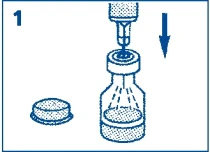
- Remove the plastic cap from the vial. Remove the needle cover from the prefilled syringe. Do not remove the plastic safety device located at the edge of the prefilled syringe. Insert the needle through the centre of the rubber stopper of the vial containing glucagon powder, and then inject all the liquid from the prefilled syringe into the vial.
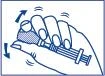
- Without removing the needle, gently shake the vial until the powder is completely dissolved and the solution becomes clear.
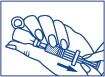
- Ensure the plunger is fully depressed. With the needle still immersed in the liquid, slowly withdraw the entire solution from the vial back into the prefilled syringe. Take care not to pull the plunger out of the syringe. Remove any air bubbles that may be present in the syringe:
- Hold the syringe with the needle pointing upwards and gently tap it with your finger;
- Gently press the plunger to expel air that has collected at the top of the syringe.
Press the plunger until the correct dose for injection is set.
A small amount of liquid may be expelled from the syringe when pressing the plunger.
Please read the dosing information provided below.
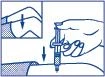
- Inject the dose subcutaneously or intramuscularly.
- Place an unconscious person in the recovery position to prevent choking.
- Give the patient a sugary snack such as sweets, biscuits or fruit juice as soon as the patient regains consciousness and is able to swallow. A sugary snack will help prevent recurrence of low blood sugar.
After using GlucaGen 1 mg HypoKit, contact your doctor. It is important to determine what
caused the severe hypoglycaemia and how to prevent such episodes from recurring.
Dosage
Therapeutic indications (severe hypoglycaemia)
Recommended dose:
Adults:
- Administer 1 mg, i.e. the entire contents of the prefilled syringe (1 ml) – marked on the syringe as “1.0”.
Children:
- Children weighing less than 25 kg or below the age of 6–8 years: administer 0.5 mg, i.e. half the contents of the prefilled syringe (0.5 ml) – marked on the syringe as “0.5”,
- Children weighing 25 kg or more or aged 6–8 years or above: administer 1 mg, i.e. the entire contents of the prefilled syringe (1 ml) – marked on the syringe as “1.0”.
Use of a higher than recommended dose of GlucaGen
A higher than recommended dose of GlucaGen may cause nausea and vomiting. Treatment is usually
not necessary. In cases of significantly higher than recommended doses, serum potassium levels
may decrease and should therefore be monitored.
4. Possible adverse reactions
Like all medicines, this medicine can cause adverse reactions, although not everyone will experience them.
The following adverse reactions may occur during treatment with this medicine:
Immediately contact a doctor if the patient experiences any of the following serious adverse reactions:
Very rare adverse reactions (may occur in less than 1 in 10,000 patients):
- allergic reaction – which may manifest as wheezing, sweating, rapid heartbeat, rash, facial swelling, and collapse.
Other adverse reactions
Common adverse reactions (may occur in less than 1 in 10 patients):
- feeling sick (nausea).
Uncommon adverse reactions (may occur in less than 1 in 100 patients):
- vomiting.
Rare adverse reactions (may occur in less than 1 in 1,000 patients):
- abdominal pain.
Frequency not known (cannot be estimated from available data):
- reactions at the injection site.
If any of the adverse reactions listed above occur, or if any adverse effects not listed in this leaflet occur, inform a doctor.
Reporting of adverse reactions
If any adverse effects occur, including any adverse effects not listed in this leaflet, inform a doctor, pharmacist, or nurse. Adverse reactions can be reported directly to the Department of Monitoring Adverse Drug Reactions of the Office for Registration of Medicinal Products, Medical Devices and Biocidal Products:
Al. Jerozolimskie 181C, 02-222 Warsaw, tel.: +48 22 49-21-301, fax: +48 22 49-21-309,
website: https://smz.ezdrowie.gov.pl
Adverse reactions can also be reported to the marketing authorization holder.
Reporting adverse reactions helps to provide more information on the safety of this medicine.
5. How to store GlucaGen 1 mg HypoKit
- Keep the medicine out of the sight and reach of children.
- Do not freeze. Store at a temperature of 2 °C to 8 °C. It is permissible to store below 25 °C for up to 18 months, provided the expiry date is not exceeded. Protect from light.
- The reconstituted solution should be used immediately after preparation – do not store the solution for later use.
- Do not use this medicine after the expiry date stated on the label after: "EXP". The expiry date refers to the last day of the stated month. The batch number is indicated as: "Lot".
- Do not use this medicine if solid particles are visible in the solution or if the powder has not completely dissolved.
- Do not use the medicine if the plastic cap is loose or missing – in such cases, return the medicine to the pharmacy where it was obtained.
- Medicines must not be disposed of via wastewater or household waste. Ask your pharmacist how to dispose of medicines no longer required. This will help protect the environment.
6. Contents of the pack and other information
What GlucaGen contains
- The active substance is glucagon as glucagon hydrochloride. One vial contains 1 mg of glucagon, equivalent to 1 mg (1 IU) of glucagon in 1 ml of solution after reconstitution.
- Other ingredients: monohydrate lactose, water for injections, hydrochloric acid (for pH adjustment), sodium hydroxide (for pH adjustment).
What GlucaGen looks like and contents of the pack
The GlucaGen 1 mg HypoKit pack contains one vial with a white or almost white powder containing 1 mg of glucagon, and one pre-filled syringe with a clear, colourless solvent free of solid particles.
Marketing Authorisation Holder and Manufacturer
Novo Nordisk A/S
Novo Allé
DK-2880 Bagsværd
Denmark
For further information, contact the local representative of the Marketing Authorisation Holder:
Novo Nordisk Pharma Sp. z o.o.
Tel.: 22 444 49 00
Fax: 22 444 49 01
Other sources of information
Detailed information on this medicinal product is available on the website of the Office for Registration of Medicinal Products, Medical Devices and Biocidal Products: www.urpl.gov.pl
Information intended exclusively for healthcare professionals
The entire package leaflet should be read before reviewing this additional information.
Identifiability
To improve the traceability of biological medicinal products, the name and batch number of the administered product should be clearly recorded.
Due to the instability of GlucaGen in solution, the medication must be administered immediately after reconstitution and must not be given as an intravenous infusion.
Do not recap the needle on the used pre-filled syringe. Place the used pre-filled syringe in the orange outer container and transfer it as soon as possible to a sharps disposal container.
Therapeutic indications in severe hypoglycaemia
Administer by subcutaneous or intramuscular injection.
If there is no response within 10 minutes, intravenous glucose should be administered. If the patient responds to treatment, carbohydrates should be given orally to replenish hepatic glycogen stores and to prevent recurrence of hypoglycaemia.
Adults:
Administer 1 mg by subcutaneous or intramuscular injection.
Children and adolescents (< 18 years):
Administer by subcutaneous or intramuscular injection:
- 0.5 mg (children with body weight below 25 kg or age below 6–8 years)
- 1 mg (children with body weight above 25 kg or age above 6–8 years).
Diagnostic indications (inhibition of gastrointestinal motility)
GlucaGen must be administered only by qualified healthcare professionals during diagnostic procedures.
After completion of the diagnostic procedure, oral carbohydrates should be given to the patient if compatible with the diagnostic protocol. Note that GlucaGen has an antagonistic effect to insulin.
GlucaGen may increase myocardial oxygen demand, elevate blood pressure, and cause tachycardia. Patients with heart disease who have received glucagon for diagnostic purposes should be monitored and treated as clinically indicated.
The use of GlucaGen for diagnostic purposes in diabetic patients may cause transient hyperglycaemia. In diabetic patients, blood glucose levels should be monitored during treatment and appropriate therapy should be initiated if indicated.
Note: A syringe with a thinner needle and precise graduation may be more suitable for diagnostic procedures.
Adults:
The dose ranges from 0.2 mg to 2 mg, depending on the diagnostic technique and route of administration.
For relaxation of the stomach, duodenal bulb, duodenum, and small intestine during diagnostic procedures, the dose is 0.2 mg to 0.5 mg administered intravenously or 1 mg administered intramuscularly.
For relaxation of the colon, the dose is 0.5 mg to 0.75 mg administered intravenously or 1 mg to 2 mg administered intramuscularly.
After intravenous administration of 0.2 mg to 0.5 mg, onset of action occurs within 1 minute and lasts from 5 to 20 minutes.
After intramuscular administration of 1 mg to 2 mg, onset of action occurs within 5 to 15 minutes and lasts approximately 10 to 40 minutes.
Children and adolescents (< 18 years):
The safety and efficacy of GlucaGen in children and adolescents for the inhibition of gastrointestinal motility during diagnostic procedures have not been established. No data are available.
Additional adverse reactions occurring after use in diagnostic procedures
Very rare (may occur in less than 1 in 10,000 patients):
hypotension, hypertension, tachycardia.
Not common (may occur in less than 1 in 100 patients):
hypoglycaemia and hypoglycaemic coma.