Gexiro
PolandTable of Contents
Patient Information Leaflet
Gexiro, 32 mg/mL + 9.6 mg/mL, oral suspension
Paracetamolum + Ibuprofenum
Please read the entire leaflet carefully before using the medicine, as it contains
important information for the patient.
- Keep this leaflet, so that you can read it again if necessary.
- If you have any questions, please consult your doctor or pharmacist.
- This medicine has been prescribed for a specific individual. Do not share it with others. This medicine may harm another person, even if their symptoms are the same.
- If you experience any adverse reactions, including those not listed in this leaflet, inform your doctor or pharmacist. See section 4.
Table of contents
- What Gexiro is and what it is used for
- Important information before taking Gexiro
- How to take Gexiro
- Possible side effects
- How to store Gexiro
- Contents of the pack and other information
1. What Gexiro is and what it is used for
Gexiro contains paracetamol and ibuprofen.
Paracetamol is an active substance that reduces pain.
Ibuprofen belongs to a group of medicines called non-steroidal anti-inflammatory drugs (NSAIDs).
It reduces pain and inflammation (swelling, redness, or tenderness).
Gexiro is used for the short-term treatment of acute pain of mild to moderate intensity, which is considered not to respond to paracetamol or ibuprofen (administered separately) in children aged 2 to 12 years and weighing 12 kg or more.
If you have any questions about this medicine, please consult your doctor or pharmacist.
2. Important information before using Gexiro
When not to use Gexiro:
- if the child is allergic to paracetamol, ibuprofen, or any of the other ingredients of this medicine (listed in section 6);
- if the child has peptic ulcer (i.e. stomach or duodenal ulcer), gastrointestinal bleeding, or has had in the past two or more episodes of ulceration or bleeding from the stomach or small intestine;
- if the child has ever had gastrointestinal bleeding or perforation following treatment with non-steroidal anti-inflammatory drugs (NSAIDs);
- with other medicines containing paracetamol or ibuprofen;
- if the child has severe heart, liver, or kidney failure;
- if the child has cerebral haemorrhage or any other active bleeding;
- if the child has blood cell disorders, blood clotting disorders, or other diseases increasing the tendency to bleed;
- if the child has ever had asthma, urticaria, or allergic-type reactions after taking acetylsalicylic acid or other NSAIDs;
- if the child is severely dehydrated (due to vomiting, diarrhoea, or insufficient fluid intake);
- with other NSAIDs (including selective COX-2 inhibitors) or with acetylsalicylic acid at doses exceeding 75 mg per day.
In adults, additionally to the situations listed above, do not use Gexiro:
- in women during the last three months of pregnancy.
Warnings and precautions
Talk to a doctor or pharmacist:
- before starting to give Gexiro to the child;
- if the child has an infection – see below, section "Infections".
Warning: Taking more than the recommended dose increases the risk of severe liver damage.
Therefore, do not exceed the maximum daily dose of paracetamol. Check whether other medicines taken by the child, including those obtained without a prescription, contain paracetamol. Do not combine them, to avoid exceeding the recommended daily dose (see section 3 "How to use Gexiro" and "If you take more Gexiro than you should").
Also check whether other medicines taken by the child contain ibuprofen.
The use of anti-inflammatory and/or analgesic medicines such as ibuprofen may cause a slight increase in the risk of heart attack or stroke, especially when used in high doses. Do not exceed the recommended dose or duration of treatment.
If, during treatment with Gexiro, the child has severe diseases, including severe kidney impairment or sepsis (when bacteria and their toxins circulate in the blood, leading to organ damage), malnutrition, chronic alcoholism, or if the child is also taking flucloxacillin (an antibiotic). Severe metabolic acidosis (a blood and body fluid disorder) has been reported in patients who take paracetamol regularly for a prolonged period or who take paracetamol together with flucloxacillin.
Symptoms of metabolic acidosis may include: severe breathing difficulties, including rapid deep breathing, drowsiness, nausea, and vomiting.
In dehydrated children, there is a risk of kidney damage.
Before starting treatment with Gexiro, discuss with a doctor or pharmacist if the child:
- has high blood pressure;
- has high cholesterol levels, or family history of heart disease or stroke;
- has or has had asthma or diabetes;
- has or has had lupus or mixed connective tissue disease;
- has or has had chronic inflammatory bowel disease, such as ulcerative colitis or Crohn's disease with gastrointestinal bleeding;
- has or has had chickenpox;
- has liver disease, hepatitis, kidney disease, or difficulty passing urine;
- is scheduled for surgery;
- has or has had other diseases, including: o heartburn, indigestion, stomach ulcers, or any other stomach problems; o vomiting blood or rectal bleeding; o glucose-6-phosphate dehydrogenase deficiency; o haemolytic anaemia (a blood disorder); o severe skin reactions, such as Stevens-Johnson syndrome;
o visual disturbances;
o swelling of ankles or feet;
o diarrhoea;
o inherited or acquired disorders of certain enzymes, manifesting as neurological or skin disorders, or sometimes both, e.g. porphyria.
This medicine is intended for children aged 2 to 12 years. In adults using this medicine, all the above statements apply, as well as the following additional warnings:
Tell the doctor or pharmacist if:
- the patient regularly consumes large amounts of alcohol or other medicines;
- the patient has heart problems, including heart failure, angina (chest pain), has had a heart attack, coronary bypass surgery, peripheral arterial disease (poor circulation in legs or feet due to narrowed or blocked arteries), or has had any stroke [including "mini-stroke" or transient ischaemic attack (TIA)];
- the patient is a smoker;
- the patient is pregnant or plans to become pregnant;
- the patient is breastfeeding or plans to breastfeed.
This medicine belongs to a group of medicines (NSAIDs) that may impair fertility in women. This effect is reversible upon discontinuation of the medicine.
Skin reactions
Severe skin reactions associated with Gexiro treatment have been reported. Discontinue administration of Gexiro to the child and seek immediate medical help if the child develops skin rash, mucosal lesions, blisters on the skin, or other allergic symptoms, as these may be early signs of a very serious skin reaction. See section 4.
Infections
Gexiro may mask symptoms of infection, such as fever and pain. Therefore, the use of Gexiro may delay the initiation of appropriate treatment for infection, potentially increasing the risk of complications. This has been observed in cases of bacterial pneumonia and bacterial skin infections during chickenpox. If the child has an infection and receives this medicine, and infection symptoms persist or worsen, seek immediate medical advice.
Gexiro and other medicines
Do not use this medicine:
- with other medicines containing paracetamol and ibuprofen;
- with other NSAIDs (including selective COX-2 inhibitors) or with acetylsalicylic acid at doses exceeding 75 mg per day.
Tell the doctor or pharmacist about all medicines currently or recently taken by the patient or the patient's child, as well as any medicines the patient or the patient's child plans to take.
Gexiro may affect other medicines or other medicines may affect this medicine. For example:
- anticoagulants (i.e. blood thinners and/or preventing clot formation, e.g. acetylsalicylic acid, warfarin, ticlopidine);
- medicines used to treat epilepsy or seizures;
- chloramphenicol, an antibiotic used to treat ear and eye infections;
- probenecid, a medicine used to treat gout;
- zidovudine, a medicine used to treat HIV infection (human immunodeficiency virus);
- medicines used to treat tuberculosis, such as isoniazid and rifampicin;
- acetylsalicylic acid, salicylates, or other NSAIDs;
- medicines used to treat high blood pressure (angiotensin-converting enzyme inhibitors, such as captopril, beta-blockers such as atenolol, angiotensin II receptor antagonists such as losartan);
- diuretics, also known as water tablets;
- lithium, a medicine used to treat certain types of depression;
- methotrexate, a medicine used to treat arthritis and certain types of cancer;
- corticosteroids, such as prednisone, cortisone;
- metoclopramide, domperidone, propanteline;
- cholestyramine, a medicine used to reduce elevated blood lipid levels;
- tacrolimus or cyclosporine, immunosuppressive medicines used after organ transplantation;
- sulfonylureas, medicines used to treat diabetes;
- certain antibiotics (e.g. quinolone antibiotics);
- flucloxacillin (antibiotic), due to the serious risk of a disorder affecting blood and body fluids (called metabolic acidosis), which requires urgent treatment (see section 2);
- aminoglycosides;
- phenytoin;
- CYP2C9 inhibitors, such as voriconazole and fluconazole;
- mifepristone;
- ritonavir;
- selective serotonin reuptake inhibitors (SSRIs), cardiac glycosides, quinidine, bisphosphonates, and pentoxifylline.
Gexiro may affect the above medicines or these medicines may affect the efficacy of Gexiro. The patient may require different doses of these medicines or alternative medicines.
Some other medicines may also affect the action of Gexiro or Gexiro may affect their action. Therefore, always consult a doctor or pharmacist before using Gexiro with other medicines.
More information about these and other medicines that should be used cautiously or avoided during treatment with this medicine can be obtained from a doctor or pharmacist.
Gexiro and alcohol
Do not drink alcoholic beverages during treatment with this medicine. Consuming alcohol while taking Gexiro may cause liver damage.
Pregnancy, breastfeeding, and effects on fertility
If the patient is pregnant or breastfeeding, suspects she may be pregnant, or plans to have a child, she should consult a doctor or pharmacist before using this medicine.
Do not take Gexiro during the last three months of pregnancy, as it may harm the unborn child or cause problems during delivery. This medicine may cause kidney and heart problems in the unborn child. It may increase the tendency to bleeding in both mother and child and may delay or prolong labour.
Do not take Gexiro during the first six months of pregnancy unless the doctor considers it absolutely necessary. If treatment is required during this period or when trying to conceive, use the lowest possible dose for the shortest possible time. From the 20th week of pregnancy, Gexiro may cause kidney function disorders in the unborn child if taken for longer than a few days. This may lead to reduced amniotic fluid surrounding the child (oligohydramnios) or narrowing of a blood vessel (ductus arteriosus) in the child's heart. If treatment for longer than a few days is required, the doctor may recommend additional monitoring.
This medicine may impair fertility in women and is not recommended for women trying to conceive.
Driving and operating machinery
Exercise caution when driving or operating machinery until the patient knows how Gexiro affects them. If symptoms such as dizziness, drowsiness, fatigue, or visual disturbances occur after taking this medicine, do not drive or operate machinery.
Gexiro contains liquid maltitol, sodium benzoate, sodium, and propylene glycol
- Liquid maltitol: Gexiro contains 250 mg/mL of liquid maltitol. If the child has previously been diagnosed with intolerance to certain sugars, consult a doctor before administering the medicine to the child.
- Sodium benzoate: this medicine contains 1 mg of sodium benzoate in each mL of suspension.
- Sodium: Gexiro contains less than 1 mmol (23 mg) of sodium per dose, meaning the medicine is considered "sodium-free".
- Propylene glycol: this medicine contains 9.6 mg of propylene glycol in each mL of suspension, equivalent to up to 16 mg/kg body weight/day.
3. How to use Gexiro
This medicine should always be used exactly as directed by the doctor or pharmacist.
In case of doubt, consult your doctor or pharmacist.
It is important to follow the dosage according to body weight for children up to 10 years of age,
not the approximate age, which is provided for informational purposes only.
| Body weight | Age (approximate) | Dose (mL) | Maximum daily dose (mL) |
| 12 - < 14 kg | 2 years | 4.5 | 18 |
| 14 - < 16 kg | 3 years | 5.5 | 22 |
| 16 - < 18 kg | 4 years | 6 | 24 |
| 18 - < 20 kg | 5 years | 7 | 28 |
| 20 - < 22 kg | 6 years | 7.5 | 30 |
| 22 - < 25 kg | 7 years | 8.5 | 34 |
| 25 - < 28 kg | 8 years | 9.5 | 38 |
| 28 - < 31 kg | 9 years | 10.5 | 42 |
| 31 - < 33 kg | 10 years | 11.5 | 46 |
| 33 - < 40 kg* | 11-12 years | 12.5 | 50 |
In children above the age of 10 years, the relationship between body weight and age is no longer uniform due to puberty, which affects body weight differently depending on sex and individual characteristics of the child.
This medicine is not indicated for use in children under 2 years of age or in children weighing less than 12 kg.
Doses should be administered every 6 hours, as needed. Do not administer more than 4 doses within 24 hours.
Adults taking this medicine should consult a doctor to determine the appropriate dose.
Do not use for longer than 3 days.
Use the lowest effective dose for the shortest duration necessary to relieve symptoms. If the child has an infection, consult a doctor immediately if symptoms (such as pain) persist or worsen.
If a doctor recommends a different dose, follow those instructions.
Instructions for using the oral syringe:
- Shake the bottle vigorously for at least 10 seconds before use.
- Firmly press the syringe into the adapter (opening) in the neck of the bottle.
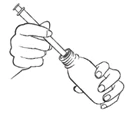
- To fill the syringe, invert the bottle upside down. Holding the syringe steady, carefully push the plunger down to draw the medicine up to the appropriate mark on the syringe scale.
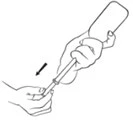
- Return the bottle to its upright position, then carefully unscrew and remove the syringe from the bottle's adapter.
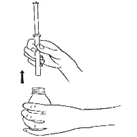
- Place the tip of the syringe into the child's mouth, usually in the corner of the mouth, between the cheek and the gums. Gently press the plunger to slowly empty the syringe's contents.
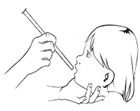
- If the table above recommends administering more than 5 mL of medicine, repeat steps 2 to 5 to deliver the appropriate amount.
- After use, close the bottle by tightly screwing on the cap. All medicines should be stored out of sight and out of reach of children.
- Wash the syringe with warm water and allow it to dry.
Do not mix this medicine with food or other liquids.
Accidental overdose of Gexiro medicine
If a patient or a patient's child takes more than the recommended dose of this medicine, or if the medicine is accidentally ingested by a child, contact a doctor immediately or go to the nearest hospital emergency department for advice on the risk and actions to take. This should be done even if the patient shows no symptoms of discomfort or poisoning, as an excessive dose of paracetamol may cause delayed, severe liver damage. Immediate medical help may be required.
Additional symptoms of overdose may include: nausea, abdominal pain, vomiting (which may contain blood), gastrointestinal bleeding (see also point 4 below), diarrhea, headache, tinnitus, confusion, and nystagmus. Excitement, drowsiness, disorientation, or coma may also occur. In isolated cases, seizures may occur in patients. After ingestion of large doses, drowsiness, chest pain, palpitations, loss of consciousness, seizures (mainly in children), weakness, and dizziness have been reported. Hematuria, low blood potassium levels, cold sensation, and breathing difficulties may also occur. Additionally, prothrombin time/INR may be prolonged, likely due to disturbances in circulating blood coagulation factors. Acute kidney failure and liver damage may occur. In patients with asthma, asthma exacerbation is possible. Furthermore, low blood pressure and reduced respiratory rate may occur.
Missed dose of Gexiro medicine
If it is almost time for the next dose, skip the missed dose and take the next dose at the scheduled time. Otherwise, take the medicine as soon as you remember, then continue with the usual dosing schedule for the suspension.
Do not take a double dose to make up for a missed dose.
If you are unsure whether to take a missed dose, consult your doctor or pharmacist.
4. Possible side effects
Like all medicines, this medicine can cause side effects, although not everybody will experience them.
If any of the adverse symptoms worsen or if any adverse effects not listed in this leaflet occur,
you should inform your doctor or pharmacist.
If any of the following serious side effects occur, stop taking Gexiro and immediately contact your doctor or go to the nearest hospital emergency department:
Uncommon (may occur in fewer than 1 in 100 people):
- vomiting blood or material resembling coffee grounds;
- bleeding from the rectum, black sticky stools, or bloody diarrhoea;
- swelling of the face, lips, or tongue, which may cause difficulty in swallowing or breathing.
Rare (may occur in fewer than 1 in 1,000 people):
- urticaria.
Very rare (may occur in fewer than 1 in 10,000 people):
- asthma, wheezing, shortness of breath;
- sudden or severe itching, skin rash;
- severe rash with blisters and bleeding around the lips, eyes, nose, and genitals (Stevens-Johnson syndrome). Very rarely, severe skin reactions have been reported;
- worsening of existing severe skin infections (rash, blisters, skin discoloration, fever, drowsiness, diarrhoea, and nausea may occur) or worsening of other infections, including chickenpox or shingles, or severe infection with tissue necrosis (necrosis) of subcutaneous tissue and muscles, formation of blisters, and peeling of the skin;
- fever;
- general malaise;
- neck stiffness.
Other side effects that may occur:
Common (may occur in fewer than 1 in 10 people):
- nausea or vomiting;
- loss of appetite;
- heartburn or pain in the upper abdomen;
- stomach cramps, flatulence, constipation or diarrhoea, minor gastrointestinal bleeding;
- skin rashes, skin itching;
- headache;
- dizziness;
- feeling of nervousness;
- ringing or noises in the ears;
- unusual weight gain, fluid retention and swelling, swelling of ankles or legs;
- increased alanine aminotransferase activity, increased gamma-glutamyl transferase activity, and abnormal liver function tests after paracetamol use, increased blood creatinine and urea levels.
Uncommon (may occur in fewer than 1 in 100 people):
- decreased number of red blood cells, nosebleeds, and heavy menstrual bleeding (menorrhagia);
- allergic reactions – skin rash, fatigue, joint pain (e.g. serum sickness, systemic lupus erythematosus, Schönlein-Henoch purpura, angioedema);
- breast enlargement in men;
- low blood sugar levels;
- insomnia;
- mood changes, such as depression, disorientation;
- eye problems, such as blurred vision (reversible), eye pain and redness, itching;
- thickening of respiratory tract secretions (mucus);
- wheezing due to airway obstruction in children during tonsillectomy;
- low blood oxygen levels;
- severe stomach pain or tenderness; peptic ulcer and (or) gastrointestinal ulceration;
- intestinal inflammation and worsening of inflammatory bowel conditions such as colitis and gastrointestinal tract (Crohn's disease), and complications related to colonic diverticula (perforation or fistula);
- inability to completely empty the bladder (urinary retention);
- abnormal laboratory test results (regarding blood, liver and kidney enzymes);
- postoperative bleeding after tonsillectomy;
- ulcerative stomatitis.
Rare (may occur in fewer than 1 in 1,000 people):
- tingling in hands and feet;
- unusual dreams, seeing things that are not there (hallucinations);
- kidney tissue damage (especially with long-term use of the medicine);
- high levels of uric acid in the blood (hyperuricaemia).
Very rare (may occur in fewer than 1 in 10,000 people):
- low potassium levels – weakness, fatigue, muscle cramps (hypokalaemia);
- symptoms of anaemia such as fatigue, headache, shortness of breath, and pale skin;
- easier than usual bleeding or bruising, red or purple spots under the skin;
- severe or persistent headache;
- sensation of spinning (dizziness);
- rapid or irregular heartbeat, also known as palpitations;
- increased blood pressure and possible heart function disturbances;
- oesophagitis;
- yellowing of the skin and (or) eyes, also known as jaundice;
- liver damage (especially with long-term use);
- hair loss;
- increased sweating;
- symptoms of frequent or worrying infections such as fever, severe chills, sore throat or mouth ulcers;
- cloudy urine;
- skin becomes sensitive to light;
- paradoxical drug reaction, eye movement pain or transient vision loss, gait disturbances or involuntary movements, tremors or seizures;
- abdominal pain, bloating or inability to pass gas and stool;
- red or purple rash.
Frequency not known (frequency cannot be estimated from available data):
- severe skin reaction known as DRESS syndrome may occur. Symptoms of DRESS syndrome include: skin rash, fever, swollen lymph nodes, and increased eosinophil count (a type of white blood cells);
- red, scaly widespread rash with subcutaneous nodules and blisters, mainly appearing in skin folds, trunk, and upper limbs, accompanied by fever at the beginning of treatment (acute generalised exanthematous pustulosis). If such symptoms occur in a patient, treatment with Gexiro should be discontinued immediately and medical help should be sought immediately. See also section 2.
- serious condition that may cause the blood to become more acidic (so-called metabolic acidosis) in patients with severe illness taking paracetamol (see section 2).
The above list includes serious side effects which may require medical attention.
Serious side effects rarely occur after low doses of this medicine and when it is used short-term.
Reporting of side effects
If any side effects occur, including any not listed in this leaflet, inform your doctor or pharmacist. Side effects can be reported directly to the Department of Monitoring Adverse Drug Reactions, Office for Registration of Medicinal Products, Medical Devices and Biocidal Products, Al. Jerozolimskie 181C, 02-222 Warsaw, phone: +48 22 49 21 301, fax: +48 22 49 21 309, website: https://smz.ezdrowie.gov.pl.
Side effects can also be reported to the marketing authorisation holder.
Reporting side effects helps to provide more information on the safety of the medicine.
5. How to store Gexiro
Keep this medicine out of the sight and reach of children.
Store below 25°C.
Shelf life after first opening: 3 months when stored at 25°C or below.
Do not use this medicine after the expiry date stated on the cardboard box and on the bottle under "Expiry date (EXP)". The expiry date refers to the last day of the specified month.
Do not use this medicine if any damage to the packaging is noticed or if the packaging shows signs of tampering.
Medicines should not be disposed of via wastewater or household waste. Ask your pharmacist how to dispose of medicines no longer required. This will help protect the environment.
6. Contents of the packaging and other information
What Gexiro contains
The active substances in the medicine are: paracetamol 32 mg and ibuprofen 9.6 mg in 1 mL of suspension.
The other ingredients are: citric acid monohydrate (E 330), glycerol (E 422), liquid maltitol (E 965),
polysorbate 80, sodium benzoate (E 211), disodium citrate dihydrate (E 331), sucralose (E 955), microcrystalline
cellulose and sodium carmellose (Vivapur MCG 591P), xanthan gum, fruit flavour,
flavour masking bitter taste*, strawberry flavour*, candy flavour*, vanilla flavour*, carmine
(E 120), purified water.
* Contains propylene glycol (E 1520)
What Gexiro looks like and contents of the pack
Gexiro is a pink, viscous oral suspension.
The pack contains 100 mL or 200 mL of suspension in a PET bottle with a PP/HDPE screw cap
with child-resistant closure, and an oral syringe with a capacity of 5 mL (graduated in 0.1 mL increments), used as a dosing device.
Marketing Authorisation Holder and Manufacturer
Marketing Authorisation Holder
Medical Valley Invest AB
Brädgårdsvägen 28
236 32 Höllviken
Sweden
email: [email protected]
Manufacturer
SAG Manufacturing S.L.U.
Carretera N-I, Km 36, San Agustin de Guadalix
28750 Madrid
Spain
This medicine is authorised in the European Economic Area countries under the following names:
Greece: GoPain Oral Suspension
Malta: Paraibucomb
Poland: Gexiro