Gentamicin krka
Poland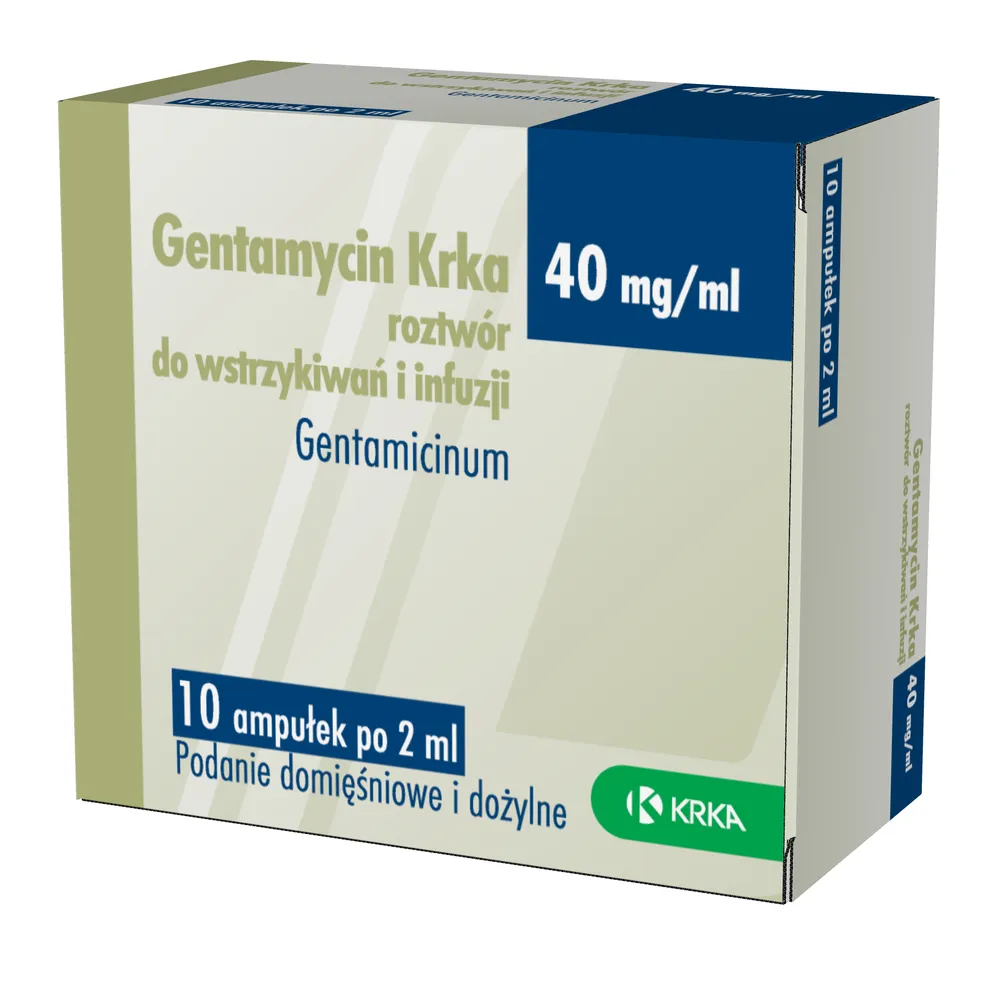
Table of Contents
- Package leaflet: Information for the patient
- 1. What Gentamycin Krka is and what it is used for
- 2. Important information before using Gentamycin Krka
- 3. How to use Gentamycin Krka
- 4. Possible adverse effects
- 5. How to store Gentamycin Krka
- 6. Contents of the packaging and other information
- Information intended exclusively for healthcare professionals:
Package leaflet: Information for the patient
Warning! Please keep the leaflet. Information on the immediate packaging is in a foreign language.
Gentamycin Krka (Gentamicin Krka), 40 mg/ml, solution for injection and infusion
Gentamicin
Gentamycin Krka and Gentamicin Krka are different brand names for the same medicine.
Please read this leaflet carefully before using the medicine, as it contains
important information for the patient.
- Keep this leaflet, so that you can read it again if necessary.
- If you have any questions, please consult your doctor or pharmacist.
- This medicine has been prescribed for a specific individual. Do not pass it on to others. This medicine may harm others, even if their symptoms are the same.
- If you experience any adverse effects, including any not listed in this leaflet, inform your doctor, pharmacist, or nurse. See section 4.
Table of contents of the leaflet
- What Gentamycin Krka is and what it is used for
- Important information before using Gentamycin Krka
- How to use Gentamycin Krka
- Possible side effects
- How to store Gentamycin Krka
- Contents of the pack and other information
1. What Gentamycin Krka is and what it is used for
Gentamycin Krka is an antibiotic belonging to the aminoglycoside group. It kills bacteria that cause serious infections in the body.
When Gentamycin Krka is used
Gentamycin Krka is used in the treatment of serious infections caused by aerobic Gram-negative bacteria susceptible to its action. These include:
- septicaemia and other severe systemic infections,
- intra-abdominal infections: peritonitis, abscesses, biliary tract infections (usually administered together with metronidazole or clindamycin),
- urinary tract infections,
- respiratory tract infections,
- secondary infections of burns and traumatic or postoperative wounds,
- severe infections in newborns.
2. Important information before using Gentamycin Krka
When not to use Gentamycin Krka
- if the patient is allergic to gentamicin, other aminoglycoside antibiotics, or any of the other ingredients of this medicine (listed in section 6),
- if the patient suffers from a disease called myasthenia gravis (muscle weakness).
Warnings and precautions
If the patient suffers from any chronic disease, has metabolic disorders, hypersensitivity
(allergy) to other medicines, or is taking other medicines, he/she should inform the doctor before starting
treatment with Gentamycin Krka.
The patient should also inform the doctor if:
- he/she has hearing or balance disorders, Parkinson's disease, or has previously suffered from any kidney disease,
- he/she has low blood calcium levels (hypocalcaemia),
- hearing disturbances, dizziness or ringing in the ears occur after starting treatment,
- severe diarrhoea occurs.
If the patient develops severe or prolonged diarrhoea associated with gentamicin treatment, he/she should
immediately consult a doctor, who will determine whether it is pseudomembranous colitis – a potentially life-threatening complication that may sometimes occur as a result of
antibiotic use. Appropriate treatment may be necessary. If diarrhoea occurs during gentamicin treatment,
the patient should not take any medicines that inhibit intestinal motility (peristalsis).
During treatment with Gentamycin Krka, symptoms of hearing disturbances may occur, especially in
children, elderly patients, patients with impaired kidney function, patients who have previously had such disorders, patients treated with other ototoxic medicines, dehydrated patients, or patients treated with higher doses of gentamicin for a prolonged period.
The doctor will closely monitor the patient's condition during treatment to prevent hearing damage.
The doctor may perform tests to assess hearing, balance, kidney function, and serum gentamicin concentration.
Gentamicin may cause kidney function disturbances. This is more likely when high doses of gentamicin are used, in elderly patients, in women, in patients with impaired kidney function, in poorly hydrated patients, in patients with nephrotic syndrome, in patients with diabetic nephropathy, and in patients treated with other nephrotoxic medicines.
Gentamycin Krka with other medicines
Tell your doctor about all medicines the patient is currently taking or has recently taken, as well as any
medicines the patient plans to take.
The simultaneous use of Gentamycin Krka and other medicines increases the risk of
adverse reactions. Inform the doctor if the patient is taking any of the
following medicines:
- diuretics (especially ethacrynic acid and furosemide),
- succinylcholine, tubocurarine, botulinum toxin (muscle relaxants),
- certain antibiotics (amikacin, tobramycin, vancomycin, cephaloridine, viomycin, polymyxin B, netromycin, neomycin, clindamycin, piperacillin, and streptomycin),
- oral anticoagulants,
- amphotericin B (used in fungal infections),
- cyclosporine (an immunosuppressive medicine),
- methoxyflurane (used for general anaesthesia during surgery),
- foscarnet (used in viral infections),
- cisplatin (used in the treatment of certain cancers),
- bisphosphonates (used in the treatment of osteoporosis),
- neostigmine, pyridostigmine (used in the treatment of muscle weakness),
- indomethacin (used in inflammatory conditions),
- intravenous contrast agents.
Indomethacin may additionally increase gentamicin plasma concentrations in newborns.
Pregnancy and breastfeeding
If the patient is pregnant or breastfeeding, suspects she may be pregnant, or is planning to have
a child, she should consult a doctor or pharmacist before using this medicine.
Pregnancy
Aminoglycoside antibiotics cross the placental barrier and may damage the fetus's hearing and
balance organs. If a woman is pregnant, the doctor may prescribe Gentamycin Krka only in life-threatening situations when no other, safer antibiotic is available.
Breastfeeding
Gentamicin passes into human milk; therefore, breastfeeding is not recommended during
treatment with Gentamycin Krka.
Driving and operating machinery
Gentamycin Krka may cause balance disturbances, nausea, and dizziness.
These symptoms may also occur after completion of treatment. During treatment, the patient should not drive
or operate machinery. If such disturbances occur, the patient should consult a doctor.
Gentamycin Krka contains methyl parahydroxybenzoate (E 218), propyl parahydroxybenzoate (E 216)
This medicine may cause allergic reactions (including delayed-type reactions) and, rarely, bronchospasm.
Gentamycin Krka contains sodium metabisulfite (E 223)
This medicine may rarely cause severe hypersensitivity reactions and bronchospasm.
Gentamycin Krka contains sodium
This medicine contains less than 1 mmol (23 mg) of sodium per dose, meaning the medicine is considered "sodium-free".
3. How to use Gentamycin Krka
Dosage
This medicine should always be used exactly as prescribed by the doctor. If in doubt, consult the doctor or pharmacist.
The doctor will determine the dose, frequency of administration, and duration of treatment depending on the disease, the patient's tolerance to the medicine, response to treatment, and possible adverse effects.
Dosage in patients with normal kidney function
Children, adolescents, and adults: 3 to 6 mg/kg body weight per day, administered as a single dose (recommended) or divided into two doses given every 12 hours.
Infants from 2 months of age: 4.5 to 7.5 mg/kg body weight per day, administered as a single dose (recommended) or divided into two doses given every 12 hours.
Newborns: 4 to 7 mg/kg body weight per day. Due to the longer half-life of the drug in newborns, the daily dose should be administered as a single dose.
Dosage in patients with renal impairment
The initial dose is the same as in patients with normal kidney function. During continued treatment, the doctor may increase the intervals between doses or reduce the dose according to kidney function. Detailed recommendations are provided at the end of this leaflet, in the section intended for healthcare professionals.
Method of administration
Gentamycin Krka is administered intramuscularly or intravenously. In both cases, the dose of the medicine is the same. Detailed recommendations are provided at the end of this leaflet, in the section intended for healthcare professionals.
Use of a higher than recommended dose of Gentamycin Krka
Excessively high doses or rapid administration of this medicine may lead to breathing difficulties, nausea, dizziness, vomiting, tinnitus, a sensation of pressure in the ears, and leg muscle spasms.
If such symptoms occur or if an overdose is suspected, inform the doctor immediately.
Missed dose of Gentamycin Krka
The frequency of injections is determined by the doctor. If an injection has not been administered for any reason, inform the doctor.
Discontinuation of Gentamycin Krka treatment
Premature discontinuation of treatment may result in worsening of disease symptoms.
4. Possible adverse effects
Like all medicines, this medicine can cause adverse effects, although not everyone experiences them.
If any of the following adverse effects occur, inform your doctor immediately.
Symptoms occurring not very commonly (in 1 to 10 out of 100 patients):
- Ringing, buzzing, or a feeling of pressure in the ears (ear blockage), nausea, vomiting, and dizziness
These may be the first signs of damage to hearing and the balance organ. Hearing and balance disorders, although rare, are usually irreversible and may worsen even after treatment has ended. The occurrence of these adverse effects is more likely in individuals who previously had hearing or balance disorders, patients with impaired liver function, those treated with other medicines causing hearing damage, patients not receiving sufficient fluids, and those receiving high doses of Gentamycin Krka for a prolonged period. (See section 2 "Important information before using Gentamycin Krka")
- Increased thirst and more frequent or less frequent urination than usual
These may be symptoms of kidney function impairment, which occurs more frequently in elderly patients, women, patients who previously had kidney function disorders and those receiving insufficient fluids, as well as patients treated with other nephrotoxic medicines.
Symptoms occurring rarely (in 1 to 10 out of 1,000 patients):
- Hypersensitivity reactions (rash)
Symptoms occurring very rarely (in 1 to 10 out of 10,000 patients):
- Breathing difficulties, low blood pressure, motor restlessness, rapid weak heartbeat, sweaty skin (anaphylactic reaction)
- Severe and prolonged diarrhoea, which may be a symptom of a specific type of colitis (pseudomembranous colitis)
- Acute kidney failure
- High levels of phosphates and amino acids in urine (a sign of acquired Fanconi syndrome associated with long-term administration of high doses of the medicine)
Frequency unknown: (frequency cannot be estimated from available data)
- Transient and/or irreversible hearing loss, hearing loss (See section 2 "Important information before using Gentamycin Krka")
- Fatigue
- Confusion
- Depression
- Unusual visions or sounds (hallucinations)
- Nerve damage (including convulsions, lack of energy, brain dysfunction caused by a harmful substance or infection (encephalopathy))
- Nerve damage in the arms and legs causing pain or numbness, burning, and tingling (peripheral neuropathy)
- Inflammation of the mucous membrane of the mouth
Allergic reactions (including severe allergic reactions such as anaphylaxis), which may include:
- Itchy, bumpy rash or hives
- Swelling of hands, feet, ankles, face, lips, or throat, which may cause difficulty in swallowing or breathing
- Fainting, dizziness, feeling faint (low blood pressure)
- Infection with microorganisms resistant to gentamicin
- Diarrhoea with or without blood and (or) stomach cramps
Severe skin and mucous membrane allergic reaction, accompanied by blisters and skin redness, which in very severe cases may affect internal organs and may be life-threatening (Stevens-Johnson syndrome, toxic epidermal necrolysis (Lyell's syndrome)).
Other adverse effects
Symptoms occurring not very commonly (in 1 to 10 out of 100 patients):
- Dizziness, vertigo
- Nausea, vomiting, diarrhoea
- Increased serum creatinine and urea levels, protein in urine
Symptoms occurring rarely (in 1 to 10 out of 1,000 patients):
- Decreased blood levels of calcium, potassium, and magnesium
- Muscle weakness (neuromuscular blockade)
Symptoms occurring very rarely (in 1 to 10 out of 10,000 patients):
- Decreased number of white blood cells and platelets (leukopenia, thrombocytopenia), increased number of eosinophils (a type of leukocyte), anaemia, decreased haemoglobin concentration
- Headache, fatigue, sensory disturbances (e.g. tingling sensation)
- Vision disorders
- Increased bilirubin levels and increased liver enzyme (aminotransferase) activity
- Elevated body temperature, palpitations
Reporting of adverse effects
If any adverse effects occur, including any not listed in this leaflet, tell your doctor, pharmacist, or nurse. Adverse effects can also be reported directly to the Department of Monitoring Adverse Drug Reactions, Office for Registration of Medicinal Products, Medical Devices and Biocidal Products
Al. Jerozolimskie 181C
02-222 Warsaw
Phone: +48 22 49 21 301
Fax: +48 22 49 21 309
Website: https://smz.ezdrowie.gov.pl
Reporting adverse effects helps provide more information on the safety of the medicine.
5. How to store Gentamycin Krka
Keep this medicine out of sight and reach of children.
Store below 25°C. Keep in the original packaging.
Do not use this medicine after the expiry date stated on the packaging. The expiry date refers to the last day of the stated month.
Medicines must not be disposed of via wastewater or household waste. Ask your pharmacist how to dispose of medicines no longer in use. This will help protect the environment.
6. Contents of the packaging and other information
What the medicine Gentamycin Krka contains
- The active substance is gentamicin. 1 ml of injection and infusion solution (1 ampoule of 1 ml) contains 40 mg of gentamicin as sulfate. 2 ml of injection and infusion solution (1 ampoule of 2 ml) contains 80 mg of gentamicin as sulfate.
- The other ingredients are: methyl parahydroxybenzoate (E 218), propyl parahydroxybenzoate (E 216), disodium edetate, sodium metabisulfite (E 223), water for injections. See section 2 "Gentamycin Krka contains methyl parahydroxybenzoate (E 218), propyl parahydroxybenzoate (E 216)", "Gentamycin Krka contains sodium metabisulfite (E 223)", "Gentamycin Krka contains sodium".
What Gentamycin Krka looks like and contents of the pack
Gentamycin Krka is a clear, colourless or slightly yellowish solution, free from visible mechanical
contamination.
The pack contains 10 ampoules of 1 ml injection and infusion solution (40 mg/1 ml) or 10
ampoules of 2 ml injection and infusion solution (80 mg/2 ml).
For further information, please contact the marketing authorisation holder or the parallel importer.
Marketing authorisation holder in Romania, country of export:
Krka d.d. Novo mesto
Šmarješka cesta 6, 8501 Novo mesto, Slovenia
Manufacturer:
Krka d.d. Novo mesto
Šmarješka cesta 6, 8501 Novo mesto, Slovenia
Parallel importer:
Delfarma Sp. z o.o.
ul. Św. Teresy od Dzieciątka Jezus 111
91-222 Łódź
Repackaged in:
Delfarma Sp. z o.o.
ul. Św. Teresy od Dzieciątka Jezus 111
91-222 Łódź
Marketing authorisation number in Romania, country of export: 13060/2020/01
13061/2020/01
Parallel import authorisation number: 370/24
Information intended exclusively for healthcare professionals:
Dosing in patients with renal impairment
The initial dose is the same as in individuals with normal renal function. During continued treatment, the intervals between doses should be prolonged or the doses reduced.
The table below presents gentamicin dosing in patients with renal impairment.
| Serum urea concentration | Serum creatinine concentration | Creatinine clearance | Dosing and intervals | |--------------------------|-------------------------------|----------------------|------------------------| | mg/100 ml | μmol/l | ml/min | ml/s | mg/100 ml | μmol/l | | | <40 | <6–7 | >70 | >1.16 | <1.4 | <124 | 80 mg* every 8 hours | | | | 30–70 | 0.5–1.16 | 1.4–1.9 | 124–168 | 80 mg* every 12 hours | | 40–100 | 6–17 | | | 1.9–2.8 | 168–248 | 80 mg* every 18 hours | | | | | | 2.8–3.7 | 248–327 | 80 mg* every 24 hours | | 100–200 | 17–34 | 10–30 | 0.16–0.5 | 3.7–5.3 | 327–469 | 80 mg* every 36 hours | | >200 | >34 | 5–10 | 0.08–0.16 | 5.3–7.2 | 469–636 | 80 mg* every 48 hours |
* Patients with body weight less than 60 kg should receive 60 mg of gentamicin.
Dose reduction or prolonged intervals between doses are equally appropriate. However, it should be noted that doses determined in this way are only approximate, and despite administration of identical doses, serum concentrations of the active substance may vary among different patients. Therefore, in critically ill patients, serum gentamicin concentrations should be monitored and doses adjusted accordingly. Serum gentamicin concentration measured 30 to 60 minutes after intravenous or intramuscular administration should be at least 5 μg/ml.
After completion of hemodialysis, gentamicin should be administered at a dose of 1 to 1.5 mg/kg body weight.
Patients undergoing peritoneal dialysis should receive 1 mg gentamicin/kg body weight in 2 liters of dialysis fluid.
Administration method
Intravenous and intramuscular administration.
Gentamicin may be administered intramuscularly or intravenously. In both cases, the dose of the drug is the same.
Due to the prolonged post-antibiotic effect of gentamicin, each subsequent dose administered during the post-antibiotic effect period is less effective, because bacteria are less susceptible to gentamicin at this time. Therefore, once-daily administration of the drug is doubly beneficial from the standpoint of its antibacterial activity:
- due to the high initial serum concentration of gentamicin, its bactericidal effect is stronger,
- due to the longer interval between consecutive doses, the antibacterial efficacy of the next dose is enhanced.
Once-daily gentamicin administration is not recommended in patients with impaired immunity (neutropenia), severe renal impairment, cystic fibrosis, ascites, infective endocarditis, extensive burns (involving more than 20% of body surface area), and in pregnant women.
In newborns, infants, and children, serum gentamicin concentrations after administration of the same weight-based doses as in adults are lower than in adults. Therefore, therapeutic doses in these patients are slightly higher. For safety of treatment, daily monitoring of serum gentamicin concentration is recommended in children. Serum gentamicin concentration measured one hour after administration should be at least 4 μg/ml.
When the daily dose of gentamicin is divided into multiple doses, the serum concentration prior to the next dose should not exceed 2 μg/ml. When the daily dose of gentamicin is administered as a single dose, the serum concentration prior to the next dose should not exceed 1 μg/ml.
Intravenous administration
Gentamicin may be administered directly into a vein or via a venous catheter. The injection time should be 2 to 3 minutes. When administering a single daily dose, the infusion should last 30 to 60 minutes.
Prior to short intravenous infusion, gentamicin should be diluted in 100 to 200 ml of 0.9% sodium chloride injection solution or 5% glucose injection solution. The concentration of gentamicin in the infusion solution should not exceed 1 mg/ml.
Incompatibilities
β-lactam antibiotics may inactivate gentamicin in vitro; therefore, they should not be mixed in the same bottle with intravenous infusion fluids.
Gentamicin should also not be mixed with erythromycin, heparin, or sodium bicarbonate.