Gemcitabine kabi
Poland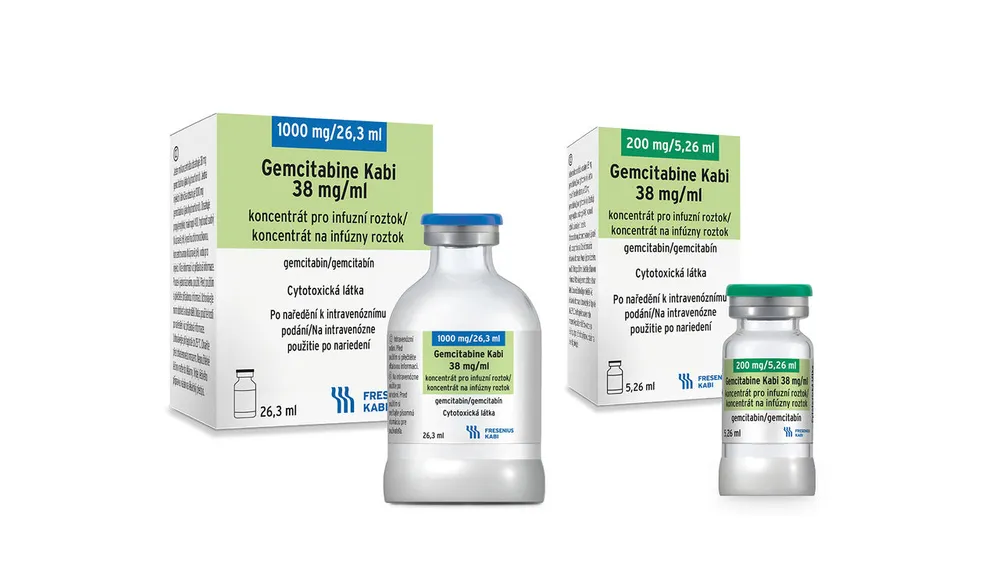
Table of Contents
- Package leaflet: Information for the patient
- 1. What Gemcitabine Kabi is and what it is used for
- 2. Important information before using Gemcitabine Kabi
- 3. How to use Gemcitabine Kabi
- 4. Possible adverse reactions
- 5. How to store Gemcitabine Kabi
- 6. Contents of the pack and other information
- Information intended exclusively for medical professionals:
Package leaflet: Information for the patient
Gemcitabine Kabi, 38 mg/ml, concentrate for solution for infusion
Gemcitabinum
Please read carefully all the information in this leaflet before using this medicine, as it contains
important information for the patient.
- Keep this leaflet so that you can read it again if necessary.
- If you have any questions, please consult your doctor, nurse or pharmacist.
- If you experience any adverse reactions, including any not listed in this leaflet, inform your doctor, pharmacist or nurse. See section 4.
Table of contents of the leaflet
- What Gemcitabine Kabi is and what it is used for
- Important information before using Gemcitabine Kabi
- How to use Gemcitabine Kabi
- Possible side effects
- How to store Gemcitabine Kabi
- Contents of the package and other information
1. What Gemcitabine Kabi is and what it is used for
Gemcitabine Kabi belongs to a group of medicines called cytotoxic agents. These medicines kill dividing cells, including cancer cells.
Gemcitabine Kabi may be administered alone or in combination with other anticancer medicines, depending on the type of cancer.
Gemcitabine Kabi is used in the treatment of the following types of cancer:
- non-small cell lung cancer (NSCLC), either alone or in combination with cisplatin,
- pancreatic cancer,
- breast cancer, in combination with paclitaxel,
- ovarian cancer, in combination with carboplatin,
- bladder cancer, in combination with cisplatin.
2. Important information before using Gemcitabine Kabi
When not to use Gemcitabine Kabi:
- if the patient is allergic to gemcitabine or any of the other ingredients of this medicine (listed in section 6),
- if the patient is breastfeeding.
Warnings and precautions
Before the first infusion, blood samples will be taken to check kidney and liver function. Prior to each infusion, blood samples will be taken to ensure the patient has an adequate number of blood cells to receive Gemcitabine Kabi. Depending on the patient's general condition or if the blood cell count is too low, the treating physician may decide to adjust the dose or delay treatment. Blood samples will be taken periodically to monitor kidney and liver function.
Before starting treatment with Gemcitabine Kabi, discuss this with your doctor, nurse, or hospital pharmacist.
If the patient has ever experienced severe skin rash, skin peeling, blistering, and/or oral mucosal ulceration after receiving gemcitabine, inform the doctor.
If the patient has or has had liver, heart, blood vessel, or kidney disease, inform the doctor or pharmacist, as administration of gemcitabine may be contraindicated.
If the patient has recently undergone or is scheduled to undergo radiotherapy, inform the doctor, as early or delayed radiation reactions may occur after administration of gemcitabine.
If the patient has recently been vaccinated, inform the doctor, as this may adversely affect the action of gemcitabine.
If the patient experiences symptoms such as pain, dizziness, seizures, or visual disturbances, inform the doctor, as these may be signs of a very rare adverse effect on the nervous system known as reversible posterior encephalopathy syndrome.
If the patient experiences difficulty breathing, or skin pallor and weakness, inform the doctor, as these may indicate kidney failure or lung disorders.
If the patient develops generalized swelling, shortness of breath, or weight gain, inform the doctor, as these may indicate fluid leakage from small blood vessels into tissues.
Serious skin reactions, including Stevens-Johnson syndrome, toxic epidermal necrolysis, and acute generalized exanthematous pustulosis (AGEP), have occurred with gemcitabine treatment. If the patient develops any of the symptoms associated with these serious skin reactions described in section 4, contact a doctor immediately.
Children and adolescents
This medicine should not be used in children under 18 years of age, as there is insufficient data on safety and efficacy in this age group.
Gemcitabine Kabi and other medicines
Inform your doctor or hospital pharmacist about all medicines currently used or recently used by the patient, including vaccines and over-the-counter medicines.
Pregnancy, breastfeeding, and fertility
Pregnancy
If the patient is pregnant or planning to become pregnant, she should inform her treating doctor. Use of Gemcitabine Kabi during pregnancy should be avoided. The treating doctor will discuss with the patient the potential risks associated with using the medicine during pregnancy. Women of childbearing potential should use effective contraception during treatment with gemcitabine and for 6 months after the last dose.
Breastfeeding
If the patient is breastfeeding, she should inform her treating doctor. Breastfeeding must be discontinued during treatment with Gemcitabine Kabi.
Fertility
Men should be advised not to plan fathering a child during treatment with Gemcitabine Kabi and for up to 3 months after treatment ends. It is recommended that men use effective contraception during treatment with gemcitabine and for 3 months after completion of treatment. The patient should consult a doctor or pharmacist if he wishes to have children during treatment or within 3 months after treatment ends. Before starting treatment, the patient may seek advice regarding sperm storage.
Driving and operating machinery
Gemcitabine Kabi may cause drowsiness, especially if alcohol is consumed. Patients should not drive or operate machinery until they know how the medicine affects them.
Gemcitabine Kabi contains sodium and propylene glycol
The 200 mg vial contains less than 1 mmol of sodium (23 mg) per vial, meaning the medicine is considered "sodium-free".
The 1000 mg vial contains 98.36 mg of sodium (a major component of table salt) in each vial. This corresponds to 4.92% of the maximum recommended daily dietary sodium intake for adults.
The 2000 mg vial contains 196.72 mg of sodium (a major component of table salt) in each vial. This corresponds to 9.84% of the maximum recommended daily dietary sodium intake for adults.
Propylene glycol in this medicine may cause alcohol-like symptoms and may increase the likelihood of adverse effects.
This medicine should only be used on a doctor's prescription. The doctor may recommend additional monitoring during treatment with this medicine.
3. How to use Gemcitabine Kabi
The usual dose of Gemcitabine Kabi is 1000 to 1250 mg of the medicinal product per square meter of the patient's body surface area. Body surface area is calculated based on the patient's height and weight measurements. The treating physician will determine the appropriate dose of the medicinal product based on the patient's body surface area. The dose may be adjusted or treatment delayed depending on blood test results and the patient's overall condition.
The frequency of administration of Gemcitabine Kabi depends on the type of tumour for which the patient is being treated.
The hospital pharmacist or physician will dilute the Gemcitabine Kabi concentrate before administration to the patient.
Gemcitabine Kabi will always be administered after dilution as an intravenous infusion into one of the patient's veins. The infusion will last approximately 30 minutes.
If you have any further questions about the use of this medicinal product, consult your physician or pharmacist.
4. Possible adverse reactions
Like all medicines, this medicine can cause adverse reactions, although not everyone will experience them.
If any of the following symptoms occur, contact your doctor immediately:
- bleeding from gums, nose or mouth, or other bleeding that cannot be stopped, red or pink discoloration of urine, unexpected bruising on the skin (because the patient may have a reduced platelet count, which is very common),
- feeling of fatigue, weakness, shortness of breath or pale skin (because the patient may have reduced hemoglobin levels, which is very common),
- mild to moderate skin rash (very common) or itching (common), or fever (very common); (allergic reactions),
- temperature of 38°C or higher, sweating or other signs of infection (because the patient may have a reduced white blood cell count with accompanying fever), so-called neutropenic fever (common),
- pain, redness, swelling or ulceration of the mouth (common),
- irregular heartbeat (arrhythmia) (uncommon),
- extreme fatigue and weakness, purpura or tendency to local bleeding in the skin (petechiae), severe kidney failure (oliguria or anuria) and signs of infection. These may be symptoms of thrombotic microangiopathy (blood clots forming in small blood vessels) and hemolytic-uremic syndrome, which can be life-threatening,
- difficulty breathing (mild breathing difficulties may occur shortly after administration of gemcitabine and resolve quickly; more severe lung complications may occur uncommonly or rarely),
- acute chest pain (heart attack) (rare),
- severe hypersensitivity reactions (allergic): severe skin rash or hives, swelling of hands, feet, ankles, face, lips, mouth or throat (which may cause difficulty swallowing or breathing), wheezing, rapid heartbeat, feeling faint (anaphylactic reaction) (very rare),
- generalized swelling, shortness of breath or weight gain may be symptoms of fluid leakage from small blood vessels into tissues (capillary leak syndrome) (very rare),
- headache with visual disturbances, confusion, seizures or convulsions (reversible posterior encephalopathy syndrome) (very rare),
- severe rash with itching, peeling or blistering skin changes (Stevens-Johnson syndrome, toxic epidermal necrolysis) (very rare),
- red, scaly, widespread rash with blisters under swollen skin (including in skin folds, trunk and upper limbs) and blisters accompanied by fever – acute generalized exanthematous pustulosis (AGEP – frequency unknown).
Other possible adverse reactions after administration of Gemcitabine Kabi:
Very common: may affect more than 1 in 10 patients
- low white blood cell count,
- difficulty breathing,
- vomiting,
- nausea,
- hair loss,
- liver function abnormalities, shown by abnormal blood test results,
- presence of blood in urine,
- abnormal urine test results: presence of protein in urine,
- flu-like symptoms, including fever,
- swelling of ankles, fingers, feet and face.
Common: may affect 1 in 10 patients
- loss of appetite,
- headache,
- insomnia,
- drowsiness,
- cough,
- nasal mucositis,
- constipation,
- diarrhea,
- itching,
- sweating,
- muscle pain,
- back pain,
- fever,
- weakness,
- chills,
- infections.
Uncommon: may affect 1 in 100 patients
- interstitial pneumonia (scarring of lung alveoli),
- bronchoconstriction (wheezing),
- abnormal chest X-ray findings (lung scarring),
- heart failure,
- kidney failure,
- severe liver damage, including liver failure,
- stroke.
Rare: may affect 1 in 1,000 patients
- low blood pressure,
- skin desquamation, ulceration or blistering,
- skin necrosis and blister formation,
- reactions at the injection site,
- adult respiratory distress syndrome (severe lung inflammation causing breathing problems),
- skin rash (sunburn-like) that may appear on skin previously treated with radiotherapy (radiation recall reaction),
- fluid in the lungs,
- radiation-induced lung fibrosis (symptoms of radiation-induced disease),
- gangrene of fingers or toes,
- symptoms of peripheral vasculitis (inflammation of blood vessels).
Very rare: may affect 1 in 10,000 patients
- increased platelet count,
- ischemic colitis (inflammation of the large intestine lining due to reduced blood flow),
- low hemoglobin (anemia), low white blood cell count and low platelet count will be detected in blood tests,
- thrombotic microangiopathy: blood clots forming in small blood vessels.
Frequency not known: frequency cannot be estimated from available data
- sepsis: when bacteria and their toxins circulate in the blood and begin to damage organs,
- pseudoscleroderma: skin redness with swelling.
If any of the above adverse reactions occur,
contact your doctor immediately.
If any adverse symptoms occur, consult your doctor.
Reporting of adverse reactions
If any adverse effects occur, including any adverse effects not listed
in this leaflet, inform your doctor or pharmacist. Adverse reactions can be reported
directly to the Department of Monitoring Adverse Drug Reactions of the Office for Registration of Medicinal Products, Medical Devices and Biocidal Products
Al. Jerozolimskie 181C
02-222 Warsaw
Phone: +48 22 49 21 301
Fax: +48 22 49 21 309
Website: https://smz.ezdrowie.gov.pl
Adverse reactions can also be reported to the marketing authorization holder.
Reporting adverse reactions helps to provide more information on the safety of the medicine.
5. How to store Gemcitabine Kabi
Keep this medicine out of the sight and reach of children.
Do not use this medicine after the expiry date stated on the carton and label after EXP. The expiry date refers to the last day of the stated month.
Store below 25°C. Do not store in a refrigerator. Do not freeze.
Period of stability after dilution (infusion solution):
Physical and chemical stability has been demonstrated after dilution in 0.9% sodium chloride solution at concentrations from 0.1 mg/ml to 5 mg/ml for 7 days at temperatures from 2°C to 8°C or at 25°C.
From a microbiological standpoint, the medicine should be used immediately. Otherwise, the user is responsible for the storage duration during use and storage conditions prior to use, and this period should usually not exceed 24 hours at 2°C to 8°C, unless dilution was carried out under controlled and validated aseptic conditions.
For single use only. Any unused solution should be discarded.
Do not use this medicine if discoloration of the solution or visible particulate matter is observed.
Medicines must not be disposed of via wastewater or household waste. Ask your pharmacist how to dispose of medicines no longer required. These measures will help protect the environment.
6. Contents of the pack and other information
What Gemcitabine Kabi contains
The active substance is gemcitabine.
One ml of concentrate for solution for infusion contains 38 mg of gemcitabine (as hydrochloride).
Each vial contains 200 mg of gemcitabine (as hydrochloride).
Each vial contains 1000 mg of gemcitabine (as hydrochloride).
Each vial contains 2000 mg of gemcitabine (as hydrochloride).
The other ingredients are: propylene glycol, macrogol 400, sodium hydroxide (for pH adjustment), concentrated hydrochloric acid (for pH adjustment), water for injections.
What Gemcitabine Kabi looks like and contents of the pack
This medicine is a concentrate for solution for infusion.
Gemcitabine Kabi is a clear, colourless to slightly straw-coloured concentrate for solution for infusion, free from visible solid particles.
Each pack contains 1 vial with 5.26 ml, 26.3 ml or 52.6 ml of concentrate.
Not all pack sizes may be marketed.
Marketing Authorisation Holder and Manufacturer
Marketing Authorisation Holder
Fresenius Kabi Polska Sp. z o.o.
Al. Jerozolimskie 134
02-305 Warsaw
Poland
Manufacturer
Fresenius Kabi Deutschland GmbH
Pfingstweide 53
61169 Friedberg
Germany
For further information, contact the Marketing Authorisation Holder:
Fresenius Kabi Polska Sp. z o.o.
Al. Jerozolimskie 134
02-305 Warsaw
Poland
Tel.: +48 22 345 67 89
This medicinal product is authorised in the Member States of the European Economic Area and in the United Kingdom (Northern Ireland) under the following names:
| Austria | Gemcitabin Kabi 38 mg/ml concentrate for solution for infusion |
| Belgium | Gemcitabine Fresenius Kabi 38 mg/ml concentrate for solution for infusion |
| Czech Republic | Gemcitabine Kabi |
| Denmark | Gemkabi |
| Estonia | Gemcitabine Kabi 38 mg/ml |
| Finland | Gemkabi 38 mg/ml infusion concentrate, solution for infusion |
| France | Gemcitabine Kabi 38 mg/ml solution to dilute for infusion |
| Netherlands | Gemcitabine Fresenius Kabi 38 mg/ml concentrate for solution for infusion |
| Ireland | Gemcitabine 38 mg/ml concentrate for solution for infusion |
| Iceland | Gemkabi 38 mg/ml concentrate for infusion solution |
| Lithuania | Gemcitabine Kabi 38 mg/ml concentrate for infusion solution |
| Luxembourg | Gemcitabin Kabi 38 mg/ml concentrate for solution for infusion |
| Latvia | Gemcitabine Kabi 38 mg/ml concentrate for preparation of infusion solution |
| Malta | Gemcitabine 38 mg/ml concentrate for solution for infusion |
| Norway | Gemkabi 38 mg/ml concentrate for infusion solution, solution |
| Poland | Gemcitabine Kabi |
| Portugal | Gemcitabina Kabi |
| Romania | Gemcitabina Kabi 38 mg/ml concentrate for perfusion solution |
| Slovakia | Gemcitabine Kabi 38 mg/ml, infusion concentrate |
| Slovenia | Gemcitabin Kabi 38 mg/ml concentrate for infusion solution |
| Sweden | Gemkabi 38 mg/ml concentrate for infusion solution, solution |
| Hungary | Gemcitabin Kabi 38 mg/ml concentrate for infusion solution |
| United Kingdom (Northern Ireland) | Gemcitabine 38 mg/ml concentrate for solution for infusion |
Information intended exclusively for medical professionals:
Preparation
Standard safety precautions for handling cytotoxic drugs must be observed during preparation and disposal of the infusion solution. Pregnant women should not prepare the drug. The solution should be prepared in a safety cabinet using protective clothing and gloves. If a safety cabinet is not available, a protective mask and goggles should also be used.
If contact with the eyes occurs, the drug may cause severe irritation. Immediately rinse eyes thoroughly with water. If irritation persists, consult a physician.
In case of spillage onto the skin, wash thoroughly with water.
Dilution instructions
The only recommended diluent for diluting Gemcitabine Kabi 38 mg/ml concentrate for infusion solution is 9 mg/ml (0.9%) sodium chloride injection solution (without preservatives).
The total amount of gemcitabine concentrate required for administration to an individual patient should be diluted in at least 500 ml of sterile 9 mg/ml (0.9%) sodium chloride injection solution to achieve clinically appropriate concentrations.
Considering the recommended dose (1000 to 1250 mg/m²) and body surface area (between 1 m² and 2 m²), concentrations between 2 mg/ml and 5 mg/ml are achieved.
The following dilution instructions must be strictly followed to avoid adverse effects.
- Aseptic techniques must be used when diluting gemcitabine for intravenous infusion.
- Parenteral drugs should be inspected visually for particulate matter and discoloration prior to administration. Do not administer if particulate matter is present.
Any unused portions or waste material should be disposed of in accordance with local regulations.