Gastrolit
Poland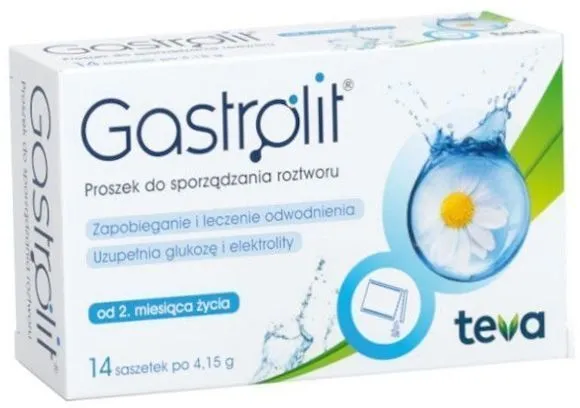
Table of Contents
Package leaflet: Information for the user
GASTROLIT, powder for oral rehydration solution
- Please keep this leaflet. You may need to read it again.
- If you need advice or further information, please consult your doctor or pharmacist.
- If any adverse reactions occur, including any not listed in this leaflet, inform your doctor or pharmacist. See section 4.
- If there is no improvement after 2 days of treatment, contact your doctor.
Leaflet contents:
- What Gastrolit is and what it is used for
- Important information before taking Gastrolit
- How to take Gastrolit
- Possible side effects
- How to store Gastrolit
- Contents of the pack and other information
1. WHAT GASTROLIT IS AND WHAT IT IS USED FOR
Gastrolit is a powder for preparing an oral rehydration solution containing a combination of electrolytes and glucose, the deficiency of which occurs during dehydration, especially in diarrhoea.
Indications for use:
The solution, once dissolved, is used for the prevention and treatment of mild dehydration associated with diarrhoea. It should be administered as soon as diarrhoea or vomiting starts, in order to prevent dehydration and the associated loss of electrolytes (see Clinical Dehydration Scale, section 2). Dehydration is particularly dangerous in children, as fluid loss occurs much faster in children than in adults; therefore, children under 3 years of age should be seen by a doctor as soon as possible.
Oral rehydration solutions such as Gastrolit may be used before seeking medical advice.
Dehydration may also occur due to excessive sweating caused by fever, heat exhaustion, intense physical exercise, reduced fluid intake, diminished thirst sensation, or lack of thirst (especially in elderly individuals).
Gastrolit replaces water and salts (electrolytes) lost due to diarrhoea and other conditions listed above that predispose to dehydration. The sugar (glucose) contained in the product enhances the absorption of water and sodium from the intestines, while bicarbonate helps correct acid-base imbalances in the body. Chamomile tincture soothes inflammatory conditions of the gastrointestinal tract and has a spasmolytic effect.
2. IMPORTANT INFORMATION BEFORE USING GASTROLIT
When not to use Gastrolit
- If the patient is allergic to glucose, sodium chloride, potassium chloride, sodium bicarbonate, chamomile tincture (or other plants from the Asteraceae family), or any of the other ingredients of this medicine listed in section 6,
- If the patient has increased blood potassium levels,
- If the patient has acute or chronic renal failure with electrolyte imbalance,
- If the patient has anuria,
- If the patient is severely dehydrated (see Clinical Dehydration Scale),
- If the patient is unconscious (risk of aspiration),
- If the patient is in hemodynamic shock (risk of aspiration),
- If the patient has intestinal obstruction,
- If the patient is experiencing profuse vomiting.
Warnings and precautions
Before starting treatment with Gastrolit, consult a doctor or pharmacist:
- in patients with heart failure or high blood pressure due to the sodium content of the medicine,
- in patients with kidney function disorders leading to reduced or complete cessation of urine excretion,
- in patients with other chronic diseases,
- in patients with liver diseases,
- if there is blood in the stool,
- if diarrhea persists for more than 24–48 hours, even if mild,
- if severe abdominal pain occurs,
- if changes in mental status occur (e.g. irritability, apathy, or lethargy),
- if fever exceeds 39°C,
- due to the glucose content, use is not recommended in patients with diabetes,
- during therapy, follow a diet restricted in sodium or potassium,
- children under 3 years of age should be seen by a doctor as soon as possible.
Oral rehydration therapy is insufficient in cases of severe dehydration; medical consultation and intravenous rehydration therapy may be necessary.
Symptoms of severe dehydration include rapid pulse, breathing difficulties, fever, extreme fatigue, muscle cramps, headache, nausea, tingling in the limbs, vomiting, confusion, seizures, and loss of consciousness.
In infants, acute diarrhea may lead to dehydration, causing rapid clinical deterioration requiring immediate medical consultation.
Clinical Dehydration Scale ( Clinical Dehydration Scale )
| Clinical symptoms | Dehydration | ||
| Mild | Moderate | Severe | |
| General condition | Normal | Thirsty child, restless or drowsy, but irritable upon touch | Child drowsy, limp, cold or sweaty skin, coma |
| Weight loss | <5% | 5–10% | >10% |
| Skin elasticity | Slightly decreased | Decreased | Markedly decreased |
| Thirst | Normal | Drinks eagerly | Drinks poorly or not at all |
| Eyes | Normal | Slightly sunken | Markedly sunken |
| Mucous membranes | Moist | Sticky | Dry |
| Tears | Normal volume | Reduced volume | None |
| Heart function | Normal | Increased | Markedly increased |
| Diuresis | Normal | Normal | Scanty urine, oliguria |
Gastrolit and other medicines
Due to the risk of increased potassium levels in the blood, this medicine should not be used with medicines that increase potassium levels in the body (e.g. potassium-sparing diuretics such as spironolactone, angiotensin-converting enzyme inhibitors – used, among others, in the treatment of arterial hypertension). It should be remembered that diarrhoea may affect the absorption of many medicinal products.
Pregnancy and breastfeeding
If the patient is pregnant or breastfeeding, suspects she may be pregnant, or is planning to have a child, she should consult a doctor or pharmacist before using this medicine.
Gastrolit may be used by women during pregnancy and breastfeeding at the recommended doses.
Driving and operating machinery
Gastrolit has no effect on psychomotor performance and does not impair the ability to drive vehicles or operate machinery.
Important information about certain ingredients of the medicine
Gastrolit contains glucose. If the patient has previously been diagnosed with intolerance to certain sugars, he or she should contact a doctor before taking this medicine.
The medicine contains 12 mmol of sodium in the prepared oral solution, which should be taken into account in patients with impaired kidney function and in patients controlling sodium intake in their diet.
Gastrolit contains potassium, which should be taken into account in patients with impaired kidney function and in patients controlling potassium intake in their diet.
3. HOW TO USE GASTROLIT
Gastrolit must always be used exactly as described in this patient leaflet or as advised by your
doctor or pharmacist. If in doubt, consult your doctor or pharmacist again.
Children under 3 years of age should seek medical attention as soon as possible.
Preparing the solution
The medicine should be given orally after dissolving it in hot, boiled water (the contents of 1 sachet in 200 ml of water) and allowing it to cool. To prepare a larger volume of solution, e.g. 500 ml, dissolve 3 Gastrolit sachets in 600 ml of water. From the resulting solution, measure and administer the appropriate volume according to the dosing schedule.
Do not add sugar or sweeten the solution. A precipitate may form in the solution, but this does not affect the medicinal value of the product.
Ensure that the contents of each sachet are mixed with the correct amount of water (200 ml) to guarantee optimal effectiveness of the medicine. Mixing the powder with insufficient water may lead to excessive salt intake.
Do not mix the contents of the sachet with any liquid other than water.
Rapid administration of the solution is safe but may provoke vomiting. Better tolerance is achieved by cooling the solution and administering it in small portions at repeated intervals, for example using a teaspoon. If well tolerated, the dose may be gradually increased.
Prevention of dehydration (associated with mild diarrhoea)
Treatment with Gastrolit solution should begin immediately after the onset of diarrhoea.
In case of diarrhoea before dehydration occurs, use the following preventive doses:
- Adults, adolescents and children over 3 years of age: 200 ml after each loose stool (equivalent to the solution prepared from 1 sachet of powder)
- Children under 3 years of age and infants: While awaiting medical consultation, administer 10 ml/kg body weight after each loose stool
Dosing in dehydration
Refer to section 2 for guidance on when to contact a doctor.
If the dehydration does not require immediate medical supervision or while awaiting medical consultation, the following dosing schedule is recommended:
The dosing schedule is presented in the table below.
1 sachet of Gastrolit must always be dissolved in 200 ml of hot, boiled water and cooled. To prepare a larger volume of solution, e.g. 500 ml, dissolve 3 sachets of Gastrolit in 600 ml of water. From the resulting solution, measure and administer the appropriate volume according to the table below.
| Age group (body weight) | Volume of Gastrolit solution |
|-------------------------|-------------------------------|
| Adults | • First 4 hours: 500 ml to 1000 ml to satisfy thirst
• Then approximately 200 ml after each loose stool |
| Adolescents, older children over 3 years of age | • First 4 hours: 500 ml to satisfy thirst
• Then approximately 100 ml to 200 ml after each loose stool |
| Children 1–3 years (approx. 10–15 kg) | • First 4 hours: usually 50 ml/kg body weight (500 ml to 750 ml)
• Then approximately 10 ml/kg body weight after each loose stool (100 ml to 150 ml) |
| Infants ≥ 2–12 months of age (approx. 5–10 kg) | • First 4–6 hours: usually 50 to 100 ml/kg body weight (250 ml to 1000 ml)
• Then approximately 10 ml/kg body weight after each loose stool (50 ml to 100 ml) |
Taking the medicine with food and drink
- Other fluids (e.g. diluted fruit juice) may be given during treatment. However, avoid fluids high in sugar, as they may worsen diarrhoea.
- Gastrolit solution is not intended for quenching thirst; doses larger than recommended should not be used without medical advice.
- During mild diarrhoea, other fluids may be taken and normal, age-appropriate diet may be continued.
- Do not give food during the first 4 hours of rehydration, except for breastfed infants, who may continue breastfeeding as usual.
When to contact a doctor
Monitor body weight and general condition during treatment and contact a doctor if any of the following occur:
- children under 3 years of age,
- changes in mental state, e.g. irritability, apathy or drowsiness,
- fever above 39°C,
- presence of blood in stool,
- persistent vomiting,
- high volume of watery stools (>8 episodes per day), especially in children under 3 years of age,
- diarrhoea lasting longer than 2 days,
- severe abdominal pain,
- no urination within the first 6 hours of treatment,
- signs of severe dehydration as perceived by a family member,
- presence of severe chronic illness (e.g. diabetes, renal failure),
- any other worrying symptoms.
Use of a higher than recommended dose of Gastrolit
If a patient has taken more medicine than recommended, or if someone else has taken it, contact a doctor or pharmacist immediately.
Symptoms of overdose may include thirst, dryness of the mouth, difficulty swallowing, dehydration, low blood pressure, disorientation, drowsiness, neck stiffness, loss of consciousness, muscle tremors, and feeling of weakness. Overdose symptoms are more likely in patients with impaired kidney function.
Missed dose of Gastrolit
Administer the dose as soon as remembered.
If you feel the medicine’s effect is too strong or too weak, consult your doctor.
If you have any doubts about using this medicine, consult your doctor or pharmacist.
4. POSSIBLE ADVERSE REACTIONS
Like all medicinal products, this medicine can cause adverse reactions, although not everybody will experience them.
Too rapid administration of the solution may cause vomiting (see section 3 "How to use the product").
Occasionally, gastrointestinal disturbances (nausea, vomiting) and increased blood potassium levels may occur.
If any of the adverse reactions worsen or if any adverse reactions not listed in this leaflet occur, inform a doctor or pharmacist.
Reporting of adverse reactions
If any adverse reactions occur, including those not listed in this leaflet, inform a doctor or pharmacist. Adverse reactions can be reported directly to the Department of Monitoring of Adverse Drug Reactions at the Office for Registration of Medicinal Products, Medical Devices and Biocidal Products:
Al. Jerozolimskie 181C, 02-222 Warsaw
Tel.: + 48 22 49 21 301
Fax: + 48 22 49 21 309
Website: https://smz.ezdrowie.gov.pl
Adverse reactions can also be reported to the marketing authorization holder.
Reporting adverse reactions helps provide more information on the safety of this medicine.
5. HOW TO STORE GASTROLIT
Store below 25°C.
Keep out of the sight and reach of children.
Do not use this medicine after the expiry date stated on the packaging. The expiry date refers to the last day of the stated month.
Medicines should not be disposed of via wastewater or household waste. Ask your pharmacist how to dispose of medicines no longer required. Such measures help protect the environment.
6. CONTENTS OF THE PACKAGE AND OTHER INFORMATION
What Gastrolit contains
Gastrolit is a combination medicine.
The active substances are:
Sodium chloride 0.35 g
Potassium chloride 0.30 g
Sodium hydrogen carbonate 0.50 g
Chamomile tincture 0.02 g
Glucose 2.98 g
When dissolved, the solution contains: 60 mmol/l Na, 20 mmol/l K, 30 mmol/l HCO₃,
80 mmol/l glucose.
The osmolarity of the solution obtained by dissolving the contents of one sachet in 200 ml of water is 240 mOsm/kg.
What Gastrolit looks like and contents of the pack
Powder for oral solution.
14 or 15 sachets containing 4.15 g of powder in a cardboard box.
Marketing Authorisation Holder
Teva Pharmaceuticals Polska Sp. z o.o.
ul. Emilii Plater 53
00-113 Warsaw
Poland
Manufacturer
Teva Operations Poland Sp. z o.o.
ul. Mogilska 80
31-546 Kraków
Poland