Gamunex 10%
Poland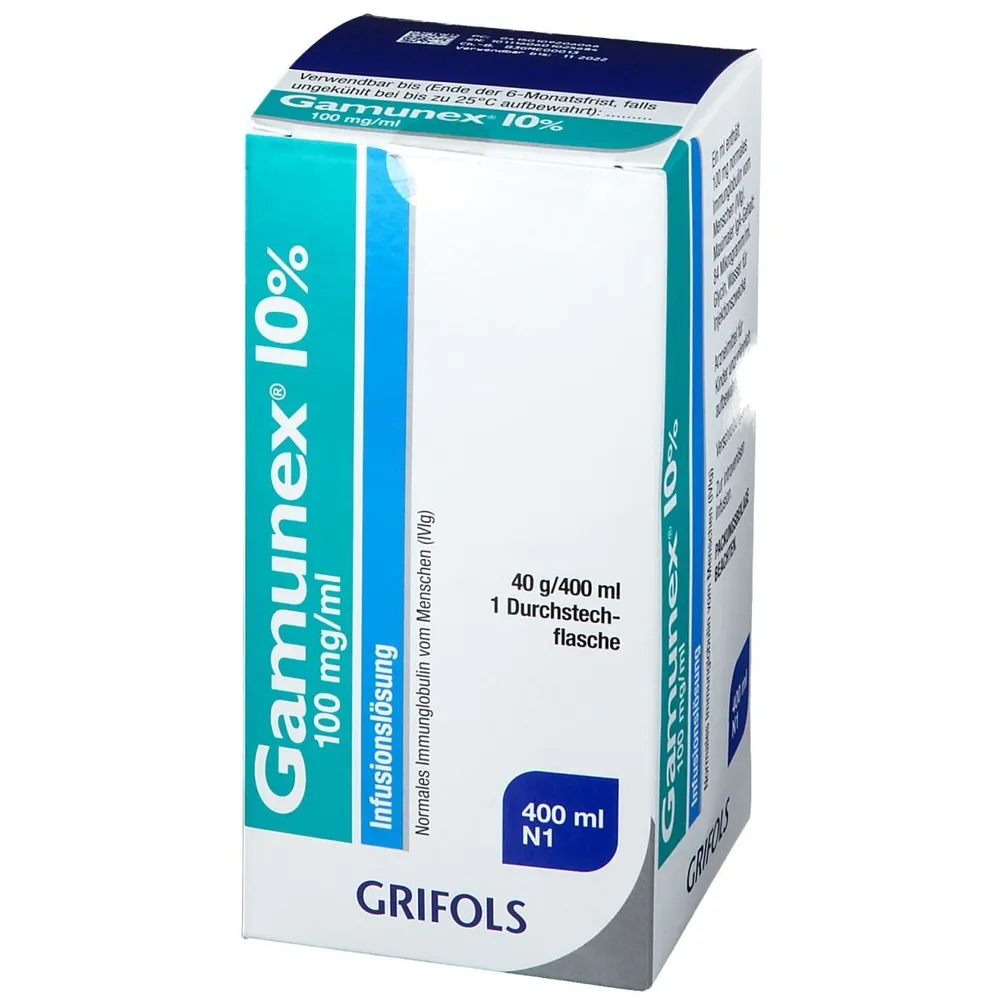
Table of Contents
- Package leaflet: Information for the user
- 1. What *Gamunex 10%* is and what it is used for
- 2. Information before using Gamunex 10%
- 3. How to use Gamunex 10%
- 4. Possible adverse reactions
- 5. How to store Gamunex 10%
- 6. Contents of the pack and other information
- Information intended exclusively for healthcare professionals
Package leaflet: Information for the user
Gamunex 10%
100 mg/ml infusion solution
Human normal immunoglobulin (IVIg)
Please read all of this leaflet carefully before this medicine is administered, as it contains
important information for you.
- Keep this leaflet, as you may need to read it again.
- If you have any further questions, please ask your doctor or pharmacist.
- This medicine has been prescribed for a specific individual. Do not pass it on to others. It may harm someone else, even if their symptoms are the same.
- If you experience any adverse effects, including any not listed in this leaflet, tell your doctor or pharmacist. See section 4.
Leaflet contents:
- What Gamunex 10% is and what it is used for
- Important information before using Gamunex 10%
- How to use Gamunex 10%
- Possible side effects
- How to store Gamunex 10%
- Contents of the pack and other information
1. What Gamunex 10% is and what it is used for
What Gamunex 10% is
Gamunex 10% is a medicine containing human normal immunoglobulins (antibodies), which are
highly purified proteins derived from human plasma (a component of blood collected from donors). This
medicine belongs to a group of medicines called intravenous immunoglobulins. They are used to treat
diseases in which the body's immune system does not function properly.
Uses of Gamunex 10%:
Treatment of adults, children and adolescents (0–18 years of age) who do not have sufficient levels of antibodies
(replacement therapy), such as:
- Patients with primary immunodeficiency syndromes (PID), i.e. congenital lack of antibodies;
- Patients with secondary immunodeficiencies (SID) with severe or recurrent infections, in whom antimicrobial therapy is ineffective and who have confirmed failure to produce specific antibodies or serum IgG concentration < 4 g/l.
Prophylaxis of measles before/after exposure in susceptible adults, children and adolescents (0–18 years of age) in whom active vaccination is contraindicated or not recommended, and who are at risk of contracting measles in the future or after exposure to measles.
Treatment of adults, children and adolescents (0–18 years of age) with certain autoimmune diseases (immunomodulation). This includes five conditions:
- Immune thrombocytopenic purpura (ITP); a disease in which the number of platelets in the bloodstream is significantly too low. Platelets are an essential part of the blood clotting process, and reduced platelet count may lead to unwanted bleeding and bruising. The product is also used in patients at high risk of bleeding or to correct platelet count prior to surgical procedures.
- Guillain-Barré syndrome, in which the immune system damages nerves and disrupts their normal function.
- Kawasaki disease (in combination with acetylsalicylic acid) – a childhood disease in which blood vessels (arteries) throughout the body become enlarged.
- Chronic inflammatory demyelinating polyradiculoneuropathy (CIPD) – a rare, progressive disease causing weakness, numbness and pain in the limbs, as well as fatigue.
- Multifocal motor neuropathy (MMN) – a rare disorder causing slowly progressive weakness of the limbs without loss of sensation.
Treatment of patients over 18 years of age:
- Severe exacerbations of myasthenia gravis. Myasthenia gravis is a disease causing excessive muscle fatigue. Exacerbations of myasthenia gravis lead to impaired swallowing, speech disturbances and breathing difficulties.
2. Information before using Gamunex 10%
When not to use Gamunex 10%:
- if the patient is allergic to human normal immunoglobulins or to any of the other components of this medicine (listed in section 6),
- if the patient has IgA deficiency in the blood and produces antibodies against IgA.
Warnings and precautions
Before starting treatment with Gamunex 10%, discuss this with your doctor, pharmacist, or nurse.
Infusion-related reactions and hypersensitivity
Some adverse reactions may be related to the rate of infusion. For this reason, the recommended infusion rate must be followed (see "Information intended exclusively for medical professionals" at the end of this leaflet).
Some adverse reactions may occur more frequently:
- with high infusion rates,
- in patients with complete absence of gammaglobulins or low levels of gammaglobulins (agammaglobulinemia or hypogammaglobulinemia), with or without IgA deficiency,
- in patients receiving human immunoglobulin for the first time, or, rarely, in patients who have had a switch from one immunoglobulin product to another, as well as in patients receiving immunoglobulin after a long interval.
Potential complications can often be avoided by ensuring that:
- patients are not hypersensitive to human normal immunoglobulin – by starting the infusion of Gamunex 10% slowly,
- patients are closely monitored during infusion, paying attention to any signs of adverse reactions. Particular attention is required for patients receiving human immunoglobulin for the first time, those who have had a switch from one immunoglobulin product to another, and those receiving immunoglobulin after a long interval. This group of patients should be monitored during the first infusion and for one hour after the infusion to detect signs of possible adverse reactions.
If adverse reactions occur, the infusion rate should be reduced or the infusion stopped until symptoms resolve. If symptoms persist despite stopping the infusion, appropriate treatment should be initiated. In case of shock (anaphylactic shock with sudden drop in blood pressure), administration of the medicine must be stopped immediately and treatment initiated according to current guidelines for managing shock.
Patients with kidney dysfunction and other risk factors
Cases of impaired kidney function and acute kidney failure have been reported following intravenous administration of immunoglobulins. Patients particularly at risk include those with pre-existing kidney dysfunction (kidney impairment), diabetes (high blood sugar), hypovolemia (reduced blood volume), obesity; patients receiving concomitant medications that may have harmful effects on the kidneys, and patients over 65 years of age. The following recommendations should be observed:
- ensure adequate hydration before starting treatment,
- monitor urine output and serum creatinine levels (to assess kidney function),
- avoid concomitant use of drugs that increase urine output (loop diuretics).
In these patients, immunoglobulin should be administered at the lowest infusion rate and at the lowest effective concentration. If kidney dysfunction occurs, the doctor will consider discontinuing immunoglobulin therapy.
Hemolysis (abnormal breakdown of red blood cells)
It is well known that immunoglobulins may increase the risk of red blood cell breakdown (hemolysis) in both adults and children. Increased risk of hemolysis may occur when excessively high doses of IVIg are administered within one day or over several days to patients with blood group A, B, or AB and/or in the presence of an inflammatory condition.
Post-marketing reports have indicated that high-dose IVIg used in children, particularly in Kawasaki disease, has been associated with a higher frequency of hemolytic reactions compared to other pediatric indications for immunoglobulin use.
Consult your doctor if you experience paleness (pallor), lethargy (weakness), dark urine, shortness of breath, or palpitations (rapid heartbeat).
Isolated cases of kidney dysfunction/failure associated with hemolysis, resulting in death, have been reported.
Information on safety with regard to infections
During the manufacturing process of medicines derived from human blood or plasma, specific procedures are implemented to prevent transmission of infections to treated patients. These procedures include:
- screening of blood and plasma donors to exclude those who may be sources of infection;
- testing of each donor and plasma pool for the presence of infectious agents;
- inclusion of processes that inactivate or eliminate viruses.
Despite these preventive measures, it cannot be completely excluded that transmission of infection may occur when medicines derived from human blood or plasma are administered. This also applies to unknown or newly emerging viruses and other pathogens.
The measures taken are considered effective against enveloped viruses such as human immunodeficiency virus (HIV), hepatitis B virus, and hepatitis C virus. These measures may have limited effectiveness against non-enveloped viruses such as hepatitis A virus and parvovirus B19.
To date, experience indicates that immunoglobulin products do not transmit hepatitis A virus or parvovirus B19. The presence of antibodies is considered to play an important protective role against viral infections.
The medicine contains less than 1 mmol sodium (23 mg) per single dose (maximum 2 g/kg), meaning the medicine is considered "sodium-free".
It is strongly recommended that the name and batch number of this medicine be recorded with each administration, so that the batch received by the patient can be clearly identified.
Gamunex 10% and other medicines
Inform your doctor or pharmacist about all medicines the patient is currently taking or has recently taken, as well as any medicines the patient plans to take.
During treatment with Gamunex 10%, concomitant use of drugs that increase water excretion from the body (loop diuretics) should be avoided.
Effect on vaccinations: Gamunex 10% may reduce the effectiveness of certain vaccines (vaccines containing live attenuated viruses). Vaccinations against rubella, mumps, and varicella may be administered only after a period of 3 months following administration of this product. For measles vaccination, this period is up to 1 year.
Pregnancy and breastfeeding
If the patient is pregnant or breastfeeding, suspects she may be pregnant, or is planning to have a child, she should consult her doctor or pharmacist before using this medicine.
Driving and operating machinery
Due to the possibility of dizziness and other reactions, this medicine may affect the ability to drive and operate machinery. In such cases, patients should wait until these reactions have subsided before driving vehicles or operating machinery.
3. How to use Gamunex 10%
The Gamunex 10% medicine is administered by a doctor into the patient's vein (intravenous administration).
The dose, which depends on the patient's body weight and underlying disease, is determined by the doctor (see also
information intended for medical professionals at the end of the leaflet).
At the beginning of the infusion, Gamunex 10% is given at a low rate. If the medicine is well tolerated,
the doctor may increase the infusion rate.
**Discontinuation of treatment with Gamunex 10%
After stopping treatment with this medicine, the patient's clinical condition may worsen. Before deciding to
discontinue treatment with this medicine, consult the doctor managing the treatment.
If you have any further doubts regarding the use of this medicine, consult your doctor or pharmacist.
4. Possible adverse reactions
Like all medicines, this medicine can cause adverse reactions, although not everyone will experience them.
The symptoms listed below have occurred in rare or isolated cases after administration of medicines
containing immunoglobulins. If any of the following symptoms occur during or after completion of the infusion,
seek immediate medical attention:
- sudden drop in blood pressure, and in some cases anaphylactic shock (symptoms of which include, among others, rash, low arterial blood pressure, rapid or irregular heartbeat, wheezing, cough, sneezing, and difficulty breathing), even if there were no signs of allergic reaction after previous doses of the medicine;
- transient non-infectious meningitis (symptoms of which include headache, anxiety or photophobia, neck stiffness);
- transient decrease in the number of red blood cells in the blood (reversible hemolytic anemia/hemolysis);
- transient skin reactions;
- increased serum creatinine levels (a test assessing kidney function) and/or acute kidney failure (symptoms of which include back pain, fatigue, reduced urine output);
- thromboembolic events such as myocardial infarction (feeling of chest tightness accompanied by a sensation of abnormally rapid heartbeat), stroke (muscle weakness in the face, arms or legs, speech disturbances or difficulty understanding speech), pulmonary embolism (shortness of breath, chest pain, and fatigue), deep vein thrombosis (pain and swelling in limbs);
- cases of acute transfusion-related lung injury (TRALI) causing hypoxia (lack of oxygen), dyspnea (difficulty breathing), tachypnea (rapid breathing), cyanosis (bluish discoloration of skin and mucous membranes), fever, and low blood pressure.
In clinical trials of Gamunex 10%, the following adverse reactions were observed:
The following adverse reactions occurred frequently (occurring in up to 1 in 10 infusions):
- headache
- fever
The following adverse reactions occurred uncommonly (up to 1 in 100 infusions):
- dizziness
- urticaria (redness, itching of the skin)
- pruritus (itching)
- rash
- nausea
- vomiting
- increased blood pressure
- pharyngitis (sore throat)
- cough
- nasal congestion
- wheezing
- joint pain
- back pain
- influenza-like symptoms
- feeling of fatigue
- chills
- asthenia (weakness)
- muscle pain
The following adverse reactions occurred rarely (up to 1 in 1000 infusions):
- hemolytic anemia (destruction of red blood cells)
- shortness of breath
- sinusitis
- skin desquamation
- anxiety
- decreased hemoglobin concentration
- digestive disorders
- bruising
- hot flush
- skeletal muscle stiffness
- palmar erythema (redness of the palms)
- aphonia (inability to produce voice)
- decreased white blood cell count
- dermatitis or contact dermatitis
- abdominal pain
- diarrhea
- decreased blood pressure
- neck pain
- musculoskeletal pain
- chest pain
- malaise
- injection site reactions
- urethritis (painful urination or difficulty urinating)
- viral upper respiratory tract infections (diseases caused by acute infection of the upper respiratory tract, including nose, sinuses, and throat)
- lymphocytosis (increase in a certain type of white blood cells)
- hypersensitivity (allergic reactions)
- photophobia (sensitivity of the eyes to light)
- hypertensive crisis (acute increase in blood pressure)
- hyperemia (increased blood flow)
- hemoglobinuria (presence of oxygen-transporting protein in the blood in abnormally high concentration in urine)
- elevated blood pressure
- presence of free hemoglobin (hemoglobin circulating outside red blood cells)
- increased ESR (increased erythrocyte sedimentation rate)
What actions should be taken if adverse reactions occur?
If adverse reactions occur, the infusion rate should be reduced or the infusion should be stopped until
symptoms resolve. If symptoms persist despite stopping the infusion, appropriate treatment should be initiated.
In case of a severe hypersensitivity reaction with decreased blood pressure and dyspnea, or a severe
systemic allergic reaction (including anaphylactic shock), the treatment with this medicine must be immediately discontinued and appropriate therapy initiated.
Reporting adverse reactions
If any adverse reactions occur, including any adverse reactions not listed in this leaflet, inform your doctor or pharmacist. Adverse reactions can be reported
directly to the Department of Monitoring Adverse Drug Reactions of the Office for Registration of Medicinal Products, Medical Devices and Biocidal Products, Al. Jerozolimskie 181C, 02-222 Warsaw, Tel.: +48 22 49 21 301, Fax: +48 22 49 21 309, Website:
https://smz.ezdrowie.gov.pl.
Adverse reactions can also be reported to the marketing authorization holder.
Reporting adverse reactions helps to gather more information on the safety of the medicine.
5. How to store Gamunex 10%
This medicine should be stored out of sight and reach of children.
Do not use this medicine after the expiry date stated on the carton and vial. The shelf life is 3 years.
Store in a refrigerator (2 – 8 °C). Do not freeze. Store the vial in the outer packaging.
The medicine may be stored in its original outer packaging for up to 6 months at room temperature (not above 25°C). The shelf life at room temperature is 6 months. A new expiry date must be recorded on the outer packaging. The new expiry date must not be later than the expiry date printed on the packaging. Re-refrigeration is not permitted.
After opening the vial, the medicine should be used immediately. Any unused portion should be discarded. Due to the risk of microbiological contamination, re-storage of the product, even in the refrigerator, is not allowed.
6. Contents of the pack and other information
What Gamunex 10% contains:
The active substance is human normal immunoglobulin (IVIg).
1 ml of this medicine contains 100 mg of protein, of which IgG constitutes at least 98%, in water for injections.
One 10 ml vial contains: 1 g of human normal immunoglobulin
One 50 ml vial contains: 5 g of human normal immunoglobulin
One 100 ml vial contains: 10 g of human normal immunoglobulin
One 200 ml vial contains: 20 g of human normal immunoglobulin
One 400 ml vial contains: 40 g of human normal immunoglobulin.
The proportion of IgG subclasses is approximately: 62.8% (IgG1), 29.7% (IgG2), 4.8% (IgG3), 2.7% (IgG4).
Maximum IgA content: 84 micrograms/ml;
Other constituent: glycine and water for injections.
What Gamunex 10% looks like and contents of the pack:
Gamunex 10% is an infusion solution. The solution is clear to slightly opalescent, colourless or
light yellow.
Gamunex 10% is available in pack sizes of: 10 ml, 50 ml, 100 ml, 200 ml and 400 ml. The pack contains
a vial made of glass with a stopper (made of chlorobutyl rubber), a label with a hanger handle, and a patient leaflet.
Marketing Authorisation Holder and Manufacturer:
Marketing Authorisation Holder:
Grifols Deutschland GmbH
Colmarer Straße 22
60528 Frankfurt
Germany
Tel.: +49 69/660 593 100
Manufacturer:
Instituto Grifols, S.A.
Can Guasc, 2 – Parets del Vallès
08150 Barcelona
Spain
This medicinal product is authorised in the European Economic Area and the United Kingdom (Northern Ireland)
under the following names:
Austria, Belgium, Cyprus, Netherlands, Ireland, Luxembourg, Germany, Poland, Portugal, United Kingdom (Northern Ireland): Gamunex 10% 100 mg/ml
Czech Republic, Denmark, Finland, France, Spain, Norway, Slovakia, Sweden, Hungary, Italy: Gamunex 100 mg/ml
Greece: Gaminex 10% 100 mg/ml
-------------------------------------------------------------------------------------------------------------------------
Information intended exclusively for healthcare professionals
Use only completely clear or slightly opalescent and colorless or pale yellow solutions that do not contain
particulate matter. Do not shake. Prior to administration, warm Gamunex 10% to room temperature or body
temperature (preferably by placing in a water bath at a temperature not exceeding 37°C).
Vials are supplied with a label incorporating an integrated hanger (Fig. 1). After connecting the infusion set
(Fig. 2), invert the vial and bend back the loop-shaped portion of the label (Fig. 3). Pull firmly and decisively
on the loop, holding it securely with fingers at the point where it joins the rest of the label (Fig. 4). Hang the
vial on an infusion stand using the formed loop (Fig. 5).

Fig. 1 Fig. 2 Fig. 3 Fig. 4 Fig. 5
Dosage and method of administration
The dose and dosing schedule depend on the indication.
Dosage adjustments may be necessary for each individual patient depending on the clinical response. Doses based on body weight may require adjustment in patients who are underweight or overweight. The following dosing regimens are provided as guidelines.
Recommended dosages are summarized in the table below:
| Indication | Dosage | Infusion frequency |
| Replacement therapy | ||
| Primary immunodeficiency syndromes | Initial dose: 0.4–0.8 g/kg Maintenance dose: 0.2–0.8 g/kg | every 3–4 weeks |
| Secondary immunodeficiencies | 0.2–0.4 g/kg | every 3–4 weeks |
| Prophylaxis of measles before/after exposure | ||
| Post-exposure prophylaxis in susceptible patients | 0.4 g/kg | As soon as possible and within 6 days after exposure, with the possibility of a single repeat dose after 2 weeks to maintain anti-measles antibody levels > 240 mIU/mL |
| Post-exposure prophylaxis in patients with PID/SID | 0.4 g/kg | Additional dose to maintenance treatment within 6 days after exposure. |
| Pre-exposure prophylaxis in patients with PID/SID | 0.53 g/kg | If the patient is receiving a maintenance dose < 0.53 g/kg every 3–4 weeks, the dose should be increased to at least 0.53 g/kg |
| Immunomodulatory treatment: | ||
| Primary immune thrombocytopenia | 0.8–1 g/kg or 0.4 g/kg/day | on day 1, with possibility of repeating once within 3 days for 2–5 days |
| Guillain-Barré syndrome | 0.4 g/kg/day | for 5 days |
| Kawasaki disease | 2 g/kg | as a single dose in combination with acetylsalicylic acid |
| Chronic inflammatory demyelinating polyradiculoneuropathy (CIDP) | Initial dose: 2 g/kg Maintenance dose: 1 g/kg | divided over 2–5 days every 3 weeks for 1–2 days in divided doses |
| Multifocal motor neuropathy (MMN) | Initial dose: 2 g/kg Maintenance dose: 1 g/kg or 2 g/kg | divided over 2–5 consecutive days every 2–4 weeks or every 4–8 weeks in divided doses over 2–5 days |
| Indication | Dosage | Infusion frequency |
| Severe exacerbations of myasthenia gravis | 2 g/kg | In divided doses over 2 days (1 g/kg daily) |
Method of administration
For intravenous use.
Human normal immunoglobulin should be administered intravenously at an initial infusion rate of
0.6–1.2 ml/kg/hour for half an hour. If adverse reactions occur, the infusion rate should be
reduced or the infusion stopped. If the infusion is well tolerated, the infusion rate may be gradually
increased to a maximum rate of 4.8–8.4 ml/kg/hour.
Children and adolescents
Dosing in children and adolescents (0–18 years) does not differ from dosing in adults,
since in each indication the dose is based on body weight and adjusted according to the clinical response in the above-mentioned diseases.
Do not mix Gamunex 10% with other infusion solutions or medicinal products.
If dilution of the Gamunex 10% is necessary prior to administration, use 50 mg/ml glucose solution for this purpose. Do not dilute with saline solutions.
Concomitant administration of Gamunex 10% and heparin through the same infusion device should be avoided.
Infusion lines for Gamunex 10% may be flushed with 50 mg/ml glucose solution or sodium chloride (9 mg/ml) solution and must not be flushed with heparin solutions.
Administration sets used for Gamunex 10% may be flushed with 50 mg/ml glucose solution or sodium chloride (9 mg/ml) solution and must not be flushed with heparin solutions.