Gadovist 1,0
Poland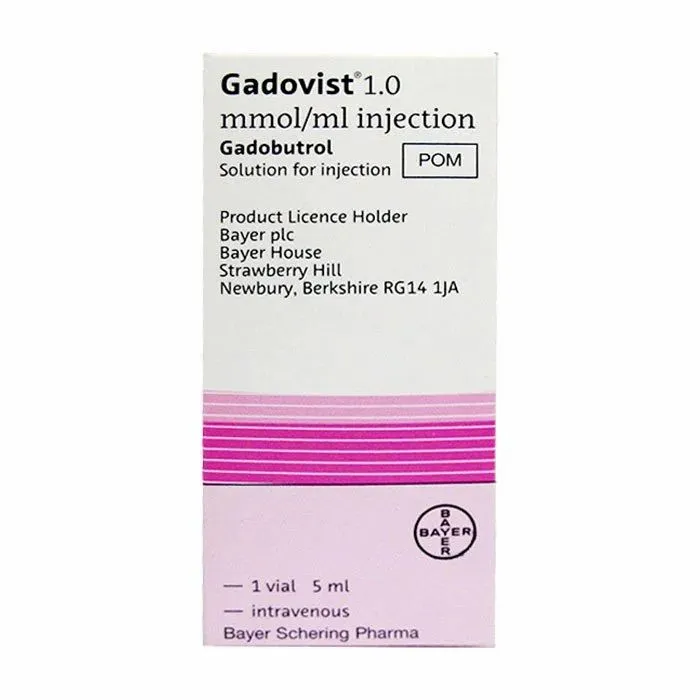
Table of Contents
Gadovist 1.0, 1.0 mmol/ml, solution for injection
Gadobutrol
Please read this leaflet carefully before using the medicine, as it contains important information for the patient.
- Keep this leaflet so that you can read it again if necessary.
- If you have any doubts, please consult your doctor (radiologist) or MRI facility staff.
- If you experience any adverse reactions, including those not listed in this leaflet, inform your doctor or MRI facility staff. See section 4.
Table of contents:
- What is Gadovist 1.0 and what is it used for
- Important information before using Gadovist 1.0
- How to use Gadovist 1.0
- Possible side effects
- How to store Gadovist 1.0
- Contents of the pack and other information
1. What is Gadovist 1.0 and what is it used for
This medicinal product is intended for diagnostic use only.
Gadovist 1.0 is a contrast agent used during magnetic resonance imaging (MRI) to visualize various parts of the body, such as: the brain, spinal cord, head, neck, chest, breasts, abdomen (including pancreas, liver, and spleen), pelvis (including prostate gland, urinary bladder, uterus), retroperitoneal space in the posterior abdominal cavity (including kidneys), limbs (upper and lower), musculoskeletal system (muscles, bones, and joints), blood vessels, and the heart. Myocardial perfusion under stress conditions (induced, for example, by medication) can be assessed. Viability of the heart muscle can also be evaluated (for example, presence of scar tissue can be detected).
MRI is a type of diagnostic imaging in medicine that exploits differences in the behavior of water molecules in healthy and diseased tissues. The examination is performed using powerful magnets and radiofrequency waves. Signals are detected by computers and converted into images.
Gadovist 1.0 is administered to adults as well as children and adolescents of all ages (including newborn infants).
Gadovist 1.0 is given as an intravenous injection. The medicine should be administered by trained healthcare professionals experienced in performing MRI examinations.
2. Important information before using Gadovist 1.0
When not to use Gadovist 1.0
if the patient is allergic to the active substance or to any of the other ingredients of this medicine (listed in section 6). There are no other absolute contraindications for the use of Gadovist 1.0.
Warnings and precautions
Before starting treatment with Gadovist 1.0, consult a doctor if the patient:
- has previously experienced an allergic reaction (hypersensitivity) to gadobutrol or to any of the other ingredients of Gadovist 1.0 (see “What Gadovist 1.0 contains”),
- has or has had allergies (e.g. hay fever, hives) or asthma,
- has previously had a reaction to a contrast agent,
- has brain disorders with seizures or other nervous system disorders.
The doctor will decide whether the ordered examination can be performed. After administration of Gadovist 1.0, allergic-type reactions or other types of reactions may occur, leading to disturbances in heart function, breathing difficulties, or skin reactions. Severe reactions are possible. Most reactions occur within half an hour after administration. Therefore, patient monitoring is recommended. Delayed reactions (occurring several hours or days later) have also been observed (see section 4 “Possible side effects”).
- Inform the doctor if the patient has a cardiac pacemaker or any implants containing iron.
Kidney and/or liver function disorders
Inform the doctor if:
- the patient’s kidneys are not functioning properly,
- the patient has recently undergone or is scheduled to receive a liver transplant.
Newborns and infants
Due to immature kidney function in newborns (children up to 4 weeks of age) and infants (children up to 1 year of age), Gadovist 1.0 should be used in these patients only after careful consideration by the physician. The doctor may decide to perform a blood test to assess kidney function before deciding to administer Gadovist 1.0, especially in patients over 65 years of age. If kidney function is impaired, the doctor will ensure that Gadovist 1.0 has been eliminated from the body before the patient receives another dose of Gadovist 1.0. Gadovist 1.0 can be removed from the body by dialysis. If kidney function is impaired, the doctor may decide to perform dialysis after administration of Gadovist 1.0.
There have been reports of severe reactions, primarily involving thickening of the skin and connective tissue (nephrogenic systemic fibrosis, NSF). NSF may cause significant joint mobility limitations, muscle weakness, or may affect the normal function of internal organs, which could be life-threatening. NSF is associated with the use of certain gadolinium-containing agents (including Gadovist 1.0) in patients with severe kidney impairment. It is also associated with the use of certain gadolinium-containing agents (including Gadovist 1.0) in patients with acute kidney injury due to hepatorenal syndrome (kidney failure in patients with advanced chronic liver disease), or in patients with acute kidney injury who have recently undergone or are about to undergo liver transplantation (see section “Possible side effects”). If any of the above conditions apply to the patient, the doctor will decide whether to administer Gadovist 1.0 only after carefully weighing the benefits against the risks.
Gadovist 1.0 and other medicines
Tell the doctor about all medicines the patient is currently taking, has recently taken, or plans to take.
Pregnancy and breastfeeding
Pregnancy
Gadobutrol may cross the placenta. It is not known whether this may affect the unborn child. Women who are or suspect they may be pregnant should inform their doctor, as Gadovist 1.0 should not be used during pregnancy unless absolutely necessary.
Breastfeeding
Women who are breastfeeding or planning to breastfeed should inform their doctor. The doctor will discuss with the patient whether she should continue breastfeeding or interrupt breastfeeding for 24 hours after administration of Gadovist 1.0.
Gadovist 1.0 contains sodium
This medicine contains less than 1 mmol of sodium (23 mg) per dose (calculated based on the average amount administered to a 70 kg person), meaning it is considered "sodium-free".
3. How to use Gadovist 1.0
Gadovist 1.0 is administered by medical personnel as an intravenous injection through a thin needle. Gadovist 1.0 will be given immediately before the magnetic resonance imaging (MRI) examination.
After injection, the patient will be monitored for at least 30 minutes.
The actual dose of Gadovist 1.0 appropriate for a given patient will depend on body weight and the body region being examined.
In adults, the recommended single dose is 0.1 millilitre of Gadovist 1.0 per kg of body weight (this means that a person weighing 70 kg will receive a dose of 7 millilitres). For central nervous system (CNS) imaging and CE-MRA (contrast enhancement in magnetic resonance angiography), a total of up to 0.3 millilitres of Gadovist 1.0 per kg of body weight may be administered (this means that a person weighing 70 kg will receive a dose of 21 millilitres). In CNS imaging, the lowest dose that may be administered is 0.075 millilitre of Gadovist 1.0 per kg of body weight (this means that a person weighing 70 kg will receive a dose of 5.25 millilitres).
For magnetic resonance imaging of the brain, spine, liver, and kidneys, a single injection of 0.1 millilitre of Gadovist 1.0 per kilogram of body weight is generally sufficient.
For magnetic resonance imaging of blood vessels, depending on the type of examination, a single injection of 7.5 to 15 millilitres is recommended (for patients weighing less than 75 kilograms) or 10 to 20 millilitres (for patients weighing 75 kilograms or more).
Dosage in special patient groups
The use of Gadovist 1.0 is not recommended in patients with severe kidney disease, or in patients who have recently undergone or are scheduled to undergo liver transplantation.
However, if administration of the drug is necessary, the patient should receive only one dose of Gadovist 1.0 during the examination and should not receive a second injection within at least 7 days.
Use in children and adolescents
In children of all ages (including newborns and infants), a single dose of 0.1 millilitre of Gadovist 1.0 per kg of body weight is recommended (see section 1: "What is Gadovist 1.0 and what is it used for"). Due to immature kidney function in newborns (children up to 4 weeks of age) and infants (children up to 1 year of age), Gadovist 1.0 should be used in these patients only after careful consideration by the physician. Newborns and infants should receive a single dose during the examination and should not receive a second injection within at least 7 days.
Elderly patients
There is no need to adjust the dose in patients over 65 years of age; however, a blood test should be performed to assess kidney function.
More information on the administration and preparation for use of Gadovist 1.0 can be found at the end of this leaflet.
Administration of a higher than recommended dose of Gadovist 1.0:
Cases of overdose have not been reported to date. If an overdose occurs, the physician will treat any symptoms that arise and monitor the proper functioning of the patient's heart and kidneys.
If you have any further questions about the use of this medicine, please consult your doctor or the MRI facility staff.
4. Possible adverse reactions
Like all medicines, Gadovist 1.0 may cause adverse reactions, although not everyone experiences them. Most of these reactions occur within half an hour after administration of Gadovist 1.0. In rare cases, delayed allergic reactions or other types of adverse reactions have been observed, occurring from several hours to several days after administration of Gadovist 1.0. If this happens, inform your doctor or radiologist immediately.
Most adverse reactions are mild to moderate in severity. The most commonly observed adverse reactions in patients receiving Gadovist 1.0 (occurring in 5 or more cases per 1,000 patients) are: headache, nausea (feeling of sickness), and dizziness.
The most severe adverse reactions (in some cases life-threatening or fatal) are: cardiac arrest (heart stops beating), severe lung disease (acute respiratory distress syndrome) / fluid in the lungs (pulmonary edema), and severe anaphylactoid-type allergic reactions (including respiratory arrest and anaphylactoid shock).
Additionally, adverse reactions have been observed (in some cases life-threatening or fatal): dyspnea (shallow breathing) and loss of consciousness (fainting).
Allergic-type reactions may rarely occur, including severe reactions which may require medical intervention.
The patient should immediately inform the MRI facility staff if any of the following occur:
- swelling of the face, lips, tongue or throat,
- coughing and sneezing,
- difficulty breathing,
- itching,
- runny nose,
- urticaria (a specific type of rash).
The above symptoms may be the first signs of a severe reaction, meaning that it may be necessary to interrupt the examination and initiate appropriate treatment.
The most commonly observed adverse reactions (may occur in 5 or more out of 1,000 individuals) are: headache, nausea, dizziness. Most adverse reactions are mild to moderate in severity.
The following possible adverse reactions were observed during clinical trials prior to marketing authorization, listed according to frequency of occurrence.
Frequent (may occur in up to 1 in 10 people):
- headache
- nausea (feeling of sickness)
Uncommon (may occur in up to 1 in 100 people):
- allergic-type reactions (hypersensitivity, anaphylactoid reaction), e.g.:
- hypotension (low blood pressure)
- urticaria
- facial swelling (swelling of the face)
- eyelid swelling (swelling of the eyelids)
- redness
Frequency of the following allergic-type reactions is unknown:
- anaphylactoid shock (severe allergic-type reaction)
- circulatory collapse (shock)
- respiratory arrest (cessation of breathing)
- bronchospasm (difficulty breathing)
- cyanosis (bluish discoloration of the lips)
- oral and pharyngeal edema (swelling of the mouth and throat)
- laryngeal edema (swelling of the larynx)
- increased blood pressure
- chest pain
- angioedema (e.g., swelling of the face, throat, lips, and/or tongue)
- conjunctivitis
- excessive sweating (increased perspiration)
- cough
- sneezing
- burning sensation
- pallor (pale skin)
- dizziness, taste disturbances (impaired sense of taste), paresthesia (tingling and numbness)
- dyspnea (shallow breathing)
- vomiting
- erythema (reddening of the skin)
- pruritus (including generalized itching)
- rash (including generalized rash, macular rash [small, flat red spots], papular rash [small, raised, localized lesions], pruritic erythema [itchy rash])
- various types of injection site reactions (e.g., extravasation, burning sensation, cold sensation, warmth sensation, redness, itching, pain or bruising)
- feeling of warmth
Rare (may occur in up to 1 in 1,000 people):
- loss of consciousness (fainting)
- seizures
- olfactory hallucinations (disturbed sense of smell)
- tachycardia (rapid heartbeat)
- palpitations (pounding or racing heart)
- dry mouth
- malaise
- feeling of cold
Adverse reactions reported after marketing authorization of Gadovist 1.0
Frequency unknown (cannot be estimated based on available data):
- cardiac arrest (heart stops beating)
- severe lung disease (acute respiratory distress syndrome)
- fluid in the lungs (pulmonary edema)
- cases of nephrogenic systemic fibrosis (a disease associated with skin hardening which may also affect soft tissues and internal organs) have been reported, most of which occurred in patients who received Gadovist 1.0 in combination with other gadolinium-containing medicines. Following administration of Gadovist 1.0, changes in blood tests related to kidney function (e.g., increased serum creatinine concentration) have been observed.
Reporting of adverse reactions
If any adverse reactions occur, including any not listed in this leaflet, tell your doctor or nurse. Adverse reactions can be reported directly to the Department of Monitoring of Adverse Drug Reactions, Office for Registration of Medicinal Products, Medical Devices and Biocidal Products, Al. Jerozolimskie 181C, 02-222 Warsaw, tel.: +48 22 49 21 301, fax: +48 22 49 21 309, website: https://smz.ezdrowie.gov.pl. Adverse reactions can also be reported to the marketing authorization holder. By reporting adverse reactions, additional information on the safety of this medicine can be collected.
5. How to store Gadovist 1.0
Keep the medicine out of the sight and reach of children.
Store at a temperature not exceeding 30°C.
Do not use Gadovist 1.0 after the expiry date stated on the packaging label after EXP. The expiry date refers to the last day of the stated month.
The batch number is indicated on the packaging following the word "Lot".
Chemical and physical stability of the product has been demonstrated for 24 hours at 20–25°C.
If the medicine is not used immediately after opening, from a microbiological point of view, the user is responsible for the storage conditions and duration prior to use, and this period should not exceed 24 hours at 20–25°C.
When using a single dose, any unused injectable solution from one examination must be discarded.
When administering to multiple patients, any remaining injectable solution not used within one continuous 24-hour period following first opening must be discarded.
Medicines must not be disposed of via wastewater or household waste. Ask your pharmacist how to dispose of medicines no longer required. Such measures will help protect the environment.
6. Contents of the Package and Other Information
What Gadovist 1.0 Contains
- The active substance is gadobutrol. 1 millilitre of injection solution contains 604.72 mg of gadobutrol (equivalent to 1.0 mmol gadobutrol containing 157.25 mg of gadolinium).
- Other ingredients are: sodium calcbutrol, trometamol, hydrochloric acid 3.6%, and water for injections.
1 vial contains 2 ml of solution, corresponding to 1209.44 mg of gadobutrol.
1 vial contains 7.5 ml of solution, corresponding to 4,535 mg of gadobutrol.
1 vial contains 10 ml of solution, corresponding to 6,047.20 mg of gadobutrol.
1 vial contains 15 ml of solution, corresponding to 9,070 mg of gadobutrol.
1 vial contains 30 ml of solution, corresponding to 18,141 mg of gadobutrol.
1 pre-filled syringe contains 5.0 ml of solution, corresponding to 3,023 mg of gadobutrol.
1 pre-filled syringe contains 7.5 ml of solution, corresponding to 4,535 mg of gadobutrol.
1 pre-filled syringe contains 10 ml of solution, corresponding to 6,047 mg of gadobutrol.
1 pre-filled syringe contains 15 ml of solution, corresponding to 9,070 mg of gadobutrol.
1 pre-filled syringe contains 20 ml of solution, corresponding to 12,094 mg of gadobutrol.
1 cartridge for an automatic syringe contains 15 ml of solution, corresponding to 9,070 mg of gadobutrol.
1 cartridge for an automatic syringe contains 20 ml of solution, corresponding to 12,094 mg of gadobutrol.
1 cartridge for an automatic syringe contains 30 ml of solution, corresponding to 18,140 mg of gadobutrol.
1 infusion bottle contains 65 ml of solution, corresponding to 39,307 mg of gadobutrol.
What Gadovist 1.0 Looks Like and Contents of the Packaging
Before use, inspect the medicinal product visually. Gadovist 1.0 is a clear, colourless or slightly yellow solution. Do not use Gadovist 1.0 if there is significant discolouration, presence of particulate matter, or container damage.
Packaging contains:
- 1 or 3 vials, each containing 2 ml of intravenous injection solution.
- 1 or 10 vials, each containing 7.5 ml, 15 ml, or 30 ml of intravenous injection solution.
- 10 vials, each containing 10 ml of intravenous injection solution.
- 1 or 5 pre-filled syringes, each containing 5 ml, 7.5 ml, or 10 ml of intravenous injection solution (in a 10 ml glass or plastic pre-filled syringe).
- 1 or 5 pre-filled syringes containing 15 ml of intravenous injection solution (in a 17 ml glass or 20 ml plastic pre-filled syringe).
- 1 or 5 pre-filled syringes containing 20 ml of intravenous injection solution (in a 20 ml glass or plastic pre-filled syringe).
- 1 or 5 cartridges for automatic syringes containing 15 ml, 20 ml, or 30 ml of intravenous injection solution (cartridge with 65 ml capacity).
- 1 or 10 infusion bottles containing 65 ml of injection solution (in a 100 ml infusion bottle).
Not all pack sizes may be marketed.
Marketing Authorisation Holder and Manufacturer
Marketing Authorisation Holder:
Bayer AG
Kaiser-Wilhelm-Allee 1
51373 Leverkusen,
Germany
Manufacturer:
Bayer AG
Müllerstrasse 178
13353 Berlin
Germany
For further information, contact the representative of the marketing authorisation holder:
Bayer Sp. z o.o.
Al. Jerozolimskie 158
02-326 Warsaw
Poland
Tel. (0-22) 572 35 00
Information intended exclusively for healthcare professionals (see also sections 1 to 6):
Method of Administration
The medicinal product is intended for intravenous use only. After administration, the patient should be observed for at least 30 minutes, as experience shows that most adverse reactions occur during this period.
The required dose should be administered as a single, rapid intravenous injection. MRI examination with contrast agent may be initiated immediately (or shortly thereafter, depending on pulse sequences and examination protocol) after injection due to the rapid onset of contrast enhancement. Optimal contrast enhancement occurs during the first arterial pass in angiographic imaging (contrast-enhanced magnetic resonance angiography – CE-MRA) and approximately 15 minutes after injection of Gadovist 1.0 in central nervous system (CNS) evaluation (timing depends on the type of pathology and tissue).
Instructions for Use
This medicinal product is a clear, colourless or slightly yellow solution. Inspect visually before use.
Do not use Gadovist 1.0 if there is significant discolouration, presence of particulate matter, or container damage.
Presentations for single-dose use only: 2 ml, 7.5 ml, 10 ml, and 15 ml vials.
Presentations for single-dose use or use in multiple patients: 30 ml vials and 65 ml bottles.
When used in multiple patients, Gadovist 1.0 must be administered using an automatic injector approved for multiple-patient use. The contrast agent must be administered under aseptic conditions.
Never pierce the rubber stopper more than once.
Gadovist 1.0 should be drawn into a syringe or automatic injector immediately before use.
The date and time of stopper puncture must be recorded on the vial/bottle label in the designated space.
The automatic injector used must be approved for single- or multiple-patient use. The device manufacturer must demonstrate suitability of the automatic injector and its single-use components for the intended use. All additional instructions from the equipment manufacturer must also be strictly followed. When used in multiple patients, single-use components must be replaced between patients.
Identification labels from vials or bottles should be affixed to the patient's chart to allow proper documentation of the gadolinium-containing contrast agent used. The administered dose should also be recorded. If an electronic patient record is used, the name of the medicinal product, batch number, and dose should be documented.
Shelf Life After First Opening
For detailed information on storage conditions and stability after use, see section 5.
Single-dose use (2 ml, 7.5 ml, 10 ml, 15 ml vials):
Any unused injection solution remaining after one examination must be discarded.
Single-dose or multiple-patient use (30 ml vials and 65 ml bottles):
For single-dose use, any unused injection solution remaining after one examination must be discarded.
For multiple-patient use, any unused injection solution remaining after the first opening must be discarded within a continuous 24-hour period.
Disposal
Any unused portions or waste material should be disposed of in accordance with local regulations.
Preparation Instructions
Vials
Gadovist 1.0 should be drawn into a syringe immediately before use.
Do not pierce the stopper more than once.
Any unused solution remaining after one examination must be discarded.
Pre-filled Syringes
Gadovist 1.0 is ready for use.
Prepare the pre-filled syringe for injection immediately before use.
Remove the tip cap immediately before use.
Any unused solution remaining after one examination must be discarded.
Glass Pre-filled Syringes (only):
MANUAL INJECTION
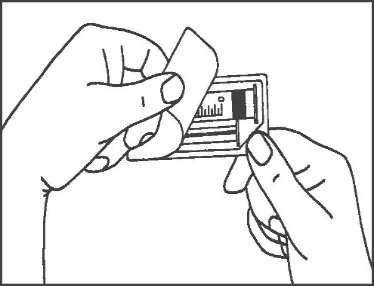
- Open the packaging
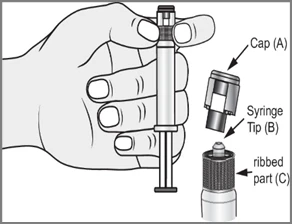
- Hold the syringe vertically by the ribbed part (C) of the closure system
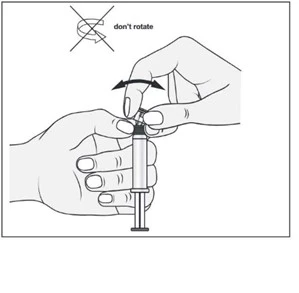
- With the other hand, grasp the cap (A) of the closure system and gently rock it forward and backward until the cap detaches and can be removed (all seals will be broken)
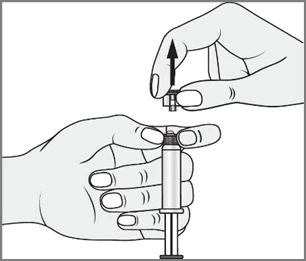
- Remove the cap (A) in a straight upward direction. Do not touch the syringe tip (B) to maintain sterility.
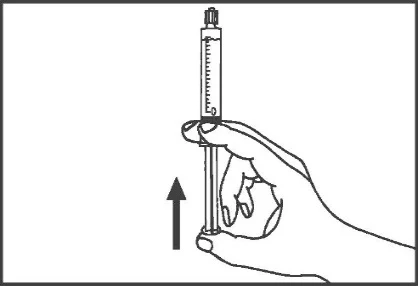
- Remove air from the syringe
Plastic Pre-filled Syringes:
MANUAL INJECTION INJECTION USING AN INJECTOR
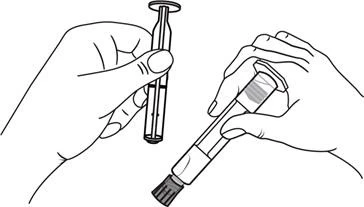
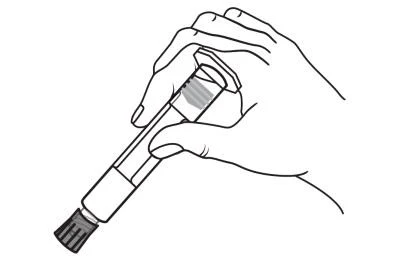
- Remove syringe and plunger from packaging 1. Remove syringe
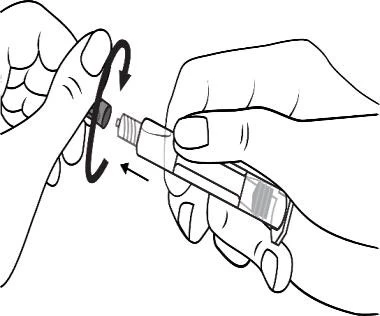
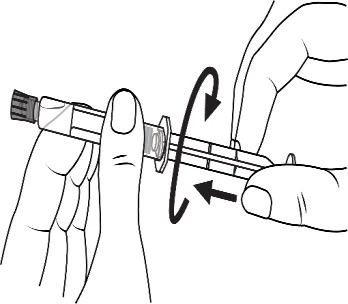
- Screw the plunger into the syringe clockwise 2. Open the tip cap by twisting
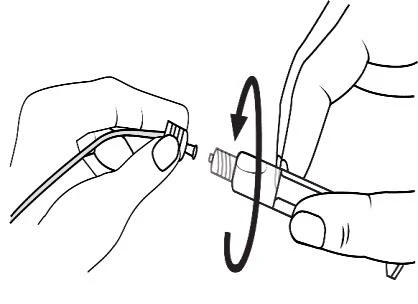
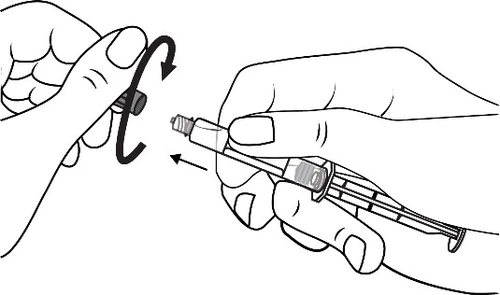
- Connect the syringe tip to the line
- Open the tip cap by twisting clockwise. Then proceed according to the operating instructions.
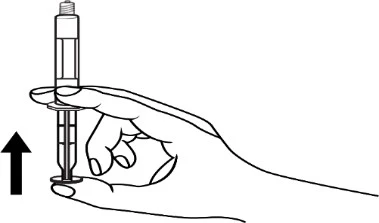
- Remove air from the syringe
Cartridges for Automatic Syringes
The medicinal product should be administered by trained medical personnel using appropriate procedures and equipment.
Maintain sterility during all injections.
The device user manual should be provided by the manufacturer.
Any unused solution remaining after one examination must be discarded.
Bottles
The bottle contains 65 ml of solution.
The medicinal product may be administered using an automatic dispenser.
The device user manual should be provided by the manufacturer.
Incompatibilities
Since compatibility studies have not been performed, the medicinal product must not be mixed with other medicinal products.
Dosage
The lowest dose providing sufficient contrast enhancement for diagnostic purposes should be used. The dose should be calculated based on the patient's body weight and must not exceed the recommended dose per kg of body weight specified in this section.
Adults
The dose depends on the indication. A single injection of 0.1 mmol of Gadovist 1.0 per kg body weight (equivalent to 0.1 ml/kg b.w.) is generally sufficient. The total maximum dose is 0.3 mmol of Gadovist 1.0 per kg body weight (equivalent to 0.3 ml/kg b.w.).
CNS Imaging:
The usually recommended dose for diagnosis is 0.1 mmol per kg body weight.
If, despite a negative MRI result, there remains a strong clinical suspicion of pathology or if more detailed information may influence patient management, a second injection may be administered, adjusting the total dose to a maximum of 0.2 mmol/kg b.w. within 30 minutes of the first dose. For CNS MRI imaging, the minimum dose that may be administered is 0.075 mmol gadobutrol per kg body weight (equivalent to 0.075 ml of Gadovist 1.0 per kg body weight).
Whole-body MRI (excluding CE-MRA):
For diagnosis, a dose of 0.1 ml/kg b.w. of Gadovist 1.0 is usually sufficient.
Angiographic Imaging:
Imaging of 1 field of view (FOV):
- 7.5 ml for body weight below 75 kg; 10 ml for body weight 75 kg and above (equivalent to 0.1–0.15 mmol/kg b.w.).
Imaging of more than 1 field of view (FOV): - 15 ml for body weight below 75 kg; 20 ml for body weight 75 kg and above (equivalent to 0.2–0.3 mmol/kg b.w.).
Special Patient Groups
Children and Adolescents
In children of all ages (including full-term newborns), the recommended dose is 0.1 mmol gadobutrol per kg body weight (equivalent to 0.1 ml of Gadovist 1.0 per kg body weight) for all indications (see section 1). Due to immature renal function in newborns up to 4 weeks of age and infants up to 1 year of age, Gadovist 1.0 should be used in these patients only after careful consideration and at a dose not exceeding 0.1 mmol/kg body weight. No more than one dose should be administered during imaging. Due to lack of data on repeated administration, injections of Gadovist 1.0 should not be repeated unless intervals between injections are at least 7 days.
Renal Impairment
Gadovist 1.0 may be used in patients with severe renal impairment (glomerular filtration rate – GFR < 30 ml/min/1.73 m²) and in patients during the perioperative period of liver transplantation only after careful benefit-risk assessment and if diagnostic information is essential and cannot be obtained by non-contrast MRI (see section 4.4). If use of Gadovist 1.0 is necessary, the dose should not exceed 0.1 mmol/kg body weight. No more than one dose should be administered during imaging. Due to lack of data on repeated administration, injections of Gadovist 1.0 should not be repeated unless intervals between injections are at least 7 days.
Special Warnings and Precautions for Use
Hypersensitivity
As with other contrast agents, use of Gadovist 1.0 may be associated with risk of anaphylactoid, hypersensitivity, or idiosyncratic reactions, manifesting as cardiovascular, respiratory, or cutaneous symptoms, up to severe reactions including shock. In general, patients with cardiovascular disease are more susceptible to serious adverse events, including death, due to severe hypersensitivity reactions.
The risk of hypersensitivity reactions may be increased in patients with:
- previous reactions to contrast agents,
- history of bronchial asthma,
- history of allergic diseases.
In patients with allergy predisposition, the decision to use Gadovist 1.0 must be made after careful benefit-risk assessment. Most reactions occur within 30 minutes after administration. Therefore, patient monitoring after the procedure is recommended. Access to medicinal products and equipment for managing hypersensitivity reactions must be ensured. Delayed reactions (after several hours to days) have been reported rarely.
Renal Impairment
Prior to administration of Gadovist 1.0, it is recommended that all patients be evaluated for renal impairment, including laboratory tests.
Cases of nephrogenic systemic fibrosis (NSF) have been reported following administration of certain gadolinium-containing medicinal products in patients with acute or chronic severe renal impairment (glomerular filtration rate – GFR < 30 ml/min/1.73 m²). Patients undergoing liver transplantation are particularly at risk, as the likelihood of acute renal failure in this group is high. Due to the potential for NSF with Gadovist 1.0, this product should be used in patients with severe renal impairment and in patients during the perioperative period of liver transplantation only after careful benefit-risk assessment and if diagnostic information is essential and not available with non-contrast MRI. If use of Gadovist 1.0 is necessary, the dose should not exceed 0.1 mmol/kg body weight. No more than one dose should be administered during imaging. Due to lack of data on repeated administration, injections of Gadovist 1.0 should not be repeated unless intervals between injections are at least 7 days.
Since renal clearance of gadobutrol may be reduced in elderly patients, it is particularly important to monitor patients aged 65 years and older for renal impairment.
Haemodialysis shortly after administration of Gadovist 1.0 may facilitate its elimination from the body. However, there is no evidence to support initiating haemodialysis for prevention or treatment of NSF in patients not already undergoing haemodialysis.
Therefore, Gadovist 1.0 should be used in these patients only after careful benefit-risk assessment (see section 4.8).
Pregnancy and Breastfeeding
Gadovist 1.0 should not be used during pregnancy unless the clinical condition of the woman necessitates use of gadobutrol.
The physician and the breastfeeding mother should decide whether to continue breastfeeding or interrupt it for 24 hours after administration of Gadovist 1.0.
Adverse Reactions
The safety profile summary is based on data from clinical trials involving over 6,300 patients and post-marketing experience.
Overdose
Single doses of gadobutrol up to 1.5 mmol/kg body weight were well tolerated.
In case of overdose, monitoring of cardiovascular function (including ECG) and renal function is recommended as a precaution.
In case of overdose, Gadovist 1.0 can be removed from the body by dialysis.