Furazek
Poland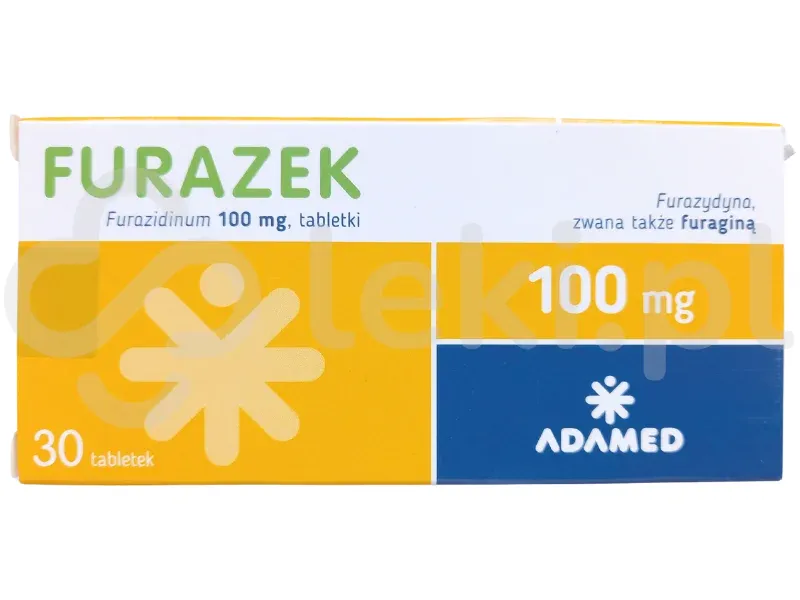
Table of Contents
Package leaflet: Information for the user
Furazek, 100 mg, tablets
Furazidinum
Please read all of this leaflet carefully before taking this medicine, because it contains
important information for the patient.
- Keep this leaflet, as you may need to read it again.
- If you have any further questions, please ask your doctor or pharmacist.
- This medicine has been prescribed for a specific individual. Do not pass it on to others. It may harm someone else, even if their symptoms are the same.
- If you experience any adverse reactions, including any not listed in this leaflet, tell your doctor or pharmacist. See section 4.
Table of contents
- What Furazek is and what it is used for
- Important information before taking Furazek
- How to take Furazek
- Possible side effects
- How to store Furazek
- Contents of the pack and other information
1. What Furazek is and what it is used for
Furazek is a medicine in tablet form for oral administration. It contains as the active substance furazidinum,
also known as furagin, a nitrofuran derivative. Furazidinum is an antibacterial agent.
The indication for Furazek is:
- Treatment of uncomplicated lower urinary tract infections, including recurrent urinary tract infections in women caused by Escherichia coli microorganisms.
2. Important information before taking Furazek
When not to use Furazek
- If the patient is allergic to furazidinum or nitrofuran derivatives or to any of the other ingredients of this medicine (listed in section 6)
- During the first trimester of pregnancy
- In late pregnancy (from week 38) and during delivery, due to the risk of haemolytic anaemia (anaemia associated with red blood cell breakdown) in the newborn
- In newborns and infants up to 3 months of age
- If the patient has peripheral neuropathy, e.g. diabetic neuropathy (a syndrome of peripheral nerve damage, which may be characterized by motor, sensory or other nervous system disturbances)
- If the patient has glucose-6-phosphate dehydrogenase deficiency (a genetically determined enzyme deficiency involved in red blood cell metabolism), as the drug may then cause haemolysis (red blood cell damage and anaemia)
- If the patient has renal failure (oliguria, anuria), and laboratory tests show creatinine clearance below 60 ml/min or elevated serum creatinine levels.
Warnings and precautions
Before starting treatment with Furazek, consult your doctor or pharmacist if the patient has:
- Impaired kidney function,
- Impaired liver function,
- Neurological disorders,
- Anaemia,
- Electrolyte imbalances (changes in blood ion concentrations), deficiency of B vitamins or folic acid,
- Lung diseases. The use of Furazek should be stopped immediately and medical advice sought if
- The patient develops symptoms such as fever, chills, cough, chest pain, or shortness of breath. These may be pulmonary reactions, which sometimes occur during treatment with nitrofuran derivatives (see also section 4).
- The patient develops neurological symptoms (tingling, numbness, sensation of electric currents). These may be signs of peripheral nerve damage (peripheral neuropathy), particularly in diabetic patients, which in severe cases may be irreversible and life-threatening. The medicine should be discontinued immediately and medical advice sought.
- The patient develops symptoms of impaired liver function (yellowing of the whites of the eyes, skin or mucous membranes, dark urine, skin itching, pale stools, abdominal pain, nausea, vomiting, persistent fatigue, loss of appetite and weight loss). Jaundice may occur during short-term use of nitrofurans (within two weeks). Chronic hepatitis (sometimes leading to liver necrosis – fatal cases have been reported) may occur with long-term use of nitrofurans (usually longer than 6 months). If the patient is on long-term treatment, blood tests and monitoring of kidney and liver function may be necessary.
Effect on laboratory tests
The medicine may cause false-positive results in urine glucose tests. Before submitting a urine sample for such testing, inform medical personnel that you are taking Furazek.
Children
This medicine should not be used in newborns and infants up to 3 months of age.
Furazek with other medicines
Tell your doctor about all medicines currently taken or recently taken, as well as any medicines the patient plans to take.
- Nitrofurans (including furazidinum) should not be combined with chloramphenicol, ristomycin, levomycetin, or sulfonamides (antibacterial agents), as this may suppress haematopoietic function.
- Nalidixic acid and other quinolone derivatives should not be used concomitantly with furagin, as antagonism (opposing action) is usually observed.
- Aminoglycoside and tetracycline antibiotics administered together with furazidinum enhance its antibacterial effect.
- Drugs that increase uric acid excretion, such as probenecid (in high doses) and sulfinpyrazone, reduce tubular excretion of nitrofuran derivatives and may cause accumulation of furazidinum in the body, increasing its toxicity and reducing treatment efficacy.
- Concomitant administration of alkalizing agents containing magnesium trisilicate inhibits absorption of furazidinum and reduces antibacterial activity.
- Atropine slows absorption of furagin, but the total amount of absorbed active substance remains unchanged.
- Medicines that neutralize gastric acid inhibit absorption of furazidinum.
- Concomitant intake of B vitamins increases absorption of nitrofuran derivatives.
Furazek with food, drink and alcohol
Furazek is best taken with meals containing protein, as this increases drug absorption.
Alcohol consumption should be avoided during therapy with furagin.
Pregnancy, breastfeeding and fertility
If the patient is pregnant or breastfeeding, suspects she may be pregnant, or is planning to have a child, she should consult her doctor or pharmacist before using this medicine.
Pregnancy
Furazek should not be used during the first trimester of pregnancy or in women in late pregnancy (from week 38) and during delivery, as furazidinum may cause haemolytic anaemia in the newborn. Particular caution should be exercised when using the medicine during the last three months of pregnancy (third trimester).
Breastfeeding
Due to the passage of furagin into human milk, the medicine should not be used during breastfeeding.
Fertility
In men of reproductive age – experimental studies and clinical observations in patients who have used nitrofurans (as well as certain antibiotics) have shown that these drugs may adversely affect testicular function, resulting in reduced total sperm count and volume, decreased sperm motility, and structural changes in sperm.
Driving and operating machinery
There is no data on the effect of furagin on the ability to drive vehicles or operate machinery. However, in some patients dizziness, drowsiness or visual disturbances may occur, which could affect the ability to drive or operate machinery.
Furazek contains lactose
Each 100 mg tablet contains 123 mg of monohydrated lactose.
If the patient has previously been diagnosed with intolerance to certain sugars, the patient should consult a doctor before taking this medicine.
Furazek contains sodium
The medicine contains less than 1 mmol (23 mg) of sodium per tablet, meaning the medicine is considered "sodium-free".
3. How to take Furazek
This medicine should always be taken according to the doctor's instructions. If in doubt, consult your doctor.
The tablet may be divided into equal doses.
Oral administration. Furazek should be administered during meals. At the same time, maintain a diet rich in protein.
The medicine should be taken with a large amount of fluid. If one or several doses have been missed, continue treatment using the previously prescribed doses.
Use in adults
On the first day of treatment: 400 mg per day in 4 divided doses (1 tablet every 6 hours);
on subsequent days: 300 mg per day in 3 divided doses (1 tablet every 8 hours). Treatment usually lasts 7–10 days. If necessary, treatment may be repeated after an interval of 10–15 days.
Recurrent urinary tract infections in women
In case of at least 3 episodes of urinary tract infection within the past 12 months, Furazek should be used at a dose of 100 mg (1 tablet) at bedtime for a period of 6–12 months.
Use in children and adolescents
Furazek may be administered to children aged 2 to 14 years. The following dosage schedule should be applied:
Furazek should be administered at a dose of 5–7 mg/kg body weight per day in 2 divided doses.
The treatment lasts 7–8 days. If necessary, treatment may be repeated after an interval of 10–15 days.
Caution should be exercised when administering this medicine to young children due to the risk of choking.
If a child has difficulty swallowing tablets, the medicine may be crushed and suspended in milk.
For children under 2 years of age, the dosage should be determined by a doctor.
Taking more Furazek than recommended
If more than the recommended dose has been taken, seek immediate advice from a doctor or pharmacist.
Missed dose of Furazek
If one or several doses have been missed, continue treatment using the previously prescribed doses. Do not take a double dose to make up for a missed dose.
If you feel that the effect of the medicine is too strong or too weak, consult your doctor.
If you have any further doubts concerning the use of this medicine, consult your doctor.
4. Possible adverse reactions
Like all medicines, this medicine can cause adverse reactions, although not everyone will experience them.
Among the adverse symptoms observed during clinical trials and considered likely to be related to the use of this medicine, the most common were: nausea (8%), headache (6%), and excessive flatulence (1.5%).
Other symptoms listed below occurred in no more than 1% of patients.
You should immediately stop using this medicine and contact your doctor or go to the nearest hospital if any of the following occur:
- allergic reactions: rash, itching, urticaria, anaphylactic reactions (sudden local or systemic allergic reactions, including life-threatening anaphylactic shock), angioedema (a severe allergic reaction—sudden swelling of the face, limbs, or joints without itching or pain). Swelling in the head and neck area may cause difficulty in swallowing and breathing;
- severe skin reactions (exfoliative dermatitis, erythema multiforme—red-blue skin spots and (or) mucosal lesions, sometimes with blisters, fever, and joint pain), Stevens-Johnson syndrome—blisters on the skin and (or) mucous membranes which, when ruptured, form painful sores; fever, muscle and joint pain often occur simultaneously;
- acute, subacute, and chronic hypersensitivity reactions to nitrofuran derivatives. Chronic reactions occurred in patients treated for longer than 6 months. Chronic pulmonary reactions (including pulmonary fibrosis and diffuse interstitial pneumonia) may occur especially in elderly patients. Acute respiratory hypersensitivity reactions were characterized by fever, chills, cough, chest pain, and pleural effusion. These reactions most often resolved quickly or very quickly after discontinuation of the drug. In the case of chronic reactions, the severity of symptoms and their reversibility after stopping the drug depend on how long treatment was continued after the first adverse symptoms appeared. Early recognition of the adverse reaction and prompt discontinuation of the drug are crucial. Impaired lung function may become irreversible;
- pseudomembranous colitis (a severe disease of the small or large intestine characterized by diarrhea, headache, and fever);
- tingling, numbness, and electric shock sensations due to peripheral neuropathy (damage to peripheral nerves), including acute or irreversible forms (patients particularly predisposed include those with renal failure, anemia, diabetes, electrolyte imbalances, or vitamin B deficiency);
- liver function disorders, symptoms of drug-induced hepatitis, cholestatic jaundice (caused by obstruction of bile flow), hepatocyte necrosis (symptoms see section 2 “Warnings and precautions”).
In addition, the following adverse reactions may occur:
- cyanosis due to methemoglobinemia (skin discoloration with a chocolate-brown hue). In patients with glucose-6-phosphate dehydrogenase deficiency, the use of furazolidone may lead to megaloblastic anemia (caused by vitamin B or folic acid deficiency) or hemolytic anemia (caused by rapid destruction of red blood cells);
- dizziness, drowsiness, visual disturbances;
- constipation, diarrhea, dyspeptic symptoms (chronic epigastric pain);
- abdominal pain, vomiting;
- salivary gland inflammation, pancreatitis;
- hair loss, exfoliative dermatitis;
- fever, chills, malaise;
- infections with microorganisms resistant to nitrofuran derivatives, most commonly Pseudomonas species or Candida species.
In patients taking furazolidone, the following adverse reactions have also been observed, with unknown frequency:
- muscle cramps, muscle pain.
Reporting of adverse reactions
If any adverse reactions occur, including any not listed in this leaflet, inform your doctor or pharmacist. Adverse reactions can be reported directly to the Department of Monitoring Adverse Reactions of Medicinal Products at the Office for Registration of Medicinal Products, Medical Devices and Biocidal Products
ul. Al. Jerozolimskie 181C
02-222 Warsaw
Phone: +48 22 49 21 301
Fax: +48 22 49 21 309
Website: https://smz.ezdrowie.gov.pl
Adverse reactions can also be reported to the marketing authorization holder.
Reporting adverse reactions helps provide more information on the safety of this medicine.
5. How to store Furazek
Keep this medicine out of sight and reach of children.
There are no special requirements regarding the storage temperature of this medicine.
Store in the original packaging to protect from light.
Do not use this medicine after the expiry date stated on the box after: EXP. The expiry date refers to the last day of the month indicated.
Medicines must not be disposed of via wastewater or household waste. Ask your pharmacist how to dispose of medicines no longer in use. This will help protect the environment.
6. Contents of the packaging and other information
What Furazek contains
- The active substance is furazidin, also known as furagin.
- The other ingredients are: lactose monohydrate, silicified microcrystalline cellulose composed of: microcrystalline cellulose 98% and colloidal anhydrous silica 2%, magnesium stearate, colloidal anhydrous silica, sodium carboxymethylstarch type A.
What Furazek looks like and contents of the pack
Yellow or yellow-orange, round tablets, with a score line on one side.
30 tablets in blisters, packed in a cardboard box.
Marketing Authorisation Holder
Adamed Pharma S.A.
Pieńków, ul. M. Adamkiewicza 6A
05-152 Czosnów
Manufacturer
Adamed Pharma S.A.
Pieńków, ul. M. Adamkiewicza 6A
05-152 Czosnów