Furaginum adamed
Poland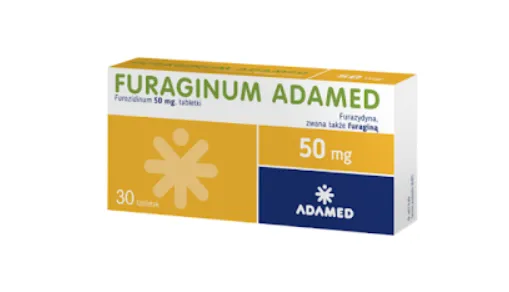
Table of Contents
Package leaflet: Information for the patient
FURAGINUM ADAMED, 50 mg, tablets
Furazidinum
Please read the entire leaflet carefully before using the medicine, as it contains
important information for the patient.
- Keep this leaflet, as you may need to read it again.
- If you have any questions, please consult your doctor or pharmacist.
- This medicine has been prescribed for a specific individual. Do not pass it on to others. This medicine may harm others, even if their symptoms are the same.
- If you experience any adverse reactions, including any not listed in this leaflet, inform your doctor or pharmacist. See section 4.
Table of contents:
- What Furaginum Adamed is and what it is used for
- Important information before taking Furaginum Adamed
- How to take Furaginum Adamed
- Possible side effects
- How to store Furaginum Adamed
- Contents of the pack and other information
1. What Furaginum Adamed is and what it is used for
The active substance in Furaginum Adamed is furazidin, also known as furagin, an antibacterial agent
used in urinary tract infections. Most bacteria causing urinary tract infections are sensitive to furazidin.
Furaginum Adamed is not effective against infections caused by Pseudomonas aeruginosa.
Indications:
Treatment of acute and chronic uncomplicated lower urinary tract infections caused by
Escherichia coli.
2. Important information before using Furaginum Adamed
When not to take Furaginum Adamed:
- if the patient is allergic to the active substance or to any of the other ingredients of this medicine (listed in section 6) or to nitrofuran derivatives,
- if the patient is in the first trimester of pregnancy (first 3 months of pregnancy),
- in cases of severe renal insufficiency (oliguria, anuria),
- in diagnosed polyneuropathy, e.g. diabetic (nerve damage, e.g. due to elevated blood glucose levels),
- in glucose-6-phosphate dehydrogenase deficiency, as the drug may then cause haemolysis (destruction of red blood cells and anaemia).
Warnings and precautions
Before starting Furaginum Adamed, discuss it with your doctor or pharmacist.
During treatment, exercise caution:
- in patients with renal insufficiency, anaemia, vitamin B complex and folic acid deficiency, and lung diseases, as the drug may cause breakdown of red blood cells (erythrocytes),
- in diabetic patients, as during treatment with nitrofuran derivatives, symptoms of polyneuropathy (nerve damage) may occur,
- in men of reproductive age, as clinical studies have shown that nitrofuran derivatives have a negative effect on testicular function. They may reduce sperm motility, decrease semen secretion, and lead to abnormalities in sperm structure. During prolonged treatment, the doctor will recommend blood tests and biochemical assessment of kidney and liver function.
Children and adolescents
Furaginum Adamed may be used in children above 2 years of age.
For children under 2 years of age, the dose should be determined directly with a doctor.
Furaginum Adamed and other medicines
Inform your doctor or pharmacist about all medicines currently used, recently used, or planned to be used.
- Nitrofurantoin is an antagonist of nalidixic acid, inhibiting its bacteriostatic effect.
- Medicines increasing urinary excretion of uric acid, such as probenecid (in high doses) and sulfinpyrazone, reduce tubular excretion and may lead to accumulation of nitrofurantoin in the body, increasing its toxicity and reducing its urinary concentration below the minimum bacteriostatic level, thus decreasing therapeutic efficacy.
- Aminoglycoside antibiotics and tetracyclines administered together with nitrofurantoin enhance its antibacterial effect.
- Chloramphenicol and ristomycin increase haemotoxic effects.
- The use of nitrofurantoin together with antacids containing magnesium trisilicate reduces its absorption.
- Atropine delays absorption of nitrofurantoin, but the total amount absorbed remains unchanged.
- Concurrent intake of vitamin B complex increases absorption of nitrofurantoin.
Effect on laboratory tests:
During administration of drugs from the same group (nitrofuran derivatives), falsely positive results in urine glucose tests have been observed.
Furaginum Adamed with food, drink and alcohol
Furaginum Adamed should preferably be taken with meals containing protein.
Alcohol consumption should be avoided during treatment with this medicine.
Pregnancy, breastfeeding and fertility
If the patient is pregnant or breastfeeding, suspects she may be pregnant, or is planning to have a child, she should consult her doctor or pharmacist before using this medicine.
Pregnancy
Due to lack of clinical data on the effect of nitrofurantoin on the embryo or foetus, the drug should not be used during the first trimester of pregnancy.
Due to the risk of causing haemolytic anaemia in the foetus, particular caution should be exercised in women during the third trimester of pregnancy. The patient, in consultation with her attending physician, should regularly monitor haemoglobin and iron levels and erythrocyte count (perform blood morphology tests).
Breastfeeding
Due to the passage of nitrofurantoin into breast milk, the drug should not be used during breastfeeding.
Driving and operating machinery
There is no data available on the effect of nitrofurantoin on the ability to drive motor vehicles and operate mechanical equipment.
However, in some patients, dizziness, drowsiness, and visual disturbances may occur, which could affect the ability to drive.
Furaginum Adamed contains 13.75 mg of sucrose.
If the patient has previously been diagnosed with intolerance to certain sugars, the patient should consult a doctor before taking this medicine.
3. How to use Furaginum Adamed
This medicine should always be taken according to the doctor's instructions. If in doubt, consult your doctor or pharmacist.
It is best to take the medicine orally during meals, especially those containing protein, as this increases the absorption of furazidinum.
Recommended dosage:
Adults:
First day of treatment: 100 mg (2 tablets) 4 times daily (maximum 8 tablets per day);
subsequent days: 100 mg (2 tablets) 3 times daily (6 tablets per day).
In cases of recurrent urinary tract infections in women (at least 3 episodes of urinary tract infection within the last 12 months): 100 mg (2 tablets) at bedtime for a period of 6–12 months.
Use in children and adolescents
Children aged 2 to 14 years:
5 mg/kg body weight/day up to 7 mg/kg body weight/day, divided into 2 or 3 doses (the tablet may be crushed and mixed with milk).
For children under 2 years of age, the dosage should be determined directly with the doctor.
The medicine should be used for 7 to 8 days. If necessary, the treatment may be repeated after 10–15 days.
Taking more Furaginum Adamed than prescribed
This medicine has low toxicity. Since furazidinum is excreted from the body via the kidneys, symptoms of overdose may occur in patients with impaired renal function, such as headache, dizziness, allergic reactions, nausea, and anemia.
Missing a dose of Furaginum Adamed
If a dose is missed, continue treatment with the previously prescribed doses.
Do not take a double dose to make up for the missed dose.
If you have any further doubts regarding the use of this medicine, consult your doctor or pharmacist.
4. Possible adverse reactions
Like any medicine, this medicine may cause adverse reactions, although not everyone will experience them.
Most patients tolerate nitrofurantoin well.
Among the adverse symptoms observed during clinical trials and considered likely related to the use of the medicine, the most common were: nausea (8%), headache (6%), and excessive flatulence (1.5%). The remaining symptoms listed below occurred in no more than 1% of patients:
- cyanosis due to methaemoglobinaemia (bluish-brown discoloration of the skin). In patients with glucose-6-phosphate dehydrogenase deficiency, the use of nitrofurantoin may lead to the development of megaloblastic anaemia (caused by vitamin B or folic acid deficiency) or haemolytic anaemia (caused by rapid breakdown of red blood cells);
- itching, urticaria, anaphylaxis (immediate allergic reaction);
- angioedema, skin rash;
- acute, subacute, and chronic hypersensitivity reactions to nitrofuran derivatives. Chronic reactions occurred in patients treated with the medicine for longer than 6 months. Acute respiratory hypersensitivity reactions were manifested by fever, chills, cough, chest pain, and pleural effusion. These symptoms usually resolved quickly or very quickly after discontinuation of the medicine.
- dizziness, drowsiness, visual disturbances;
- peripheral neuropathy (damage to peripheral nerves), including acute or irreversible forms (patients particularly predisposed to this include those with renal insufficiency, anaemia, diabetes, electrolyte disturbances, or vitamin B deficiency);
- constipation, diarrhoea, dyspeptic symptoms (chronic upper abdominal pain);
- abdominal pain, vomiting;
- sialadenitis, pancreatitis, pseudomembranous colitis;
- drug-induced hepatitis;
- cholestatic jaundice (caused by obstruction of bile flow);
- hepatic parenchymal necrosis;
- alopecia, desquamative dermatitis;
- erythema multiforme, Stevens-Johnson syndrome (vesicular erythema);
- fever, chills, malaise;
- infections with microorganisms resistant to nitrofuran derivatives, most commonly Pseudomonas species or Candida fungi.
In addition, in patients receiving nitrofurantoin, the following reactions have been observed at an unknown frequency:
- muscle cramps, muscle pain.
Reporting of adverse reactions
If any adverse reactions occur, including any adverse reactions not listed in this leaflet, inform your doctor or pharmacist. Adverse reactions can be reported directly to the Department of Monitoring of Adverse Drug Reactions at the Office for Registration of Medicinal Products, Medical Devices and Biocidal Products:
Al. Jerozolimskie 181C
02-222 Warsaw
Phone: +48 22 49 21 301
Fax: +48 22 49 21 309
Website: https://smz.ezdrowie.gov.pl
Adverse reactions can also be reported to the marketing authorization holder.
Reporting adverse reactions helps to enhance the safety information regarding the use of this medicine.
5. How to store Furaginum Adamed
Store in a dry place.
Keep the medicine out of sight and reach of children.
Do not use this medicine after the expiry date stated on the blister after: EXP. The expiry date refers to the last day of the month indicated.
Medicines must not be disposed of via wastewater or household waste. Ask your pharmacist how to dispose of medicines no longer required. This will help protect the environment.
6. Contents of the pack and other information
What Furaginum Adamed contains
- The active substance is furazidin, also known as furagin. Each tablet contains 50 mg of the active substance.
- The other ingredients are: maize starch, sucrose, colloidal silicon dioxide, stearic acid.
What Furaginum Adamed looks like and contents of the pack
Furaginum Adamed 50 mg tablets are yellow-orange in colour. One side of the tablet has a division line, the other side is smooth. The tablet can be divided into equal doses.
Furaginum Adamed tablets are available in cardboard boxes containing 30 tablets.
Marketing Authorisation Holder
Adamed Pharma S.A.
Pieńków, ul. M. Adamkiewicza 6A
05-152 Czosnów
Manufacturer
Adamed Pharma S.A.
Pieńków, ul. M. Adamkiewicza 6A
05-152 Czosnów
03.2023